


Tom Gatto
-
Posts
200 -
Joined
-
Last visited
Content Type
Profiles
News
New York Mets Videos
2026 New York Mets Top Prospects Ranking
New York Mets Free Agent & Trade Rumors, Notes, & Tidbits
Guides & Resources
The New York Mets Players Project
2026 New York Mets Draft Tracker: Picks & Bonuses
Forums
Blogs
Events
Store
Downloads
Gallery
Everything posted by Tom Gatto
-
 Jonathan Santucci finished his 2026 season strong. The Syracuse left-hander held St. Paul to one hit, a solo home run, over five innings Wednesday, with six strikeouts and no walks. He threw 50 strikes and 17 balls, a rare 3:1 ratio. He left the game in line for the win with Syracuse leading 4-1, but the bullpen blew the lead in the seventh and the Mets eventually lost 5-4 on a bases-loaded walk in the ninth. With the no-decision, Santucci finished with a 1-2 record in seven Triple-A starts after being promoted from Double-A Binghamton in August. More importantly, his key rates with Syracuse were mixed: a 27.6 strikeout rate, a 13.4 walk rate (2.06 K:BB ratio), and a 3.7 percent home run rate over 29 innings. Overall, Santucci threw 119 2/3 innings over 26 starts in his age-23 season, to go with 117 2/3 innings in 25 games (23 starts) in 2025. At some point, he'll need to bump up his workload substantially. Mets fans will hope it happens in 2027 and Santucci joins the homegrown rotation core of Nolan McLean, Christian Scott, Zac Thornton and Jonah Tong. With Brooklyn and St. Lucie having finished their seasons Sunday, the only Mets minor-league affiliates still playing are Syracuse and Binghamton. The Rumble Ponies are wrapping up their season this weekend at Portland. They're still mathematically alive in the second-half title race in the Eastern League's Northeast Division. They defeated the Sea Dogs 5-2 Wednesday after scoring four runs in the seventh to break a 1-1 tie. Corey Collins had the key hit, a two-run home run. New York Mets Transactions No Roster Moves Syracuse Wastes Early Lead In Loss Syracuse built a four-run cushion in the first three innings, and Santucci proved more than capable of holding it. Check out this sharp slider which produced a swinging strikeout: Jamari Baylor was then hit by a pitch and stole second. After a strikeout, Marco Vargas singled to right to score Baylor for a 5-1 lead. Rojas, Suero and Bay had two hits each. Suero extended his team lead with his 37th steal. The catcher/outfielder is fifth in the Eastern League in that category. Five Binghamton pitchers held Portland to six hits. Will Watson started and allowed a run on three hits over 3 1/3 innings, walking two and striking out three. Carlos Guzman got the final two outs in the fourth, both on strikeouts. Ryan Dollar earned the win with two scoreless innings, allowing a hit and fanning four. Bryce Conley threw a scoreless seventh and eighth before handing it over to Bryce Jenkins, who allowed an unearned run in the ninth before finishing the game. Binghamton Batting .Player AB R H RBI BB K Marco Vargas 4 0 1 1 0 1 Jefferson Rojas 4 1 2 0 0 0 Jacob Reimer 3 0 1 1 1 1 Chris Suero 4 1 2 0 0 1 Eli Serrano III 4 0 0 0 0 1 John Bay 3 1 2 1 1 1 Corey Collins 4 1 2 2 0 1 Jamari Baylor 3 1 0 0 0 1 Vincent Perozo 4 0 0 0 0 3 Binghamton Pitching Player IP H R ER BB K HR Will Watson 3 1/3 3 1 1 2 3 0 Carlos Guzman 2/3 0 0 0 0 2 0 Ryan Dollar 2 1 0 0 0 4 0 Bryce Conley 2 0 0 0 1 2 0 Bryce Jenkins 1 2 1 0 0 1 0 Top-20 Prospect Performance Jonah Tong: MLB Jack Wenninger: DNP Elian Pena: DNP Mitch Voit: DNP Ryan Clifford: 1-for-4, HR, 2 RBI, K Nick Morabito: MLB Jonathan Santucci: 5 IP, 5 H, 1 R, 1 ER, 0 BB, 6 K Carson Wiggins: DNP Jacob Reimer: 1-for-3, RBI, BB, K Aiden Robbins: DNP Randy Guzman: DNP Wandy Asigen: DNP Chris Suero: 2-for-4, R, SB, K Jefferson Rojas: 2-for-4, 2B, R Will Watson: 3 1/3 IP, 3 H, 1 R, 1 ER, 2 BB, 3 K Shane Sdao: DNP Eli Serrano III: 0-for-4, K Antonio Jimenez: DNP Émilien Pitre: 0-for-4, BB, K Dylan Ross: DNP
 -
St. Lucie had a golden opportunity to win in nine innings but, like Binghamton, it imploded in the ninth. It gave up five runs to blow a 6-2 lead. It had to rally for a run in the bottom half to force extras. Ryan Tayman and Yovanny Rodriguez walked after the first two batters were retired. Vladi Gomez ran for Tayman at second and promptly stole third. Kuhio Aloy brought in Gomez with a single for a 7-7 tie. In fact, walks were a big part of St. Lucie's offense in this one. The Mets received 11 free passes to go with seven hits and a hit batsman. Aloy was the only Met with more than one hit; he went 2-for-5 with a walk, an RBI and three runs scored. Way back on Saturday evening, Jake Ogden homered in the first inning to tie the game 1-1. The tarp went on the field quickly after Ogden crossed home plate. When play resumed Sunday afternoon, Tayman homered in the restarted first to give St. Lucie a 2-0 lead. St. Lucie Hitting Player AB R H RBI BB K Bruin Agbayani 4 0 0 2 1 0 Jeremy Rodriguez 1 0 0 0 0 1 Jake Ogden 5 1 1 2 1 1 Boston Baro 0 0 0 0 0 0 Yunior Amparo 6 0 0 0 0 5 Ryan Tayman 3 1 1 1 2 1 Vladi Gomez 0 1 0 0 0 0 Julio Zayas 0 0 0 0 1 0 Yovanny Rodriguez 5 0 0 0 1 2 Kuhio Aloy 5 3 2 1 1 3 Reed Stallman 5 2 1 0 0 2 Branny De Oleo 0 0 0 0 0 0 Jack Toomey 4 2 1 1 2 1 Dylan Carey 4 1 1 3 2 2 St. Lucie Pitching Player IP H R ER BB K HR Alex Petrovic 1 1 1 1 0 2 0 Irving Cota 1 3 1 1 0 1 0 Luke McNeillie 1 0 0 0 2 3 0 Landon Koenig 1 1 0 0 0 1 0 Gavin Guidry 1 0 0 0 0 1 0 Zach Crotchfelt 1 0 0 0 0 2 0 Candido Cuevas 1 0 0 0 0 2 0 Jonathan Jimenez 1 1 0 0 0 2 0 Christian Rodriguez 2/3 2 5 5 3 0 1 Miguel Mejias 1 1/3 1 1 0 0 1 0 Brett Banks 2 2 2 1 0 3 1 Top-20 Prospect Performance Jonah Tong: DNP Jack Wenninger: DNP Elian Peña: 1-for-5, 2B, 1 K Mitch Voit: 1-for-5, 1 K Ryan Clifford: 0-for-2, BB Nick Morabito: DNP Jonathan Santucci: DNP Carson Wiggins: DNP Jacob Reimer: 2-for-5, 2B, 2 RBI, 2 K Aiden Robbins: DNP Randy Guzman: DNP Wandy Asigen: DNP Chris Suero: 0-for-3, BB, 1 K Jefferson Rojas: 4-for-5, 2B, HR, 3 RBI, 1 K Will Watson: DNP Shane Sdao: DNP Eli Serrano III: 0-for-3, BB, 2 K Antonio Jimenez: 0-for-3, 1 K Émilien Pitre: 0-for-3, 1 K Dylan Ross: 1 IP, 1 H, 1 R, 1 ER, 2 BB, 2 K, HR View full article
-
 It seemed as if St. Lucie didn’t want to stop playing Sunday. Dylan Carey eventually said “Enough” and called both game and season. Carey launched a 422-foot, three-run home run off the scoreboard in left field in the bottom of the 12th inning to give the Mets an 11-10 victory over Jupiter in the completion of Saturday’s game. Carey’s drive made a winner of Brett Banks, St. Lucie’s 11th(!) pitcher of the day. Banks worked the 11th and 12th innings, and was on the hook for the loss after giving up a two-run homer in the top of the 12th. The contest was suspended because of rain with one out in the bottom of the first. Sunday’s regularly scheduled game was canceled on Saturday night. Elsewhere in the organization: Syracuse rallied to walk off Rochester 4-3. The winning run scored when the Red Wings’ pitcher threw away a sacrifice bunt the bottom of the ninth. MJ Melendez came around from second base on the error. Binghamton suffered a crippling blow to their division hopes, losing 7-6 to New Hampshire after entering the ninth inning with a 6-1 lead. Jefferson Rojas had four hits, including a home run, and three RBIs. Brooklyn ended its season on a 6-5 loss to Frederick. The Keys scored all their runs in the second inning. Aidan Smith was 3-for-5 with two RBIs and a stolen base. New York Mets Transactions New York Mets optioned LHP Jefry Yan to Syracuse Mets. New York Mets recalled RHP Tobias Myers from Syracuse Mets. Small Ball Works In A Big Way For Syracuse The Mets trailed for the first 7 1/2 innings, but RBI doubles by Kevin Parada and D’Andre Smith in the bottom of the eighth brought them even at 3-3. Melendez led off the ninth with a single and moved to second on a wild pitch. Jose Ramos walked, setting up the bunt with no one out. Amick got it down between the mound and home plate. The pitcher fielded the ball but slipped on the grass and made an off-balance throw. It sailed wide of first and down the right-field line. Melendez steamed home with the winning run. Gary Gill Hill got through five innings in his first Triple-A start. He allowed a run on six hits, walked one and struck out four. Gill took the place of Jonah Tong, who was called up to New York to start against the Marlins on Monday in Miami. Smith homered in the fourth for the Mets’ first run. Syracuse Batting Player AB R H RBI BB K D'Andre Smith 4 1 2 2 0 1 Émilien Pitre 3 0 0 0 0 1 Ronny Mauricio 3 0 0 0 0 0 MJ Melendez 4 1 2 0 0 1 Jose Ramos 3 0 0 0 1 2 Billy Amick 2 1 0 0 1 1 Ryan Clifford 2 0 0 0 1 0 Nick Lorusso 3 0 0 0 0 0 Kevin Parada 3 0 1 1 0 0 Vidal Bruján 0 1 0 0 0 0 Hayden Senger 0 0 0 0 0 0 Syracuse Pitching Player IP H R ER BB K HR Gary Gill Hill 5 6 2 1 1 4 0 Cameron Weston 2 0 0 0 0 5 0 Dylan Ross 1 1 1 1 2 2 1 Chayce McDermott 1 0 0 0 1 1 0 Rumble Ponies Punch Themselves In The Gut Binghamton was one strike away from a win when Gabriel Rodriguez allowed a bases-clearing double that put the Fisher Cats in front in the top of the ninth. Binghamton called on Carlos Guzman to begin the inning, but he allowed all six batters he faced to reach base. He left with the bases loaded and Binghamton ahead 6-4. Rodriguez retired the next two batters and had a 1-2 count on his third batter before giving up the fateful hit. To add to the misery, the Rumble Ponies got the potential winning run on base in the bottom of the ninth. Mitch Voit led off with a single and stole second. After Marco Vargas struck out, Rojas singled Voit to third, but Jacob Reimer rapped into a game-ending 6-4-3 double play. Gabe Davis, Bryce Conley and Brendan Girton got the game to Guzman by holding New Hampshire to a run and six hits over the first eight innings. The Rumble Ponies are 3 1/2 games out of first place in the Eastern League’s Northeast Division with six to play in the second half following the loss and a win by first-place Reading. They’ll begin their final series of the regular season Tuesday at Portland. Binghamton Batting Player AB R H RBI BB K Mitch Voit 5 0 1 0 0 1 Marco Vargas 4 2 1 1 1 2 Jefferson Rojas 5 2 4 3 0 1 Jacob Reimer 5 0 2 2 0 2 Chris Suero 3 0 0 0 1 1 Eli Serrano III 3 0 0 0 1 2 Corey Collins 4 1 1 0 0 1 JT Benson 4 1 1 0 0 2 Jamari Baylor 4 0 1 0 0 2 Binghamton Pitching Player IP H R ER BB K HR Gabe Davis 4 1/3 5 1 1 0 5 1 Bryce Conley 2 2/3 1 0 0 1 3 0 Brendan Girton 1 0 0 0 0 1 0 Carlos Guzman 0 5 6 6 1 0 0 Gabriel Rodriguez 1 1 0 0 0 1 0 Brooklyn's Comeback Falls Short The Cyclones started chipping away in the third, when Colin Houck singled, Elian Peña doubled him to third, and Aidan Smith singled home both runners. Two more came home in the fourth. After Yonatan Henriquez singled and was caught stealing, Ronald Hernandez walked, Houck doubled him to third, and Alejandro Urias singled to center to score both. In the fifth, Aidan Smith singled, stole second, and scored on a single by Trey Snyder to make it 6-5. Urias is an interesting case. The Mets signed the 24-year-old catcher as a minor league free agent on March 20 after his Mexican League club released him, but he played in just four games this season because of an injury. He joined Brooklyn on Wednesday and went 5-for-12 with a home run and six RBIs in three games. He's slated to play a fourth season in the Mexican winter league beginning in the fall. Luis R. Rodriguez followed starter Calvin Ziegler to the mound and promptly absorbed almost all of the punishment from Frederick in the second. He recorded one out and was charged with five runs on one hit and four walks.. Brooklyn Batting Player AB R H RBI BB K Elian Peña 5 1 1 0 0 1 Aidan Smith 5 1 3 2 0 1 Cole Mathis 3 0 0 0 1 0 Trey Snyder 4 0 1 1 0 1 Yonatan Henriquez 4 0 2 0 0 1 Ronald Hernandez 2 1 0 0 2 0 Colin Houck 2 2 2 0 1 0 Antonio Jimenez 3 0 0 0 0 1 Chase Meggers 1 0 0 0 0 1 Alejandro Urias 3 0 1 2 1 1 Brooklyn Pitching Player IP H R ER BB K HR Calvin Ziegler 1 0 0 0 0 1 0 Luis R. Rodriguez 1/3 1 5 5 4 0 0 Rafi Vazquez 1 2/3 4 1 1 0 4 0 Ernesto Mercedes 2 0 0 0 1 3 0 Juan Arnaud 2 1 0 0 2 1 0 Elwis Mijares 2/3 1 0 0 2 1 0 Parker Carlson 1 1/3 1 0 0 0 1 0 Carey's Blast Ends Two-Day Marathon The final game of the Mets' season officially took three hours and 58 minutes, but that was spread out over roughly 22 hours. Carey spent the final moments well. St. Lucie had a golden opportunity to win in nine innings but, like Binghamton, it imploded in the ninth. It gave up five runs to blow a 6-2 lead. It had to rally for a run in the bottom half to force extras. Ryan Tayman and Yovanny Rodriguez walked after the first two batters were retired. Vladi Gomez ran for Tayman at second and promptly stole third. Kuhio Aloy brought in Gomez with a single for a 7-7 tie. In fact, walks were a big part of St. Lucie's offense in this one. The Mets received 11 free passes to go with seven hits and a hit batsman. Aloy was the only Met with more than one hit; he went 2-for-5 with a walk, an RBI and three runs scored. Way back on Saturday evening, Jake Ogden homered in the first inning to tie the game 1-1. The tarp went on the field quickly after Ogden crossed home plate. When play resumed Sunday afternoon, Tayman homered in the restarted first to give St. Lucie a 2-0 lead. St. Lucie Hitting Player AB R H RBI BB K Bruin Agbayani 4 0 0 2 1 0 Jeremy Rodriguez 1 0 0 0 0 1 Jake Ogden 5 1 1 2 1 1 Boston Baro 0 0 0 0 0 0 Yunior Amparo 6 0 0 0 0 5 Ryan Tayman 3 1 1 1 2 1 Vladi Gomez 0 1 0 0 0 0 Julio Zayas 0 0 0 0 1 0 Yovanny Rodriguez 5 0 0 0 1 2 Kuhio Aloy 5 3 2 1 1 3 Reed Stallman 5 2 1 0 0 2 Branny De Oleo 0 0 0 0 0 0 Jack Toomey 4 2 1 1 2 1 Dylan Carey 4 1 1 3 2 2 St. Lucie Pitching Player IP H R ER BB K HR Alex Petrovic 1 1 1 1 0 2 0 Irving Cota 1 3 1 1 0 1 0 Luke McNeillie 1 0 0 0 2 3 0 Landon Koenig 1 1 0 0 0 1 0 Gavin Guidry 1 0 0 0 0 1 0 Zach Crotchfelt 1 0 0 0 0 2 0 Candido Cuevas 1 0 0 0 0 2 0 Jonathan Jimenez 1 1 0 0 0 2 0 Christian Rodriguez 2/3 2 5 5 3 0 1 Miguel Mejias 1 1/3 1 1 0 0 1 0 Brett Banks 2 2 2 1 0 3 1 Top-20 Prospect Performance Jonah Tong: DNP Jack Wenninger: DNP Elian Peña: 1-for-5, 2B, 1 K Mitch Voit: 1-for-5, 1 K Ryan Clifford: 0-for-2, BB Nick Morabito: DNP Jonathan Santucci: DNP Carson Wiggins: DNP Jacob Reimer: 2-for-5, 2B, 2 RBI, 2 K Aiden Robbins: DNP Randy Guzman: DNP Wandy Asigen: DNP Chris Suero: 0-for-3, BB, 1 K Jefferson Rojas: 4-for-5, 2B, HR, 3 RBI, 1 K Will Watson: DNP Shane Sdao: DNP Eli Serrano III: 0-for-3, BB, 2 K Antonio Jimenez: 0-for-3, 1 K Émilien Pitre: 0-for-3, 1 K Dylan Ross: 1 IP, 1 H, 1 R, 1 ER, 2 BB, 2 K, HR
 -
St. Lucie answered in the bottom half. Jake Ogden, the second batter in the inning, hit his first professional homer, a liner toward the left-field corner, to tie the game. As Ogden was jogging around the bases, umpires called for the tarp. The game was suspended about a half-hour later. Top-20 Prospect Performance Jonah Tong: DNP Jack Wenninger: DNP Elian Peña: 0-for-5, 2 K Mitch Voit: DNP Ryan Clifford: DNP Nick Morabito: DNP Jonathan Santucci: DNP Carson Wiggins: DNP Jacob Reimer: DNP Aiden Robbins: 2-for-5, 2 K Randy Guzman: DNP Wandy Asigen: DNP Chris Suero: DNP Jefferson Rojas: 1-for-4, HR, K Will Watson: DNP Shane Sdao: DNP Eli Serrano III: 0-for-3, BB, K Antonio Jimenez: 0-for-4, 2 K Émilien Pitre: 2-for-5, HR Dylan Ross: DNP View full article
-
 Binghamton’s surge after the MLB trade deadline made national headlines last month. Two and a half weeks after they received that recognition, the Rumble Ponies are still charging, and they’re poised to run down the leader in a pennant race. After a 3-1 win over New Hampshire and a loss by first-place Reading to Hartford on Saturday, Binghamton is 2 1/2 games out in the Eastern League Northeast Division's second-half standings with seven games to play. It's tied for second with Somerset. Corey Collins had the key hit for the Rumble Ponies, a double to right in the first inning that produced two runs. Collins got credit for one RBI, for knocking in Eli Serrano III, and the second run scored when the right fielder bobbled the ball for an error, allowing John Bay to score from first base. Jefferson Rojas' solo home run in the fifth made it 3-0. That was enough support for starter RJ Gordon and three relievers, who held the Fisher Cats to four hits. Binghamton was 11-22 for the second half on deadline day, Aug 3, but imports Rojas, Émilien Pitre, Billy Amick, Gary Gill Hill, Gabe Davis and Luke Gabrysh joined with players promoted from High-A Brooklyn, such as Collins, Mitch Voit and Noah Hall, to turbocharge the squad. The result was a 16-2 run in the first 18 games after the deadline. The beat went on even after Pitre and Amick were quickly promoted to Triple-A Syracuse. The surge slowed as the Rumble Ponies lost four of six to Reading at the end of August. It’s a series that, in retrospect, may cost them the title. They've four of five from New Hampshire this week to raise their post-deadline record to 22-7. For the Rumble Ponies to have any chance of making the playoffs, they need to run the table in the final week against Portland and have Reading lose multiple games to Erie, which is on the verge of clinching the second-half Southwest Division championship. But this team is good enough to do its part. Elsewhere in the organization: Syracuse lost a seesaw game to Rochester 14-9. The Mets rallied to take leads of 6-4 and 9-7, only to give up seven runs in the eighth inning. Ronny Mauricio and MJ Melendez homered back-to-back in the sixth. Brooklyn surrendered three runs in the seventh inning of a tie game and went on to lose 7-3 to Frederick. Yonatan Henriquez and Colin Houck homered in the fourth inning for the Cyclones’ runs. St. Lucie-Jupiter was suspended because of rain with one out in the bottom of the first and the score 1-1. The game will resume at that point beginning at 12:10 p.m. ET Sunday. It will now serve as the regular-season finale for both teams; the regularly scheduled game that was to have followed the resumption has been canceled. New York Mets Transactions Toronto Blue Jays claimed C Shawn Ross off waivers from New York Mets. Syracuse Loses The Battle Of The Long Balls How could you tell the ball was flying in Central New York on Saturday? Pitre slugged his first Triple-A home run and the 15th of his career in 1,097 plate appearances. It came in the seventh and tied the game 7-7. The Mets took a 9-7 lead later in the inning on an RBI single by Jose Ramos and a run-scoring wild pitch. Mauricio and Melendez’s homers in the fifth sparked a five-run inning, which concluded with a two-single by Nick Lorusso that put Syracuse ahead 6-4. Rochester went deep six times in the game, including four in the decisive eighth. Joe Jacques served up the first one, and Zack Peek surrendered the next three. Mets starter Kevin Herget was untouched by the long ball as he allowed just an unearned run over the first three innings. Rochester took Matt Seelinger deep twice in his three innings of piggyback relief. Syracuse Batting Player AB R H RBI BB K D'Andre Smith 4 0 2 1 1 1 Émilien Pitre 5 1 2 2 0 0 Ronny Mauricio 5 1 1 1 0 2 MJ Melendez 5 2 2 1 0 3 Vidal Bruján 3 1 1 0 2 1 Jose Ramos 4 1 2 1 0 1 Hayden Senger 3 2 1 0 1 1 Nick Lorusso 4 1 2 2 1 1 Zack Short 1 0 0 0 0 0 Eric Wagaman 3 0 0 0 1 1 Totals 37 9 13 8 6 11 Syracuse Pitching Player IP H R ER BB K HR Kevin Herget 3 3 1 0 1 2 0 Matt Seelinger 3 4 3 3 1 2 2 Brian Metoyer 0 0 3 3 3 0 0 Joe Jacques 1 3 3 3 1 0 1 Zach Peek 2 4 4 4 1 3 3 Totals 9 14 14 13 7 7 6 Collins, Rojas Back Gordon In Rumble Ponies’ Win Collins notched his 25th RBI in 38 games since his promotion to Double-A. His OPS sits at .910 on the strength of eight home runs. St. Lucie answered in the bottom half. Jake Ogden, the second batter in the inning, hit his first professional homer, a liner toward the left-field corner, to tie the game. As Ogden was jogging around the bases, umpires called for the tarp. The game was suspended about a half-hour later. Top-20 Prospect Performance Jonah Tong: DNP Jack Wenninger: DNP Elian Peña: 0-for-5, 2 K Mitch Voit: DNP Ryan Clifford: DNP Nick Morabito: DNP Jonathan Santucci: DNP Carson Wiggins: DNP Jacob Reimer: DNP Aiden Robbins: 2-for-5, 2 K Randy Guzman: DNP Wandy Asigen: DNP Chris Suero: DNP Jefferson Rojas: 1-for-4, HR, K Will Watson: DNP Shane Sdao: DNP Eli Serrano III: 0-for-3, BB, K Antonio Jimenez: 0-for-4, 2 K Émilien Pitre: 2-for-5, HR Dylan Ross: DNP
 -
New York Mets Minor League Report: Shane Sdao Debuts For St. Lucie
Tom Gatto posted an article in Minor Leagues
 It took until the final weekend of the Class A season, but Shane Sdao made his professional debut after being drafted by the New York Mets in the fourth round this summer. The left-hander out of Texas A&M University pitched the second inning of St. Lucie's 10-6 home victory over Jupiter on Friday. He struck out three, but only after allowing a double and a home run to his first two batters. Fifth-round selection Peyton Prescott made his pro debut ahead of Sdao. The right-hander started and worked a scoreless top of the first, with two strikeouts. Seventh-round selection Aidan Keenan pitched a scoreless third and fourth, striking out three as he worked around three hits. Another 2026 draftee, 11th-round outfielder Kuhio Aloy, had the key hit. He launched a grand slam in the bottom of the first to give St. Lucie a 4-0 lead. That was the first of four Mets home runs in the game. Yovanny Rodriguez went deep twice and Branny De Oleo homered once. St. Lucie built a 10-2 lead through six innings. Elsewhere in the organization: Syracuse split a doubleheader with Rochester. It lost Game 1 5-0 and won Game 2 7-4 in nine innings on Hayden Senger’s walk-off three-run homer. Binghamton got a two-run double from Mitch Voit in the eighth inning to edge New Hampshire 2-0. Four Rumble Ponies pitchers combined on a four-hit shutout. Brooklyn melted down in the eighth inning and lost 9-5 to Frederick. The Keys scored seven runs in the frame to erase a 5-1 Cyclones lead. New York Mets Transactions No Roster Moves Syracuse Goes Down Quietly In Opener The Mets were held to three hits in Game 1 and could not respond after Rochester broke through late. Émilien Pitre singled in the first, Senger singled in the third, and MJ Melendez hit a ground-rule double in the seventh. Syracuse never had more than one runner on base in an inning. Jack Wenninger started and worked four-plus innings. He left after allowing a single and a double to the first two batters in the fifth in a 0-0 game. Dan Hammer came in and allowed those inherited runners to score. A groundout brought in the first run, and a fielder’s choice brought home the second. Rochester put the game away in the sixth against Hammer. The Red Wings got the first two batters on with a walk and a single, and after an infield popout, a three-run homer made it 5-0. Syracuse Batting Player AB R H RBI BB K D'Andre Smith 3 0 0 0 0 2 Émilien Pitre 3 0 1 0 0 1 Ronny Mauricio 3 0 0 0 0 3 MJ Melendez 2 0 1 0 1 0 Eric Wagaman 3 0 0 0 0 0 Vidal Bruján 3 0 0 0 0 1 Ryan Clifford 2 0 0 0 0 1 Nick Lorusso 2 0 0 0 0 0 Hayden Senger 2 0 1 0 0 1 Totals 23 0 3 0 1 9 Syracuse Pitching Player IP H R ER BB K HR Jack Wenninger 4 4 2 2 3 5 0 Dan Hammer 1 1/3 2 3 3 1 0 1 Saul Garcia 1 2/3 0 0 0 0 1 0 Senger Walk-Off Caps Wild Finish, Salvages Split The final seven runs of this game scored in extra innings. Each team scored twice in the eighth before Senger produced the final three in the ninth with an opposite-field drive to right-center field, scoring Eric Wagaman and Jose Ramos ahead of him. St. Lucie's seven pitchers combined to strike out 17 in a dominating bullpen game. St. Lucie Batting Player AB R H RBI BB K Boston Baro 5 2 2 1 0 1 Branny De Oleo 3 2 1 2 1 1 Yovanny Rodriguez 3 3 2 2 1 1 Kuhio Aloy 3 1 1 4 1 1 Jack Toomey 4 0 0 0 0 1 Julio Zayas 4 0 0 0 0 2 Jeremy Rodriguez 2 2 0 0 2 0 Vladi Gomez 3 0 0 0 1 0 Yunior Amparo 3 0 1 1 1 1 Totals 30 10 7 10 7 8 St. Lucie Pitching Player IP H R ER BB K HR Peyton Prescott 1 0 0 0 1 2 0 Shane Sdao 1 3 2 2 0 3 1 Aidan Keenan 2 3 0 0 0 3 0 AJ Krodel 1 1/3 1 0 0 2 2 0 Nate Isler 1 1 3 3 2 2 0 Tyler McLoughlin 1 1/3 1 1 1 1 3 1 Zack Mack 1 1/3 1 0 0 0 2 0 Top-20 Prospect Performance Jonah Tong: DNP Jack Wenninger: 4 IP, 4 H, 2 R, 2 ER, 3 BB, 5 K, L Elian Pena: DNP Mitch Voit: 1-for-4, 2B, 2 RBI, K Ryan Clifford: 0-for-5, K Nick Morabito: DNP Jonathan Santucci: DNP Carson Wiggins: DNP Jacob Reimer: 0-for-4, 2 K Aiden Robbins: 0-for-3, BB, 2 K Randy Guzman: DNP Wandy Asigen: DNP Chris Suero: 0-for-4, 2 K Jefferson Rojas: 0-for-2, 2 BB, K Will Watson: DNP Shane Sdao: 1 IP, 3 H, 2 R, 2 ER, 0 BB, 3 K, HR Eli Serrano III: DNP Antonio Jimenez: 1-for-3, 2 K Emilien Pitre: 1-for-4, 2 K Dylan Ross: 1 IP, 3 H, 2 R, 1 ER, 0 BB, 1 K, HR
 -
St. Lucie's seven pitchers combined to strike out 17 in a dominating bullpen game. St. Lucie Batting Player AB R H RBI BB K Boston Baro 5 2 2 1 0 1 Branny De Oleo 3 2 1 2 1 1 Yovanny Rodriguez 3 3 2 2 1 1 Kuhio Aloy 3 1 1 4 1 1 Jack Toomey 4 0 0 0 0 1 Julio Zayas 4 0 0 0 0 2 Jeremy Rodriguez 2 2 0 0 2 0 Vladi Gomez 3 0 0 0 1 0 Yunior Amparo 3 0 1 1 1 1 Totals 30 10 7 10 7 8 St. Lucie Pitching Player IP H R ER BB K HR Peyton Prescott 1 0 0 0 1 2 0 Shane Sdao 1 3 2 2 0 3 1 Aidan Keenan 2 3 0 0 0 3 0 AJ Krodel 1 1/3 1 0 0 2 2 0 Nate Isler 1 1 3 3 2 2 0 Tyler McLoughlin 1 1/3 1 1 1 1 3 1 Zack Mack 1 1/3 1 0 0 0 2 0 Top-20 Prospect Performance Jonah Tong: DNP Jack Wenninger: 4 IP, 4 H, 2 R, 2 ER, 3 BB, 5 K, L Elian Pena: DNP Mitch Voit: 1-for-4, 2B, 2 RBI, K Ryan Clifford: 0-for-5, K Nick Morabito: DNP Jonathan Santucci: DNP Carson Wiggins: DNP Jacob Reimer: 0-for-4, 2 K Aiden Robbins: 0-for-3, BB, 2 K Randy Guzman: DNP Wandy Asigen: DNP Chris Suero: 0-for-4, 2 K Jefferson Rojas: 0-for-2, 2 BB, K Will Watson: DNP Shane Sdao: 1 IP, 3 H, 2 R, 2 ER, 0 BB, 3 K, HR Eli Serrano III: DNP Antonio Jimenez: 1-for-3, 2 K Emilien Pitre: 1-for-4, 2 K Dylan Ross: 1 IP, 3 H, 2 R, 1 ER, 0 BB, 1 K, HR View full article
-
Elwis Mijares, Parker Carlson and Ryan Dollar combined for four scoreless innings out of the bullpen after Joel Diaz and Gregori Louis combined to give up five runs and seven hits. Brooklyn Batting Player AB R H RBI BB K Elian Peña 5 0 0 0 0 2 Aidan Smith 5 1 2 1 0 1 Aiden Robbins 4 1 1 0 1 2 Trey Snyder 3 3 1 1 2 0 Ronald Hernandez 5 3 5 6 0 0 John Spikerman 3 3 1 0 2 1 Colin Houck 5 0 1 1 0 4 Antonio Jimenez 4 0 2 0 1 2 Alejandro Urias 5 1 3 2 0 1 Brooklyn Pitching Player IP H R ER BB K HR Joel Díaz 3 1/3 4 2 2 2 2 0 Gregori Louis 1 2/3 3 3 3 0 1 1 Elwis Mijares 2 1 0 0 1 2 0 Parker Carlson 1 0 0 0 0 2 0 Ryan Dollar 1 1 0 0 1 2 0 Tayman's Big Game Wasted Tayman gave St. Lucie a 1-0 lead in the bottom of the first when he doubled home Jake Ogden, who had walked to lead off the inning. He hit a solo home run in the sixth to put the Mets in front 3-2. In between, Ogden tied the game 2-2 in the third when he stole home on the front end of a double steal with Bruin Agbayani. Jupiter moved in front in the seventh with a double, a wild pitch, walk, a stolen base and a two-run single. It added an insurance run in the ninth on a run-scoring double. Nathan Hall started and went 2 1/3 innings. He was charged with two runs on two hits, walked one and struck out three. Camden Lohman took the loss after allowing Jupiter’s runs in the seventh. St. Lucie Batting Player AB R H RBI BB K Jake Ogden 3 2 1 0 1 1 Bruin Agbayani 4 0 1 0 0 2 Jeremy Rodriguez 1 0 0 0 0 0 Ryan Tayman 4 1 3 2 0 0 Kuhio Aloy 3 0 0 0 1 1 Julio Zayas 4 0 0 0 0 2 Jack Toomey 3 0 1 0 1 2 Reed Stallman 3 0 0 0 1 2 Branny De Oleo 4 0 0 0 0 3 Vladi Gomez 2 0 0 0 2 0 St. Lucie Pitching Player IP H R ER BB K HR Nathan Hall 2 1/3 2 2 2 1 3 0 Owen Woodward 2 2/3 2 0 0 1 3 0 Camden Lohman 1 2/3 4 2 2 2 1 0 Brett Banks 1 1/3 0 0 0 0 0 0 Miguel Mejias 1 2 1 1 0 1 0 Top-20 Prospect Performance Jonah Tong: DNP Jack Wenninger: DNP Elian Peña: 0-for-5, 2 K Mitch Voit: DNP Ryan Clifford: 1-for-2, RBI, 2 BB, K Nick Morabito: MLB Jonathan Santucci: DNP Carson Wiggins: DNP Jacob Reimer: 1-for-5, 2 K Aiden Robbins: 1-for-4, BB, 2 K Randy Guzman: DNP Wandy Asigen: DNP Chris Suero: 0-for-4, BB, K Jefferson Rojas: 0-for-4, BB Will Watson: 2 1/3 IP, 7 H, 5 R, 5 ER, 1 BB, 3 K, HR, L Shane Sdao: DNP Eli Serrano III: 1-for-4, BB, K Antonio Jimenez: 2-for-4, BB, 2 K Émilien Pitre: 0-for-5, 2 K Dylan Ross: DNP View full article
-
 Ronald Hernandez is wrapping up a second consecutive full season with High-A Brooklyn. Not what you want if you have major league ambitions. At least Season 2 will have the memory of a huge game at the end of it. Hernandez went 5-for-5 with two home runs and six RBIs as Brooklyn hammered Frederick 12-5 on Thursday. He singled in the first inning, singled home a run in the third, popped a three-run homer in the fifth that put the Cyclones ahead to stay, singled in the seventh and lifted a two-run homer in a five-run eighth. The switch hitter went deep from both sides of the plate. The performance ended an 0-for-19 slump (per Cyclones radio) and bumped up Hernandez's season slash line to .208/.339/.338 (.677 OPS, 83 wRC+), with 10 home runs in 446 plate appearances. The OBP gets a big boost from 68 walks. Hernandez repeated High-A for his third full year in the Mets’ organization and sixth season in pro ball. The 22-year-old Venezuelan was one of two minor leaguers obtained by New York from the Miami Marlins in exchange for reliever David Robertson at the 2023 trade deadline. Infield prospect Marco Vargas was the other player in the deal. He is finishing the year at Double-A Binghamton as a 21-year-old. Elsewhere in the organization: Syracuse scattered nine hits in a 4-0 shutout of Rochester. Tobias Myers picked up a vulture win in relief after coming on for starter Xzavion Curry with two outs in the fifth. Binghamton allowed 21 hits in a 17-5 loss to New Hampshire. JT Benson homered AND pitched a scoreless top of the ninth. Jamari Baylor hit his first home run for the Rumble Ponies. St. Lucie surrendered the lead late and lost to Jupiter 5-3. The Hammerheads scored twice in the seventh to go ahead. Ryan Tayman ended a triple shy of the cycle and drove in two runs. New York Mets Transactions New York Mets designated C Shawn Ross for assignment. New York Mets claimed RHP Cameron Weston off waivers from Baltimore Orioles. New York Mets optioned RHP Cameron Weston to Syracuse Mets. Myers Gets The Big Out As Syracuse Blanks Rochester The right-hander came in with the tying runs on base in a 2-0 game. He got Phillip Glasser to fly out to end the threat. Myers went back out for the sixth and seventh. He allowed a hit, struck out three and walked none. He handed the game over to Chayce McDermott, who got the final six outs. McDermott struck out five as he worked around three hits. Syracuse got those two runs in the second on an infield error and an RBI single by D’Andre Smith. It added a run in the bottom of the fifth on a single by Ryan Clifford, who was playing for the first time since Aug. 16. He had been on the team’s development list. The fourth run came on back-to-back doubles by MJ Melendez and Eric Wagaman in the seventh. Curry allowed five and two walks over 4 2/3 innings. He struck out one. Syracuse Batting Player AB R H RBI BB K D'Andre Smith 3 0 2 1 2 0 Émilien Pitre 5 0 0 0 0 2 Ronny Mauricio 5 0 1 0 0 2 MJ Melendez 4 2 2 0 0 1 Eric Wagaman 3 0 1 1 1 0 Vidal Bruján 3 1 2 0 1 0 Ryan Clifford 2 1 1 1 2 1 Hayden Senger 3 0 1 0 0 0 Zack Short 3 0 0 0 1 1 Syracuse Pitching Player IP H R ER BB K HR Xzavion Curry 4 2/3 5 0 0 2 1 0 Tobias Myers 2 1/3 1 0 0 0 3 0 Chayce McDermott 2 3 0 0 0 5 0 Binghamton Blown Out Early The Ponies trailed 10-0 after 3 1/2 innings as New Hampshire put up five runs each in the third and fourth. Binghamton tried to mount a comeback in the bottom of the fourth. Benson drove in Eli Serrano III with a single and Baylor followed with a three-run homer. Benson hit a solo home run two innings later for Binghamton’s final run, but by that time, the Fisher Cats had put up three-run innings in the fifth and sixth, so it made the score 16-5. New Hampshire closed its scoring with a run in the eighth. Will Watson started and took the loss. He gave up five runs on seven hits over 2 1/3 innings, with a walk and three strikeouts. The Rumble Ponies’ bullpen absorbed the rest of the punishment. Benson allowed only a walk as he registered a game finished. Baylor finished 3-for-4, while Benson went 2-for-4. Binghamton Batting Player AB R H RBI BB K Jefferson Rojas 4 0 0 0 1 0 Jacob Reimer 5 0 1 0 0 2 Chris Suero 4 0 0 0 1 1 Eli Serrano III 4 1 1 0 1 1 John Bay 4 0 1 0 0 1 Corey Collins 4 1 1 0 0 1 JT Benson 4 2 2 2 0 1 Jamari Baylor 4 1 3 3 0 0 Vincent Perozo 3 0 0 0 1 1 Binghamton Pitching Player IP H R ER BB K HR Will Watson 2 1/3 7 5 5 1 3 1 Brendan Girton 1 3 4 4 1 0 1 Dakota Hawkins 1 2/3 6 4 4 0 1 1 Bryce Conley 2 3 3 3 2 2 0 Gabriel Rodriguez 1 2 1 1 1 2 1 JT Benson 1 0 0 0 1 0 0 Hernandez The Hero In Cyclones’ Comeback Brooklyn trailed 5-3 entering the bottom of the fifth. It ended the frame leading 7-5, thanks mostly to Hernandez. Aiden Robbins singled and Trey Snyder walked with one out to set the table for him. Batting right-handed, Hernandez followed with a drive to left-center for a sudden lead. Elwis Mijares, Parker Carlson and Ryan Dollar combined for four scoreless innings out of the bullpen after Joel Diaz and Gregori Louis combined to give up five runs and seven hits. Brooklyn Batting Player AB R H RBI BB K Elian Peña 5 0 0 0 0 2 Aidan Smith 5 1 2 1 0 1 Aiden Robbins 4 1 1 0 1 2 Trey Snyder 3 3 1 1 2 0 Ronald Hernandez 5 3 5 6 0 0 John Spikerman 3 3 1 0 2 1 Colin Houck 5 0 1 1 0 4 Antonio Jimenez 4 0 2 0 1 2 Alejandro Urias 5 1 3 2 0 1 Brooklyn Pitching Player IP H R ER BB K HR Joel Díaz 3 1/3 4 2 2 2 2 0 Gregori Louis 1 2/3 3 3 3 0 1 1 Elwis Mijares 2 1 0 0 1 2 0 Parker Carlson 1 0 0 0 0 2 0 Ryan Dollar 1 1 0 0 1 2 0 Tayman's Big Game Wasted Tayman gave St. Lucie a 1-0 lead in the bottom of the first when he doubled home Jake Ogden, who had walked to lead off the inning. He hit a solo home run in the sixth to put the Mets in front 3-2. In between, Ogden tied the game 2-2 in the third when he stole home on the front end of a double steal with Bruin Agbayani. Jupiter moved in front in the seventh with a double, a wild pitch, walk, a stolen base and a two-run single. It added an insurance run in the ninth on a run-scoring double. Nathan Hall started and went 2 1/3 innings. He was charged with two runs on two hits, walked one and struck out three. Camden Lohman took the loss after allowing Jupiter’s runs in the seventh. St. Lucie Batting Player AB R H RBI BB K Jake Ogden 3 2 1 0 1 1 Bruin Agbayani 4 0 1 0 0 2 Jeremy Rodriguez 1 0 0 0 0 0 Ryan Tayman 4 1 3 2 0 0 Kuhio Aloy 3 0 0 0 1 1 Julio Zayas 4 0 0 0 0 2 Jack Toomey 3 0 1 0 1 2 Reed Stallman 3 0 0 0 1 2 Branny De Oleo 4 0 0 0 0 3 Vladi Gomez 2 0 0 0 2 0 St. Lucie Pitching Player IP H R ER BB K HR Nathan Hall 2 1/3 2 2 2 1 3 0 Owen Woodward 2 2/3 2 0 0 1 3 0 Camden Lohman 1 2/3 4 2 2 2 1 0 Brett Banks 1 1/3 0 0 0 0 0 0 Miguel Mejias 1 2 1 1 0 1 0 Top-20 Prospect Performance Jonah Tong: DNP Jack Wenninger: DNP Elian Peña: 0-for-5, 2 K Mitch Voit: DNP Ryan Clifford: 1-for-2, RBI, 2 BB, K Nick Morabito: MLB Jonathan Santucci: DNP Carson Wiggins: DNP Jacob Reimer: 1-for-5, 2 K Aiden Robbins: 1-for-4, BB, 2 K Randy Guzman: DNP Wandy Asigen: DNP Chris Suero: 0-for-4, BB, K Jefferson Rojas: 0-for-4, BB Will Watson: 2 1/3 IP, 7 H, 5 R, 5 ER, 1 BB, 3 K, HR, L Shane Sdao: DNP Eli Serrano III: 1-for-4, BB, K Antonio Jimenez: 2-for-4, BB, 2 K Émilien Pitre: 0-for-5, 2 K Dylan Ross: DNP
 -
Jupiter mistakes got the Mets to 5-4 in the eighth. Toomey led off with an infield single that deflected off the third baseman’s mitt. Two outs later, De Oleo walked. A wild pitch moved the runners up. Vladi Gomez hit an infield single to score Toomey, and De Oleo scored when the shortstop threw the ball away. St. Lucie was down 5-1 in the seventh when the fight began. Jeremy Rodriguez led off with a walk and moved up to second on an errant pickoff throw by the pitcher. Branny De Oleo walked, but two strikeouts followed. Then, more help arrived. A wild pitch moved the runners up a base. Jake Ogden walked to load the bases. Another error on a pickoff throw by the pitcher scored Jeremy Rodriguez to make it 5-2. The totals for those final three frames: five runs, three hits, eight walks, three errors, two wild pitches, a stolen base, six left on. St. Lucie starter Ethan Lanthier allowed all five Jupiter runs on six hits over 4 1/3 innings. He struck out four and walked two. The last two runs scored on a two-run homer. Relievers Ernesto Mercedes, Cesar Rivera, Zach Crotchfelt and Caden Wooster were almost perfect, allowing just two hits, walking none and striking out six over the final 4 2/3 innings. St. Lucie Batting Player AB R H RBI BB K Jake Ogden, LF 3 0 0 0 2 1 Boston Baro, DH 2 1 0 0 3 1 Julio Zayas, 1B 4 1 0 0 1 3 Jack Toomey, RF 4 1 1 0 1 2 Yovanny Rodriguez, C 4 1 1 2 1 2 Jeremy Rodriguez, SS 3 1 1 0 1 1 Branny De Oleo, CF 1 1 1 1 3 0 Vladi Gomez, 2B 4 0 2 1 0 2 Yunior Amparo, 3B 4 0 1 0 0 2 St. Lucie Pitching Player IP H R ER BB K HR Ethan Lanthier 4 1/3 6 5 5 2 4 1 Ernesto Mercedes 1 2/3 0 0 0 0 3 0 Cesar Rivera 1 1 0 0 0 1 0 Zach Crotchfelt 1 0 0 0 0 1 0 Caden Wooster (W, 1-0) 1 1 0 0 0 1 0 Top-20 Prospect Performance Jonah Tong: DNP Jack Wenninger: DNP Elian Peña: 1-for-4, K Mitch Voit: 0-for-4 Ryan Clifford: DNP Nick Morabito: MLB Jonathan Santucci: DNP Carson Wiggins: DNP Jacob Reimer: 2-for-4, 2B, 2 K Aiden Robbins: 1-for-3, BB, K Randy Guzman: DNP Wandy Asigen: DNP Chris Suero: 0-for-4, 2 K Jefferson Rojas: DNP Will Watson: DNP Shane Sdao: DNP Eli Serrano III: 0-for-3, K Antonio Jimenez: DNP Emilien Pitre: DNP Dylan Ross: DNP View full article
-
 The New York Mets’ Class A minor-league affiliates are wrapping up their seasons this week. The mission for Brooklyn and St. Lucie is to finish strong, since they’ve been out of playoff contention for a while. On Wednesday, St. Lucie showed off a powerful finishing kick. The Mets scored one run in the seventh inning, two runs in the eighth and two more in the ninth to rally from a four-run deficit and walk off Jupiter 6-5. Yovanny Rodriguez’s two-run single in the ninth capped the comeback. This was the second snatch-‘em-back in a row from St. Lucie. On Tuesday, it erased a three-run deficit in the seventh and scored the go-ahead run in the eighth. Whatever the level, it’s all about competing. Elsewhere in the organization: Syracuse’s home game against Rochester was postponed because of rain. It will be made up Friday as part of a doubleheader beginning at 4 p.m. ET. Binghamton shut out New Hampshire 1-0, with John Bay’s home run in the seventh representing the only run. Noah Hall and three relievers combined on a six-hitter. Brooklyn wasn’t so competitive as it lost 5-1 to Frederick. Colin Houck homered for the Cyclones’ only run. Emilio Obispo allowed two runs and two hits over five innings. New York Mets Transactions New York Mets activated RHP Justin Hagenman from the 60-day injured list. New York Mets optioned RHP Dylan Ross to Syracuse Mets. Binghamton Quartet Harmonizes For Shutout Hall started and went the first five innings. He allowed four hits and three walks while striking out three. He had to work out of jams three times, starting with stranding the bases loaded in the first. He stranded two runners each in the third and fourth. Cristofer Gomez followed with two innings of one-hit ball. Bay’s homer made him the winning pitcher. Felipe De La Cruz worked a clean eighth for his third hold, and Bryce Jenkins worked around a hit in the ninth for his first save. Bay smacked a drive into the left-field corner with one out for his third Binghamton homer of the season. Jupiter mistakes got the Mets to 5-4 in the eighth. Toomey led off with an infield single that deflected off the third baseman’s mitt. Two outs later, De Oleo walked. A wild pitch moved the runners up. Vladi Gomez hit an infield single to score Toomey, and De Oleo scored when the shortstop threw the ball away. St. Lucie was down 5-1 in the seventh when the fight began. Jeremy Rodriguez led off with a walk and moved up to second on an errant pickoff throw by the pitcher. Branny De Oleo walked, but two strikeouts followed. Then, more help arrived. A wild pitch moved the runners up a base. Jake Ogden walked to load the bases. Another error on a pickoff throw by the pitcher scored Jeremy Rodriguez to make it 5-2. The totals for those final three frames: five runs, three hits, eight walks, three errors, two wild pitches, a stolen base, six left on. St. Lucie starter Ethan Lanthier allowed all five Jupiter runs on six hits over 4 1/3 innings. He struck out four and walked two. The last two runs scored on a two-run homer. Relievers Ernesto Mercedes, Cesar Rivera, Zach Crotchfelt and Caden Wooster were almost perfect, allowing just two hits, walking none and striking out six over the final 4 2/3 innings. St. Lucie Batting Player AB R H RBI BB K Jake Ogden, LF 3 0 0 0 2 1 Boston Baro, DH 2 1 0 0 3 1 Julio Zayas, 1B 4 1 0 0 1 3 Jack Toomey, RF 4 1 1 0 1 2 Yovanny Rodriguez, C 4 1 1 2 1 2 Jeremy Rodriguez, SS 3 1 1 0 1 1 Branny De Oleo, CF 1 1 1 1 3 0 Vladi Gomez, 2B 4 0 2 1 0 2 Yunior Amparo, 3B 4 0 1 0 0 2 St. Lucie Pitching Player IP H R ER BB K HR Ethan Lanthier 4 1/3 6 5 5 2 4 1 Ernesto Mercedes 1 2/3 0 0 0 0 3 0 Cesar Rivera 1 1 0 0 0 1 0 Zach Crotchfelt 1 0 0 0 0 1 0 Caden Wooster (W, 1-0) 1 1 0 0 0 1 0 Top-20 Prospect Performance Jonah Tong: DNP Jack Wenninger: DNP Elian Peña: 1-for-4, K Mitch Voit: 0-for-4 Ryan Clifford: DNP Nick Morabito: MLB Jonathan Santucci: DNP Carson Wiggins: DNP Jacob Reimer: 2-for-4, 2B, 2 K Aiden Robbins: 1-for-3, BB, K Randy Guzman: DNP Wandy Asigen: DNP Chris Suero: 0-for-4, 2 K Jefferson Rojas: DNP Will Watson: DNP Shane Sdao: DNP Eli Serrano III: 0-for-3, K Antonio Jimenez: DNP Emilien Pitre: DNP Dylan Ross: DNP
 -
Kuhio Aloy led off the eighth with a walk and advanced to second on a wild pitch. Yovanny Rodriguez walked to put two on with none out. Julio Zayas struck out and Jeremy Rodriguez popped out, but then Jack Toomey walked to load the bases and De Oleo walked on a 3-2 pitch to force in Aloy. St. Lucie's run in the eighth made a winner of Zack Mack, the sixth of seven Mets pitchers, He gave up a hit and walk over 1 1/3 scoreless innings, Miguel Mejias struck out two in the ninth as he notched his sixth save. Agbayani made his Mets organizational debut and played seven innings at second base. The son of former New York outfielder Benny Agbayani had been out of action since mid-May with a shoulder injury. The Mets acquired him along with Amick from the Minnesota Twins in exchange for left-hander A.J. Minter on July 31. St. Lucie Batting Player AB R H RBI BB K Bruin Agbayani 4 1 1 0 0 3 Dylan Carey 1 0 0 0 0 0 Ryan Tayman 3 2 1 3 1 2 Boston Baro 4 0 0 0 0 1 Kuhio Aloy 2 1 0 0 2 2 Yovanny Rodriguez 2 1 1 0 2 0 Julio Zayas 4 0 0 0 0 3 Jeremy Rodriguez 4 0 0 0 0 1 Jack Toomey 3 1 1 1 1 1 Branny De Oleo 2 1 1 2 2 1 St. Lucie Pitching Player IP H R ER BB K HR Irving Cota 1 0 0 0 0 2 0 Roberto Pena 2 1/3 4 3 3 3 2 0 Tyler McLoughlin 2/3 0 0 0 2 2 0 Dillon Stiltner 2 0 0 0 1 3 0 Candido Cuevas 2/3 1 3 3 2 2 1 Zack Mack 1 1/3 1 0 0 1 2 0 Miguel Mejias 1 1 0 0 0 2 0 Top-20 Prospect Performance Jonah Tong: DNP Jack Wenninger: DNP Elian Peña: 1-for-3, 3B, BB, K Mitch Voit: 1-for-7, 2 RBI, 3 K Ryan Clifford: DNP Nick Morabito: DNP Jonathan Santucci: five innings, 5 H, 2 R, 2 ER, 1 BB, 6 K Carson Wiggins: DNP Jacob Reimer: 0-for-3, BB, K Aiden Robbins: 2-for-4, HR, 2 RBI, K Randy Guzman: DNP Wandy Asigen: DNP Chris Suero: 0-for-2, 2 BB Jefferson Rojas: 1-for-4, K Will Watson: DNP Shane Sdao: DNP Eli Serrano III: 0-for-3, BB Antonio Jimenez: 1-for-3, HR, RBI, BB Emilien Pitre: DNP Dylan Ross: MLB View full article
-
 Ronny Mauricio did not receive a September callup from the New York Mets. The club went with speedy outfielder Nick Morabito as the 14th position player instead. If Mauricio was looking to deliver a response Tuesday, he came in loud and clear. Mauricio clubbed a solo home run off the scoreboard in left-center field in the bottom of the first inning to put the Mets in front against Rochester. The blast off former Washington Nationals starter DJ Herz was the opening statement in a 7-4 Mets victory. The timing of the homer was interesting, and so was the fact it came from the right side, the switch-hitting Mauricio’s weaker side. It was his third home run in 66 plate appearances batting right-handed with Syracuse this season. It was his 17th homer overall. Kuhio Aloy led off the eighth with a walk and advanced to second on a wild pitch. Yovanny Rodriguez walked to put two on with none out. Julio Zayas struck out and Jeremy Rodriguez popped out, but then Jack Toomey walked to load the bases and De Oleo walked on a 3-2 pitch to force in Aloy. St. Lucie's run in the eighth made a winner of Zack Mack, the sixth of seven Mets pitchers, He gave up a hit and walk over 1 1/3 scoreless innings, Miguel Mejias struck out two in the ninth as he notched his sixth save. Agbayani made his Mets organizational debut and played seven innings at second base. The son of former New York outfielder Benny Agbayani had been out of action since mid-May with a shoulder injury. The Mets acquired him along with Amick from the Minnesota Twins in exchange for left-hander A.J. Minter on July 31. St. Lucie Batting Player AB R H RBI BB K Bruin Agbayani 4 1 1 0 0 3 Dylan Carey 1 0 0 0 0 0 Ryan Tayman 3 2 1 3 1 2 Boston Baro 4 0 0 0 0 1 Kuhio Aloy 2 1 0 0 2 2 Yovanny Rodriguez 2 1 1 0 2 0 Julio Zayas 4 0 0 0 0 3 Jeremy Rodriguez 4 0 0 0 0 1 Jack Toomey 3 1 1 1 1 1 Branny De Oleo 2 1 1 2 2 1 St. Lucie Pitching Player IP H R ER BB K HR Irving Cota 1 0 0 0 0 2 0 Roberto Pena 2 1/3 4 3 3 3 2 0 Tyler McLoughlin 2/3 0 0 0 2 2 0 Dillon Stiltner 2 0 0 0 1 3 0 Candido Cuevas 2/3 1 3 3 2 2 1 Zack Mack 1 1/3 1 0 0 1 2 0 Miguel Mejias 1 1 0 0 0 2 0 Top-20 Prospect Performance Jonah Tong: DNP Jack Wenninger: DNP Elian Peña: 1-for-3, 3B, BB, K Mitch Voit: 1-for-7, 2 RBI, 3 K Ryan Clifford: DNP Nick Morabito: DNP Jonathan Santucci: five innings, 5 H, 2 R, 2 ER, 1 BB, 6 K Carson Wiggins: DNP Jacob Reimer: 0-for-3, BB, K Aiden Robbins: 2-for-4, HR, 2 RBI, K Randy Guzman: DNP Wandy Asigen: DNP Chris Suero: 0-for-2, 2 BB Jefferson Rojas: 1-for-4, K Will Watson: DNP Shane Sdao: DNP Eli Serrano III: 0-for-3, BB Antonio Jimenez: 1-for-3, HR, RBI, BB Emilien Pitre: DNP Dylan Ross: MLB
 -
Yep. Didn't think the O's or anyone else would spend that much for a month of Robert, no matter how well he's been hitting. Granted, they get to make the call on an option if he's a monster, but to me, it's a real overpay by a desperate team.
-
Jonah Tong didn't do it in seven innings Saturday, but six Syracuse pitchers did in nine innings Sunday. The sextet combined on a no-hitter as the Mets won the series finale 8-0. Kevin Herget (1 2/3 innings), Saul Garcia (1 1/3), Tobias Myers (three), Chayce McDermott, Joe Jacques and Zach Franklin (one each) did the honors. And if that wasn’t enough of a storyline, there was also Mark Vientos' day at the plate. The rehabbing slugger launched three home runs, giving him five in his last four games, and drove in five runs. MJ Melendez added a two-run shot for the Mets. Elsewhere in the organization . . . Binghamton broke a tie with four runs in the seventh inning and then added five in the eighth to defeat first-place Reading 14-5. Marco Vargas, Jefferson Rojas and Eli Serrano III each drove in runs in both innings. Brooklyn got two home runs from Sammy Stafura in a 5-2 victory at Hudson Valley. Stafura also had one of six Cyclones stolen bases. St. Lucie scored seven runs in the fifth inning and rolled to a 13-5 win at Daytona. Aiden Robbins singled in two runs in the inning as part of a four-RBI day. New York Mets Transactions New York Mets activated LF Juan Soto from the 10-day injured list. New York Mets optioned 1B Eric Wagaman to Syracuse Mets. Syracuse Finally Gets Its No-No Tong fell one out short of achieving the feat, but he got to watch his staff mates finish the job. They allowed two baserunners, both on walks. They struck out just three, so the defense needed to be perfect with the ball in play all day. Vientos, meanwhile, continued to respond to the challenge New York interim manager Andy Green issued last week. He launched two-run homers in the first and seventh and a solo blast in the ninth. He also singled in the third. He’s eligible to be activated from New York’s injured list, but, given that he still isn’t playing nine innings in the field (he played eight at first base Sunday), he might need more conditioning at Triple-A. Syracuse is at home this week against Rochester. Melendez’s homer was a two-run shot in the seventh as the Mets expanded their lead to 7-0. He now has 17 for the season. Ronny Mauricio had the other Syracuse RBI, a third-inning double that drove in Nick Morabito. Syracuse Batting Player AB R H RBI BB K Nick Morabito, RF 3 3 1 0 1 0 Mark Vientos, 1B 5 3 4 5 0 0 Nick Lorusso, 1B 0 0 0 0 0 0 Ronny Mauricio, SS 5 1 2 1 0 0 MJ Melendez, LF 5 1 2 2 0 2 Eric Wagaman, DH 4 0 1 0 1 1 Billy Amick, 3B 4 0 1 0 1 2 Jose Ramos, CF 4 0 1 0 0 0 Shawn Ross, C 4 0 0 0 0 1 Zack Short, 2B 4 0 0 0 0 3 Syracuse Pitching Player IP H R ER BB K HR Kevin Herget 1 2/3 0 0 0 0 1 0 Saul Garcia 1 1/3 0 0 0 1 1 0 Tobias Myers 3 0 0 0 0 1 0 Chayce McDermott 1 0 0 0 1 0 0 Joe Jacques 1 0 0 0 0 0 0 Zach Franklin 1 0 0 0 0 0 0 Binghamton Piles Up The Runs Late Vargas, Rojas and Serrano came up clutch in consecutive innings. In the seventh, Vargas doubled in Mitch Voit to break a 5-5 deadlock, Rojas followed with a two-run homer, and Serrano doubled in Jacob Reimer later in the inning. In the eighth, Vargas doubled in Jamari Baylor, Rojas doubled in Voit and Vargas, and Serrano singled in Rojas. Bryce Jenkins, Binghamton’s fifth pitcher out of seven, earned the win. He allowed two unearned runs on two hits and a walk in the sixth as Reading tied the game. Voit hit a two-run homer in the fifth to put Binghamton ahead 5-3. He reached base five times in all, with three hits and two walks, and drove in three runs total. Vargas went 4-for-6 as part of a 16-hit Binghamton attack. Binghamton Batting Player AB R H RBI BB K Mitch Voit, 2B 4 3 3 3 2 1 Marco Vargas, SS 6 2 4 2 0 2 Jefferson Rojas, 3B 6 2 3 4 0 2 Jacob Reimer, DH 6 1 1 0 0 2 Chris Suero, CF 3 2 0 0 2 1 Eli Serrano III, RF 5 0 2 2 0 2 Corey Collins, LF 4 1 1 1 1 3 Kevin Parada, C 5 1 2 0 0 0 Jamari Baylor, 1B 2 2 0 1 2 0 Binghamton Pitching Player IP H R ER BB K HR Gabe Davis 2 1 1 1 4 2 0 Cristofer Gomez 1 2 2 2 0 1 1 Felipe De La Cruz 1 1 0 0 1 0 0 Brendan Girton 1 0 0 0 0 0 0 Bryce Jenkins 1 2 2 0 1 1 0 Bryce Conley 2 0 0 0 0 3 0 Gabriel Rodriguez 1 0 0 0 1 1 0 Stafura Powers Brooklyn Past Hudson Valley Stafura got the Cyclones on the board in the fifth with his first homer, a solo shot that cut Hudson Valley’s lead to 2-1. One inning later, Brooklyn scratched out a pair of runs to take the lead. Trey Snyder led off with a single, stole second and advanced to third on a wild pitch. Yonatan Henriquez walked, and then the pair pulled off a double steal, with Snyder scoring on the front end to tie the game. John Spikerman followed with a double, bringing in Henriquez with the go-ahead run. Stafura gave Brooklyn insurance in the ninth with his second homer, a two-run drive following a walk to Eddinson Paulino. Conner Ware started and went 3 1/3 innings. He was charged with two runs on one hit, with two walks and six strikeouts. The second run came in after he left the game as Elwis Mijares allowed an inherited runner to score. Mijares was credited with the win after throwing 1 2/3 innings. Juan Arnaud worked a hitless ninth for his fourth save. Brooklyn Batting Player AB R H RBI BB K Sammy Stafura, SS 4 2 2 3 1 1 Elian Peña, DH 5 0 1 0 0 2 Trey Snyder, RF 5 1 1 0 0 1 Yonatan Henriquez, LF 3 1 1 0 1 0 John Spikerman, CF 3 0 1 1 1 0 Colin Houck, 2B 2 0 0 0 2 0 Antonio Jimenez, 3B 4 0 0 0 0 1 Chase Meggers, C 4 0 0 0 0 1 Eddinson Paulino, 1B 3 1 0 0 1 1 Brooklyn Pitching Player IP H R ER BB K HR Conner Ware 3 1/3 1 2 2 2 6 0 Elwis Mijares 1 2/3 3 0 0 0 1 0 Ryan Dollar 2 1 0 0 0 2 0 Gregori Louis 1 0 0 0 0 1 0 Juan Arnaud 1 0 0 0 0 1 0 St. Lucie Rolls 7 In Rout The Mets sent 12 batters to the plate in the fifth as they snapped a 2-2 tie. The first six reached base. Robbins walked, Ryan Tayman drove him in with a double, Kuhio Aloy doubled home Tayman, Jack Toomey singled in Aloy, Julio Zayas singled, and, after a wild pitch moved Zayas up to second, Branny De Oleo walked to load the bases. It was still 5-2 with the bases loaded after a forceout and a strikeout, but then Jake Ogden walked to force in a run, and Robbins laced a two-run single. A third run scored on the play courtesy of a throwing error by Daytona’s center fielder. Zayas hit a three-run homer in the eighth, and Tayman singled home Jeremy Rodriguez in the ninth for the rest of the Mets’ runs. Ernesto Mercedes was credited with the win after a key relief effort. He came on for starter Christian Rodriguez in the bottom of the fourth with the bases loaded and one out in a 2-2 game. He kept it 2-2 with a pair of strikeouts. The Mets responded with the seven-run fifth. Mercedes allowed a run on a hit and a walk in the bottom of the fifth. Every St. Lucie batter recorded a hit as the Mets banged out 14 for the game. Tayman finished 3-for-5. St. Lucie Batting Player AB R H RBI BB K Jake Ogden, SS 4 1 1 1 1 0 Aiden Robbins, CF 5 1 2 4 1 2 Ryan Tayman, C 5 2 3 2 0 1 Kuhio Aloy, RF 6 1 1 1 0 1 Jack Toomey, DH 4 1 1 1 1 3 Julio Zayas, 1B 5 2 2 3 0 0 Branny De Oleo, LF 4 1 1 0 1 2 Vladi Gomez, 2B 3 2 1 0 2 0 Jeremy Rodriguez, 3B 4 2 2 0 1 1 St. Lucie Pitching Player IP H R ER BB K HR Christian Rodriguez 3 1/3 5 2 2 1 2 0 Ernesto Mercedes 1 2/3 1 1 1 1 2 0 Jean Brito 1 1/3 1 2 1 3 0 0 Luis Sotillo 1 2/3 0 0 0 2 0 0 Brett Banks 1 1 0 0 1 1 0 Top-20 Prospect Performance Jonah Tong: DNP Jack Wenninger: DNP Elian Pena: 1-for-5, 2B, 2 K Mitch Voit: 3-for-4, 2B, HR, 1 K Ryan Clifford: DNP Nick Morabito: 1-for-3, 0 K Jonathan Santucci: DNP Carson Wiggins: DNP Jacob Reimer: 1-for-6, 2B, 2 K Aiden Robbins: 2-for-5, 2 K Randy Guzman: DNP Wandy Asigen: DNP Chris Suero: 0-for-3, 1 K Jefferson Rojas: 3-for-6, 2B, HR, 2 K Will Watson: DNP Shane Sdao: DNP Eli Serrano III: 2-for-5, 2B, 2 K Antonio Jimenez: 0-for-4, 1 K Emilien Pitre: DNP Dylan Ross: DNP View full article
-
 Jonah Tong didn't do it in seven innings Saturday, but six Syracuse pitchers did in nine innings Sunday. The sextet combined on a no-hitter as the Mets won the series finale 8-0. Kevin Herget (1 2/3 innings), Saul Garcia (1 1/3), Tobias Myers (three), Chayce McDermott, Joe Jacques and Zach Franklin (one each) did the honors. And if that wasn’t enough of a storyline, there was also Mark Vientos' day at the plate. The rehabbing slugger launched three home runs, giving him five in his last four games, and drove in five runs. MJ Melendez added a two-run shot for the Mets. Elsewhere in the organization . . . Binghamton broke a tie with four runs in the seventh inning and then added five in the eighth to defeat first-place Reading 14-5. Marco Vargas, Jefferson Rojas and Eli Serrano III each drove in runs in both innings. Brooklyn got two home runs from Sammy Stafura in a 5-2 victory at Hudson Valley. Stafura also had one of six Cyclones stolen bases. St. Lucie scored seven runs in the fifth inning and rolled to a 13-5 win at Daytona. Aiden Robbins singled in two runs in the inning as part of a four-RBI day. New York Mets Transactions New York Mets activated LF Juan Soto from the 10-day injured list. New York Mets optioned 1B Eric Wagaman to Syracuse Mets. Syracuse Finally Gets Its No-No Tong fell one out short of achieving the feat, but he got to watch his staff mates finish the job. They allowed two baserunners, both on walks. They struck out just three, so the defense needed to be perfect with the ball in play all day. Vientos, meanwhile, continued to respond to the challenge New York interim manager Andy Green issued last week. He launched two-run homers in the first and seventh and a solo blast in the ninth. He also singled in the third. He’s eligible to be activated from New York’s injured list, but, given that he still isn’t playing nine innings in the field (he played eight at first base Sunday), he might need more conditioning at Triple-A. Syracuse is at home this week against Rochester. Melendez’s homer was a two-run shot in the seventh as the Mets expanded their lead to 7-0. He now has 17 for the season. Ronny Mauricio had the other Syracuse RBI, a third-inning double that drove in Nick Morabito. Syracuse Batting Player AB R H RBI BB K Nick Morabito, RF 3 3 1 0 1 0 Mark Vientos, 1B 5 3 4 5 0 0 Nick Lorusso, 1B 0 0 0 0 0 0 Ronny Mauricio, SS 5 1 2 1 0 0 MJ Melendez, LF 5 1 2 2 0 2 Eric Wagaman, DH 4 0 1 0 1 1 Billy Amick, 3B 4 0 1 0 1 2 Jose Ramos, CF 4 0 1 0 0 0 Shawn Ross, C 4 0 0 0 0 1 Zack Short, 2B 4 0 0 0 0 3 Syracuse Pitching Player IP H R ER BB K HR Kevin Herget 1 2/3 0 0 0 0 1 0 Saul Garcia 1 1/3 0 0 0 1 1 0 Tobias Myers 3 0 0 0 0 1 0 Chayce McDermott 1 0 0 0 1 0 0 Joe Jacques 1 0 0 0 0 0 0 Zach Franklin 1 0 0 0 0 0 0 Binghamton Piles Up The Runs Late Vargas, Rojas and Serrano came up clutch in consecutive innings. In the seventh, Vargas doubled in Mitch Voit to break a 5-5 deadlock, Rojas followed with a two-run homer, and Serrano doubled in Jacob Reimer later in the inning. In the eighth, Vargas doubled in Jamari Baylor, Rojas doubled in Voit and Vargas, and Serrano singled in Rojas. Bryce Jenkins, Binghamton’s fifth pitcher out of seven, earned the win. He allowed two unearned runs on two hits and a walk in the sixth as Reading tied the game. Voit hit a two-run homer in the fifth to put Binghamton ahead 5-3. He reached base five times in all, with three hits and two walks, and drove in three runs total. Vargas went 4-for-6 as part of a 16-hit Binghamton attack. Binghamton Batting Player AB R H RBI BB K Mitch Voit, 2B 4 3 3 3 2 1 Marco Vargas, SS 6 2 4 2 0 2 Jefferson Rojas, 3B 6 2 3 4 0 2 Jacob Reimer, DH 6 1 1 0 0 2 Chris Suero, CF 3 2 0 0 2 1 Eli Serrano III, RF 5 0 2 2 0 2 Corey Collins, LF 4 1 1 1 1 3 Kevin Parada, C 5 1 2 0 0 0 Jamari Baylor, 1B 2 2 0 1 2 0 Binghamton Pitching Player IP H R ER BB K HR Gabe Davis 2 1 1 1 4 2 0 Cristofer Gomez 1 2 2 2 0 1 1 Felipe De La Cruz 1 1 0 0 1 0 0 Brendan Girton 1 0 0 0 0 0 0 Bryce Jenkins 1 2 2 0 1 1 0 Bryce Conley 2 0 0 0 0 3 0 Gabriel Rodriguez 1 0 0 0 1 1 0 Stafura Powers Brooklyn Past Hudson Valley Stafura got the Cyclones on the board in the fifth with his first homer, a solo shot that cut Hudson Valley’s lead to 2-1. One inning later, Brooklyn scratched out a pair of runs to take the lead. Trey Snyder led off with a single, stole second and advanced to third on a wild pitch. Yonatan Henriquez walked, and then the pair pulled off a double steal, with Snyder scoring on the front end to tie the game. John Spikerman followed with a double, bringing in Henriquez with the go-ahead run. Stafura gave Brooklyn insurance in the ninth with his second homer, a two-run drive following a walk to Eddinson Paulino. Conner Ware started and went 3 1/3 innings. He was charged with two runs on one hit, with two walks and six strikeouts. The second run came in after he left the game as Elwis Mijares allowed an inherited runner to score. Mijares was credited with the win after throwing 1 2/3 innings. Juan Arnaud worked a hitless ninth for his fourth save. Brooklyn Batting Player AB R H RBI BB K Sammy Stafura, SS 4 2 2 3 1 1 Elian Peña, DH 5 0 1 0 0 2 Trey Snyder, RF 5 1 1 0 0 1 Yonatan Henriquez, LF 3 1 1 0 1 0 John Spikerman, CF 3 0 1 1 1 0 Colin Houck, 2B 2 0 0 0 2 0 Antonio Jimenez, 3B 4 0 0 0 0 1 Chase Meggers, C 4 0 0 0 0 1 Eddinson Paulino, 1B 3 1 0 0 1 1 Brooklyn Pitching Player IP H R ER BB K HR Conner Ware 3 1/3 1 2 2 2 6 0 Elwis Mijares 1 2/3 3 0 0 0 1 0 Ryan Dollar 2 1 0 0 0 2 0 Gregori Louis 1 0 0 0 0 1 0 Juan Arnaud 1 0 0 0 0 1 0 St. Lucie Rolls 7 In Rout The Mets sent 12 batters to the plate in the fifth as they snapped a 2-2 tie. The first six reached base. Robbins walked, Ryan Tayman drove him in with a double, Kuhio Aloy doubled home Tayman, Jack Toomey singled in Aloy, Julio Zayas singled, and, after a wild pitch moved Zayas up to second, Branny De Oleo walked to load the bases. It was still 5-2 with the bases loaded after a forceout and a strikeout, but then Jake Ogden walked to force in a run, and Robbins laced a two-run single. A third run scored on the play courtesy of a throwing error by Daytona’s center fielder. Zayas hit a three-run homer in the eighth, and Tayman singled home Jeremy Rodriguez in the ninth for the rest of the Mets’ runs. Ernesto Mercedes was credited with the win after a key relief effort. He came on for starter Christian Rodriguez in the bottom of the fourth with the bases loaded and one out in a 2-2 game. He kept it 2-2 with a pair of strikeouts. The Mets responded with the seven-run fifth. Mercedes allowed a run on a hit and a walk in the bottom of the fifth. Every St. Lucie batter recorded a hit as the Mets banged out 14 for the game. Tayman finished 3-for-5. St. Lucie Batting Player AB R H RBI BB K Jake Ogden, SS 4 1 1 1 1 0 Aiden Robbins, CF 5 1 2 4 1 2 Ryan Tayman, C 5 2 3 2 0 1 Kuhio Aloy, RF 6 1 1 1 0 1 Jack Toomey, DH 4 1 1 1 1 3 Julio Zayas, 1B 5 2 2 3 0 0 Branny De Oleo, LF 4 1 1 0 1 2 Vladi Gomez, 2B 3 2 1 0 2 0 Jeremy Rodriguez, 3B 4 2 2 0 1 1 St. Lucie Pitching Player IP H R ER BB K HR Christian Rodriguez 3 1/3 5 2 2 1 2 0 Ernesto Mercedes 1 2/3 1 1 1 1 2 0 Jean Brito 1 1/3 1 2 1 3 0 0 Luis Sotillo 1 2/3 0 0 0 2 0 0 Brett Banks 1 1 0 0 1 1 0 Top-20 Prospect Performance Jonah Tong: DNP Jack Wenninger: DNP Elian Pena: 1-for-5, 2B, 2 K Mitch Voit: 3-for-4, 2B, HR, 1 K Ryan Clifford: DNP Nick Morabito: 1-for-3, 0 K Jonathan Santucci: DNP Carson Wiggins: DNP Jacob Reimer: 1-for-6, 2B, 2 K Aiden Robbins: 2-for-5, 2 K Randy Guzman: DNP Wandy Asigen: DNP Chris Suero: 0-for-3, 1 K Jefferson Rojas: 3-for-6, 2B, HR, 2 K Will Watson: DNP Shane Sdao: DNP Eli Serrano III: 2-for-5, 2B, 2 K Antonio Jimenez: 0-for-4, 1 K Emilien Pitre: DNP Dylan Ross: DNP
 -
Similar to what the Reds did with Suarez and Friedl. Neither one was claimed. Difference nowadays is that if Robert is claimed, there's no pulling him back. Waiver trades after the deadline have been eliminated. Anyway, he's making too much to be claimed. Still, I am the kiss of death/jinx with these stories.
-
New York Mets Transactions New York Mets activated LF Juan Soto from the 10-day injured list. New York Mets optioned 1B Eric Wagaman to Syracuse Mets. Syracuse Hitters Give Tong Plenty Of Support Three home runs in the third inning were enough for Tong. With one out, Zack Short homered to left and D'Andre Smith followed with a homer to the same part of the park. After Mark Vientos singled and Ronny Mauricio flied out, MJ Melendez hit a two-run homer to left-center that put the Mets up 4-0. Syracuse added a run in the fourth on a fielder's choice grounder by Smith with the bases loaded. Vientos closed the scoring with a solo homer to center in the seventh, capping a three-hit day. Syracuse Batting Player AB R H RBI BB K D'Andre Smith, CF 4 1 1 2 0 1 Mark Vientos, DH 4 2 3 1 0 0 Ronny Mauricio, 2B 4 0 0 0 0 1 MJ Melendez, LF 3 1 1 2 0 2 Billy Amick, 3B 3 0 0 0 0 1 Nick Lorusso, 1B 3 1 1 0 0 1 Hayden Senger, C 3 0 1 0 0 0 Jose Ramos, RF 3 0 0 0 0 1 Zack Short, SS 2 1 1 1 1 1 Totals 29 6 8 6 1 8 Syracuse Pitching Player IP H R ER BB K HR Jonah Tong 7 1 0 0 2 8 0 Amick Gives Syracuse The Sweep Syracuse won a back-and-forth nightcap thanks to Amick's opposite-field drive to right-center. The IronPigs scored four in the first against Dan Hammer, who retired the leadoff man and then walked three straight to load the bases. A run scored on a passed ball by Shawn Ross, a two-run double followed, and Hammer was done after a third of an inning. Dylan Ross came on and gave up an RBI single, with the run charged to Hammer. Syracuse answered with five in the second. Smith singled in Lorusso, and Short doubled home two more runs to cut the gap to 4-3. Morabito then hit his two-run homer for a 5-4 lead. Smith singled in another run in the third for a 6-4 lead, but Lehigh Valley answered with three in the fourth against Jack Weisenburger, who walked three and threw a run-scoring wild pitch in the inning. Ronny Mauricio's groundout in the sixth scored Short to tie the game 7-7. Amick broke the tie. Brian Metoyer got the final five outs to record the win. Syracuse Batting Player AB R H RBI BB K Nick Morabito, CF 3 1 1 2 0 1 Jose Ramos, LF 3 0 1 0 1 0 Ronny Mauricio, SS 4 0 0 1 0 0 MJ Melendez, DH 3 1 2 0 1 0 Billy Amick, 1B 4 1 1 1 0 0 Nick Lorusso, 3B 4 1 0 0 0 0 Shawn Ross, C 2 1 0 0 1 1 D'Andre Smith, RF 3 1 2 2 1 1 Zack Short, 2B 2 2 1 2 2 0 Totals 28 8 8 8 6 3 Syracuse Pitching Player IP H R ER BB K HR Dan Hammer 1/3 1 4 4 3 0 0 Dylan Ross 2/3 1 0 0 0 0 0 Matt Turner 1 0 0 0 2 0 0 Jack Weisenburger 2 2 3 3 3 2 0 Ofreidy Gómez 1 1/3 1 0 0 1 0 0 Brian Metoyer 1 2/3 0 0 0 1 2 0 Binghamton Lets Lead Slips Away In Game 1 The Rumble Ponies were up 3-2 after three innings, but Reading scored three runs on one hit in the fourth to seize control. The rally started after starter Luke Gabrysh retired the first two batters. A walk, a single and a walk loaded the bases and knocked Gabrysh out of the game. Dakota Hawkins came on and threw a wild pitch that tied the score 3-3. He issued a walk to reload the bases and another walk to force in the go-ahead run, and then hit a batter to force in the third run of the inning. Binghamton scored single runs in each of the first three innings. Chris Suero hit an RBI single in the first, Corey Collins homered in the second and Jefferson Rojas went deep in the third. Binghamton Batting Player AB R H RBI BB K Mitch Voit, 2B 4 0 0 0 0 1 Marco Vargas, SS 3 1 0 0 1 2 Jefferson Rojas, DH 4 1 1 1 0 0 Jacob Reimer, 3B 3 0 2 0 1 0 Chris Suero, C 2 0 1 1 2 0 Eli Serrano III, RF 4 0 1 0 0 0 John Bay, CF 3 0 0 0 0 0 Corey Collins, 1B 2 1 1 1 1 0 Vincent Perozo, LF 2 0 1 0 1 1 Totals 27 3 7 3 6 4 Binghamton Pitching Player IP H R ER BB K HR Luke Gabrysh 3 2/3 4 5 5 2 3 2 Dakota Hawkins 2 1/3 2 0 0 2 4 0 Gordon's Quality Start Wasted In Shutout Loss Gordon went six innings, allowed three runs on seven hits, walked two and struck out six. He gave up a run-scoring double in the second that stood as the only offense until the sixth, when a two-run double provided Reading with insurance.. The Rumble Ponies had their chances with seven hits and four walks, but they left nine runners on base. Kevin Parada had three hits and Jamari Baylor added two. Binghamton batters struck out 11 times. Binghamton Batting Player AB R H RBI BB K Jefferson Rojas, SS 4 0 1 0 0 1 Jacob Reimer, 3B 3 0 1 0 1 1 Chris Suero, DH 2 0 0 0 2 2 John Bay, CF 3 0 0 0 0 1 Corey Collins, 1B 3 0 0 0 0 2 Kevin Parada, C 3 0 3 0 0 0 JT Benson, RF 2 0 0 0 1 0 Jamari Baylor, 2B 3 0 2 0 0 1 Vincent Perozo, LF 2 0 0 0 0 2 Marco Vargas, PH 1 0 0 0 0 1 Totals 26 0 7 0 4 11 Binghamton Pitching Player IP H R ER BB K HR R.J. Gordon 6 7 3 3 2 6 0 First Inning Too Much For Brooklyn To Overcome The Cyc;lones opened the scoring in the top of the first before falling behind for good. Elian Peña led off the game with a walk, stole second, moved to third on an infield hit by Trey Snyder, and scored on a groundout by Ronald Hernandez. Hudson Valley answered in the bottom half against Brooklyn starter Daviel Hurtado. A run-scoring double and a two-run homer put Hudson Valley in front 3-1, and the Renegades never trailed after that. Brooklyn cut the gap to 3-2 in the third as Colin Houck's groundout brought home Snyder, and after Hudson Valley got the run back in the bottom half with another homer, Antonio Jimenez homered in the fourth to make it 4-3. The Cyclones' defense gifted Hudson Valley its fifth run in the fourth. Catcher Chase Meggers extended the inning when he committed a throwing error while trying to complete a strikeout. After a single put runners at the corners, Meggers committed a passed ball to bring home the runner from third. Hudson Valley padded its lead in the fifth, again after two were out. A hit batsman and a pop-fly double made it 6-3 and knocked Hurtado out of the game. Parker Carlson gave up a run-scoring single to increase the deficit to 7-3, Hurtado went 4 2/3 innings and was charged with seven runs (six earned) on nine hits, with no walks, seven strikeouts and two home runs allowed, Brooklyn Batting Player AB R H RBI BB K Elian Peña, SS 4 1 0 0 1 0 Trey Snyder, CF 5 1 2 0 0 0 Ronald Hernandez, 1B 3 0 0 1 1 2 Yonatan Henriquez, LF 4 0 0 0 0 1 Colin Houck, DH 4 0 1 1 0 1 Chase Meggers, C 4 0 0 0 0 1 Antonio Jimenez, 3B 3 1 1 1 0 0 Eddinson Paulino, 2B 1 0 0 0 3 1 Heriberto Rincon, RF 4 0 1 0 0 2 Totals 32 3 5 3 5 8 Brooklyn Pitching Player IP H R ER BB K HR Daviel Hurtado 4 2/3 9 7 6 0 7 2 Parker Carlson 1 1/3 1 0 0 0 2 0 Rafi Vazquez 2 1 0 0 0 3 0 St. Lucie Buried Early In Daytona St. Lucie surrendered two runs in each of the first three innings and then a five-spot in the fourth. Five pitchers combined to get 12 outs, prompting the use of Stallman and Ogden to save the bullpen. Stallman worked two scoreless innings, allowing two hits. Ogden surrendered four hits to go with the two runs. The Mets briefly tied the game 2-2 in the top of the second on Branny De Oleo's two-run homer. Julio Zayas homered in the sixth and Jeremy Rodriguez lifted a sacrifice fly in the eighth for St. Lucie's other runs. St. Lucie Batting Player AB R H RBI BB K Boston Baro, 2B 4 0 0 0 1 1 Aiden Robbins, RF 4 0 0 0 1 0 Jack Toomey, LF 4 0 1 0 0 2 Julio Zayas, 1B 4 2 3 1 0 1 Yovanny Rodriguez, C 4 0 1 0 0 3 Jeremy Rodriguez, SS 2 1 0 1 1 0 Branny De Oleo, CF 3 1 2 2 1 0 Reed Stallman, P 2 0 0 0 1 1 Jake Ogden, P 1 0 0 0 0 0 Vladi Gomez, 3B 4 0 0 0 0 0 Totals 32 4 7 4 5 8 St. Lucie Pitching Player IP H R ER BB K HR Jose Lopez 1/3 1 2 2 1 1 1 Jose Guevara 1 1/3 2 2 2 1 3 0 Miguel Mejias 1 1/3 1 2 1 2 1 0 Ryan Lambert 2/3 1 3 3 2 1 0 Zack Mack 1/3 3 2 2 0 1 0 Reed Stallman 2 2 0 0 0 0 0 Jake Ogden 2 4 2 2 0 0 0 Top-20 Prospect Performance Jonah Tong: 7 IP, 1 H, 0 R, 2 BB, 8 K Jack Wenninger: DNP Elian Pena: 0-for-4, BB, SB Mitch Voit: 0-for-4, K Ryan Clifford: DNP Nick Morabito: 1-for-3, HR, 2 RBI, K Jonathan Santucci: DNP Carson Wiggins: DNP Jacob Reimer: 3-for-6, 2 2B, 2 BB, K Aiden Robbins: 0-for-4, BB Randy Guzman: DNP Wandy Asigen: DNP Chris Suero: 1-for-4, RBI, 4 BB, 2 K Jefferson Rojas: 2-for-8, HR, RBI Will Watson: DNP Shane Sdao: DNP Eli Serrano III: 1-for-4 Antonio Jimenez: 1-for-3, HR, RBI Emilien Pitre: DNP Dylan Ross: 2/3 IP, 1 H, 0 R, 0 BB, 0 K View full article
-
 Jonah Tong made a strong closing argument for the New York Mets to recall him from the minors when they expand their roster to 28 players this week. The right-hander fell one out short of throwing a seven-inning no-hitter Saturday for Syracuse against Lehigh Valley. Kameron Misner broke up the bid with a clean single to right field on a 2-1 pitch. Tong struck out the next batter, Carter Kieboom, for his eighth K of the game to complete a 6-0 shutout in the first game of a doubleheader. He threw 88 pitches, 55 for strikes, in his first complete game of the year. He retired the first 12 IronPigs he faced before walking Otto Kemp to lead off the fifth. He walked Paul McIntosh in the sixth for the only other baserunner prior to Misner’s hit. MLB.com reported that Tong threw his fastball 52.3 percent of the time, and the MiLB.com pitch-by-pitch showed that Tong was airing it out at the end. Against Kieboom, he threw heaters of 95.6, 97.0 and 96.1 mph before getting the strikeout with an 87.3 mph changeup. New York Mets Transactions New York Mets activated LF Juan Soto from the 10-day injured list. New York Mets optioned 1B Eric Wagaman to Syracuse Mets. Syracuse Hitters Give Tong Plenty Of Support Three home runs in the third inning were enough for Tong. With one out, Zack Short homered to left and D'Andre Smith followed with a homer to the same part of the park. After Mark Vientos singled and Ronny Mauricio flied out, MJ Melendez hit a two-run homer to left-center that put the Mets up 4-0. Syracuse added a run in the fourth on a fielder's choice grounder by Smith with the bases loaded. Vientos closed the scoring with a solo homer to center in the seventh, capping a three-hit day. Syracuse Batting Player AB R H RBI BB K D'Andre Smith, CF 4 1 1 2 0 1 Mark Vientos, DH 4 2 3 1 0 0 Ronny Mauricio, 2B 4 0 0 0 0 1 MJ Melendez, LF 3 1 1 2 0 2 Billy Amick, 3B 3 0 0 0 0 1 Nick Lorusso, 1B 3 1 1 0 0 1 Hayden Senger, C 3 0 1 0 0 0 Jose Ramos, RF 3 0 0 0 0 1 Zack Short, SS 2 1 1 1 1 1 Totals 29 6 8 6 1 8 Syracuse Pitching Player IP H R ER BB K HR Jonah Tong 7 1 0 0 2 8 0 Amick Gives Syracuse The Sweep Syracuse won a back-and-forth nightcap thanks to Amick's opposite-field drive to right-center. The IronPigs scored four in the first against Dan Hammer, who retired the leadoff man and then walked three straight to load the bases. A run scored on a passed ball by Shawn Ross, a two-run double followed, and Hammer was done after a third of an inning. Dylan Ross came on and gave up an RBI single, with the run charged to Hammer. Syracuse answered with five in the second. Smith singled in Lorusso, and Short doubled home two more runs to cut the gap to 4-3. Morabito then hit his two-run homer for a 5-4 lead. Smith singled in another run in the third for a 6-4 lead, but Lehigh Valley answered with three in the fourth against Jack Weisenburger, who walked three and threw a run-scoring wild pitch in the inning. Ronny Mauricio's groundout in the sixth scored Short to tie the game 7-7. Amick broke the tie. Brian Metoyer got the final five outs to record the win. Syracuse Batting Player AB R H RBI BB K Nick Morabito, CF 3 1 1 2 0 1 Jose Ramos, LF 3 0 1 0 1 0 Ronny Mauricio, SS 4 0 0 1 0 0 MJ Melendez, DH 3 1 2 0 1 0 Billy Amick, 1B 4 1 1 1 0 0 Nick Lorusso, 3B 4 1 0 0 0 0 Shawn Ross, C 2 1 0 0 1 1 D'Andre Smith, RF 3 1 2 2 1 1 Zack Short, 2B 2 2 1 2 2 0 Totals 28 8 8 8 6 3 Syracuse Pitching Player IP H R ER BB K HR Dan Hammer 1/3 1 4 4 3 0 0 Dylan Ross 2/3 1 0 0 0 0 0 Matt Turner 1 0 0 0 2 0 0 Jack Weisenburger 2 2 3 3 3 2 0 Ofreidy Gómez 1 1/3 1 0 0 1 0 0 Brian Metoyer 1 2/3 0 0 0 1 2 0 Binghamton Lets Lead Slips Away In Game 1 The Rumble Ponies were up 3-2 after three innings, but Reading scored three runs on one hit in the fourth to seize control. The rally started after starter Luke Gabrysh retired the first two batters. A walk, a single and a walk loaded the bases and knocked Gabrysh out of the game. Dakota Hawkins came on and threw a wild pitch that tied the score 3-3. He issued a walk to reload the bases and another walk to force in the go-ahead run, and then hit a batter to force in the third run of the inning. Binghamton scored single runs in each of the first three innings. Chris Suero hit an RBI single in the first, Corey Collins homered in the second and Jefferson Rojas went deep in the third. Binghamton Batting Player AB R H RBI BB K Mitch Voit, 2B 4 0 0 0 0 1 Marco Vargas, SS 3 1 0 0 1 2 Jefferson Rojas, DH 4 1 1 1 0 0 Jacob Reimer, 3B 3 0 2 0 1 0 Chris Suero, C 2 0 1 1 2 0 Eli Serrano III, RF 4 0 1 0 0 0 John Bay, CF 3 0 0 0 0 0 Corey Collins, 1B 2 1 1 1 1 0 Vincent Perozo, LF 2 0 1 0 1 1 Totals 27 3 7 3 6 4 Binghamton Pitching Player IP H R ER BB K HR Luke Gabrysh 3 2/3 4 5 5 2 3 2 Dakota Hawkins 2 1/3 2 0 0 2 4 0 Gordon's Quality Start Wasted In Shutout Loss Gordon went six innings, allowed three runs on seven hits, walked two and struck out six. He gave up a run-scoring double in the second that stood as the only offense until the sixth, when a two-run double provided Reading with insurance.. The Rumble Ponies had their chances with seven hits and four walks, but they left nine runners on base. Kevin Parada had three hits and Jamari Baylor added two. Binghamton batters struck out 11 times. Binghamton Batting Player AB R H RBI BB K Jefferson Rojas, SS 4 0 1 0 0 1 Jacob Reimer, 3B 3 0 1 0 1 1 Chris Suero, DH 2 0 0 0 2 2 John Bay, CF 3 0 0 0 0 1 Corey Collins, 1B 3 0 0 0 0 2 Kevin Parada, C 3 0 3 0 0 0 JT Benson, RF 2 0 0 0 1 0 Jamari Baylor, 2B 3 0 2 0 0 1 Vincent Perozo, LF 2 0 0 0 0 2 Marco Vargas, PH 1 0 0 0 0 1 Totals 26 0 7 0 4 11 Binghamton Pitching Player IP H R ER BB K HR R.J. Gordon 6 7 3 3 2 6 0 First Inning Too Much For Brooklyn To Overcome The Cyc;lones opened the scoring in the top of the first before falling behind for good. Elian Peña led off the game with a walk, stole second, moved to third on an infield hit by Trey Snyder, and scored on a groundout by Ronald Hernandez. Hudson Valley answered in the bottom half against Brooklyn starter Daviel Hurtado. A run-scoring double and a two-run homer put Hudson Valley in front 3-1, and the Renegades never trailed after that. Brooklyn cut the gap to 3-2 in the third as Colin Houck's groundout brought home Snyder, and after Hudson Valley got the run back in the bottom half with another homer, Antonio Jimenez homered in the fourth to make it 4-3. The Cyclones' defense gifted Hudson Valley its fifth run in the fourth. Catcher Chase Meggers extended the inning when he committed a throwing error while trying to complete a strikeout. After a single put runners at the corners, Meggers committed a passed ball to bring home the runner from third. Hudson Valley padded its lead in the fifth, again after two were out. A hit batsman and a pop-fly double made it 6-3 and knocked Hurtado out of the game. Parker Carlson gave up a run-scoring single to increase the deficit to 7-3, Hurtado went 4 2/3 innings and was charged with seven runs (six earned) on nine hits, with no walks, seven strikeouts and two home runs allowed, Brooklyn Batting Player AB R H RBI BB K Elian Peña, SS 4 1 0 0 1 0 Trey Snyder, CF 5 1 2 0 0 0 Ronald Hernandez, 1B 3 0 0 1 1 2 Yonatan Henriquez, LF 4 0 0 0 0 1 Colin Houck, DH 4 0 1 1 0 1 Chase Meggers, C 4 0 0 0 0 1 Antonio Jimenez, 3B 3 1 1 1 0 0 Eddinson Paulino, 2B 1 0 0 0 3 1 Heriberto Rincon, RF 4 0 1 0 0 2 Totals 32 3 5 3 5 8 Brooklyn Pitching Player IP H R ER BB K HR Daviel Hurtado 4 2/3 9 7 6 0 7 2 Parker Carlson 1 1/3 1 0 0 0 2 0 Rafi Vazquez 2 1 0 0 0 3 0 St. Lucie Buried Early In Daytona St. Lucie surrendered two runs in each of the first three innings and then a five-spot in the fourth. Five pitchers combined to get 12 outs, prompting the use of Stallman and Ogden to save the bullpen. Stallman worked two scoreless innings, allowing two hits. Ogden surrendered four hits to go with the two runs. The Mets briefly tied the game 2-2 in the top of the second on Branny De Oleo's two-run homer. Julio Zayas homered in the sixth and Jeremy Rodriguez lifted a sacrifice fly in the eighth for St. Lucie's other runs. St. Lucie Batting Player AB R H RBI BB K Boston Baro, 2B 4 0 0 0 1 1 Aiden Robbins, RF 4 0 0 0 1 0 Jack Toomey, LF 4 0 1 0 0 2 Julio Zayas, 1B 4 2 3 1 0 1 Yovanny Rodriguez, C 4 0 1 0 0 3 Jeremy Rodriguez, SS 2 1 0 1 1 0 Branny De Oleo, CF 3 1 2 2 1 0 Reed Stallman, P 2 0 0 0 1 1 Jake Ogden, P 1 0 0 0 0 0 Vladi Gomez, 3B 4 0 0 0 0 0 Totals 32 4 7 4 5 8 St. Lucie Pitching Player IP H R ER BB K HR Jose Lopez 1/3 1 2 2 1 1 1 Jose Guevara 1 1/3 2 2 2 1 3 0 Miguel Mejias 1 1/3 1 2 1 2 1 0 Ryan Lambert 2/3 1 3 3 2 1 0 Zack Mack 1/3 3 2 2 0 1 0 Reed Stallman 2 2 0 0 0 0 0 Jake Ogden 2 4 2 2 0 0 0 Top-20 Prospect Performance Jonah Tong: 7 IP, 1 H, 0 R, 2 BB, 8 K Jack Wenninger: DNP Elian Pena: 0-for-4, BB, SB Mitch Voit: 0-for-4, K Ryan Clifford: DNP Nick Morabito: 1-for-3, HR, 2 RBI, K Jonathan Santucci: DNP Carson Wiggins: DNP Jacob Reimer: 3-for-6, 2 2B, 2 BB, K Aiden Robbins: 0-for-4, BB Randy Guzman: DNP Wandy Asigen: DNP Chris Suero: 1-for-4, RBI, 4 BB, 2 K Jefferson Rojas: 2-for-8, HR, RBI Will Watson: DNP Shane Sdao: DNP Eli Serrano III: 1-for-4 Antonio Jimenez: 1-for-3, HR, RBI Emilien Pitre: DNP Dylan Ross: 2/3 IP, 1 H, 0 R, 0 BB, 0 K
 -
The lead was short-lived. Lehigh Valley tied the game in the bottom half, The score stayed 4-4 until the ninth, when closer Ben Simon surrendered a leadoff single, got a strikeout, and then served up the game-ending homer. Jose Ramos hit his third homer of the year to put the Mets up 1-0 in the third. Mauricio finished 3--for-4. Vientos went 0-for-2 with a walk and a strikeout in his latest rehab outing. He played six innings at third base and committed a throwing error that led to an unearned run. Rehabbing right-hander Justin Hagenman started a piggyback game. He went the first four innings, allowing two runs (one earned) on two hits, with no walks and four strikeouts. He gave up a two-run homer one batter after Vientos' error. Wenninger followed and allowed two runs on three hits over three innings. He walked two to go with the six Ks, Zach Franklin kept the game tied with a scoreless eighth. Syracuse Batting Player AB R H RBI BB K Nick Morabito 5 1 1 0 0 0 Émilien Pitre 3 0 1 0 0 0 Mark Vientos 2 1 0 0 1 1 Nick Lorusso 1 0 0 0 0 0 Ronny Mauricio 4 1 3 0 0 0 MJ Melendez 4 0 1 1 0 0 Billy Amick 4 0 1 2 0 2 Jose Ramos 3 1 1 1 1 0 Hayden Senger 3 0 1 0 0 0 D'Andre Smith 4 0 1 0 0 0 Syracuse Pitching Player IP H R ER BB K HR Justin Hagenman 4 2 2 1 0 4 1 Jack Wenninger 3 3 2 2 2 6 0 Zach Franklin 1 0 0 0 0 2 0 Ben Simon 1/3 1 2 2 1 1 1 Binghamton's Early Runs Hold Up Suero drove in the Rumble Ponies' first four runs with his homer and single. He cleared the bases in the first after Marco Vargas led off with a double and Jacob Reimer walked with one out. He delivered his hit in the third after after Jefferson Rojas reached on a force out and moved to second on a single by Reimer. Eli Serrano III drove in Reimer with a groundout to put Binghamton up 5-1.. Will Watson started and went the first three innings, allowing a run on a hit, with two walks and two strikeouts. Bryce Jenkins was credited with the win for throwing a scoreless fourth. Garrett Stratton got four outs, two via strikeout, for his fifth save. Vargas also tripled and singled in a three-hit night. Binghamton Batting Player AB R H RBI BB K Marco Vargas 5 1 3 0 0 1 Jefferson Rojas 4 1 0 0 1 0 Jacob Reimer 2 2 1 0 2 0 Chris Suero 4 1 2 4 0 0 Eli Serrano III 4 0 0 1 0 3 John Bay 3 0 0 0 1 2 Corey Collins 4 0 0 0 0 2 Kevin Parada 4 0 1 0 0 2 JT Benson 4 0 1 0 0 0 Binghamton Pitching Player IP H R ER BB K HR Will Watson 3 1 1 1 2 2 0 Bryce Jenkins 1 0 0 0 0 1 0 Gabriel Rodriguez 1 0 0 0 1 1 0 Douglas Orellana 2 1 0 0 1 0 0 Carlos Guzman 2/3 1 0 0 2 1 0 Garrett Stratton 1 1/3 0 0 0 1 2 0 Brooklyn Squanders Chances In Loss Brooklyn was 1-for-13 with runners in scoring position, The hit was Henriquez's double, which brought in Sammy Stafura and Ronald Hernandez with two outs to give the Cyclones a 2-0 lead. Stafura doubled with one out and Hernandez walked with two down. Brooklyn stranded two runners in the seventh, two more in the eighth and the three in the ninth. Potential go-ahead runs Daiverson Gutierrez and Antonio Jimenez struck out to end the game. Jose Chirinos started and took the loss. He allowed three runs and six hits over four innings, walking two, striking out five and allowing a home run. Henriquez finished 3-for-4 with a walk. Brooklyn Batting Player AB R H RBI BB K Sammy Stafura 4 1 1 0 1 1 Trey Snyder 4 0 0 0 1 2 Ronald Hernandez 2 1 0 0 2 0 Yonatan Henriquez 4 0 3 2 1 0 John Spikerman 4 0 0 0 1 1 Daiverson Gutierrez 4 0 2 0 1 2 Antonio Jimenez 5 0 1 0 0 2 Chase Meggers 4 0 1 0 0 0 Heriberto Rincon 4 0 1 0 0 3 Brooklyn Pitching Player IP H R ER BB K HR Jose Chirinos 4 6 3 3 2 5 1 Luis R. Rodriguez 1 2/3 1 2 2 2 2 0 Calvin Ziegler 1 1/3 2 0 0 0 3 0 Hunter Hodges 1 1 0 0 1 0 0 St. Lucie Loses Four-Run Cushion In Daytona St. Lucie led 4-0 after four, only to give up five runs and the lead in the fifth. The Mets fought back to tie the game in the seventh, only to have the Tortugas retake the lead in the bottom half.. Rodriguez put the Mets up 2-0 in the first with a one-out single that drove in Jake Ogden and Kuhio Aloy. He made it 3-0 in the third with a sac fly to bring home Ogden. De Oleo belted his eighth homer of the year for a 4-0 Mets lead, but, of course, no lead is safe in Single-A. Daytona put up a five-spot in the fifth against Jonathan Jimenez, the Mets' fourth pitcher in a bullpen game. A single, a walk, a wild pitch, two more singles, another wild pitch, a single plus a throwing error by Aloy, and one last single did the damage. St. Lucie tied the game in the seventh when Ryan Tayman scored on a passed ball, but Brett Banks promptly served up a home run to put Daytona ahead for good. St. Lucie Batting Player AB R H RBI BB K Vladi Gomez 4 0 1 0 1 3 Jake Ogden 5 2 2 0 0 0 Ryan Tayman 4 1 1 0 0 0 Kuhio Aloy 2 1 1 0 3 0 Yovanny Rodriguez 4 0 1 3 0 1 Julio Zayas 4 0 0 0 0 2 Dylan Carey 4 0 0 0 0 0 Branny De Oleo 3 1 1 1 0 2 Wyatt Vincent 3 0 1 0 0 0 Jack Toomey 1 0 0 0 0 1 St. Lucie Pitching Player IP H R ER BB K HR Aidan Keenan 1 1 0 0 0 0 0 Nate Isler 1 1 0 0 1 1 0 AJ Krodel 1 1 0 0 0 0 0 Jonathan Jimenez 2 1/3 5 5 4 2 4 0 Brett Banks 1 2/3 1 1 1 1 2 1 Ernesto Mercedes 1 0 0 0 1 0 0 Top 20 Prospect Performance Jonah Tong: DNP Jack Wenninger: 3 IP, 3 H, 2 R, 2 ER, 2 BB, 6 K Elian Pena: DNP Mitch Voit: DNP Ryan Clifford: DNP Nick Morabito: 1-for-5, R Jonathan Santucci: DNP Carson Wiggins: DNP Jacob Reimer: 1-for-2, 2 BB, 2 R Aiden Robbins: DNP Randy Guzman: DNP Wandy Asigen: DNP Chris Suero: 2-for-4, HR, 4 RBI, R Jefferson Rojas: 0-for-4, BB, R Will Watson: 3 IP, 1 H, 1 R, 1 ER, 2 BB, 2 K Shane Sdao: DNP Eli Serrano III: 0-for-4, RBI, 3 K Antonio Jimenez: 1-for-5, 2 K Emilien Pitre: 1-for-3 Dylan Ross: DNP View full article
-
 Chris Suero took a night off from catching on Friday, but not from producing offense for Double-A Binghamton. He slugged a three-run home run in the first inning and laced an RBI single in the third as the Rumble Ponies raced to a 5-1 victory at Reading. Suero made his eighth start of the season in center field. The 22-year-old prospect has also started six games in left field, four at first base and 19 at DH to go with 62 starts at catcher. He's splitting time behind the dish with Kevin Parada as the season winds down. The Ponies are moving him around to keep his bat in the lineup and help him develop as a hitter. In 447 plate appearances, Suero has 18 home runs, 40 extra-base hits and a .778 OPS (111 wRC+), The OPS is bolstered by an extreme 15.2 percent walk rate. Elsewhere in the organization: Syracuse lost 6-4 at Lehigh Valley on a two-run walk-off home run in the bottom of the ninth. Billy Amick delivered a go-ahead two-run single in the sixth and Ronny Mauricio went 3-for-4. Jack Wenninger struck out six in long relief. Brooklyn left 14 runners on base, including the bases loaded in the ninth, and lost at Hudson Valley 5-2. Yonatan Henriquez went 3-for-4 and drove in both Cyclones runs with a double in the third inning. St. Lucie blew a four-run lead and lost at Daytona 6-5. Yovanny Rodriguez drove in three runs and Branny De Oleo homered. New York Mets Transactions New York Mets transferred DH Jorge Polanco from the 10-day injured list to the 60-day injured list. New York Mets optioned RHP Xzavion Curry to Syracuse Mets. New York Mets selected the contract of RHP Chris Devenski from Syracuse Mets. Amick's Hit Goes For Naught In Syracuse Loss Amick put the Mets ahead 4-3 with his two-out hit to right. Nick Morabito led off the inning with a single, Émilien Pitre moved him to second with a sacrifice bunt. Mark Vientos walked. Ronny Mauricio singled to left to load the bases, MJ Melendez's flyout failed to get the run in from third, but Amick delivered, plating Morabito and Vientos for a 4-3 lead. The lead was short-lived. Lehigh Valley tied the game in the bottom half, The score stayed 4-4 until the ninth, when closer Ben Simon surrendered a leadoff single, got a strikeout, and then served up the game-ending homer. Jose Ramos hit his third homer of the year to put the Mets up 1-0 in the third. Mauricio finished 3--for-4. Vientos went 0-for-2 with a walk and a strikeout in his latest rehab outing. He played six innings at third base and committed a throwing error that led to an unearned run. Rehabbing right-hander Justin Hagenman started a piggyback game. He went the first four innings, allowing two runs (one earned) on two hits, with no walks and four strikeouts. He gave up a two-run homer one batter after Vientos' error. Wenninger followed and allowed two runs on three hits over three innings. He walked two to go with the six Ks, Zach Franklin kept the game tied with a scoreless eighth. Syracuse Batting Player AB R H RBI BB K Nick Morabito 5 1 1 0 0 0 Émilien Pitre 3 0 1 0 0 0 Mark Vientos 2 1 0 0 1 1 Nick Lorusso 1 0 0 0 0 0 Ronny Mauricio 4 1 3 0 0 0 MJ Melendez 4 0 1 1 0 0 Billy Amick 4 0 1 2 0 2 Jose Ramos 3 1 1 1 1 0 Hayden Senger 3 0 1 0 0 0 D'Andre Smith 4 0 1 0 0 0 Syracuse Pitching Player IP H R ER BB K HR Justin Hagenman 4 2 2 1 0 4 1 Jack Wenninger 3 3 2 2 2 6 0 Zach Franklin 1 0 0 0 0 2 0 Ben Simon 1/3 1 2 2 1 1 1 Binghamton's Early Runs Hold Up Suero drove in the Rumble Ponies' first four runs with his homer and single. He cleared the bases in the first after Marco Vargas led off with a double and Jacob Reimer walked with one out. He delivered his hit in the third after after Jefferson Rojas reached on a force out and moved to second on a single by Reimer. Eli Serrano III drove in Reimer with a groundout to put Binghamton up 5-1.. Will Watson started and went the first three innings, allowing a run on a hit, with two walks and two strikeouts. Bryce Jenkins was credited with the win for throwing a scoreless fourth. Garrett Stratton got four outs, two via strikeout, for his fifth save. Vargas also tripled and singled in a three-hit night. Binghamton Batting Player AB R H RBI BB K Marco Vargas 5 1 3 0 0 1 Jefferson Rojas 4 1 0 0 1 0 Jacob Reimer 2 2 1 0 2 0 Chris Suero 4 1 2 4 0 0 Eli Serrano III 4 0 0 1 0 3 John Bay 3 0 0 0 1 2 Corey Collins 4 0 0 0 0 2 Kevin Parada 4 0 1 0 0 2 JT Benson 4 0 1 0 0 0 Binghamton Pitching Player IP H R ER BB K HR Will Watson 3 1 1 1 2 2 0 Bryce Jenkins 1 0 0 0 0 1 0 Gabriel Rodriguez 1 0 0 0 1 1 0 Douglas Orellana 2 1 0 0 1 0 0 Carlos Guzman 2/3 1 0 0 2 1 0 Garrett Stratton 1 1/3 0 0 0 1 2 0 Brooklyn Squanders Chances In Loss Brooklyn was 1-for-13 with runners in scoring position, The hit was Henriquez's double, which brought in Sammy Stafura and Ronald Hernandez with two outs to give the Cyclones a 2-0 lead. Stafura doubled with one out and Hernandez walked with two down. Brooklyn stranded two runners in the seventh, two more in the eighth and the three in the ninth. Potential go-ahead runs Daiverson Gutierrez and Antonio Jimenez struck out to end the game. Jose Chirinos started and took the loss. He allowed three runs and six hits over four innings, walking two, striking out five and allowing a home run. Henriquez finished 3-for-4 with a walk. Brooklyn Batting Player AB R H RBI BB K Sammy Stafura 4 1 1 0 1 1 Trey Snyder 4 0 0 0 1 2 Ronald Hernandez 2 1 0 0 2 0 Yonatan Henriquez 4 0 3 2 1 0 John Spikerman 4 0 0 0 1 1 Daiverson Gutierrez 4 0 2 0 1 2 Antonio Jimenez 5 0 1 0 0 2 Chase Meggers 4 0 1 0 0 0 Heriberto Rincon 4 0 1 0 0 3 Brooklyn Pitching Player IP H R ER BB K HR Jose Chirinos 4 6 3 3 2 5 1 Luis R. Rodriguez 1 2/3 1 2 2 2 2 0 Calvin Ziegler 1 1/3 2 0 0 0 3 0 Hunter Hodges 1 1 0 0 1 0 0 St. Lucie Loses Four-Run Cushion In Daytona St. Lucie led 4-0 after four, only to give up five runs and the lead in the fifth. The Mets fought back to tie the game in the seventh, only to have the Tortugas retake the lead in the bottom half.. Rodriguez put the Mets up 2-0 in the first with a one-out single that drove in Jake Ogden and Kuhio Aloy. He made it 3-0 in the third with a sac fly to bring home Ogden. De Oleo belted his eighth homer of the year for a 4-0 Mets lead, but, of course, no lead is safe in Single-A. Daytona put up a five-spot in the fifth against Jonathan Jimenez, the Mets' fourth pitcher in a bullpen game. A single, a walk, a wild pitch, two more singles, another wild pitch, a single plus a throwing error by Aloy, and one last single did the damage. St. Lucie tied the game in the seventh when Ryan Tayman scored on a passed ball, but Brett Banks promptly served up a home run to put Daytona ahead for good. St. Lucie Batting Player AB R H RBI BB K Vladi Gomez 4 0 1 0 1 3 Jake Ogden 5 2 2 0 0 0 Ryan Tayman 4 1 1 0 0 0 Kuhio Aloy 2 1 1 0 3 0 Yovanny Rodriguez 4 0 1 3 0 1 Julio Zayas 4 0 0 0 0 2 Dylan Carey 4 0 0 0 0 0 Branny De Oleo 3 1 1 1 0 2 Wyatt Vincent 3 0 1 0 0 0 Jack Toomey 1 0 0 0 0 1 St. Lucie Pitching Player IP H R ER BB K HR Aidan Keenan 1 1 0 0 0 0 0 Nate Isler 1 1 0 0 1 1 0 AJ Krodel 1 1 0 0 0 0 0 Jonathan Jimenez 2 1/3 5 5 4 2 4 0 Brett Banks 1 2/3 1 1 1 1 2 1 Ernesto Mercedes 1 0 0 0 1 0 0 Top 20 Prospect Performance Jonah Tong: DNP Jack Wenninger: 3 IP, 3 H, 2 R, 2 ER, 2 BB, 6 K Elian Pena: DNP Mitch Voit: DNP Ryan Clifford: DNP Nick Morabito: 1-for-5, R Jonathan Santucci: DNP Carson Wiggins: DNP Jacob Reimer: 1-for-2, 2 BB, 2 R Aiden Robbins: DNP Randy Guzman: DNP Wandy Asigen: DNP Chris Suero: 2-for-4, HR, 4 RBI, R Jefferson Rojas: 0-for-4, BB, R Will Watson: 3 IP, 1 H, 1 R, 1 ER, 2 BB, 2 K Shane Sdao: DNP Eli Serrano III: 0-for-4, RBI, 3 K Antonio Jimenez: 1-for-5, 2 K Emilien Pitre: 1-for-3 Dylan Ross: DNP
 -
But Ewing’s bat is losing steam late in the season, something that could be expected from a 21-year-old prospect who moved rapidly through the upper levels of the minors. He entered Friday batting .165/.240/.209 in August with no home runs or RBIs. Green said Thursday that Ewing was hitting in bad luck (.231 BABIP), but luck doesn’t explain those numbers away. Ewing does have seven stolen bases for the month, giving him 21 for the year. (Robert stole 33 last season but has swiped just two this year amid the injury issues.) And despite the slump, Ewing has a 90 wRC+ as a rookie. It’s almost impossible to see him included in a blockbuster trade this offseason, and a demotion to Triple-A, assuming the lockout ends next year, is implausible. Ewing and fellow rookie Carson Benge give the Mets two young, athletic, fearless and inexpensive outfielders. The third member of the outfield trio does not share those attributes. Yep, it’s time to talk about Juan Soto and how he would affect Robert. Forget that Soto will be 28 next year; his legs have gotten heavier after nine years and 1,115 MLB career appearances in the outfield. The breakdowns have begun. A calf injury is going to cost him almost half of this season. Yes, he hurt himself while running the bases. No, that doesn’t matter. If he’s getting slower and perhaps growing more cautious, then he will become a huge liability in the field. Robert can still be an asset out there, assuming he’d accept a position change. He would prevent more runs, and we all know how much emphasis Stearns puts on that part of the game after what he did last offseason. But if the everyday outfield remains Soto-Ewing-Benge because the Mets don’t want to make Soto an everyday DH yet, then keeping Robert becomes difficult. He has been a regular center fielder whenever he has been healthy. Would he accept a fourth-outfielder role and a pay cut, either on a one-year deal or by converting the option into a two-year contract? Would the Mets even want an expensive fourth outfielder for a second year in a row (cough, Tyrone Taylor)? Serviceable free agents will be available for less. The club could also give Nick Morabito a shot in the spring. But just to break some brains, what happens if Soto does move to DH in the offseason? That would open a spot for Robert -- again, assuming he’d be OK with moving to left full time -- but it would complicate matters elsewhere. Jorge Polanco, another $20 million man, would shift from DH back to full-time infielder after a lost season that ended this month with ankle surgery. (No, let’s not think about moving Soto to first.) The Mets could then enter a long, cold winter with this starting nine: 1B: Polanco 2B: Marcus Semien SS: Francisco Lindor 3B: Bo Bichette (assuming he stays) LF: Robert CF: Ewing RF: Benge C: Luis Torrens/Francisco Alvarez DH: Soto Debate whether running it back is good or bad, but that group could be the beginning point. And if Soto is the DH and Polanco is the first baseman, then that affects the bench. Who survives among Jared Young, Mark Vientos, Brett Baty and Ronny Mauricio? Eric Wagaman, Christopher Morel and Cristian Pache are roster filler. No matter how all everything fits together, the takeaway of all this is: Robert will be a 2027 piece if the layout of the chessboard allows Stearns to play it. View full article
-
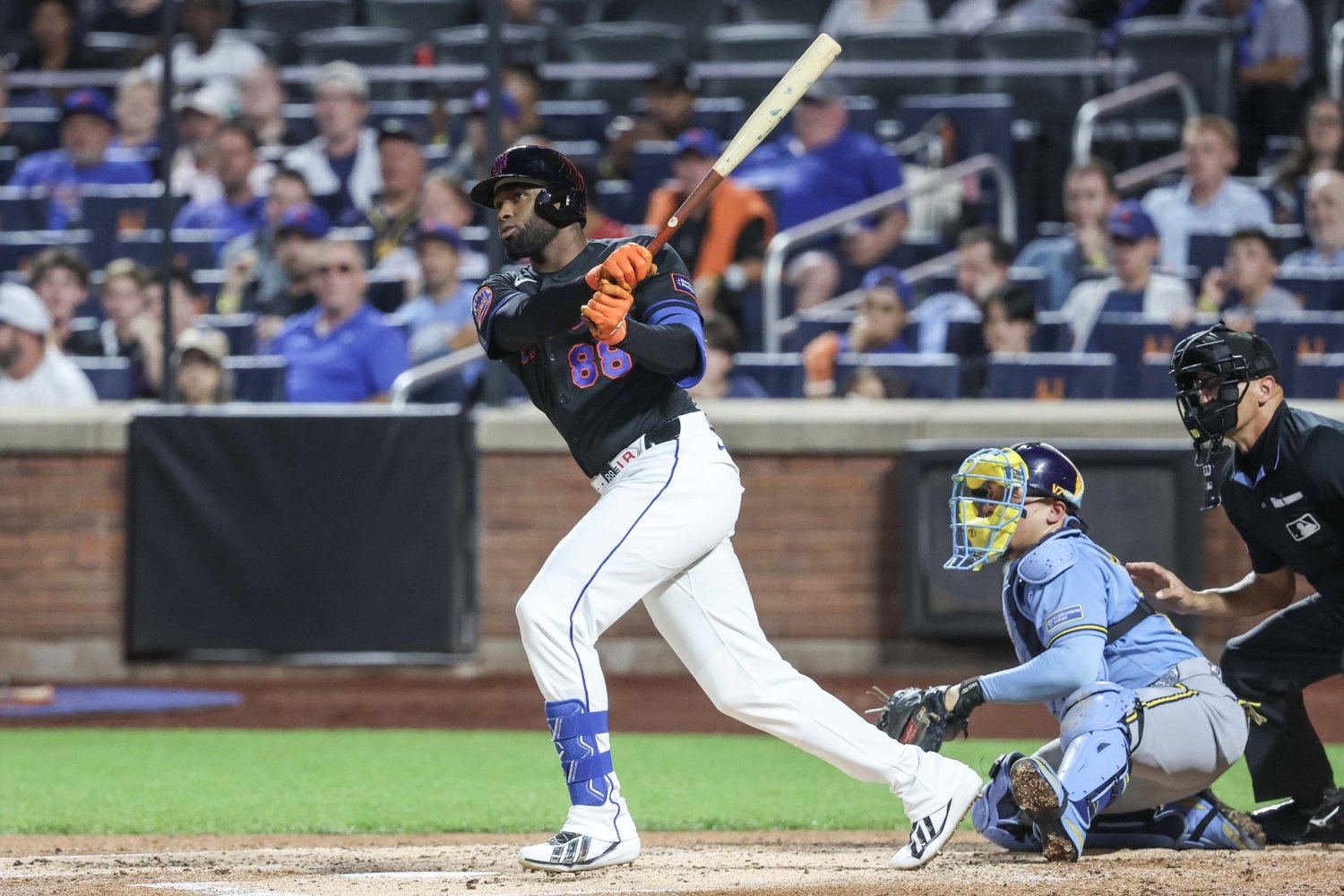 The question was put to David Stearns at his post-trade deadline press conference: Why wasn’t Luis Robert Jr. included in the New York Mets’ summer sell-off? The team’s president of baseball operations replied, “I think with Luis, it’s the possibility of what he can do for us in the second half, the understanding that there is a club option and the excitement of still having him here for the next two months of the season.” Mets Twitter read that answer as code for “Nobody wanted him, so we’ll keep him for now.” The peanut gallery might have been right, to a degree. But it wasn’t because, as many loudly claimed, Robert was washed at 29. It was because he was guaranteed more than $8 million at the time -- $6 million-plus in salary, plus a $2 million buyout of his $20 million club option for 2027) -- and Stearns had said he wouldn’t add cash in trades. Plus, Robert was coming off a back injury that kept him sidelined for three months. There was also an alternate explanation, and lots of fans might think it dumb, but it’s worth reviewing here: What if Stearns kept Robert because he truly believes the player has a lot left and wants to see if he should re-sign him in the offseason as the club reloads for 2027? Why in the world, the fans ask, would Stearns think that? “Robert is hitting .230 and can’t stay healthy” is the reflexive, reductive argument. Well, here are four reasons Stearns might -- and maybe should -- be looking to keep the relationship going. 1. He Hits The Ball Hard Nights like Tuesday, when Robert hit four balls solidly against the Milwaukee Brewers -- and one of them left the yard -- are why Stearns might buy into him. His exit velocities were, in order, 93.5, 97, 101.8 (the home runs) and 96.5 mph. But Ewing’s bat is losing steam late in the season, something that could be expected from a 21-year-old prospect who moved rapidly through the upper levels of the minors. He entered Friday batting .165/.240/.209 in August with no home runs or RBIs. Green said Thursday that Ewing was hitting in bad luck (.231 BABIP), but luck doesn’t explain those numbers away. Ewing does have seven stolen bases for the month, giving him 21 for the year. (Robert stole 33 last season but has swiped just two this year amid the injury issues.) And despite the slump, Ewing has a 90 wRC+ as a rookie. It’s almost impossible to see him included in a blockbuster trade this offseason, and a demotion to Triple-A, assuming the lockout ends next year, is implausible. Ewing and fellow rookie Carson Benge give the Mets two young, athletic, fearless and inexpensive outfielders. The third member of the outfield trio does not share those attributes. Yep, it’s time to talk about Juan Soto and how he would affect Robert. Forget that Soto will be 28 next year; his legs have gotten heavier after nine years and 1,115 MLB career appearances in the outfield. The breakdowns have begun. A calf injury is going to cost him almost half of this season. Yes, he hurt himself while running the bases. No, that doesn’t matter. If he’s getting slower and perhaps growing more cautious, then he will become a huge liability in the field. Robert can still be an asset out there, assuming he’d accept a position change. He would prevent more runs, and we all know how much emphasis Stearns puts on that part of the game after what he did last offseason. But if the everyday outfield remains Soto-Ewing-Benge because the Mets don’t want to make Soto an everyday DH yet, then keeping Robert becomes difficult. He has been a regular center fielder whenever he has been healthy. Would he accept a fourth-outfielder role and a pay cut, either on a one-year deal or by converting the option into a two-year contract? Would the Mets even want an expensive fourth outfielder for a second year in a row (cough, Tyrone Taylor)? Serviceable free agents will be available for less. The club could also give Nick Morabito a shot in the spring. But just to break some brains, what happens if Soto does move to DH in the offseason? That would open a spot for Robert -- again, assuming he’d be OK with moving to left full time -- but it would complicate matters elsewhere. Jorge Polanco, another $20 million man, would shift from DH back to full-time infielder after a lost season that ended this month with ankle surgery. (No, let’s not think about moving Soto to first.) The Mets could then enter a long, cold winter with this starting nine: 1B: Polanco 2B: Marcus Semien SS: Francisco Lindor 3B: Bo Bichette (assuming he stays) LF: Robert CF: Ewing RF: Benge C: Luis Torrens/Francisco Alvarez DH: Soto Debate whether running it back is good or bad, but that group could be the beginning point. And if Soto is the DH and Polanco is the first baseman, then that affects the bench. Who survives among Jared Young, Mark Vientos, Brett Baty and Ronny Mauricio? Eric Wagaman, Christopher Morel and Cristian Pache are roster filler. No matter how all everything fits together, the takeaway of all this is: Robert will be a 2027 piece if the layout of the chessboard allows Stearns to play it.
 -
Elian Peña had two hits, two RBIs and a run scored to lead Brooklyn to a 5-2 victory over Hudson Valley on Thursday. The game was one of just three played by New York Mets minor-league affiliates thanks to two rainouts in eastern Pennsylvania. Peña , ranked third in Grand Central Mets’ prospect Top 20, has struggled against High-A pitching after being promoted from Single-A St. Lucie 10 days ago. His two hits Thursday also came with two strikeouts, giving him 15 punchouts in 44 plate appearances. He’s slashing .194/.318/.194 over eight games. On the positive side, he has six RBIs in those eight games. He singled home a run in the fifth and lifted a sacrifice fly in the eighth on Thursday. He scored in the seventh after reaching on his second single of the game. Trey Snyder and Antonio Jimenez had two hits each Chase Meggers walked four times after entering the game as pinch hitter in the second inning. Gregori Louis earned the win with 1 1/3 scoreless innings of relief. He worked around four walks, three of which loaded the bases in the fifth. He got a double-play ball to end the inning. Elsewhere in the organization: Syracuse, at Lehigh Valley, and Binghamton, at Reading, were both rained out. The teams will make up those games Saturday as part of doubleheaders. St. Lucie split a doubleheader with Daytona, losing the first game 8-2 and winning the second game 3-1. Owen Woodward was the pitching star for the Mets with his three-inning save in the nightcap. Ryan Tayman and Aiden Robbins homered for St. Lucie’s runs in the opener. The Mets turned a triple play in the first inning of Game 1. New York Mets Transactions New York Mets optioned RHP Chayce McDermott to Syracuse Mets. New York Mets recalled RHP Xzavion Curry from Syracuse Mets. Peña Has Big Hand In Cyclones’ Win Peña lined a run-scoring single to right after the Cyclones loaded the bases with none out on walks to Meggers, Jimenez, and Eddinson Paulino. A fielder’s choice grounder by Yonatan Henriquez brought in the second run of the inning and put Brooklyn ahead 3-0. Peña started the Cyclones’ rally in the seventh with his second single. He came around to score on Snyder’s two-out double to right, giving Brooklyn a 4-0 lead. Hudson Valley cut the lead in half in the bottom of the seventh, but Peña got the run back an inning later when drove in Colin Houck with a fly ball to center. Joel Diaz started and threw 3 2/3 scoreless innings. He allowed one hit, walked one and struck out four. After Louis’ high-wire act, Elwis Mijares went the next two, allowing both Hudson Valley runs in the seventh. Ryan Dollar came on in the eighth and struck out five in a six-out save. Brooklyn Batting Player AB R H RBI BB K Elian Peña 4 1 2 2 0 2 Aidan Smith 5 1 1 0 0 2 Yonatan Henriquez 5 0 1 1 0 3 Trey Snyder 5 0 2 1 0 2 John Spikerman 4 0 1 1 0 1 Colin Houck 4 1 1 0 1 1 Daiverson Gutierrez 0 0 0 0 0 0 Chase Meggers 1 1 0 0 4 1 Antonio Jimenez 4 1 2 0 1 1 Eddinson Paulino 2 0 0 0 2 2 Totals 34 5 10 5 8 15 Brooklyn Pitching Player IP H R ER BB K HR Joel Diaz 3 2/3 1 0 0 1 4 0 Gregori Louis 1 1/3 0 0 0 4 1 0 Elwis Mijares 2 4 2 2 0 0 0 Ryan Dollar 2 1 0 0 0 5 0 Totals 9 6 2 2 5 10 0 Early Break Fails To Spur St. Lucie in Opener St. Lucie got its night off to a good start by turning three to end the first. Mets starter Ethan Lanthier walked the first two batters of the game before shortstop Boston Baro caught a line drive, stepped on second base for the second out and threw to first baseman Julio Zayas to complete the triple play. St. Lucie then took a 1-0 lead in the second on Tayman’s homer. It was his second of the year and first since his first professional at-bat on July 28. But Daytona took control with four runs in the third against Lanthier. A one-out solo home run got things started. After two were out, a walk, a stolen base, an RBI single, a walk and a two-run double stretched the Tortugas’ lead to 4-1. Daytona broke the game open with two runs in the bottom of the fourth against Candido Cuevas. Robbins smashed his fourth homer in the fifth to cut the Mets’ deficit to 6-2. Daytona responded with single runs in the fifth and sixth. St. Lucie Batting Player AB R H RBI BB K Boston Baro 4 0 2 0 0 0 Aiden Robbins 3 1 2 1 1 0 Jack Toomey 3 0 0 0 0 1 Kuhio Aloy 2 0 0 0 1 2 Yovanny Rodriguez 3 0 0 0 0 1 Ryan Tayman 3 1 1 1 0 1 Jeremy Rodriguez 3 0 0 0 0 0 Julio Zayas 2 0 0 0 1 1 Dylan Carey 2 0 0 0 0 1 Totals 25 2 5 2 3 7 St. Lucie Pitching Player IP H R ER BB K HR Ethan Lanthier 3 3 4 4 5 2 1 Candido Cuevas 1 2 2 2 1 1 0 Caden Wooster 2 3 2 1 2 4 0 Totals 6 8 8 7 8 7 1 St. Lucie Efficient In Earning Split The Mets scored their runs on five consecutive hits in the third inning. Jack Toomey started the rally with a one-out single. Yovanny Rodriguez doubled him to third. Jeremy Rodriguez singled in Toomey to tie the game 1-1. Branny De Oleo singled home Yovanny Rodriguez to give St. Lucie the lead. Wyatt Vincent singled home Jeremy Rodriguez to make it 3-1. Mets starter Nathan Hall went 3 1/3 innings, allowing a run on two hits with no walks and five strikeouts. Zack Mack got the final two outs in a 1-2-3 fourth, which was enough for him to be credited with the win in the seven-inning game. Woodward allowed two hits, walked none and struck out three in his three innings of work. St. Lucie Batting Player AB R H RBI BB K Vladi Gomez 4 0 0 0 0 0 Aiden Robbins 4 0 0 0 0 1 Jack Toomey 3 1 1 0 1 2 Yovanny Rodriguez 3 1 1 0 0 0 Jeremy Rodriguez 3 1 1 1 0 0 Branny De Oleo 3 0 2 1 0 0 Wyatt Vincent 3 0 1 1 0 1 Reed Stallman 2 0 1 0 1 1 Jake Ogden 2 0 0 0 1 1 Totals 27 3 7 3 3 6 St. Lucie Pitching Player IP H R ER BB K HR Nathan Hall 3 1/3 2 1 1 0 5 0 Zack Mack 2/3 0 0 0 0 1 0 Owen Woodward 3 2 0 0 0 3 0 Totals 7 4 1 1 0 9 0 Top-20 Prospect Performance Jonah Tong: DNP Jack Wenninger: DNP Elian Peña: 2-for-4, 2 RBI, 2 K Mitch Voit: DNP Ryan Clifford: DNP Nick Morabito: DNP Jonathan Santucci: DNP Carson Wiggins: DNP Jacob Reimer: DNP Aiden Robbins: 2-for-7, 2B, HR, RBI, BB, K Randy Guzman: DNP Wandy Asigen: DNP Chris Suero: DNP Jefferson Rojas: DNP Will Watson: DNP Shane Sdao: DNP Eli Serrano III: DNP Antonio Jimenez: 2-for-4, BB, K Emilien Pitre: DNP Dylan Ross: DNP View full article
-
 Elian Peña had two hits, two RBIs and a run scored to lead Brooklyn to a 5-2 victory over Hudson Valley on Thursday. The game was one of just three played by New York Mets minor-league affiliates thanks to two rainouts in eastern Pennsylvania. Peña , ranked third in Grand Central Mets’ prospect Top 20, has struggled against High-A pitching after being promoted from Single-A St. Lucie 10 days ago. His two hits Thursday also came with two strikeouts, giving him 15 punchouts in 44 plate appearances. He’s slashing .194/.318/.194 over eight games. On the positive side, he has six RBIs in those eight games. He singled home a run in the fifth and lifted a sacrifice fly in the eighth on Thursday. He scored in the seventh after reaching on his second single of the game. Trey Snyder and Antonio Jimenez had two hits each Chase Meggers walked four times after entering the game as pinch hitter in the second inning. Gregori Louis earned the win with 1 1/3 scoreless innings of relief. He worked around four walks, three of which loaded the bases in the fifth. He got a double-play ball to end the inning. Elsewhere in the organization: Syracuse, at Lehigh Valley, and Binghamton, at Reading, were both rained out. The teams will make up those games Saturday as part of doubleheaders. St. Lucie split a doubleheader with Daytona, losing the first game 8-2 and winning the second game 3-1. Owen Woodward was the pitching star for the Mets with his three-inning save in the nightcap. Ryan Tayman and Aiden Robbins homered for St. Lucie’s runs in the opener. The Mets turned a triple play in the first inning of Game 1. New York Mets Transactions New York Mets optioned RHP Chayce McDermott to Syracuse Mets. New York Mets recalled RHP Xzavion Curry from Syracuse Mets. Peña Has Big Hand In Cyclones’ Win Peña lined a run-scoring single to right after the Cyclones loaded the bases with none out on walks to Meggers, Jimenez, and Eddinson Paulino. A fielder’s choice grounder by Yonatan Henriquez brought in the second run of the inning and put Brooklyn ahead 3-0. Peña started the Cyclones’ rally in the seventh with his second single. He came around to score on Snyder’s two-out double to right, giving Brooklyn a 4-0 lead. Hudson Valley cut the lead in half in the bottom of the seventh, but Peña got the run back an inning later when drove in Colin Houck with a fly ball to center. Joel Diaz started and threw 3 2/3 scoreless innings. He allowed one hit, walked one and struck out four. After Louis’ high-wire act, Elwis Mijares went the next two, allowing both Hudson Valley runs in the seventh. Ryan Dollar came on in the eighth and struck out five in a six-out save. Brooklyn Batting Player AB R H RBI BB K Elian Peña 4 1 2 2 0 2 Aidan Smith 5 1 1 0 0 2 Yonatan Henriquez 5 0 1 1 0 3 Trey Snyder 5 0 2 1 0 2 John Spikerman 4 0 1 1 0 1 Colin Houck 4 1 1 0 1 1 Daiverson Gutierrez 0 0 0 0 0 0 Chase Meggers 1 1 0 0 4 1 Antonio Jimenez 4 1 2 0 1 1 Eddinson Paulino 2 0 0 0 2 2 Totals 34 5 10 5 8 15 Brooklyn Pitching Player IP H R ER BB K HR Joel Diaz 3 2/3 1 0 0 1 4 0 Gregori Louis 1 1/3 0 0 0 4 1 0 Elwis Mijares 2 4 2 2 0 0 0 Ryan Dollar 2 1 0 0 0 5 0 Totals 9 6 2 2 5 10 0 Early Break Fails To Spur St. Lucie in Opener St. Lucie got its night off to a good start by turning three to end the first. Mets starter Ethan Lanthier walked the first two batters of the game before shortstop Boston Baro caught a line drive, stepped on second base for the second out and threw to first baseman Julio Zayas to complete the triple play. St. Lucie then took a 1-0 lead in the second on Tayman’s homer. It was his second of the year and first since his first professional at-bat on July 28. But Daytona took control with four runs in the third against Lanthier. A one-out solo home run got things started. After two were out, a walk, a stolen base, an RBI single, a walk and a two-run double stretched the Tortugas’ lead to 4-1. Daytona broke the game open with two runs in the bottom of the fourth against Candido Cuevas. Robbins smashed his fourth homer in the fifth to cut the Mets’ deficit to 6-2. Daytona responded with single runs in the fifth and sixth. St. Lucie Batting Player AB R H RBI BB K Boston Baro 4 0 2 0 0 0 Aiden Robbins 3 1 2 1 1 0 Jack Toomey 3 0 0 0 0 1 Kuhio Aloy 2 0 0 0 1 2 Yovanny Rodriguez 3 0 0 0 0 1 Ryan Tayman 3 1 1 1 0 1 Jeremy Rodriguez 3 0 0 0 0 0 Julio Zayas 2 0 0 0 1 1 Dylan Carey 2 0 0 0 0 1 Totals 25 2 5 2 3 7 St. Lucie Pitching Player IP H R ER BB K HR Ethan Lanthier 3 3 4 4 5 2 1 Candido Cuevas 1 2 2 2 1 1 0 Caden Wooster 2 3 2 1 2 4 0 Totals 6 8 8 7 8 7 1 St. Lucie Efficient In Earning Split The Mets scored their runs on five consecutive hits in the third inning. Jack Toomey started the rally with a one-out single. Yovanny Rodriguez doubled him to third. Jeremy Rodriguez singled in Toomey to tie the game 1-1. Branny De Oleo singled home Yovanny Rodriguez to give St. Lucie the lead. Wyatt Vincent singled home Jeremy Rodriguez to make it 3-1. Mets starter Nathan Hall went 3 1/3 innings, allowing a run on two hits with no walks and five strikeouts. Zack Mack got the final two outs in a 1-2-3 fourth, which was enough for him to be credited with the win in the seven-inning game. Woodward allowed two hits, walked none and struck out three in his three innings of work. St. Lucie Batting Player AB R H RBI BB K Vladi Gomez 4 0 0 0 0 0 Aiden Robbins 4 0 0 0 0 1 Jack Toomey 3 1 1 0 1 2 Yovanny Rodriguez 3 1 1 0 0 0 Jeremy Rodriguez 3 1 1 1 0 0 Branny De Oleo 3 0 2 1 0 0 Wyatt Vincent 3 0 1 1 0 1 Reed Stallman 2 0 1 0 1 1 Jake Ogden 2 0 0 0 1 1 Totals 27 3 7 3 3 6 St. Lucie Pitching Player IP H R ER BB K HR Nathan Hall 3 1/3 2 1 1 0 5 0 Zack Mack 2/3 0 0 0 0 1 0 Owen Woodward 3 2 0 0 0 3 0 Totals 7 4 1 1 0 9 0 Top-20 Prospect Performance Jonah Tong: DNP Jack Wenninger: DNP Elian Peña: 2-for-4, 2 RBI, 2 K Mitch Voit: DNP Ryan Clifford: DNP Nick Morabito: DNP Jonathan Santucci: DNP Carson Wiggins: DNP Jacob Reimer: DNP Aiden Robbins: 2-for-7, 2B, HR, RBI, BB, K Randy Guzman: DNP Wandy Asigen: DNP Chris Suero: DNP Jefferson Rojas: DNP Will Watson: DNP Shane Sdao: DNP Eli Serrano III: DNP Antonio Jimenez: 2-for-4, BB, K Emilien Pitre: DNP Dylan Ross: DNP
