


Tom Gatto
-
Posts
200 -
Joined
-
Last visited
Tom Gatto's Achievements


-
Image courtesy of Denis Poroy-Imagn Images The nickname aged poorly. The "Baby Mets" -- Francisco Alvarez, Brett Baty and Mark Vientos -- have not matured into foundational players. There's an excellent chance the trio will be broken up in the offseason. Perhaps all three will go. This winter would be a good time for it to happen. Baseball economics is a driver in that supposition. Alvarez, Baty and Vientos are all arbitration-eligible for 2027, and no matter what MLB's salary system will be after the lockout, shelling out low seven figures to veteran players who had respective bWARs of 0.7, 1.6 and minus-1.2 this year is not good business. How long does the front office allow itself to be teased? How tightly should it hug these homegrown products? Team president David Stearns has shown that he isn't sentimental about players, and he inherited this lot to begin with. On a human level, it feels like everyone could stand a change of scenery. All three players' careers have stalled after they've put in so much effort to improve. After this year's results, Stearns can't be certain that a breakthrough is coming. He started hedging last offseason when he shifted Baty and Vientos to bench roles in the aftermath of signing Jorge Polanco and Bo Bichette as free agents. Let's dig into where the "Baby Mets" are falling short, and who could be next up to fill their spots. Francisco Alvarez Alvarez has the best chance of staying because of his position, but remember, his name was floated in trade rumors during the summer. Also recall the Mets signed Luis Torrens to a two-year, $11 million extension on May 2, and while there was a trend the past few years of teams paying good money for veteran backups, that still is a lot for a No. 2. But it's quite economical for a No. 1, and Torrens looked the part for much of this season (2.1 fWAR this season). So, where is Alvarez lacking? To start, his focus on patching the down-and-away hole in his swing, with help from special assistant J.D. Martinez, has had an odd effect: his hole now is velocity. He improved from a .190 average against sliders and .152 against sweepers in '25 to .258 and .231, respectively, in '26, but he plummeted from .343 against four-seamers in 2025 to .231 in this year. That's more than statistical noise when each pitch has a decent-sized sample for both years. GCM's Yirsandy Rodriguez has a full breakdown of how Alvarez has regressed at the plate and what it means for the Mets' catching situation going forward. The defensive numbers remained mixed. His throwing has improved incrementally, according to Baseball Savant metrics, but he will never match Torrens' throwing ability. His framing took a hit in the first year of ABS challenges, and his blocking hit rock bottom at the first percentile. His health history cannot be ignored, either. There was a thumb sprain in 2024, a hamate fracture and thumb UCL sprain in 2025, and a meniscus tear in 2026. Catchers take a pounding behind the dish, of course, but Alvarez's availability has been too limited. He has played in 100, 76 and 113 games in the past three seasons. If Stearns feels he can only save money at the margins of the payroll, then he could finally go through with an Alvarez trade, give Torrens the majority of starts and sign a cheap, defense-first backup, ideally one who bats left-handed to complement the righty-swinging Torrens. Brett Baty Baty teased the front office again with another strong second half at the plate (.838 OPS, seven home runs in 49 games). The season-long bat speed (87th percentile) and exit velocity (73rd percentile) are tempting, as well. But a lack of progress against left-handers (.500 OPS, zero home runs in 91 plate appearances) and lackluster overall production (91 wRC+, 11 home runs in 143 games) signal he's just a platoon player. A check of some Baty numbers paints a clear picture of why he hasn't broken through. First, spin still vexes him. He couldn't figure out the sweeper, and so pitchers threw it more than ever to him this year. He posted a minus-4 run value on the pitch, with a .162 average and .216 slugging percentage. The slider was a problem, too, with a .167 average and .333 SLG (minus-1 run value). Those two deficiencies helped to cancel out the +3 run value and .446 SLG against four-seamers. Second, despite the exit velocity and the 73rd-percentile launch angle-sweet spot percentage, the slug just wasn't there. His SLG dropped from a career-high .435 in 2025 to .371 this year. His extra-base-hit total remained flat (33 and 34 the past two years). After four-plus seasons in the majors, that's not a good sign. And while he has the athletic ability to play multiple positions, he's not quite a glove-first player. His best work this year came at his natural position, third base, and it was modest. He registered +2 defensive runs saved (DRS) and +1 out above average (OAA). Among players with 450 or more innings at the position, he was tied for 14th in both DRS and OAA. He was a good-enough fill-in when Bo Bichette slid over to shortstop to cover for the injured Francisco Lindor. Baty did show promise at second base, with +3 OAA and +3 fielding run value (FRV). The latter number was tied for 14th among all MLB second basemen. His work at first base and the outfield were limited, but not bad (2 DRS/-1 OAA at first, 2 DRS/-1 OAA in the outfield). All of which is to say that Baty is versatile enough to keep but still a borderline call. The Mets enter the offseason with replacement utility options, starting with Christopher Morel, who has more power. They could finally give Ronny Mauricio a full season in the role, although he, too, might be on the outs after not getting a September call-up until Jared Young suffered a concussion and went on the injured list. They have deadline acquisition Emilien Pitre and waiver claim Christian Cairo at Triple-A as well, but Pitre probably needs more time there after a late promotion. A club could do worse than to dream on a first-round draft pick who will turn 27 in November, and hope he finally figures it out to become a solid third baseman. Stearns should be making that pitch to interested parties about Baty over the next couple months. Mark Vientos Manager Andy Green was blunt about Vientos' future with the Mets when the club recalled the infielder from a minor-league rehab stint in late August. "I still think there's a very bright future out there for him, if he wants to go grab a hold of it. That's on him," Green said. "When he gets back in the box, take advantage of the at-bats you do get and prove you deserve more at-bats." Vientos got exactly 30 ABs in 12 games from Aug. 31 through Sept. 24. He homered twice and struck out eight times, or about what would be expected from him. That sample doesn't forgive the entire 2026 body of work. The exit velocity, hard-hit rate, and line-drive rate all fell from 2025 despite fast bat speed. His ground-ball rate ticked up two points. Also as you would expect from Vientos, the chase rate moved up as his season sputtered and frustration grew. To his credit, the whiff percentage ticked slightly downward. But in the end, we're talking about marginal statistical moves that landed within his career norms. Therefore, Vientos' main value for 2027 and beyond, as Rodriguez noted last week for GCM, is as a platoon masher against left-handed pitching. But this is a player who showed two years ago that he could be more. Right now, he's just a guy who could maybe rotate with Polanco and Young. Could a Vientos-Baty utility platoon play? The Mets would be pairing a 121 wRC+ against left-handers (Vientos) with a 103 wRC+ against right-handers (Baty) in that scenario, and maybe both would see a boost with more defined roles, but those numbers don't scream that it should be tried. In theory, Morel, Eric Wagaman or a cheap offseason pickup could fill the Vientos role and Mauricio can fill the Baty role. Vientos still has trade value because his slug will entice a team to give him a fresh start. But will Stearns be reluctant to deal a player with 30-home-run power a year after letting Pete Alonso walk? Maybe, but Stearns saw Vientos struggle badly in the field at first base (minus-10 OAA), and run prevention is still important in Queens. And there aren't full-time DH at-bats available with Polanco, Juan Soto and even Lindor needing them. View full article
-
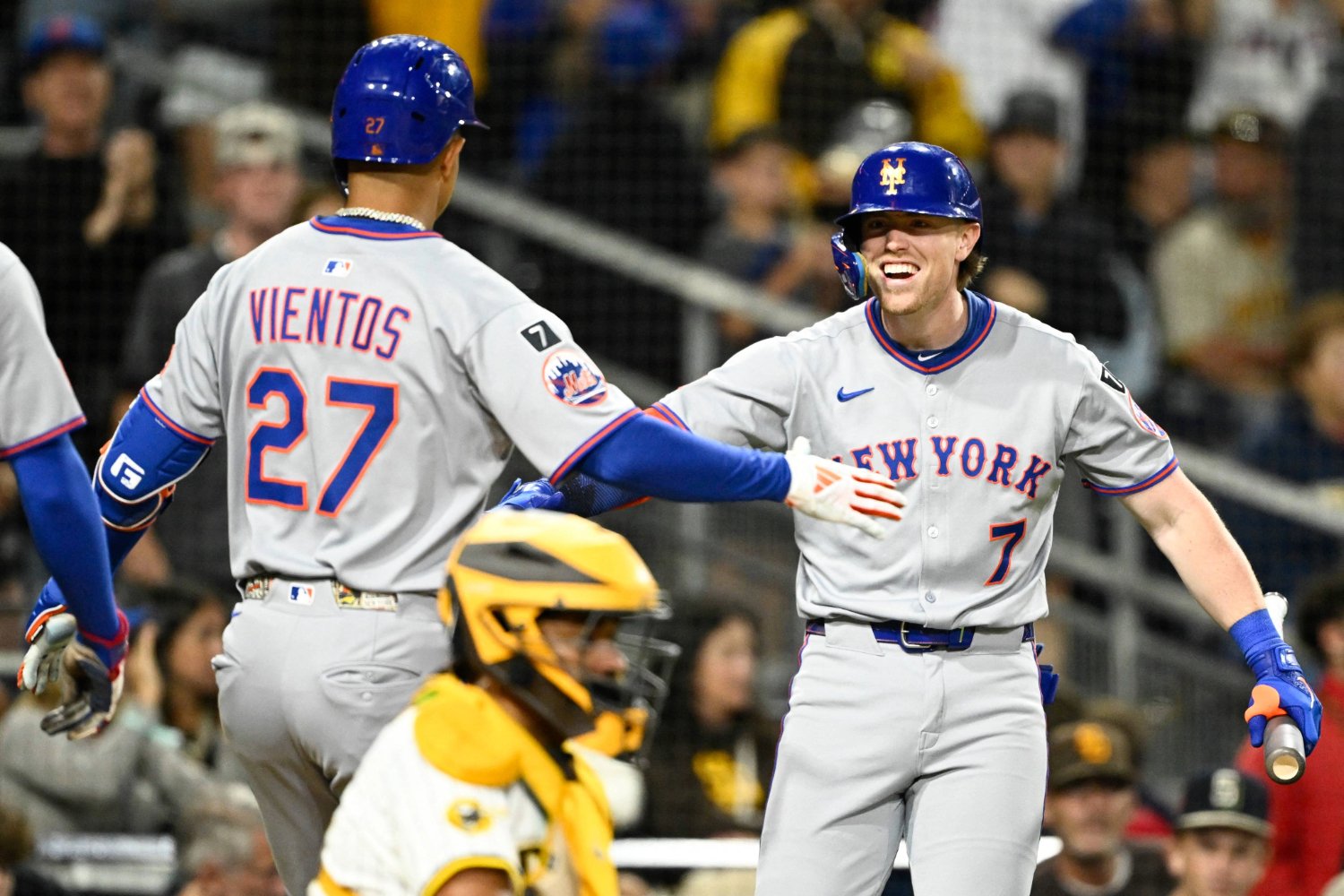 The nickname aged poorly. The "Baby Mets" -- Francisco Alvarez, Brett Baty and Mark Vientos -- have not matured into foundational players. There's an excellent chance the trio will be broken up in the offseason. Perhaps all three will go. This winter would be a good time for it to happen. Baseball economics is a driver in that supposition. Alvarez, Baty and Vientos are all arbitration-eligible for 2027, and no matter what MLB's salary system will be after the lockout, shelling out low seven figures to veteran players who had respective bWARs of 0.7, 1.6 and minus-1.2 this year is not good business. How long does the front office allow itself to be teased? How tightly should it hug these homegrown products? Team president David Stearns has shown that he isn't sentimental about players, and he inherited this lot to begin with. On a human level, it feels like everyone could stand a change of scenery. All three players' careers have stalled after they've put in so much effort to improve. After this year's results, Stearns can't be certain that a breakthrough is coming. He started hedging last offseason when he shifted Baty and Vientos to bench roles in the aftermath of signing Jorge Polanco and Bo Bichette as free agents. Let's dig into where the "Baby Mets" are falling short, and who could be next up to fill their spots. Francisco Alvarez Alvarez has the best chance of staying because of his position, but remember, his name was floated in trade rumors during the summer. Also recall the Mets signed Luis Torrens to a two-year, $11 million extension on May 2, and while there was a trend the past few years of teams paying good money for veteran backups, that still is a lot for a No. 2. But it's quite economical for a No. 1, and Torrens looked the part for much of this season (2.1 fWAR this season). So, where is Alvarez lacking? To start, his focus on patching the down-and-away hole in his swing, with help from special assistant J.D. Martinez, has had an odd effect: his hole now is velocity. He improved from a .190 average against sliders and .152 against sweepers in '25 to .258 and .231, respectively, in '26, but he plummeted from .343 against four-seamers in 2025 to .231 in this year. That's more than statistical noise when each pitch has a decent-sized sample for both years. GCM's Yirsandy Rodriguez has a full breakdown of how Alvarez has regressed at the plate and what it means for the Mets' catching situation going forward. The defensive numbers remained mixed. His throwing has improved incrementally, according to Baseball Savant metrics, but he will never match Torrens' throwing ability. His framing took a hit in the first year of ABS challenges, and his blocking hit rock bottom at the first percentile. His health history cannot be ignored, either. There was a thumb sprain in 2024, a hamate fracture and thumb UCL sprain in 2025, and a meniscus tear in 2026. Catchers take a pounding behind the dish, of course, but Alvarez's availability has been too limited. He has played in 100, 76 and 113 games in the past three seasons. If Stearns feels he can only save money at the margins of the payroll, then he could finally go through with an Alvarez trade, give Torrens the majority of starts and sign a cheap, defense-first backup, ideally one who bats left-handed to complement the righty-swinging Torrens. Brett Baty Baty teased the front office again with another strong second half at the plate (.838 OPS, seven home runs in 49 games). The season-long bat speed (87th percentile) and exit velocity (73rd percentile) are tempting, as well. But a lack of progress against left-handers (.500 OPS, zero home runs in 91 plate appearances) and lackluster overall production (91 wRC+, 11 home runs in 143 games) signal he's just a platoon player. A check of some Baty numbers paints a clear picture of why he hasn't broken through. First, spin still vexes him. He couldn't figure out the sweeper, and so pitchers threw it more than ever to him this year. He posted a minus-4 run value on the pitch, with a .162 average and .216 slugging percentage. The slider was a problem, too, with a .167 average and .333 SLG (minus-1 run value). Those two deficiencies helped to cancel out the +3 run value and .446 SLG against four-seamers. Second, despite the exit velocity and the 73rd-percentile launch angle-sweet spot percentage, the slug just wasn't there. His SLG dropped from a career-high .435 in 2025 to .371 this year. His extra-base-hit total remained flat (33 and 34 the past two years). After four-plus seasons in the majors, that's not a good sign. And while he has the athletic ability to play multiple positions, he's not quite a glove-first player. His best work this year came at his natural position, third base, and it was modest. He registered +2 defensive runs saved (DRS) and +1 out above average (OAA). Among players with 450 or more innings at the position, he was tied for 14th in both DRS and OAA. He was a good-enough fill-in when Bo Bichette slid over to shortstop to cover for the injured Francisco Lindor. Baty did show promise at second base, with +3 OAA and +3 fielding run value (FRV). The latter number was tied for 14th among all MLB second basemen. His work at first base and the outfield were limited, but not bad (2 DRS/-1 OAA at first, 2 DRS/-1 OAA in the outfield). All of which is to say that Baty is versatile enough to keep but still a borderline call. The Mets enter the offseason with replacement utility options, starting with Christopher Morel, who has more power. They could finally give Ronny Mauricio a full season in the role, although he, too, might be on the outs after not getting a September call-up until Jared Young suffered a concussion and went on the injured list. They have deadline acquisition Emilien Pitre and waiver claim Christian Cairo at Triple-A as well, but Pitre probably needs more time there after a late promotion. A club could do worse than to dream on a first-round draft pick who will turn 27 in November, and hope he finally figures it out to become a solid third baseman. Stearns should be making that pitch to interested parties about Baty over the next couple months. Mark Vientos Manager Andy Green was blunt about Vientos' future with the Mets when the club recalled the infielder from a minor-league rehab stint in late August. "I still think there's a very bright future out there for him, if he wants to go grab a hold of it. That's on him," Green said. "When he gets back in the box, take advantage of the at-bats you do get and prove you deserve more at-bats." Vientos got exactly 30 ABs in 12 games from Aug. 31 through Sept. 24. He homered twice and struck out eight times, or about what would be expected from him. That sample doesn't forgive the entire 2026 body of work. The exit velocity, hard-hit rate, and line-drive rate all fell from 2025 despite fast bat speed. His ground-ball rate ticked up two points. Also as you would expect from Vientos, the chase rate moved up as his season sputtered and frustration grew. To his credit, the whiff percentage ticked slightly downward. But in the end, we're talking about marginal statistical moves that landed within his career norms. Therefore, Vientos' main value for 2027 and beyond, as Rodriguez noted last week for GCM, is as a platoon masher against left-handed pitching. But this is a player who showed two years ago that he could be more. Right now, he's just a guy who could maybe rotate with Polanco and Young. Could a Vientos-Baty utility platoon play? The Mets would be pairing a 121 wRC+ against left-handers (Vientos) with a 103 wRC+ against right-handers (Baty) in that scenario, and maybe both would see a boost with more defined roles, but those numbers don't scream that it should be tried. In theory, Morel, Eric Wagaman or a cheap offseason pickup could fill the Vientos role and Mauricio can fill the Baty role. Vientos still has trade value because his slug will entice a team to give him a fresh start. But will Stearns be reluctant to deal a player with 30-home-run power a year after letting Pete Alonso walk? Maybe, but Stearns saw Vientos struggle badly in the field at first base (minus-10 OAA), and run prevention is still important in Queens. And there aren't full-time DH at-bats available with Polanco, Juan Soto and even Lindor needing them.
 -
Count on the front office gazing longingly at him in Port St. Lucie next February and March -- if baseball is being played at that point, of course. New York Mets Prospect Losers Ryan Clifford, 1B/OF He didn’t fall far in the GCM Top 20 during the season, but Clifford took a heavy tumble nonetheless with a 63 wRC+ in 470 plate appearances for Syracuse. His 174 punchouts (37.2 percent K rate) obliterated whatever impact he generated with his 18 home runs. His 10th-percentile Z-contact rate neutered his 90s-percentile EV and barrel rates. To put that in layman's terms, selling out for slug didn’t work. If he was an even average hitter, he could have maybe forced the Mets’ hand on a promotion. They showed they were willing to give kids a shot at the big-league level. They opened the season with Benge in right field and then made Ewing their center fielder in May. Clifford, 23, could have been next as the club’s first-base production lagged. (For context: Mets first basemen were 28th in the majors with an 89 wRC+ and 23rd with 18 home runs). He was given a reset in mid-August when Syracuse placed him on its development list. After he returned to the lineup on Sept. 3, he produced decently to end the season: a .978 OPS, two home runs and a 25.6 percent K rate in 11 games. Six of his eight hits went for extra bases. But the full body of work can’t be ignored. Neither can the company Clifford has at the position after the deadline pickup of fellow slugger Billy Amick and the second-half power surge by Corey Collins at Binghamton. R.J. Gordon, RHP Gordon, 24, put himself on a fast track last year by succeeding at Double-A in his first pro season. Where does he stand now after taking a long step back in 2026? He pitched close to a full season at Binghamton (21 starts), but his ERA went up almost two runs to 5.03 (with a 4.91 FIP) and his RA/9 (runs allowed per nine) rate increased by a similar amount to 6.54. The K-rate at Double-A fell sharply, from 28.7 percent to 20.1 percent, and the walk rate jumped from 6.1 percent to 10.4 percent. The home run rate inched up from 2.8 percent to 3.0 percent. The only red in his Prospect Savant player card was his chase rate, which finished in the 89th percentile. Does he have a health excuse? Maybe for early in the season. He began the year on the injured list and made his first appearance for Binghamton on May 10. The Rumble Ponies limited his innings at first. But he handled a full workload over the final two months, and the numbers were just okay: a 3.82 ERA, .701 opponents’ OPS, 21.6 percent K-rate and 9.7 percent walk rate over 12 starts and 63 2/3 innings pitched from July 3 on. That’s not what an organization would want from an older college prospect like Gordon. Jacob Reimer, 3B/1B Like Clifford, Reimer stayed near the top half of the Top 20, but there’s little denying he stalled at Binghamton. Before he was sidelined with a groin injury in mid-June, he was slashing .212/.332/.391 with six home runs in 214 PAs for the Rumble Ponies. The numbers weren’t much better after his return from a rehab stint in early August: .263/.341/.373, two home runs in 135 PAs. His 97 wRC+ belies those basic stat lines. The key was his selectiveness. Prospect Savant had Reimer’s 12.9 percent walk rate in the 73rd percentile (the rate itself jumped almost three points between ’25 and ’26) and his chase rate in the 81st percentile. The downside was he didn’t swing the bat enough. His overall swing percentage and in-zone swing percentage were both in the ninth percentile. The zone-contact percentage was only in the 29th percentile. Also like Clifford, Reimer, 22, will have to contend with new faces at his primary position next spring. Jefferson Rojas played a lot of third base in Double-A this year, and Amick plays there as well. View full article
-
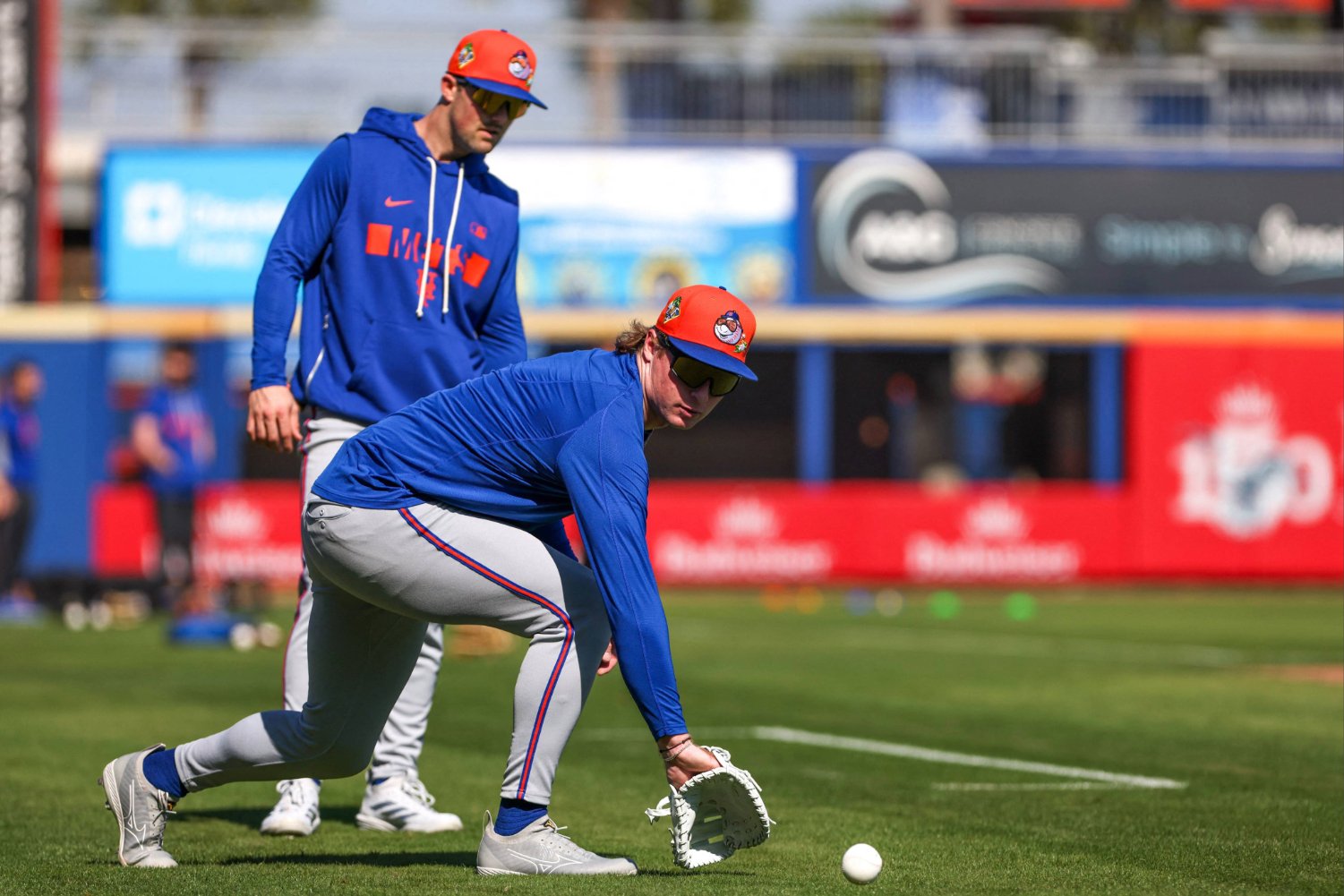 With the New York Mets’ season fully in the books, it’s time to assess what happened and predict what lies ahead for a number of high-profiled prospects. The process includes identifying who helped or hurt themselves the most from the start of the season. That’s often difficult to decide, because players are constantly working on their games and experimenting with tweaks and overhauls that can affect their numbers. But enough players made clear strides and took clear tumbles over the 5 1/2-month campaign to fill a list. With that, Grand Central Mets presents its listing of the organization's three biggest winners and three biggest losers in 2026. It’s focused on players who performed well above or below their places in GCM’s preseason rankings, or who played their way into the rankings. We tried to stay away from prospects who missed significant time with injuries. That’s why Randy Guzman isn’t on the winners’ list and Antonio Jimenez, Eli Serrano III and Will Watson aren’t on the losers’ list. New York Mets Prospect Winners (2026) A.J. Ewing, OF Ewing took the commuter lane to the big leagues. He raked for three weeks at Binghamton and two weeks at Syracuse before getting the call in the second week of May. The big club was desperate for a spark. The kid did his part, especially in that first month with his hot hitting, acrobatic outfield play, and daring mentality on the bases. (His teammates didn’t exactly follow suit.) Count on the front office gazing longingly at him in Port St. Lucie next February and March -- if baseball is being played at that point, of course. New York Mets Prospect Losers Ryan Clifford, 1B/OF He didn’t fall far in the GCM Top 20 during the season, but Clifford took a heavy tumble nonetheless with a 63 wRC+ in 470 plate appearances for Syracuse. His 174 punchouts (37.2 percent K rate) obliterated whatever impact he generated with his 18 home runs. His 10th-percentile Z-contact rate neutered his 90s-percentile EV and barrel rates. To put that in layman's terms, selling out for slug didn’t work. If he was an even average hitter, he could have maybe forced the Mets’ hand on a promotion. They showed they were willing to give kids a shot at the big-league level. They opened the season with Benge in right field and then made Ewing their center fielder in May. Clifford, 23, could have been next as the club’s first-base production lagged. (For context: Mets first basemen were 28th in the majors with an 89 wRC+ and 23rd with 18 home runs). He was given a reset in mid-August when Syracuse placed him on its development list. After he returned to the lineup on Sept. 3, he produced decently to end the season: a .978 OPS, two home runs and a 25.6 percent K rate in 11 games. Six of his eight hits went for extra bases. But the full body of work can’t be ignored. Neither can the company Clifford has at the position after the deadline pickup of fellow slugger Billy Amick and the second-half power surge by Corey Collins at Binghamton. R.J. Gordon, RHP Gordon, 24, put himself on a fast track last year by succeeding at Double-A in his first pro season. Where does he stand now after taking a long step back in 2026? He pitched close to a full season at Binghamton (21 starts), but his ERA went up almost two runs to 5.03 (with a 4.91 FIP) and his RA/9 (runs allowed per nine) rate increased by a similar amount to 6.54. The K-rate at Double-A fell sharply, from 28.7 percent to 20.1 percent, and the walk rate jumped from 6.1 percent to 10.4 percent. The home run rate inched up from 2.8 percent to 3.0 percent. The only red in his Prospect Savant player card was his chase rate, which finished in the 89th percentile. Does he have a health excuse? Maybe for early in the season. He began the year on the injured list and made his first appearance for Binghamton on May 10. The Rumble Ponies limited his innings at first. But he handled a full workload over the final two months, and the numbers were just okay: a 3.82 ERA, .701 opponents’ OPS, 21.6 percent K-rate and 9.7 percent walk rate over 12 starts and 63 2/3 innings pitched from July 3 on. That’s not what an organization would want from an older college prospect like Gordon. Jacob Reimer, 3B/1B Like Clifford, Reimer stayed near the top half of the Top 20, but there’s little denying he stalled at Binghamton. Before he was sidelined with a groin injury in mid-June, he was slashing .212/.332/.391 with six home runs in 214 PAs for the Rumble Ponies. The numbers weren’t much better after his return from a rehab stint in early August: .263/.341/.373, two home runs in 135 PAs. His 97 wRC+ belies those basic stat lines. The key was his selectiveness. Prospect Savant had Reimer’s 12.9 percent walk rate in the 73rd percentile (the rate itself jumped almost three points between ’25 and ’26) and his chase rate in the 81st percentile. The downside was he didn’t swing the bat enough. His overall swing percentage and in-zone swing percentage were both in the ninth percentile. The zone-contact percentage was only in the 29th percentile. Also like Clifford, Reimer, 22, will have to contend with new faces at his primary position next spring. Jefferson Rojas played a lot of third base in Double-A this year, and Amick plays there as well.
 -
Lehigh Valley erased that lead in the fourth on two solo home runs off Saul Garcia, the second of seven Syracuse pitchers. The Mets went back ahead in the seventh when Ramos singled, moved up to second on a sacrifice bunt by Hayden Senger, advanced to third on a single by Zack Short and scored on a single by Christian Cairo. The IronPigs tied it in the eighth with a sacrifice fly following a leadoff triple. In the 11th, Metoyer struck out the first batter he faced but then allowed a single that scored the zombie runner. Tyler McLoughlin came on and gave up a run-scoring double that made the score 5-3. Ramos began the bottom half at second as the zombie runner. Kevin Parada flied out, but Short walked and Cairo singled to load the bases. Smith's grounder to deep third base brought Ramos home, but then Rojas flied out to end it. Syracuse stranded 12 runners in the game. The Mets went with another bullpen game to wrap up the season. Xzavion Curry opened with two scoreless innings. He allowed two hits, walked one and struck out one. Syracuse Batting Player AB R H RBI BB K D'Andre Smith 5 0 0 1 1 0 Jefferson Rojas 6 0 0 0 0 2 MJ Melendez 4 0 1 0 1 1 Eric Wagaman 4 0 0 0 1 2 Billy Amick 5 1 1 0 0 2 Jose Ramos 4 3 2 2 0 1 Hayden Senger 3 0 0 0 0 2 Kevin Parada 1 0 0 0 0 0 Zack Short 4 0 1 0 1 1 Christian Cairo 4 0 2 1 1 0 Syracuse Pitching Player IP H R ER BB K HR Xzavion Curry 2 2 0 0 1 1 0 Saul Garcia 2 2 2 2 0 2 2 Kevin Herget 1 0 0 0 0 2 0 Dylan Ross 2 1 0 0 0 2 0 Cameron Weston 2 1 1 1 0 2 0 Brian Metoyer 1 1/3 1 2 1 1 1 0 Tyler McLoughlin 2/3 1 0 0 0 1 0 New York Mets Transactions No Roster Moves Top-20 Prospect Performance Jonah Tong: MLB Jack Wenninger: DNP Elian Pena: DNP Mitch Voit: DNP Ryan Clifford: DNP Nick Morabito: MLB Jonathan Santucci: DNP Carson Wiggins: DNP Jacob Reimer: DNP Aiden Robbins: DNP Randy Guzman: DNP Wandy Asigen: DNP Chris Suero: DNP Jefferson Rojas: 0-for-6, 2 K Will Watson: DNP Shane Sdao: DNP Eli Serrano III: DNP Antonio Jimenez: DNP Emilien Pitre: DNP Dylan Ross: 2 IP, 1 H, 0 R, 0 BB, 2 K View full article
-
 Syracuse finished a length and a half short in its run at an International League playoff berth. The Mets were eliminated from the second-half pennant race Sunday when Rochester clinched the title with a 15-8 victory over Buffalo. About a half-hour later, Syracuse lost 5-4 in 11 innings to Lehigh Valley. The Mets needed a win and a Rochester loss to sneak into the championship series. Instead, it will be Rochester vs. Memphis in the best-of-three beginning Tuesday in Memphis. Syracuse was poised to at least go out a winner in its final game, but Cameron Weston, who was optioned back to Triple-A from New York on Saturday, allowed the tying run in the top of the eighth. Lehigh Valley scored two in the 11th off Brian Metoyer and Tyler McLoughlin before Syracuse answered with one in the bottom half. It loaded the bases with one out, but D’Andre Smith hit into force play, which made It 5-4, and Jefferson Rojas, who was on fire in the first part of the week, flied out to left in foul territory to end an 0-for-5 day. But the Mets’ organization can still feel good about how the club finished its season. It went 29-11 over its last 40 games (including wins in the first five games of their final series) to finish 43-31 and third in the IL in the second half, 1 1/2 games behind champion Rochester. Indianapolis moved ahead of the Mets into second with a win Sunday. For the full season, Syracuse was 81-68 and tied for fourth in the league with Charlotte. Prospects Jonah Tong and Nick Morabito proved they were ready to return to the majors when rosters expanded on Sept. 1. Billy Amick, Emilien Pitre, D’Andre Smith, Jose Ramos, Nick Lorusso and Jonathan Santucci added depth to the roster after being promoted from Double-A. But this revamped squad won’t be playing postseason baseball this year. Mets End Season With Extra-Inning Loss Ramos homered, singled, drove in a pair and scored three runs in defeat. His two-run shot in the second opened the scoring. Lehigh Valley erased that lead in the fourth on two solo home runs off Saul Garcia, the second of seven Syracuse pitchers. The Mets went back ahead in the seventh when Ramos singled, moved up to second on a sacrifice bunt by Hayden Senger, advanced to third on a single by Zack Short and scored on a single by Christian Cairo. The IronPigs tied it in the eighth with a sacrifice fly following a leadoff triple. In the 11th, Metoyer struck out the first batter he faced but then allowed a single that scored the zombie runner. Tyler McLoughlin came on and gave up a run-scoring double that made the score 5-3. Ramos began the bottom half at second as the zombie runner. Kevin Parada flied out, but Short walked and Cairo singled to load the bases. Smith's grounder to deep third base brought Ramos home, but then Rojas flied out to end it. Syracuse stranded 12 runners in the game. The Mets went with another bullpen game to wrap up the season. Xzavion Curry opened with two scoreless innings. He allowed two hits, walked one and struck out one. Syracuse Batting Player AB R H RBI BB K D'Andre Smith 5 0 0 1 1 0 Jefferson Rojas 6 0 0 0 0 2 MJ Melendez 4 0 1 0 1 1 Eric Wagaman 4 0 0 0 1 2 Billy Amick 5 1 1 0 0 2 Jose Ramos 4 3 2 2 0 1 Hayden Senger 3 0 0 0 0 2 Kevin Parada 1 0 0 0 0 0 Zack Short 4 0 1 0 1 1 Christian Cairo 4 0 2 1 1 0 Syracuse Pitching Player IP H R ER BB K HR Xzavion Curry 2 2 0 0 1 1 0 Saul Garcia 2 2 2 2 0 2 2 Kevin Herget 1 0 0 0 0 2 0 Dylan Ross 2 1 0 0 0 2 0 Cameron Weston 2 1 1 1 0 2 0 Brian Metoyer 1 1/3 1 2 1 1 1 0 Tyler McLoughlin 2/3 1 0 0 0 1 0 New York Mets Transactions No Roster Moves Top-20 Prospect Performance Jonah Tong: MLB Jack Wenninger: DNP Elian Pena: DNP Mitch Voit: DNP Ryan Clifford: DNP Nick Morabito: MLB Jonathan Santucci: DNP Carson Wiggins: DNP Jacob Reimer: DNP Aiden Robbins: DNP Randy Guzman: DNP Wandy Asigen: DNP Chris Suero: DNP Jefferson Rojas: 0-for-6, 2 K Will Watson: DNP Shane Sdao: DNP Eli Serrano III: DNP Antonio Jimenez: DNP Emilien Pitre: DNP Dylan Ross: 2 IP, 1 H, 0 R, 0 BB, 2 K
 -
The Mets took a 3-0 lead in the second on Short’s bases-loaded double. Billy Amick led off the inning with a double and moved to third on a fly out by Jose Ramos. Ryan Clifford walked and Senger reached on catcher’s interference to load the bases. Short then drove a ball to the gap in right-center to clear the bases. Lehigh Valley answered with a solo home run in the third and pulled even at 3-3 in the fifth on a bases-loaded walk and a sacrifice fly. Dan Hammer started another bullpen game for the Mets and allowed one hit over two scoreless innings with two strikeouts. Eight Mets pitchers in all took the mound. The last one, Chayce McDermott, was credited with the win after allowing the go-ahead run in the ninth. Short had two of the Mets’ eight hits. Syracuse Batting Player AB R H RBI BB K D'Andre Smith 5 1 1 2 0 0 Jefferson Rojas 4 0 0 0 0 2 MJ Melendez 4 0 1 0 0 1 Vidal Bruján 3 0 1 0 0 0 Billy Amick 4 1 1 0 0 3 Jose Ramos 3 0 1 0 1 0 Ryan Clifford 2 1 0 0 1 0 Eric Wagaman 1 0 0 0 0 1 Hayden Senger 3 1 1 0 0 1 Zack Short 3 1 2 3 1 0 Syracuse Pitching Player IP H R ER BB K HR Dan Hammer 2 1 0 0 0 2 0 Ofreidy Gómez 1 1 1 1 0 0 1 Matt Seelinger (H, 3) 1 1 0 0 0 3 0 Garrett Stratton 0 1 1 1 0 0 0 Ryan Lambert (BS, 3) 1 2 1 1 1 1 0 Matt Turner 2 1 0 0 1 2 0 Zach Franklin 1 0 0 0 1 2 0 Chayce McDermott (W, 3-1) 1 3 1 1 0 1 0 New York Mets Transactions New York Mets activated LHP Cionel Pérez from the 15-day injured list. New York Mets optioned RHP Cameron Weston to Syracuse Mets. Top-20 Prospect Performance Jonah Tong: MLB Jack Wenninger: DNP Elian Pena: DNP Mitch Voit: DNP Ryan Clifford: 0-for-2, BB Nick Morabito: MLB Jonathan Santucci: DNP Carson Wiggins: DNP Jacob Reimer: DNP Aiden Robbins: DNP Randy Guzman: DNP Wandy Asigen: DNP Chris Suero: DNP Jefferson Rojas: 0-for-4, 2 K Will Watson: DNP Shane Sdao: DNP Eli Serrano III: DNP Antonio Jimenez: DNP Emilien Pitre: DNP Dylan Ross: DNP View full article
-
 The race will go down to the final day, thanks to a dramatic finish Saturday night. Syracuse was two outs from elimination in the race for the International League’s second-half championship when D’Andre Smith clubbed a two-run, walk-off home run in the bottom of the ninth inning to beat Lehigh Valley 5-4. The win kept the Mets half a game behind first-place Rochester with only Sunday’s games remaining. The Red Wings would have clinched the title with a Syracuse loss. They beat Buffalo 7-3 on Saturday afternoon and then followed along as Indianapolis, Scranton/Wilkes-Barre and Worcester took themselves out of contention with losses and made it a two-team race. Here’s how the remaining clubs stand entering play Sunday: TEAM W L PCT GB Rochester 44 30 .595 -- SYRACUSE 43 30 .589 0.5 The Mets will be able to scoreboard-watch from the clubhouse and dugout to start Sunday. First pitch of Rochester at Buffalo is scheduled for 12:05 p.m. ET. The Mets and IronPigs will start at 1:05 p.m. ET in Syracuse. The second-half champion will face first-half winner Memphis in the best-of-three IL Championship Series beginning Tuesday night in Memphis. If the Mets are the opponent, they will be competing for the city’s ninth IL playoff crown and its first in half a century. The then-Chiefs won it all in 1976 as the Yankees’ Triple-A affiliate. That club was managed by Hall of Famer Bobby Cox and included a 25-year-old left-handed reliever named Ron Guidry. Smith Keeps The Dream Alive The Mets fell behind 4-3 in the top of the ninth on a Lehigh Valley sacrifice fly. Hayden Senger struck out to lead off the bottom half. Zack Short walked, and Smith followed with his sixth Triple-A homer, a 375-foot drive to left. The Mets took a 3-0 lead in the second on Short’s bases-loaded double. Billy Amick led off the inning with a double and moved to third on a fly out by Jose Ramos. Ryan Clifford walked and Senger reached on catcher’s interference to load the bases. Short then drove a ball to the gap in right-center to clear the bases. Lehigh Valley answered with a solo home run in the third and pulled even at 3-3 in the fifth on a bases-loaded walk and a sacrifice fly. Dan Hammer started another bullpen game for the Mets and allowed one hit over two scoreless innings with two strikeouts. Eight Mets pitchers in all took the mound. The last one, Chayce McDermott, was credited with the win after allowing the go-ahead run in the ninth. Short had two of the Mets’ eight hits. Syracuse Batting Player AB R H RBI BB K D'Andre Smith 5 1 1 2 0 0 Jefferson Rojas 4 0 0 0 0 2 MJ Melendez 4 0 1 0 0 1 Vidal Bruján 3 0 1 0 0 0 Billy Amick 4 1 1 0 0 3 Jose Ramos 3 0 1 0 1 0 Ryan Clifford 2 1 0 0 1 0 Eric Wagaman 1 0 0 0 0 1 Hayden Senger 3 1 1 0 0 1 Zack Short 3 1 2 3 1 0 Syracuse Pitching Player IP H R ER BB K HR Dan Hammer 2 1 0 0 0 2 0 Ofreidy Gómez 1 1 1 1 0 0 1 Matt Seelinger (H, 3) 1 1 0 0 0 3 0 Garrett Stratton 0 1 1 1 0 0 0 Ryan Lambert (BS, 3) 1 2 1 1 1 1 0 Matt Turner 2 1 0 0 1 2 0 Zach Franklin 1 0 0 0 1 2 0 Chayce McDermott (W, 3-1) 1 3 1 1 0 1 0 New York Mets Transactions New York Mets activated LHP Cionel Pérez from the 15-day injured list. New York Mets optioned RHP Cameron Weston to Syracuse Mets. Top-20 Prospect Performance Jonah Tong: MLB Jack Wenninger: DNP Elian Pena: DNP Mitch Voit: DNP Ryan Clifford: 0-for-2, BB Nick Morabito: MLB Jonathan Santucci: DNP Carson Wiggins: DNP Jacob Reimer: DNP Aiden Robbins: DNP Randy Guzman: DNP Wandy Asigen: DNP Chris Suero: DNP Jefferson Rojas: 0-for-4, 2 K Will Watson: DNP Shane Sdao: DNP Eli Serrano III: DNP Antonio Jimenez: DNP Emilien Pitre: DNP Dylan Ross: DNP
 -
After Friday’s results, Syracuse is very much alive for an out-of-nowhere International League second-half championship. The Mets pulled to a half-game behind co-leaders Indianapolis and Rochester with two games left in the regular season, part of a five-team battle for the flag. They dispatched visiting Lehigh Valley 6-2 while Rochester was getting drilled 7-1 at Buffalo and Indianapolis was losing 8-7 in 10 innings at Gwinnett after blowing a two-run lead in the ninth inning. Here’s how the clubs stand entering play Saturday: TEAM W L PCT GB Rochester 43 30 .589 -- Indianapolis 43 30 .589 -- Syracuse 42 30 .583 0.5 Scranton/Wilkes-Barre 40 31 .563 2 Worcester 40 31 .563 2 And while smart people will say that there’s no such thing as momentum in baseball, this Mets team is rolling. They have won the first four games of this week’s series and are 27-12 since the Aug. 3 MLB trade deadline. The club was 15-18, 8 1/2 games back and 15th in the league standings through Aug. 2. The Mets got another shot of energy this week with the promotion of infielder Jefferson Rojas. The 21-year-old homered in each of his first three games and then contributed with his legs on Friday. He manufactured an insurance run in the eighth as he reached on an infield error, stole second and advanced to third on a throwing error by the catcher, and scored on a double by MJ Melendez. Rojas became a more important player this weekend after New York recalled Ronny Mauricio on Friday to replace the injured Jared Young on the active roster. Syracuse could be percentage points ahead of Rochester before it takes the field Saturday (6:35 p.m. ET). The Red Wings will play the Bisons at 1:05 p.m. ET. Indianapolis will take on Gwinnett at 6:05 p.m. It’s a rare day of scoreboard-watching in the IL. A correction/clarification on tiebreakers is needed after Friday’s article: According to Minor League Baseball, the first tiebreaker remains head-to-head, and that applies in a two- or three-way tie, but the second tiebreaker is winning percentage over the last 20 games. If the clubs are tied after that, then the game threshold will increase by one (to 21, 22 and so on) until the tie is broken. Syracuse can’t be finish in a tie right now because it has played one fewer game than the clubs ahead of it. Bruján Homers, Syracuse Breaks Through In The Sixth Vidal Bruján is also having a big week. He’s 6-for-15 (.400) with a homer and eight RBIs in four games. He knocked in two big runs Friday. He hit a solo homer in the fifth to put Syracuse on top 2-1, and then an RBI groundout in the sixth to cap a three-run outburst that stretched the margin to 5-1. He also scored the Mets’ first run, scampering home on a Jose Ramos single in the fourth. The Mets took advantage of wildness by the Lehigh Valley bullpen to break the game open. A walk to Ramos, a single by Hayden Senger and walk to Zack Short loaded the bases with none out for D’Andre Smith. He came through with a two-run single to give the Mets a 4-1 cushion. Rojas popped out but MJ Melendez walked. Brujan followed with his run-scoring roller. Justin Hagenman was solid in his second consecutive four-inning start. He allowed a run on two hits, walked none and struck out two. Ben Simon followed with two hitless innings to earn the win. Kevin Herget allowed a solo homer in the seventh, but Saul Garcia worked a hitless eighth and Chayce McDermott got the final three outs, though not in a save situation. Syracuse Batting Player AB R H RBI BB K D'Andre Smith 4 0 1 2 0 1 Jefferson Rojas 5 1 1 0 0 1 MJ Melendez 4 0 1 1 1 1 Vidal Bruján 5 2 2 2 0 1 Eric Wagaman 5 0 1 0 0 0 Billy Amick 3 0 0 0 1 1 Jose Ramos 3 1 1 1 1 1 Hayden Senger 3 1 2 0 1 1 Zack Short 2 1 0 0 2 0 Totals 34 6 9 6 6 7 Syracuse Pitching Player IP H R ER BB K HR Justin Hagenman 4 2 1 1 0 2 0 Ben Simon (W, 5-4) 2 0 0 0 0 0 0 Kevin Herget 1 2 1 1 0 2 1 Saul Garcia (H, 1) 1 0 0 0 0 0 0 Chayce McDermott 1 0 0 0 0 1 0 Totals 9 4 2 2 0 5 1 New York Mets Transactions New York Mets placed 1B Jared Young on the 7-day injured list. Concussion. New York Mets recalled SS Ronny Mauricio from Syracuse Mets. Top-20 Prospect Performance Jonah Tong: MLB Jack Wenninger: DNP Elian Pena: DNP Mitch Voit: DNP Ryan Clifford: DNP Nick Morabito: MLB Jonathan Santucci: DNP Carson Wiggins: DNP Jacob Reimer: DNP Aiden Robbins: DNP Randy Guzman: DNP Wandy Asigen: DNP Chris Suero: DNP Jefferson Rojas: 1-for-5, K Will Watson: DNP Shane Sdao: DNP Eli Serrano III: DNP Antonio Jimenez: DNP Emilien Pitre: DNP Dylan Ross: DNP View full article
-
 After Friday’s results, Syracuse is very much alive for an out-of-nowhere International League second-half championship. The Mets pulled to a half-game behind co-leaders Indianapolis and Rochester with two games left in the regular season, part of a five-team battle for the flag. They dispatched visiting Lehigh Valley 6-2 while Rochester was getting drilled 7-1 at Buffalo and Indianapolis was losing 8-7 in 10 innings at Gwinnett after blowing a two-run lead in the ninth inning. Here’s how the clubs stand entering play Saturday: TEAM W L PCT GB Rochester 43 30 .589 -- Indianapolis 43 30 .589 -- Syracuse 42 30 .583 0.5 Scranton/Wilkes-Barre 40 31 .563 2 Worcester 40 31 .563 2 And while smart people will say that there’s no such thing as momentum in baseball, this Mets team is rolling. They have won the first four games of this week’s series and are 27-12 since the Aug. 3 MLB trade deadline. The club was 15-18, 8 1/2 games back and 15th in the league standings through Aug. 2. The Mets got another shot of energy this week with the promotion of infielder Jefferson Rojas. The 21-year-old homered in each of his first three games and then contributed with his legs on Friday. He manufactured an insurance run in the eighth as he reached on an infield error, stole second and advanced to third on a throwing error by the catcher, and scored on a double by MJ Melendez. Rojas became a more important player this weekend after New York recalled Ronny Mauricio on Friday to replace the injured Jared Young on the active roster. Syracuse could be percentage points ahead of Rochester before it takes the field Saturday (6:35 p.m. ET). The Red Wings will play the Bisons at 1:05 p.m. ET. Indianapolis will take on Gwinnett at 6:05 p.m. It’s a rare day of scoreboard-watching in the IL. A correction/clarification on tiebreakers is needed after Friday’s article: According to Minor League Baseball, the first tiebreaker remains head-to-head, and that applies in a two- or three-way tie, but the second tiebreaker is winning percentage over the last 20 games. If the clubs are tied after that, then the game threshold will increase by one (to 21, 22 and so on) until the tie is broken. Syracuse can’t be finish in a tie right now because it has played one fewer game than the clubs ahead of it. Bruján Homers, Syracuse Breaks Through In The Sixth Vidal Bruján is also having a big week. He’s 6-for-15 (.400) with a homer and eight RBIs in four games. He knocked in two big runs Friday. He hit a solo homer in the fifth to put Syracuse on top 2-1, and then an RBI groundout in the sixth to cap a three-run outburst that stretched the margin to 5-1. He also scored the Mets’ first run, scampering home on a Jose Ramos single in the fourth. The Mets took advantage of wildness by the Lehigh Valley bullpen to break the game open. A walk to Ramos, a single by Hayden Senger and walk to Zack Short loaded the bases with none out for D’Andre Smith. He came through with a two-run single to give the Mets a 4-1 cushion. Rojas popped out but MJ Melendez walked. Brujan followed with his run-scoring roller. Justin Hagenman was solid in his second consecutive four-inning start. He allowed a run on two hits, walked none and struck out two. Ben Simon followed with two hitless innings to earn the win. Kevin Herget allowed a solo homer in the seventh, but Saul Garcia worked a hitless eighth and Chayce McDermott got the final three outs, though not in a save situation. Syracuse Batting Player AB R H RBI BB K D'Andre Smith 4 0 1 2 0 1 Jefferson Rojas 5 1 1 0 0 1 MJ Melendez 4 0 1 1 1 1 Vidal Bruján 5 2 2 2 0 1 Eric Wagaman 5 0 1 0 0 0 Billy Amick 3 0 0 0 1 1 Jose Ramos 3 1 1 1 1 1 Hayden Senger 3 1 2 0 1 1 Zack Short 2 1 0 0 2 0 Totals 34 6 9 6 6 7 Syracuse Pitching Player IP H R ER BB K HR Justin Hagenman 4 2 1 1 0 2 0 Ben Simon (W, 5-4) 2 0 0 0 0 0 0 Kevin Herget 1 2 1 1 0 2 1 Saul Garcia (H, 1) 1 0 0 0 0 0 0 Chayce McDermott 1 0 0 0 0 1 0 Totals 9 4 2 2 0 5 1 New York Mets Transactions New York Mets placed 1B Jared Young on the 7-day injured list. Concussion. New York Mets recalled SS Ronny Mauricio from Syracuse Mets. Top-20 Prospect Performance Jonah Tong: MLB Jack Wenninger: DNP Elian Pena: DNP Mitch Voit: DNP Ryan Clifford: DNP Nick Morabito: MLB Jonathan Santucci: DNP Carson Wiggins: DNP Jacob Reimer: DNP Aiden Robbins: DNP Randy Guzman: DNP Wandy Asigen: DNP Chris Suero: DNP Jefferson Rojas: 1-for-5, K Will Watson: DNP Shane Sdao: DNP Eli Serrano III: DNP Antonio Jimenez: DNP Emilien Pitre: DNP Dylan Ross: DNP
 -
Thursday's win kept Syracuse 1 1/2 games behind co-leaders Rochester and Indianapolis (both 43-29) in the International League second-half standings. An earlier cancellation has left the Mets (41-30) with one fewer game played, which means that, if all games are completed the next three days, Syracuse will need to win the title outright; it can't win on a tiebreaker. If games are canceled and tiebreakers do come into play, then head-to-head in the second half would be the first one in a two-way tie. Syracuse is 6-6 against Rochester in the second half. It did not play Indianapolis at all this season. In a three-way tie, winning percentage among the tied teams would be first. Syracuse and Rochester are at .500, while Indianapolis doesn't have a percentage because it didn't face Syracuse or Rochester. In that case, overall records would be used to break the tie. Rochester would get the nod as it has the best record in the league at 88-57, Syracuse is 79-67, while Indianapolis is 74-73. Rochester is wrapping up its season at Buffalo, while Indianapolis is finishing at Gwinnett. If the Mets pull off the improbable and win the second half, they'll face first-half champion Memphis in a best-of-three series for the Governors' Cup beginning Tuesday. The IL champion will face the Pacific Coast League champion, either Las Vegas or Oklahoma City, in the Triple-A National Championship Game on Sept. 26 in Las Vegas. Syracuse Outslugs Lehigh Valley Rojas' contributions were key Thursday, but Vidal Brujan and Eric Wagaman played big roles as well. Brujan singled in Rojas and Wagaman drove in two runs with a double to give Syracuse a 3-2 lead in the bottom of the first. Brujan put the Mets up 7-5 in the second with a sacrifice fly. Ronny Mauricio had the Mets' other RBI with a fielder's choice grounder in the second. A throwing error on the play brought in Rojas with a second run. Mets starter Jack Wenninger was knocked out in the second inning. He allowed five runs on six hits, walked two and struck out one. After Matt Seelinger gave up two runs in 1 1/3 innings and Ryan Lambert surrendered a run in his inning of work, Brian Metoyer (two innings), Dylan Ross (two-thirds of an inning), Matt Turner (one inning) and Zach Franklin (1 1/3 innings) combined for five scoreless innings of relief. Metoyer was credited with the win and Franklin earned the save. Syracuse Batting Player AB R H RBI BB K D'Andre Smith 5 2 2 0 0 1 Jefferson Rojas 4 3 2 3 0 0 Ronny Mauricio 5 1 0 1 0 1 MJ Melendez 4 1 1 0 1 1 Vidal Bruján 3 0 1 2 0 0 Eric Wagaman 4 0 2 2 0 0 Ryan Clifford 2 0 0 0 1 2 Christian Cairo 3 0 1 0 1 0 Kevin Parada 3 2 2 0 1 0 Syracuse Pitching Player IP H R ER BB K HR Jack Wenninger 1 2/3 6 5 5 2 1 1 Matt Seelinger 1 1/3 2 2 2 1 1 1 Ryan Lambert 1 1 1 1 2 0 0 Brian Metoyer 2 1 0 0 1 4 0 Dylan Ross 2/3 0 0 0 2 0 0 Matt Turner 1 1 0 0 0 1 0 Zach Franklin 1 1/3 1 0 0 1 2 0 New York Mets Transactions New York Mets optioned RHP Xzavion Curry to Syracuse Mets. New York Mets recalled RHP Cameron Weston from Syracuse Mets. New York Mets placed RHP Robert Stock on the 15-day injured list. Finger numbness. Top-20 Prospect Performance Jonah Tong: MLB Jack Wenninger: 1 2/3 IP, 6 H, 5 R, 5 ER, 2 BB, 1 K, 1 HR Elian Pena: DNP Mitch Voit: DNP Ryan Clifford: 0-for-2, BB, HBP, 2 K Nick Morabito: MLB Jonathan Santucci: DNP Carson Wiggins: DNP Jacob Reimer: DNP Aiden Robbins: DNP Randy Guzman: DNP Wandy Asigen: DNP Chris Suero: DNP Jefferson Rojas: 2-for-4, 2B, HR, 3 RBI, 3 R, HBP Will Watson: DNP Shane Sdao: DNP Eli Serrano III: DNP Antonio Jimenez: DNP Emilien Pitre: DNP Dylan Ross: 2/3 IP, 0 H, 0 R, 0 ER, 2 BB, 0 K View full article
-
 Jefferson Rojas has been quite the September call-up for Triple-A Syracuse this week. He's helping to fuel the club's last-ditch run to a spot in the International League playoffs. Rojas has now homered in each of his first three games with the Mets after going deep Thursday in a 9-8 Syracuse victory over Lehigh Valley. His solo shot in the third inning put Syracuse ahead 8-7. Lehigh Valley tied the game in the fourth but Syracuse took the lead for good in the fifth on Rojas' sacrifice fly. Rojas also had an RBI double in the second inning. In 14 plate appearances this week, the 21-year-old infield prospect is slashing .583/.643/1,417 for a 2.060 OPS, with the three homers and seven RBIs. He has walked once and struck out three times. Thursday's win kept Syracuse 1 1/2 games behind co-leaders Rochester and Indianapolis (both 43-29) in the International League second-half standings. An earlier cancellation has left the Mets (41-30) with one fewer game played, which means that, if all games are completed the next three days, Syracuse will need to win the title outright; it can't win on a tiebreaker. If games are canceled and tiebreakers do come into play, then head-to-head in the second half would be the first one in a two-way tie. Syracuse is 6-6 against Rochester in the second half. It did not play Indianapolis at all this season. In a three-way tie, winning percentage among the tied teams would be first. Syracuse and Rochester are at .500, while Indianapolis doesn't have a percentage because it didn't face Syracuse or Rochester. In that case, overall records would be used to break the tie. Rochester would get the nod as it has the best record in the league at 88-57, Syracuse is 79-67, while Indianapolis is 74-73. Rochester is wrapping up its season at Buffalo, while Indianapolis is finishing at Gwinnett. If the Mets pull off the improbable and win the second half, they'll face first-half champion Memphis in a best-of-three series for the Governors' Cup beginning Tuesday. The IL champion will face the Pacific Coast League champion, either Las Vegas or Oklahoma City, in the Triple-A National Championship Game on Sept. 26 in Las Vegas. Syracuse Outslugs Lehigh Valley Rojas' contributions were key Thursday, but Vidal Brujan and Eric Wagaman played big roles as well. Brujan singled in Rojas and Wagaman drove in two runs with a double to give Syracuse a 3-2 lead in the bottom of the first. Brujan put the Mets up 7-5 in the second with a sacrifice fly. Ronny Mauricio had the Mets' other RBI with a fielder's choice grounder in the second. A throwing error on the play brought in Rojas with a second run. Mets starter Jack Wenninger was knocked out in the second inning. He allowed five runs on six hits, walked two and struck out one. After Matt Seelinger gave up two runs in 1 1/3 innings and Ryan Lambert surrendered a run in his inning of work, Brian Metoyer (two innings), Dylan Ross (two-thirds of an inning), Matt Turner (one inning) and Zach Franklin (1 1/3 innings) combined for five scoreless innings of relief. Metoyer was credited with the win and Franklin earned the save. Syracuse Batting Player AB R H RBI BB K D'Andre Smith 5 2 2 0 0 1 Jefferson Rojas 4 3 2 3 0 0 Ronny Mauricio 5 1 0 1 0 1 MJ Melendez 4 1 1 0 1 1 Vidal Bruján 3 0 1 2 0 0 Eric Wagaman 4 0 2 2 0 0 Ryan Clifford 2 0 0 0 1 2 Christian Cairo 3 0 1 0 1 0 Kevin Parada 3 2 2 0 1 0 Syracuse Pitching Player IP H R ER BB K HR Jack Wenninger 1 2/3 6 5 5 2 1 1 Matt Seelinger 1 1/3 2 2 2 1 1 1 Ryan Lambert 1 1 1 1 2 0 0 Brian Metoyer 2 1 0 0 1 4 0 Dylan Ross 2/3 0 0 0 2 0 0 Matt Turner 1 1 0 0 0 1 0 Zach Franklin 1 1/3 1 0 0 1 2 0 New York Mets Transactions New York Mets optioned RHP Xzavion Curry to Syracuse Mets. New York Mets recalled RHP Cameron Weston from Syracuse Mets. New York Mets placed RHP Robert Stock on the 15-day injured list. Finger numbness. Top-20 Prospect Performance Jonah Tong: MLB Jack Wenninger: 1 2/3 IP, 6 H, 5 R, 5 ER, 2 BB, 1 K, 1 HR Elian Pena: DNP Mitch Voit: DNP Ryan Clifford: 0-for-2, BB, HBP, 2 K Nick Morabito: MLB Jonathan Santucci: DNP Carson Wiggins: DNP Jacob Reimer: DNP Aiden Robbins: DNP Randy Guzman: DNP Wandy Asigen: DNP Chris Suero: DNP Jefferson Rojas: 2-for-4, 2B, HR, 3 RBI, 3 R, HBP Will Watson: DNP Shane Sdao: DNP Eli Serrano III: DNP Antonio Jimenez: DNP Emilien Pitre: DNP Dylan Ross: 2/3 IP, 0 H, 0 R, 0 ER, 2 BB, 0 K
 -
He reached base all four times up (3-for-3, walk) and was in the middle of Syracuse's two, two-run innings (he singled and scored in the first on Ronny Mauricio's double for a 1-0 lead). He's making a great first impression in the place he should call home for at least a part of next year Santucci Wraps Up Season Jonathan Santucci took the mound for the first time since being named Mets Player Development's Minor League Pitcher of the Year. It went well enough. The left-hander was charged with four runs (three earned) on three hits over 5 1/3 innings. He walked three, struck out six and allowed a home run. He left the game leading 4-3, but Kevin Herget allowed his inherited runner to score and denied Santucci a chance at a win. Santucci also committed a throwing error, which led to Lehigh Valley's first run of the game in the first inning. The homer was a two-run shot that cut the Mets' lead to a run the fifth. On the plus side, his fastball velocity averaged 94 mph, right in line with his season figure. That's a good indication he stayed healthy and strong late in the year. The K's gave him 163 in 125 innings between Binghamton and Syracuse (30.8 percent). Other Notes Left-hander Cionel Pérez pitched for a second consecutive night as his minor-league rehab continued. He allowed one hit in a scoreless eighth inning, setting up Chayce McDermott for his first save with Syracuse. . . . Amick's K rate jumped to 32.2 percent after three punchouts in an 0-for-4 night. . . . Mets batters struck out 14 times in all. D'Andre Smith completed the hat trick as well. Clifford, Mauricio and Jose Ramos each fanned twice. Syracuse Batting Player AB R H RBI BB K D'Andre Smith 3 0 0 0 1 3 Jefferson Rojas 3 2 3 2 1 0 Ronny Mauricio 4 1 1 1 0 2 Vidal Bruján 3 0 0 0 1 1 Eric Wagaman 4 0 1 1 0 1 Billy Amick 4 0 0 0 0 3 Ryan Clifford 4 1 1 1 0 2 Jose Ramos 3 1 1 0 0 2 Hayden Senger 3 0 1 0 0 0 Totals 31 5 8 5 3 14 Syracuse Pitching Player IP H R ER BB K HR Jonathan Santucci 5 1/3 3 4 3 3 6 1 Kevin Herget 1 2/3 1 0 0 0 2 0 Cionel Pérez 1 1 0 0 0 0 0 Chayce McDermott 1 0 0 0 0 2 0 Totals 9 5 4 3 3 10 1 New York Mets Transactions New York Mets placed RHP Daniel Duarte on the 15-day injured list. Left hamstring strain. New York Mets recalled RHP Xzavion Curry from Syracuse Mets. New York Mets recalled LHP Jefry Yan from Syracuse Mets. Top-20 Prospect Performance Jonah Tong: MLB Jack Wenninger: DNP Elian Pena: DNP Mitch Voit: DNP Ryan Clifford: 1-for-4, HR, R, RBI, 2 K Nick Morabito: MLB Jonathan Santucci: 5 1/3 IP, 3 H, 4 R, 3 ER, 3 BB, 6 K, HR Carson Wiggins: DNP Jacob Reimer: DNP Aiden Robbins: DNP Randy Guzman: DNP Wandy Asigen: DNP Chris Suero: DNP Jefferson Rojas: 3-for-3, HR, 2 R, 2 RBI, BB Will Watson: DNP Shane Sdao: DNP Eli Serrano III: DNP Antonio Jimenez: DNP Emilien Pitre: DNP Dylan Ross: DNP View full article
-
 Syracuse made it two wins in a row in its season-ending series against Lehigh Valley with a 5-4 victory Wednesday night. Some notes from the victory: Ryan Clifford Regaining His Footing? Ryan Clifford has come back strong after being inactive for two weeks on the development list. His September numbers improved some more on Wednesday. He hit his second home run of the month, a tie-breaking blast in the sixth inning, which stood up as the winning run. Six of his eight hits this month have gone for extra bases -- three doubles, a triple and the two homers. Wednesday's dinger, his 18th of the year, extended his hitting streak to five games. Between the streak and the four walks he has drawn in 32 plate appearances, the slash line in nine games this month looks good: .286/.375/.679. He reached base all four times up (3-for-3, walk) and was in the middle of Syracuse's two, two-run innings (he singled and scored in the first on Ronny Mauricio's double for a 1-0 lead). He's making a great first impression in the place he should call home for at least a part of next year Santucci Wraps Up Season Jonathan Santucci took the mound for the first time since being named Mets Player Development's Minor League Pitcher of the Year. It went well enough. The left-hander was charged with four runs (three earned) on three hits over 5 1/3 innings. He walked three, struck out six and allowed a home run. He left the game leading 4-3, but Kevin Herget allowed his inherited runner to score and denied Santucci a chance at a win. Santucci also committed a throwing error, which led to Lehigh Valley's first run of the game in the first inning. The homer was a two-run shot that cut the Mets' lead to a run the fifth. On the plus side, his fastball velocity averaged 94 mph, right in line with his season figure. That's a good indication he stayed healthy and strong late in the year. The K's gave him 163 in 125 innings between Binghamton and Syracuse (30.8 percent). Other Notes Left-hander Cionel Pérez pitched for a second consecutive night as his minor-league rehab continued. He allowed one hit in a scoreless eighth inning, setting up Chayce McDermott for his first save with Syracuse. . . . Amick's K rate jumped to 32.2 percent after three punchouts in an 0-for-4 night. . . . Mets batters struck out 14 times in all. D'Andre Smith completed the hat trick as well. Clifford, Mauricio and Jose Ramos each fanned twice. Syracuse Batting Player AB R H RBI BB K D'Andre Smith 3 0 0 0 1 3 Jefferson Rojas 3 2 3 2 1 0 Ronny Mauricio 4 1 1 1 0 2 Vidal Bruján 3 0 0 0 1 1 Eric Wagaman 4 0 1 1 0 1 Billy Amick 4 0 0 0 0 3 Ryan Clifford 4 1 1 1 0 2 Jose Ramos 3 1 1 0 0 2 Hayden Senger 3 0 1 0 0 0 Totals 31 5 8 5 3 14 Syracuse Pitching Player IP H R ER BB K HR Jonathan Santucci 5 1/3 3 4 3 3 6 1 Kevin Herget 1 2/3 1 0 0 0 2 0 Cionel Pérez 1 1 0 0 0 0 0 Chayce McDermott 1 0 0 0 0 2 0 Totals 9 5 4 3 3 10 1 New York Mets Transactions New York Mets placed RHP Daniel Duarte on the 15-day injured list. Left hamstring strain. New York Mets recalled RHP Xzavion Curry from Syracuse Mets. New York Mets recalled LHP Jefry Yan from Syracuse Mets. Top-20 Prospect Performance Jonah Tong: MLB Jack Wenninger: DNP Elian Pena: DNP Mitch Voit: DNP Ryan Clifford: 1-for-4, HR, R, RBI, 2 K Nick Morabito: MLB Jonathan Santucci: 5 1/3 IP, 3 H, 4 R, 3 ER, 3 BB, 6 K, HR Carson Wiggins: DNP Jacob Reimer: DNP Aiden Robbins: DNP Randy Guzman: DNP Wandy Asigen: DNP Chris Suero: DNP Jefferson Rojas: 3-for-3, HR, 2 R, 2 RBI, BB Will Watson: DNP Shane Sdao: DNP Eli Serrano III: DNP Antonio Jimenez: DNP Emilien Pitre: DNP Dylan Ross: DNP
 -
 Tuesday was a big day for the New York Mets’ minor-league system. There was news on who would represent the organization in the Arizona Fall League, on who was taking home organizational honors for 2026, and on a big late-season promotion. Mets’ AFL Contingent Includes Rehabbing Players One of the aims with this group is getting extra reps for players who were injured for most of the season, in particular infielders Cole Mathis, Boston Baro and Bruin Agbayani and right-hander Irving Cota and Calvin Ziegler. Mathis, 23, played in just 13 games in Mets’ system after being acquired from the Chicago Cubs on June 25 for David Peterson. He went on the injured list with the Cubs four days earlier with an unspecified ailment. The Mets sent him to Florida for a rehab stint in July, and Brooklyn activated him on Aug. 4. He went back on the IL a week later and was activated for the final week of the season. Agbayani, 19, played in 10 games for Single-A Fort Myers before a shoulder injury kept him out for four months from May to September. He played in three games with St. Lucie at the end of the season. The Mets acquired Agbayani and Billy Amick from the Minnesota Twins for A.J. Minter on July 31. Cota, 22, missed three months from late May through August with an unspecified injury. He returned for two appearances with St. Lucie in September. Overall, he appeared in 10 games between St. Lucie, Brooklyn and Binghamton. Baro, 22, was limited to 11 games this season because of a right shoulder injury. He was placed on the IL on March 18 and sent to St. Lucie on a rehab assignment on Aug. 20. Ziegler, 23, pitched in 17 games this year as he made his return from 2024 Tommy John surgery. He ended his minor-league season with Binghamton. Lambert, 24, landed on the IL on June 4 with an unspecified injury. After rehab stints with St. Lucie and Brooklyn, he was activated and assigned to Syracuse on Sept. 9. He has struggled this year with an 8.00 ERA and 22.9 percent walk rate in 30 games (27 innings), but his strikeout rate is strong at 28.2 percent. The other representatives are right-handers Brendan Girton and Peyton Prescott. Girton, 24, pitched to a 6.72 ERA in 83 innings at Binghamton. Prescott was the Mets’ fifth-round selection in this year’s MLB Draft and made one appearance for St. Lucie at the end of the season. All seven players will suit up for the Surprise Saguaros. Voit, Santucci Named Top Player, Pitcher Mitch Voit made it to Citi Field this year—to meet with the media after being chosen the Mets Player Development Player of the Year. Voit, 21, moved up to Double-A in his first full professional season, and he began his Binghamton tenure on fire, slashing .533/.618/,822 in his first 12 games. The regression hit back hard, but Voit still finished with a .347/.430/.517 line in 29 games for the Rumble Ponies. His full-season numbers paled in comparison: a .273/.371.431 slash line, 13 home runs, 45 stolen bases in 55 attempts, and a 118 wRC+. Still, he’s on a fast track to Queens, for a much longer visit in the future. Left-hander Jonathan Santucci earned Pitcher of the Year honors. He’s wrapping up his second pro season at Syracuse following an August promotion from Binghamton. After some early struggles, Santucci, 23, has been strong in his last three starts (3.00 ERA, 19 strikeouts in 15 innings pitched). The K’s have been there all season; Santucci is tied for third among all minor league pitchers with 157 punchouts in 119 2/3 innings. Rojas Goes Deep In Triple-A Debut The Mets promoted infielder Jefferson Rojas to Syracuse for the final week of the minor-league regular season. He introduced himself to Triple-A pitchers with a home run in his second at-bat, a two-run blast in a 9-1 Mets rout of Lehigh Valley. on Tuesday. He singled his first time up in the first inning. Rojas, 21, now has 10 home runs in 30 games as a Mets farmhand and 25 homers overall. His .838 overall OPS is a career high by better than 40 points. The debut wasn’t all rosy. Rojas struck out in his next three plate appearances, twice looking, after the homer. After a full Double-A season between Tennessee in the Chicago Cubs’ chain and Binghamton with the Mets. Syracuse was the next stage in his development. He’s there now, and it’s likely that he will return there to begin 2027. D’Andre Smith continued his surge at Triple-A with his fifth home run for Syracuse and three runs scored. He scored Syracuse’s first run after being hit by a pitch to lead off the first. Vidal Brujan drove in four runs with a two-run triple in the first and a two-run single in the eighth. Ryan Clifford collected two hits and scored twice. MJ Melendez, who was named International League Player of the Week earlier in the day for his four homers and 10 RBIs against St. Paul, walked twice in five PAs. Cionel Perez pitched a scoreless third inning as his minor league rehab assignment moved to Syracuse. He threw 15 pitches, 11 for strikes, and struck out one. The left-hander has been on New York’s 15-day injured list July 31, retroactive to July 30, with a forearm strain. Syracuse Batting Player AB R H RBI BB K D'Andre Smith 3 3 1 2 1 0 Jefferson Rojas 5 2 2 2 0 3 Ronny Mauricio 5 1 2 1 0 0 MJ Melendez 2 0 0 0 3 1 Vidal Bruján 4 0 3 4 1 0 Émilien Pitre 5 0 0 0 0 1 Billy Amick 3 0 0 0 1 1 Ryan Clifford 4 2 2 0 0 0 Hayden Senger 4 1 1 0 0 1 Totals 35 9 11 9 6 7 Syracuse Pitching Player IP H R ER BB K HR Saul Garcia 2 0 0 0 1 1 0 Cionel Pérez 1 0 0 0 0 1 0 Ben Simon (W, 4-4) 2 2 0 0 1 0 0 Garrett Stratton 2 0 0 0 3 3 0 Dylan Ross 1 2 1 1 0 2 1 Dan Hammer 1 0 0 0 1 1 0 Totals 9 4 1 1 6 8 1 New York Mets Transactions New York Mets sent LHP Cionel Pérez on a rehab assignment to Syracuse Mets. New York Mets optioned SS Christian Cairo to Syracuse Mets. New York Mets claimed SS Christian Cairo off waivers from Philadelphia Phillies. Top-20 Prospect Performance Jonah Tong: MLB Jack Wenninger: DNP Elian Pena: DNP Mitch Voit: DNP Ryan Clifford: 2-for-4, 2B, 2 R Nick Morabito: MLB Jonathan Santucci: DNP Carson Wiggins: DNP Jacob Reimer: DNP Aiden Robbins: DNP Randy Guzman: DNP Wandy Asigen: DNP Chris Suero: DNP Jefferson Rojas: 2-for-5, HR, 2 RBI, 2 R, 3 K Will Watson: DNP Shane Sdao: DNP Eli Serrano III: DNP Antonio Jimenez: DNP Emilien Pitre: 0-for-5, K Dylan Ross: 1 IP, 2 H, R, ER, HR, 2 K
