


N.B. Lindberg
-
Posts
50 -
Joined
-
Last visited
Content Type
Profiles
News
New York Mets Videos
2026 New York Mets Top Prospects Ranking
New York Mets Free Agent & Trade Rumors, Notes, & Tidbits
Guides & Resources
The New York Mets Players Project
2026 New York Mets Draft Tracker: Picks & Bonuses
Forums
Blogs
Events
Store
Downloads
Gallery
Everything posted by N.B. Lindberg
-
Francisco Lindor, Juan Soto Contracts Are Not To Blame For Mets' Woes
N.B. Lindberg posted an article in Mets
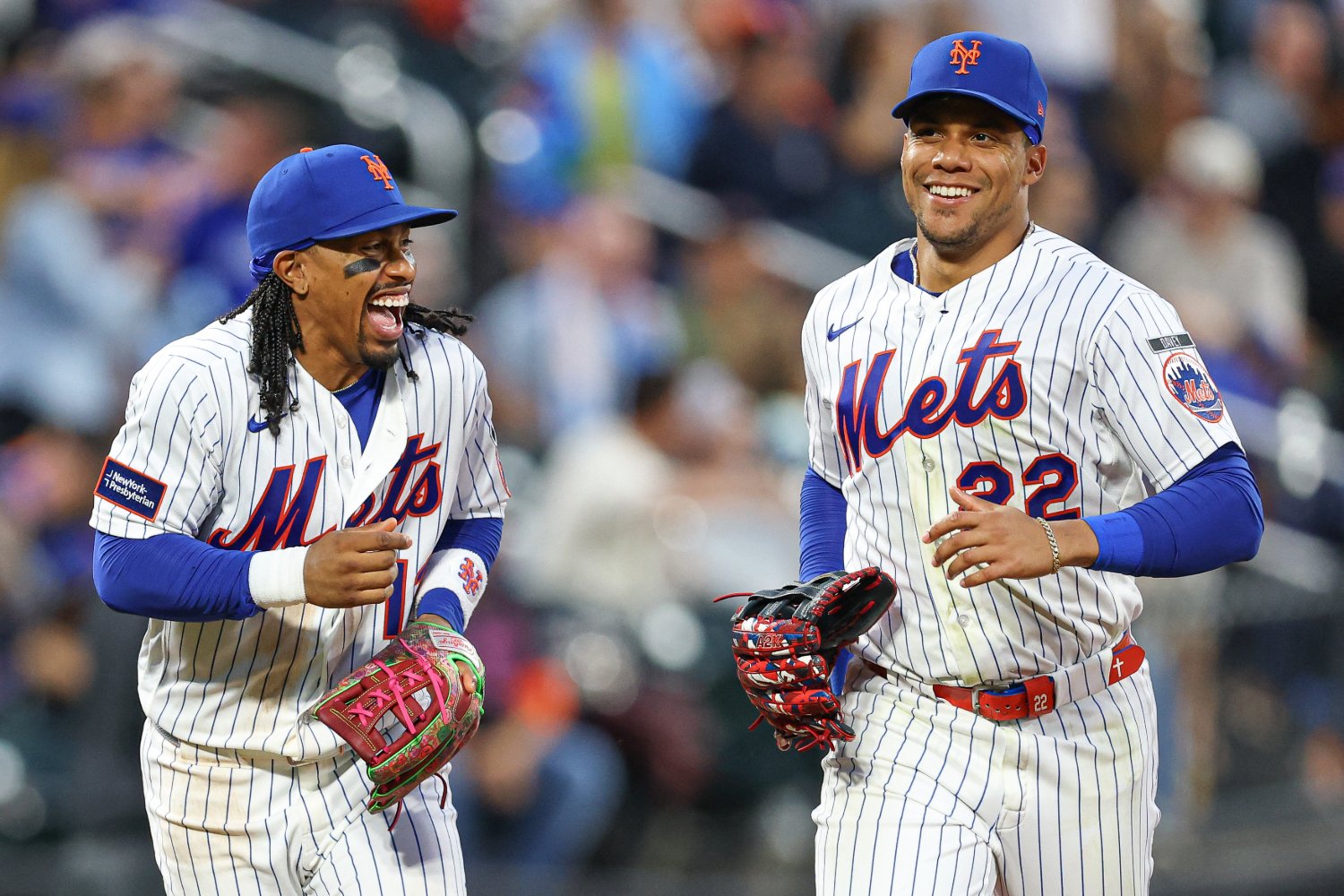 They say money can’t buy you happiness, love, friends, and, apparently, pennants. Outside of the Los Angeles Dodgers, who are back in the NLCS for the third consecutive season, the league’s most expensive teams either failed to make the postseason or have been eliminated prior to the championship series. Team Total Payroll Allocations Wins Cost per Win NYM $346,736,805 74 $4,685,633 LAD $339,319,244 100 $3,393,192 NYY $308,336,780 93 $3,315,449 PHI $291,951,676 88 $3,317,633 TOR $276,130,678 79 $3,495,325 ATL $263,462,438 94 $2,802,792 CHC $249,319,956 89 $2,801,348 HOU $239,763,783 81 $2,960,047 SD $226,252,714 91 $2,486,294 BOS $207,988,016 87 $2,390,667 DET $202,081,991 76 $2,658,974 ARI $192,670,027 86 $2,240,349 TEX $191,262,798 80 $2,390,785 SF $190,174,131 65 $2,925,756 LAA $182,509,023 62 $2,943,694 SEA $169,556,014 76 $2,231,000 BAL $167,039,211 79 $2,114,420 KC $150,429,892 69 $2,180,143 MIL $146,206,320 103 $1,419,479 CIN $128,223,748 75 $1,709,650 COL $121,526,750 58 $2,095,289 MIN $115,748,036 77 $1,503,221 PIT $106,728,501 82 $1,301,567 CHW $103,330,141 84 $1,230,121 WSH $101,639,888 77 $1,319,999 ATH $98,948,812 64 $1,546,075 STL $96,396,498 77 $1,251,903 TB $95,615,469 98 $975,668 MIA $83,298,123 80 $1,041,227 CLE $74,459,014 85 $875,988 While this isn’t the topic of this article, just know that if the owners lock the players out for a salary cap, it isn’t about competitive balance. The linear correlation between total payroll and wins in 2026 was 0.299, which is very weak. Now, none of this has stopped people from trolling the Mets, who, for the low, low price of $346 million, won 74 games. Their $4.685 million per win was by far the highest in the league, and the supposed culprits of this extreme inefficiency were none other than Juan Soto and Francisco Lindor. When a team this expensive fails this spectacularly, it’s easy to blame the highest earners, but that’s not exactly what went wrong with the 2026 Mets. That being said, Lindor and Soto aren’t blameless; the pair earned a combined $95.975 million and produced a measly 5.5 fWAR. However, that had far more to do with injury. If Soto and Lindor had hit 158 games played, instead of 111 and 105 respectively, they would have combined for 7.72 fWAR if they had played at their seasonal fWAR pace. When you throw Bo Bichette in the mix, who earned $42 million and produced 1.9 fWAR, things do get worse. All told, the Mets’ three highest earners took home $137.975 million in salary and produced 7.2 fWAR. Player Salary WAR G PA WAR/158G WAR/600PA WAR-Blend Juan Soto $61,875,000 3.1 111 482 4.41 3.86 4.14 Bo Bichette $42,000,000 1.9 160 696 1.88 1.64 1.76 Francisco Lindor $34,100,000 2.2 105 469 3.31 2.81 3.06 Totals $137,975,000 7.2 376 1647 9.60 8.31 8.96 Stars need to be stars, and the Mets’ three position-player stars fell short because of injury in Lindor and Soto’s case and underperformance in Bichette’s. But that’s not why the Mets won 74 games despite a $350 million payroll. What doomed the Mets was that their middle class of earners absolutely stunk. The Mets had six players who earned between $10 million and $20 million, for a total of $116.112 million in salary. That half-dozen cohort combined to produce an unfathomable -0.2 fWAR. Player Salary WAR Marcus Semien $26,000,000 -0.5 Sean Manaea $25,000,000 1.0 Luis Robert Jr. $17,112,299 0.5 Devin Williams $17,000,000 0.8 Jorge Polanco $17,000,000 -1.4 Kodai Senga $14,000,000 -0.6 Total $116,112,299 -0.2 Obviously, Jorge Polanco’s -1.4 fWAR looms large, but when Sean Manaea’s 1.0 fWAR leads the pack, this level of putridness is still a group effort. While the Mets’ three highest earners have received the most criticism, their average of $19.163 million per fWAR looks like a downright bargain compared to these laggards. If the Mets’ middle earners had produced at that allegedly reprehensible pace, they would have combined for an fWAR of 6.06. To put in perspective how much damage the dismal half-dozen caused, the Mets spent $32.68 million on players who didn’t play for them. Somehow, some way, that money led to more fWAR. If you combine that dead money with their vengeful zombie money, the Mets spent $148.8 million for -0.2 fWAR. Now, nothing we've discussed has been an efficient use of dollars, but it's clear that the Mets’ season didn’t end in disaster solely because Juan Soto and Francisco Lindor stunk. The main reason the Mets fell short of their financial expenditures is that their middle class collapsed, and their stars weren’t bright enough to offset it. On the bright-ish side, the Mets’ lower earners were actually relatively productive. Among players who earned between $1 million and $9.9 million, that group of 13 produced 10.6 fWAR for a total cost of $53.4 million. And the 21 players who took home less than $1 million racked up 13.8 fWAR for $13.5 million. Now, the pre-arbitration and arbitration system is specifically designed to churn out value production—hence the complete farce that a salary cap has much to do about competitive balance—but the Mets did solidly here, which portends a brighter future. Nolan McLean, Carson Benge, A.J. Ewing, and Christian Scott, who accounted for 11.9 of their sub-million 13.8 fWAR, won’t be cheap forever, but they will be cheap for the next three to four seasons. With continued growth, a bounce back from their stars, and hopefully a rebuilt middle class, the Mets can put their financial resources to good use, instead of burning a mountain of cash like they're the Joker in The Dark Knight.
 -
Image courtesy of Vincent Carchietta-Imagn Images They say money can’t buy you happiness, love, friends, and, apparently, pennants. Outside of the Los Angeles Dodgers, who are back in the NLCS for the third consecutive season, the league’s most expensive teams either failed to make the postseason or have been eliminated prior to the championship series. Team Total Payroll Allocations Wins Cost per Win NYM $346,736,805 74 $4,685,633 LAD $339,319,244 100 $3,393,192 NYY $308,336,780 93 $3,315,449 PHI $291,951,676 88 $3,317,633 TOR $276,130,678 79 $3,495,325 ATL $263,462,438 94 $2,802,792 CHC $249,319,956 89 $2,801,348 HOU $239,763,783 81 $2,960,047 SD $226,252,714 91 $2,486,294 BOS $207,988,016 87 $2,390,667 DET $202,081,991 76 $2,658,974 ARI $192,670,027 86 $2,240,349 TEX $191,262,798 80 $2,390,785 SF $190,174,131 65 $2,925,756 LAA $182,509,023 62 $2,943,694 SEA $169,556,014 76 $2,231,000 BAL $167,039,211 79 $2,114,420 KC $150,429,892 69 $2,180,143 MIL $146,206,320 103 $1,419,479 CIN $128,223,748 75 $1,709,650 COL $121,526,750 58 $2,095,289 MIN $115,748,036 77 $1,503,221 PIT $106,728,501 82 $1,301,567 CHW $103,330,141 84 $1,230,121 WSH $101,639,888 77 $1,319,999 ATH $98,948,812 64 $1,546,075 STL $96,396,498 77 $1,251,903 TB $95,615,469 98 $975,668 MIA $83,298,123 80 $1,041,227 CLE $74,459,014 85 $875,988 While this isn’t the topic of this article, just know that if the owners lock the players out for a salary cap, it isn’t about competitive balance. The linear correlation between total payroll and wins in 2026 was 0.299, which is very weak. Now, none of this has stopped people from trolling the Mets, who, for the low, low price of $346 million, won 74 games. Their $4.685 million per win was by far the highest in the league, and the supposed culprits of this extreme inefficiency were none other than Juan Soto and Francisco Lindor. When a team this expensive fails this spectacularly, it’s easy to blame the highest earners, but that’s not exactly what went wrong with the 2026 Mets. That being said, Lindor and Soto aren’t blameless; the pair earned a combined $95.975 million and produced a measly 5.5 fWAR. However, that had far more to do with injury. If Soto and Lindor had hit 158 games played, instead of 111 and 105 respectively, they would have combined for 7.72 fWAR if they had played at their seasonal fWAR pace. When you throw Bo Bichette in the mix, who earned $42 million and produced 1.9 fWAR, things do get worse. All told, the Mets’ three highest earners took home $137.975 million in salary and produced 7.2 fWAR. Player Salary WAR G PA WAR/158G WAR/600PA WAR-Blend Juan Soto $61,875,000 3.1 111 482 4.41 3.86 4.14 Bo Bichette $42,000,000 1.9 160 696 1.88 1.64 1.76 Francisco Lindor $34,100,000 2.2 105 469 3.31 2.81 3.06 Totals $137,975,000 7.2 376 1647 9.60 8.31 8.96 Stars need to be stars, and the Mets’ three position-player stars fell short because of injury in Lindor and Soto’s case and underperformance in Bichette’s. But that’s not why the Mets won 74 games despite a $350 million payroll. What doomed the Mets was that their middle class of earners absolutely stunk. The Mets had six players who earned between $10 million and $20 million, for a total of $116.112 million in salary. That half-dozen cohort combined to produce an unfathomable -0.2 fWAR. Player Salary WAR Marcus Semien $26,000,000 -0.5 Sean Manaea $25,000,000 1.0 Luis Robert Jr. $17,112,299 0.5 Devin Williams $17,000,000 0.8 Jorge Polanco $17,000,000 -1.4 Kodai Senga $14,000,000 -0.6 Total $116,112,299 -0.2 Obviously, Jorge Polanco’s -1.4 fWAR looms large, but when Sean Manaea’s 1.0 fWAR leads the pack, this level of putridness is still a group effort. While the Mets’ three highest earners have received the most criticism, their average of $19.163 million per fWAR looks like a downright bargain compared to these laggards. If the Mets’ middle earners had produced at that allegedly reprehensible pace, they would have combined for an fWAR of 6.06. To put in perspective how much damage the dismal half-dozen caused, the Mets spent $32.68 million on players who didn’t play for them. Somehow, some way, that money led to more fWAR. If you combine that dead money with their vengeful zombie money, the Mets spent $148.8 million for -0.2 fWAR. Now, nothing we've discussed has been an efficient use of dollars, but it's clear that the Mets’ season didn’t end in disaster solely because Juan Soto and Francisco Lindor stunk. The main reason the Mets fell short of their financial expenditures is that their middle class collapsed, and their stars weren’t bright enough to offset it. On the bright-ish side, the Mets’ lower earners were actually relatively productive. Among players who earned between $1 million and $9.9 million, that group of 13 produced 10.6 fWAR for a total cost of $53.4 million. And the 21 players who took home less than $1 million racked up 13.8 fWAR for $13.5 million. Now, the pre-arbitration and arbitration system is specifically designed to churn out value production—hence the complete farce that a salary cap has much to do about competitive balance—but the Mets did solidly here, which portends a brighter future. Nolan McLean, Carson Benge, A.J. Ewing, and Christian Scott, who accounted for 11.9 of their sub-million 13.8 fWAR, won’t be cheap forever, but they will be cheap for the next three to four seasons. With continued growth, a bounce back from their stars, and hopefully a rebuilt middle class, the Mets can put their financial resources to good use, instead of burning a mountain of cash like they're the Joker in The Dark Knight. View full article
-
Image courtesy of Wendell Cruz-Imagn Images It’s usually not a good sign when your fans start actively cheering an opposing player, but that’s exactly where the 2026 New York Mets find themselves. Upon his return to Citi Field, the warm welcome Pete Alonso received is par for the course. If NBA teams will produce a "welcome back" montage for George Hill, then Alonso—who for seven seasons was at the heart of the Mets’ lineup, hit a franchise record 264 home runs, and slugged the to the 2024 National League Championship series—deserved a feature-length film. The thing is, Mets fans didn’t stop at a nice little ovation during his first plate appearance. They hoisted signs fit for Beatle-mania, booed when he was walked, and cheered so hard following a game-tying home run in the ninth inning that he, a visiting player, was granted a curtain call. But underneath the surface of this well-deserved love fest, another side came out. Alonso, who departed last fall in free agency, has come to embody fan resentment towards Mets’ President of Baseball Operations David Stearns. David Stearns was always walking into a difficult situation when he took over the Mets in the fall of 2023. His work in Milwaukee, where he built a perennial playoff machine with limited financial resources, gave him an aura of invincibility, and Mets owner Steve Cohen’s insistence on spending aggressively to chase a World Series raised expectations to a point where failure was always the most likely outcome. While not saving the Polar Bear has become the avatar of fan angst towards Stearns, the original sin was Cohen’s brash, unapologetic stance toward spending. Payroll is a superpower in baseball, but it isn’t a panacea. And while Cohen has spared no expense on the roster since taking over in 2020, it created an urgency for success that was antithetical to Stearns’ work in Milwaukee. In theory, bringing an executive so skilled at squeezing the most out of modest budgets and a firehouse of finances together seemed like a match made in heaven. But in practice, it’s a bit of oil and water. This isn’t to absolve Stearns of his work, but it is important context. He made his mark by creating an organizational infrastructure capable of continuously spitting out competent major league talent, which Milwaukee is still benefitting from, and then he was thrust into a win-now situation. As they say, Rome wasn’t built in a day, but after three seasons, it’s fair to ask: has Stearns laid the groundwork for the behemoth Mets fans were promised, or will the barbarians sack the city? B.S. (Before Stearns): 2023 Front offices are never granted a clean slate. Whatever messes the previous regime made, they have to clean up or wait out. The 2023 Mets followed up a 101-win campaign with a 75-87 stinker. They had the third-oldest average position player age (28.9) and the oldest pitcher age (31.9) in the National League. Simply put, Stearns inherited a morbidly expensive, geriatric roster that would need time to fully be flushed out. To make matters worse, the Mets’ signings of Justin Verlander and Max Scherzer to massive short-term deals followed them into 2024. In an effort to land better prospects when pulling the plug on 2023, the Mets paid down a combined $59.16 million of the pair’s 2024 salary. Upon taking the job, Stearns was saddled with an old, expensive roster, with some of its financial might tied behind its back, not to mention a mediocre minor-league system. It was far from an impossible situation, but the internal evaluation was almost certainly to tread water at the major-league level while the developmental infrastructure was built out. 2024: The Year Everything Went Right Look, sometimes a plan goes horribly right. The Mets called 2024 a bridge year and acted like it. Their offseason saw them sign 12 veteran free agents ostensibly to one-year deals, plus a host more to minor-league contracts. The lone exception to the one-year pact plan was Sean Manaea’s two-year deal, but even then the second year was a player option. Stocking up on bulk arms (Manaea, Luis Severino), middle relievers (Jake Diekman, Adam Ottavino, Jorge Lopez), and veteran stop-gaps (Harrison Bader, J.D. Martinez) isn’t particularly exciting, but they’ll keep the lights on and the powder dry. It shouldn’t be glossed over that the 2023-24 free agent class had Shohei Ohtani and Yoshinobu Yamamoto, which raises the question why the Mets weren’t more aggressive in their pursuit of true difference makers. Well, unfortunately, the Dodgers exist. They too have incredible financial resources, were coming off a 100-win season, and are geographically over 2,500 miles closer to Japan. The Mets were probably never seriously considered by either. That being said, the rest of the 2023-24 free agent class was pretty good. Excluding Aaron Nola, the Mets could have targeted Cody Bellinger, Sony Gray, Blake Snell, Matt Chapman, Shota Imanaga, Seth Lugo, Josh Hader, and Jung Hoo Lee. All of them came with their own question marks, but they either signed for short-term deals or had annual average values under $20 million. Unfortunately, the Mets’ lack of free agent fireworks didn’t doom them to a gap year. After a 22-33 start and a players only meeting, the Mets closed the season on a 67-40 run. They made the playoffs and then knocked off the Brewers and Phillies to make it to the NL Championship series where they would eventually lose to the Dodgers. For a gap year, it was perfect, but not entirely. The Mets were clearly, obviously in the early stages of reorienting their roster towards the future, and 2024 made them look like they were on the doorstep of a title. However, they still had the second oldest average position player (30.0) and pitcher age (31.0) in the National League and benefitted from some pretty unsustainable fortune. Three of their five starting pitchers made 30-plus starts, the four who hit 20-plus starts all had ERAs that beat their FIPs, and they got a 3.0 WAR season from Jose Iglesias, who had signed a minor-league deal to bolster their depth. The problem with lightning in a bottle is it doesn’t stay there. 2025: The Start of the Collapse The Mets entered 2025 as real contenders. They were coming off a fantastic run, returned a large chunk of the roster, added some guy named Juan Soto, and then got off to a fantastic start. On June 12, the Mets were 45-25, and looked poised to challenge the Dodgers for National League supremacy. Unfortunately, the wheels completely fell off from that moment on. They limped to a 38-56 finish, and missed the playoffs due to a tie breaker with the Cincinnati Reds. The reason for their complete and utter capitulation is as varied as it is mysterious, but a lot of it came down to bad luck. They had the run differential of an 86-76 team, and finished the season with the sixth-best position player WAR (28.1), tenth-best pitcher WAR (17.1), and fifth-best overall WAR (45.2), according to Fangraphs. Wins above replacement (WAR) has a very strong correlation to wins, hence the name, and the Mets underperformed their underlying production by a massive margin. Among teams with 40+ total team WAR, the lowest win total, excluding the Mets, were the Red Sox’s 89. Using a linear forecast model, the Mets underperformed their expected win total, based on WAR, by -8.6, the second largest underperformance in the league. Simply put, the front office built a very strong team that got ravaged by the baseball gods. Biggest WAR Underperformers 2025 Rk Team WAR (Pitch) WAR (Position) Total WAR Wins WAR Forecast Wins Forecast Wins - Wins 1 MIN 15.5 16.2 31.7 70 79.54 -9.54 2 NYM 17.1 28.1 45.2 83 91.60 -8.60 3 CHW 10.6 6.5 17.1 60 66.49 -6.49 4 COL 0.4 -3.1 -2.7 43 48.80 -5.80 5 ARI 9.5 27.2 36.7 80 84.01 -4.01 6 ATL 11.7 19.7 31.4 76 79.27 -3.27 7 PIT 19.4 5.7 25.1 71 73.64 -2.64 8 NYY 16.7 33.5 50.2 94 96.07 -2.07 9 LAD 20.2 28.8 49 93 95.00 -2.00 10 BOS 18.1 26.3 44.4 89 90.89 -1.89 A common refrain you’ll hear fans say when a team underperforms their underlying metrics is you can’t build a team in a spreadsheet. To that I say, “You only say that when things go wrong.” Every MLB team is built using statistics. Sometimes things go wrong, sometimes things go right, but baseball is an exceedingly random sport played on the finest of margins. The 2025 Mets were just a casualty of uncertainty, but 2026 has been a whole different ballgame. 2026: The Year Everything Went Wrong Giving the front office a mulligan for 2025 would be appropriate. The team was legitimately good, and in most worlds they coast to the playoffs. Unfortunately, the 2026 team has actually been awful, and few of Stearns' offseason moves have worked out. The signing of Bo Bichette has been an unmitigated disaster, Marcus Semien looks as cooked as burnt toast, and Pete Alonso has been exceptional in Baltimore. These three decisions have completely colored Stearns' tenure, but it’s probably not fair to say they were all bad ideas. First and foremost, Bichette’s struggles came completely out of nowhere. He has a career wRC+ of 118, was coming off a season with a wRC+ of 134, and was entering his age-28 season. Every team, finances permitting, would have signed him to that exact same three-year, $126 million deal the Mets did. His second-half wRC+ of 110 offers hope that should he exercise his player option the Mets will have the player they thought they signed. Trading Brandon Nimmo for Semien, and subsequently offloading Jeff McNeil, was about cleaning up the present and future of their finances while offering an opening for their young outfielders. Player Age (2026) 2026 2027 2028 2029 2030 Marcus Semien 35 $26,000,000 $26,000,000 $20,000,000 Brandon Nimmo 33 $20,500,000 $20,500,000 $20,500,000 $20,500,000 $20,500,000 Jeff McNeil 34 $15,750,000 $2,000,00 (Buy Out) With Nimmo out of the way, the Mets were able to promote Carson Benge—more on him later—and it also opened an avenue for A.J. Ewing in center. The hope that Semien still had something in the tank was a real risk, but his deal will be much more palatable to move or eat than Nimmo’s would have been. Unfortunately, letting Pete Alonso walk and replacing him with Jorge Polanco and the hope that Mark Vientos would stop being Mark Vientos has been an actual disaster. Committing $155 million to a first base, bat-only slugger entering their age-31 season is scary. The list of generationally awful contracts that have gone to players in that mold is a who’s who of regret: Albert Pujols, Miguel Cabrera, Chris Davis, and Ryan Howard, to name a few. On its face, Stearns decision is defensible, but the way it has played out has been about as bad as possible. Alonso has been fantastic this season, Polanco has either been injured and/or awful, and Vientos’ fantastic 2024 is looking like a total fluke. By the end of Alonso’s deal, Stearns will probably look vindicated, because he didn’t balk at $31 million in 2026, he balked at $31 million in 2030, but he’ll have to make it that far. Over Stearns' first three seasons at the helm, the on-field product has actually been solid. The problem is the implied trajectory. Going from 89 to 83 to 69 (and counting) wins does not inspire confidence that he is improving the team. Of course, that fails to acknowledge that MLB organizations are about more than the big-league club. The Hidden Rebuild Stearns was fundamentally brought in to rebuild the Mets. The hope was he could overhaul the Mets’ amateur scouting and development systems, while the big-league club stayed competitive, but he faced two serious challenges. The first was that the team he inherited was incredibly old, and the second was that the Mets' top prospects from the previous regime have largely faltered. Stearns has done an excellent job bringing the average age of the roster down. They were one of the oldest teams in the National League his first two seasons, but currently rank eighth in average position player age and fifth in average pitcher age. Considering the moves made at the deadline, there’s a good chance the team is even younger in 2027, and if it isn’t, that means veteran reinforcements. Season 2023 2024 2025 2026 Ave Pitcher Age 31.9 31 30.7 30.2 Ave Position Age 28.9 30 28.9 27.7 The youth movement might be underway, but the stagnation of Brett Baty and Francisco Alvarez has set the Mets back substantially in the short term. When Stearns took over in the fall of 2023, Baty was entering his age-25 season and Alvarez his age-23 campaign. They were supposed to be the heirs to the rapidly aging core, but both have struggled to make an impact. Since 2024, Alvarez has produced a total of 3.0 bWAR, at an average of 1.7 bWAR per 162 games, while Baty comes in at 4.3 for an average of 2.2 per 162 games. However, 3.0 of Baty’s bWAR came in 2025 alone, which means he’s been basically a replacement level player in two of the past three seasons. The truth is most prospects, even top ones, don’t become MVPs and All-Stars, but Baty at one point had a 55 grade and Alvarez a 60. Their current production, in particular Alvarez’s, is running well short of those grades, and it temporarily collapsed the Mets’ bridge to the future. This context is important because Stearns first draft was in 2024, which means few of his front office’s hand-picked players have had enough time to reach the bigs, except for one. The first pick Stearns made as the head of the Mets was Carson Benge, which seems to be working out pretty well. Time will tell about his other picks, but he has been able to build up the Mets’ farm system, without access to top tier draft picks. Farm System Overview Draft Picks Season Overall Rank Farm Value (in millions) Top-30 Picks Top-50 Picks Top-75 Picks Top-100 Picks Top-150 Picks 2023 6 $280 0 1 2 3 7 2024 16 $178 1 2 2 3 5 2025 7 $242 0 1 1 1 3 2026 6 $492 1 1 1 2 3 *Fangraphs organizational prospect rankings and value. In 2026 they changed their prospect valuation model The Mets have had a grand total of 11 picks within the top 150 since 2024, but have still managed to build and maintain a top-10 farm system. Part of that is down to the players he inherited, but they have done well in the international market, trades, and improved internal development. Stearns might not have drafted Nolan McLean, but he went from a third-round pick to the top pitching prospect under his watch. All told, Stearns has brought in six of the Mets current top-10 prospects, and dramatically improved the stock of countless pitchers already in the organization. So, while the big-league club has underperformed, the rest of the organization looks far healthier. The Blueprint and Finances However, the real question probably isn’t: Does David Stearns deserve to keep his job? The question is: What was his job? If Stearns was brought in to try and win a championship right away, then he’s failed. However, if his job was to build the infrastructure to consistently churn out major-league talent, then everything appears to be on track. That’s probably not a satisfying answer, but it’s the exact blueprint the Dodgers used to become the best team in baseball. They lost their cheap-o owners, brought in an Ivy league wiz to build an exceptional baseball development infrastructure, and then weaponized their financial resources to push them over the top. It’s easy to forget due to their decade-long run of dominance, but it took the Dodgers eight seasons to finally win a World Series. And while they were a perennial playoff team from the jump, they did have one sizable advantage over the Stearns-era Mets: money. When the Dodgers sold to Guggenheim Baseball Management in 2012, they had a payroll of $116.7 million, the ninth-highest in baseball, and over $100 million short of the Yankees' league-leading figure of $225.6 million. By 2013 (that’s one offseason for those that are counting) the Dodgers led baseball in payroll at $236.7 million. For as much as Cohen has talked about spending, and he has, Stearns never had the financial runway to completely remake the Mets' roster through cash. Season Total Salary RK 2023 $347,949,991 1 2024 $322,960,494 1 2025 $342,303,011 2 2026 $344,556,436 2 Truthfully, any team with a $300 million payroll should always be a playoff quality team, which makes 2026 such a disappointing, near-inexcusable season. But Stearns has positioned the Mets to have a ton of resources to quickly rebuild the squad for 202, assuming MLB doesn’t get their wish with a salary cap. Right now, the Mets have $267.7 million in guaranteed salary for 2027, which gives them over $70 million to add to the roster, should they maintain their current spending levels. The 2026-27 free agent class gets pretty thin after Tarik Skubal, but it is heavy on quality veteran arms. On top of that, the Mets’ long-term salary situation is pretty rosy. The only guaranteed contracts on their books for 2029 are Juan Soto and Francisco Lindor, two future Hall of Famers. While this doesn’t include any of their young core, they’ll all still be going through the arbitration process, meaning the Mets will be serious players to add high-end talent for the rest of the decade. Contrast that with the Dodgers, who have $238.5 million committed to seven players who will all be well into their 30s in 2029. While I completely understand the current fan sentiment towards David Stearns, it conveniently ignores all of the good he has done. The organization is in a much healthier place than when he took over. Their MiLB affiliates and development pipeline looks far better and their books are relatively clean going forward. Sure, he let Pete Alonso walk in free agency, but Alonso’s production wouldn’t have turned this team into a playoff team. Every front office makes mistakes. Stearns has made his. But he finally has the Mets looking like a sleeping giant ready to wake. View full article
-
Full Analysis of David Stearns' Tenure Proves Mets Were Right To Hire Him
N.B. Lindberg posted an article in Mets
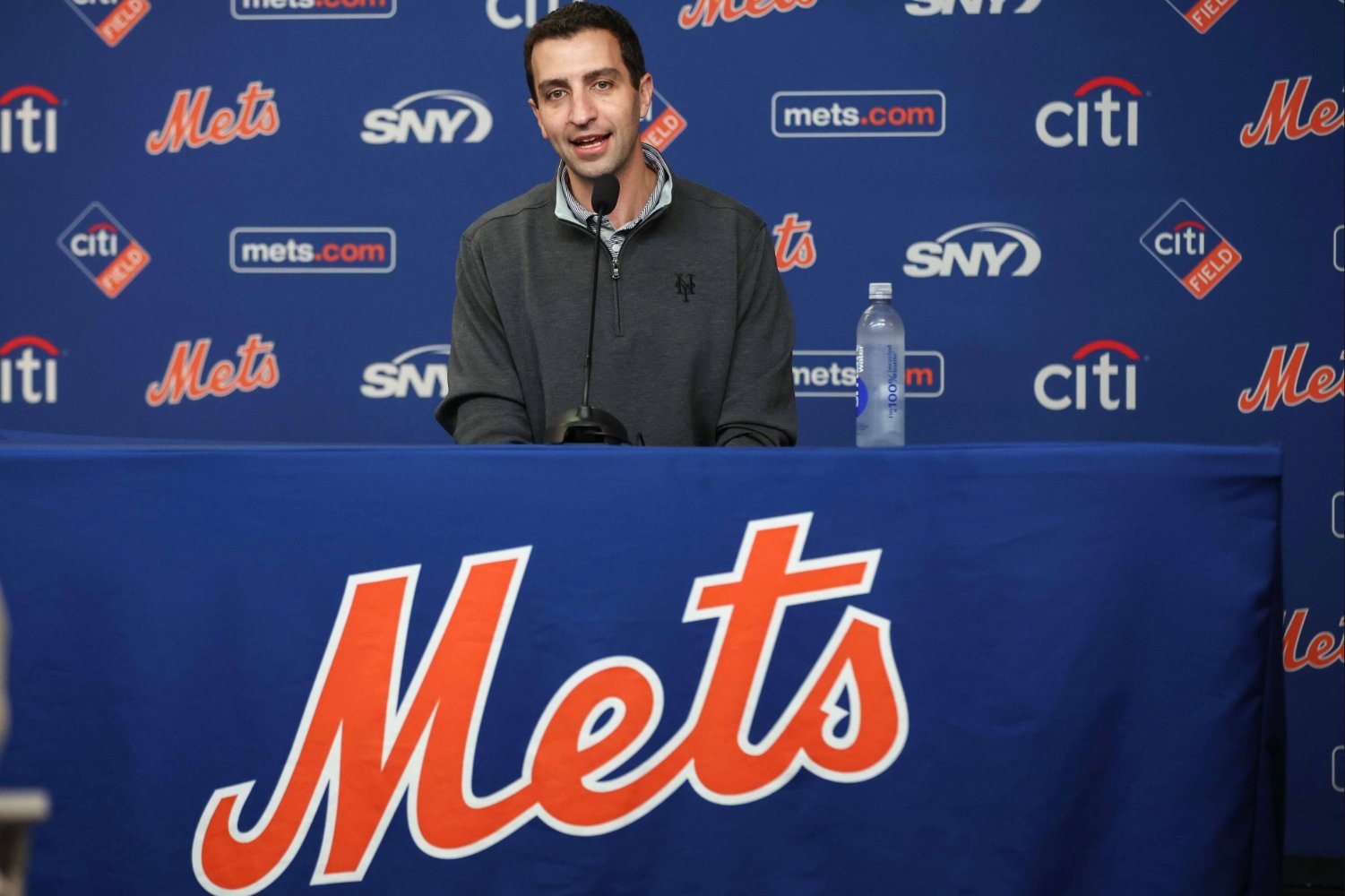 It’s usually not a good sign when your fans start actively cheering an opposing player, but that’s exactly where the 2026 New York Mets find themselves. Upon his return to Citi Field, the warm welcome Pete Alonso received is par for the course. If NBA teams will produce a "welcome back" montage for George Hill, then Alonso—who for seven seasons was at the heart of the Mets’ lineup, hit a franchise record 264 home runs, and slugged the to the 2024 National League Championship series—deserved a feature-length film. The thing is, Mets fans didn’t stop at a nice little ovation during his first plate appearance. They hoisted signs fit for Beatle-mania, booed when he was walked, and cheered so hard following a game-tying home run in the ninth inning that he, a visiting player, was granted a curtain call. But underneath the surface of this well-deserved love fest, another side came out. Alonso, who departed last fall in free agency, has come to embody fan resentment towards Mets’ President of Baseball Operations David Stearns. David Stearns was always walking into a difficult situation when he took over the Mets in the fall of 2023. His work in Milwaukee, where he built a perennial playoff machine with limited financial resources, gave him an aura of invincibility, and Mets owner Steve Cohen’s insistence on spending aggressively to chase a World Series raised expectations to a point where failure was always the most likely outcome. While not saving the Polar Bear has become the avatar of fan angst towards Stearns, the original sin was Cohen’s brash, unapologetic stance toward spending. Payroll is a superpower in baseball, but it isn’t a panacea. And while Cohen has spared no expense on the roster since taking over in 2020, it created an urgency for success that was antithetical to Stearns’ work in Milwaukee. In theory, bringing an executive so skilled at squeezing the most out of modest budgets and a firehouse of finances together seemed like a match made in heaven. But in practice, it’s a bit of oil and water. This isn’t to absolve Stearns of his work, but it is important context. He made his mark by creating an organizational infrastructure capable of continuously spitting out competent major league talent, which Milwaukee is still benefitting from, and then he was thrust into a win-now situation. As they say, Rome wasn’t built in a day, but after three seasons, it’s fair to ask: has Stearns laid the groundwork for the behemoth Mets fans were promised, or will the barbarians sack the city? B.S. (Before Stearns): 2023 Front offices are never granted a clean slate. Whatever messes the previous regime made, they have to clean up or wait out. The 2023 Mets followed up a 101-win campaign with a 75-87 stinker. They had the third-oldest average position player age (28.9) and the oldest pitcher age (31.9) in the National League. Simply put, Stearns inherited a morbidly expensive, geriatric roster that would need time to fully be flushed out. To make matters worse, the Mets’ signings of Justin Verlander and Max Scherzer to massive short-term deals followed them into 2024. In an effort to land better prospects when pulling the plug on 2023, the Mets paid down a combined $59.16 million of the pair’s 2024 salary. Upon taking the job, Stearns was saddled with an old, expensive roster, with some of its financial might tied behind its back, not to mention a mediocre minor-league system. It was far from an impossible situation, but the internal evaluation was almost certainly to tread water at the major-league level while the developmental infrastructure was built out. 2024: The Year Everything Went Right Look, sometimes a plan goes horribly right. The Mets called 2024 a bridge year and acted like it. Their offseason saw them sign 12 veteran free agents ostensibly to one-year deals, plus a host more to minor-league contracts. The lone exception to the one-year pact plan was Sean Manaea’s two-year deal, but even then the second year was a player option. Stocking up on bulk arms (Manaea, Luis Severino), middle relievers (Jake Diekman, Adam Ottavino, Jorge Lopez), and veteran stop-gaps (Harrison Bader, J.D. Martinez) isn’t particularly exciting, but they’ll keep the lights on and the powder dry. It shouldn’t be glossed over that the 2023-24 free agent class had Shohei Ohtani and Yoshinobu Yamamoto, which raises the question why the Mets weren’t more aggressive in their pursuit of true difference makers. Well, unfortunately, the Dodgers exist. They too have incredible financial resources, were coming off a 100-win season, and are geographically over 2,500 miles closer to Japan. The Mets were probably never seriously considered by either. That being said, the rest of the 2023-24 free agent class was pretty good. Excluding Aaron Nola, the Mets could have targeted Cody Bellinger, Sony Gray, Blake Snell, Matt Chapman, Shota Imanaga, Seth Lugo, Josh Hader, and Jung Hoo Lee. All of them came with their own question marks, but they either signed for short-term deals or had annual average values under $20 million. Unfortunately, the Mets’ lack of free agent fireworks didn’t doom them to a gap year. After a 22-33 start and a players only meeting, the Mets closed the season on a 67-40 run. They made the playoffs and then knocked off the Brewers and Phillies to make it to the NL Championship series where they would eventually lose to the Dodgers. For a gap year, it was perfect, but not entirely. The Mets were clearly, obviously in the early stages of reorienting their roster towards the future, and 2024 made them look like they were on the doorstep of a title. However, they still had the second oldest average position player (30.0) and pitcher age (31.0) in the National League and benefitted from some pretty unsustainable fortune. Three of their five starting pitchers made 30-plus starts, the four who hit 20-plus starts all had ERAs that beat their FIPs, and they got a 3.0 WAR season from Jose Iglesias, who had signed a minor-league deal to bolster their depth. The problem with lightning in a bottle is it doesn’t stay there. 2025: The Start of the Collapse The Mets entered 2025 as real contenders. They were coming off a fantastic run, returned a large chunk of the roster, added some guy named Juan Soto, and then got off to a fantastic start. On June 12, the Mets were 45-25, and looked poised to challenge the Dodgers for National League supremacy. Unfortunately, the wheels completely fell off from that moment on. They limped to a 38-56 finish, and missed the playoffs due to a tie breaker with the Cincinnati Reds. The reason for their complete and utter capitulation is as varied as it is mysterious, but a lot of it came down to bad luck. They had the run differential of an 86-76 team, and finished the season with the sixth-best position player WAR (28.1), tenth-best pitcher WAR (17.1), and fifth-best overall WAR (45.2), according to Fangraphs. Wins above replacement (WAR) has a very strong correlation to wins, hence the name, and the Mets underperformed their underlying production by a massive margin. Among teams with 40+ total team WAR, the lowest win total, excluding the Mets, were the Red Sox’s 89. Using a linear forecast model, the Mets underperformed their expected win total, based on WAR, by -8.6, the second largest underperformance in the league. Simply put, the front office built a very strong team that got ravaged by the baseball gods. Biggest WAR Underperformers 2025 Rk Team WAR (Pitch) WAR (Position) Total WAR Wins WAR Forecast Wins Forecast Wins - Wins 1 MIN 15.5 16.2 31.7 70 79.54 -9.54 2 NYM 17.1 28.1 45.2 83 91.60 -8.60 3 CHW 10.6 6.5 17.1 60 66.49 -6.49 4 COL 0.4 -3.1 -2.7 43 48.80 -5.80 5 ARI 9.5 27.2 36.7 80 84.01 -4.01 6 ATL 11.7 19.7 31.4 76 79.27 -3.27 7 PIT 19.4 5.7 25.1 71 73.64 -2.64 8 NYY 16.7 33.5 50.2 94 96.07 -2.07 9 LAD 20.2 28.8 49 93 95.00 -2.00 10 BOS 18.1 26.3 44.4 89 90.89 -1.89 A common refrain you’ll hear fans say when a team underperforms their underlying metrics is you can’t build a team in a spreadsheet. To that I say, “You only say that when things go wrong.” Every MLB team is built using statistics. Sometimes things go wrong, sometimes things go right, but baseball is an exceedingly random sport played on the finest of margins. The 2025 Mets were just a casualty of uncertainty, but 2026 has been a whole different ballgame. 2026: The Year Everything Went Wrong Giving the front office a mulligan for 2025 would be appropriate. The team was legitimately good, and in most worlds they coast to the playoffs. Unfortunately, the 2026 team has actually been awful, and few of Stearns' offseason moves have worked out. The signing of Bo Bichette has been an unmitigated disaster, Marcus Semien looks as cooked as burnt toast, and Pete Alonso has been exceptional in Baltimore. These three decisions have completely colored Stearns' tenure, but it’s probably not fair to say they were all bad ideas. First and foremost, Bichette’s struggles came completely out of nowhere. He has a career wRC+ of 118, was coming off a season with a wRC+ of 134, and was entering his age-28 season. Every team, finances permitting, would have signed him to that exact same three-year, $126 million deal the Mets did. His second-half wRC+ of 110 offers hope that should he exercise his player option the Mets will have the player they thought they signed. Trading Brandon Nimmo for Semien, and subsequently offloading Jeff McNeil, was about cleaning up the present and future of their finances while offering an opening for their young outfielders. Player Age (2026) 2026 2027 2028 2029 2030 Marcus Semien 35 $26,000,000 $26,000,000 $20,000,000 Brandon Nimmo 33 $20,500,000 $20,500,000 $20,500,000 $20,500,000 $20,500,000 Jeff McNeil 34 $15,750,000 $2,000,00 (Buy Out) With Nimmo out of the way, the Mets were able to promote Carson Benge—more on him later—and it also opened an avenue for A.J. Ewing in center. The hope that Semien still had something in the tank was a real risk, but his deal will be much more palatable to move or eat than Nimmo’s would have been. Unfortunately, letting Pete Alonso walk and replacing him with Jorge Polanco and the hope that Mark Vientos would stop being Mark Vientos has been an actual disaster. Committing $155 million to a first base, bat-only slugger entering their age-31 season is scary. The list of generationally awful contracts that have gone to players in that mold is a who’s who of regret: Albert Pujols, Miguel Cabrera, Chris Davis, and Ryan Howard, to name a few. On its face, Stearns decision is defensible, but the way it has played out has been about as bad as possible. Alonso has been fantastic this season, Polanco has either been injured and/or awful, and Vientos’ fantastic 2024 is looking like a total fluke. By the end of Alonso’s deal, Stearns will probably look vindicated, because he didn’t balk at $31 million in 2026, he balked at $31 million in 2030, but he’ll have to make it that far. Over Stearns' first three seasons at the helm, the on-field product has actually been solid. The problem is the implied trajectory. Going from 89 to 83 to 69 (and counting) wins does not inspire confidence that he is improving the team. Of course, that fails to acknowledge that MLB organizations are about more than the big-league club. The Hidden Rebuild Stearns was fundamentally brought in to rebuild the Mets. The hope was he could overhaul the Mets’ amateur scouting and development systems, while the big-league club stayed competitive, but he faced two serious challenges. The first was that the team he inherited was incredibly old, and the second was that the Mets' top prospects from the previous regime have largely faltered. Stearns has done an excellent job bringing the average age of the roster down. They were one of the oldest teams in the National League his first two seasons, but currently rank eighth in average position player age and fifth in average pitcher age. Considering the moves made at the deadline, there’s a good chance the team is even younger in 2027, and if it isn’t, that means veteran reinforcements. Season 2023 2024 2025 2026 Ave Pitcher Age 31.9 31 30.7 30.2 Ave Position Age 28.9 30 28.9 27.7 The youth movement might be underway, but the stagnation of Brett Baty and Francisco Alvarez has set the Mets back substantially in the short term. When Stearns took over in the fall of 2023, Baty was entering his age-25 season and Alvarez his age-23 campaign. They were supposed to be the heirs to the rapidly aging core, but both have struggled to make an impact. Since 2024, Alvarez has produced a total of 3.0 bWAR, at an average of 1.7 bWAR per 162 games, while Baty comes in at 4.3 for an average of 2.2 per 162 games. However, 3.0 of Baty’s bWAR came in 2025 alone, which means he’s been basically a replacement level player in two of the past three seasons. The truth is most prospects, even top ones, don’t become MVPs and All-Stars, but Baty at one point had a 55 grade and Alvarez a 60. Their current production, in particular Alvarez’s, is running well short of those grades, and it temporarily collapsed the Mets’ bridge to the future. This context is important because Stearns first draft was in 2024, which means few of his front office’s hand-picked players have had enough time to reach the bigs, except for one. The first pick Stearns made as the head of the Mets was Carson Benge, which seems to be working out pretty well. Time will tell about his other picks, but he has been able to build up the Mets’ farm system, without access to top tier draft picks. Farm System Overview Draft Picks Season Overall Rank Farm Value (in millions) Top-30 Picks Top-50 Picks Top-75 Picks Top-100 Picks Top-150 Picks 2023 6 $280 0 1 2 3 7 2024 16 $178 1 2 2 3 5 2025 7 $242 0 1 1 1 3 2026 6 $492 1 1 1 2 3 *Fangraphs organizational prospect rankings and value. In 2026 they changed their prospect valuation model The Mets have had a grand total of 11 picks within the top 150 since 2024, but have still managed to build and maintain a top-10 farm system. Part of that is down to the players he inherited, but they have done well in the international market, trades, and improved internal development. Stearns might not have drafted Nolan McLean, but he went from a third-round pick to the top pitching prospect under his watch. All told, Stearns has brought in six of the Mets current top-10 prospects, and dramatically improved the stock of countless pitchers already in the organization. So, while the big-league club has underperformed, the rest of the organization looks far healthier. The Blueprint and Finances However, the real question probably isn’t: Does David Stearns deserve to keep his job? The question is: What was his job? If Stearns was brought in to try and win a championship right away, then he’s failed. However, if his job was to build the infrastructure to consistently churn out major-league talent, then everything appears to be on track. That’s probably not a satisfying answer, but it’s the exact blueprint the Dodgers used to become the best team in baseball. They lost their cheap-o owners, brought in an Ivy league wiz to build an exceptional baseball development infrastructure, and then weaponized their financial resources to push them over the top. It’s easy to forget due to their decade-long run of dominance, but it took the Dodgers eight seasons to finally win a World Series. And while they were a perennial playoff team from the jump, they did have one sizable advantage over the Stearns-era Mets: money. When the Dodgers sold to Guggenheim Baseball Management in 2012, they had a payroll of $116.7 million, the ninth-highest in baseball, and over $100 million short of the Yankees' league-leading figure of $225.6 million. By 2013 (that’s one offseason for those that are counting) the Dodgers led baseball in payroll at $236.7 million. For as much as Cohen has talked about spending, and he has, Stearns never had the financial runway to completely remake the Mets' roster through cash. Season Total Salary RK 2023 $347,949,991 1 2024 $322,960,494 1 2025 $342,303,011 2 2026 $344,556,436 2 Truthfully, any team with a $300 million payroll should always be a playoff quality team, which makes 2026 such a disappointing, near-inexcusable season. But Stearns has positioned the Mets to have a ton of resources to quickly rebuild the squad for 202, assuming MLB doesn’t get their wish with a salary cap. Right now, the Mets have $267.7 million in guaranteed salary for 2027, which gives them over $70 million to add to the roster, should they maintain their current spending levels. The 2026-27 free agent class gets pretty thin after Tarik Skubal, but it is heavy on quality veteran arms. On top of that, the Mets’ long-term salary situation is pretty rosy. The only guaranteed contracts on their books for 2029 are Juan Soto and Francisco Lindor, two future Hall of Famers. While this doesn’t include any of their young core, they’ll all still be going through the arbitration process, meaning the Mets will be serious players to add high-end talent for the rest of the decade. Contrast that with the Dodgers, who have $238.5 million committed to seven players who will all be well into their 30s in 2029. While I completely understand the current fan sentiment towards David Stearns, it conveniently ignores all of the good he has done. The organization is in a much healthier place than when he took over. Their MiLB affiliates and development pipeline looks far better and their books are relatively clean going forward. Sure, he let Pete Alonso walk in free agency, but Alonso’s production wouldn’t have turned this team into a playoff team. Every front office makes mistakes. Stearns has made his. But he finally has the Mets looking like a sleeping giant ready to wake.
 -
Image courtesy of © Nathan Ray Seebeck-Imagn Images Fresh off writing the New York Mets’ hitters of the month piece for August, an odd detail caught my eye: Bo Bichette had an excellent 135 wRC+ in August, but managed to produce a negative win probability added (WPA). This isn’t a cause for alarm, but it is interesting. Those stats (wRC+ and WPA) are strongly correlated because hitting well is good for winning, so I figured further investigation was necessary. There are a few ways a hitter can hit well without helping his team’s chances of winning. The first is to rarely come up with runners on base or in scoring position. As great as a leadoff double is, the single that knocks them in improves your chances of winning more. The second is doing damage when the game is not close. If you’re up eight or down eight in the late innings, even a grand slam doesn’t change your odds all that much. The third is not having many leverage opportunities. And somehow, Bichette managed a trifecta. Of Bichette’s 109 plate appearances in August, 69 came with no runners on, and only 23 came with runners in scoring position. To make matters worse, Bichette saved his slugging for when the bases were empty. All four of his home runs, five of his seven doubles, and his lone triple came with no runners on. Bo Bichette Bases Empty Men On Total PA 69 40 109 1B 7 10 17 2B 5 2 7 3B 1 0 1 HR 4 0 4 BB 6 3 9 SO 14 6 20 Ave 0.270 0.324 0.290 OBP 0.333 0.375 0.349 Slugging 0.571 0.378 0.500 BB% 8.70% 7.50% 8.26% K% 20.29% 15.00% 18.35% On top of having no one on, three of Bichette’s August home runs came with the Mets up by at least three runs. And his lone home run to break a deadlock was in the first inning, when a 1-0 lead is the most vulnerable. Finally, Bichette’s average Leverage Index (0.89) for the month ranked 178th out of 190 qualified hitters. Now, that doesn’t necessarily doom you to a low WPA, as Alex Bregman had an identical Leverage Index and led baseball in WPA for August, but he posted a 177 wRC+ and hit three home runs in a single game twice. Opportunity is a big driver in context-based statistics, and Bichette didn’t really have the chance to shine. His -0.03 WPA was mostly driven by his 120th-ranked +1.75 win advancement, not his 60th-ranked -1.78 loss advancement. He wasn’t awful in leverage situations; he just didn’t have enough of them. This isn't proof that Bichette is some unclutch stiff who can only get it done when the pressure is off. He’s a career 118 wRC+ hitter with a positive clutch score, after all. However, even when a good hitter has it going, if the opportunities and sequencing are off, their impact on winning can be limited. I’ll stress: don’t hate the player, hate the game. Because that’s just baseball. View full article
-
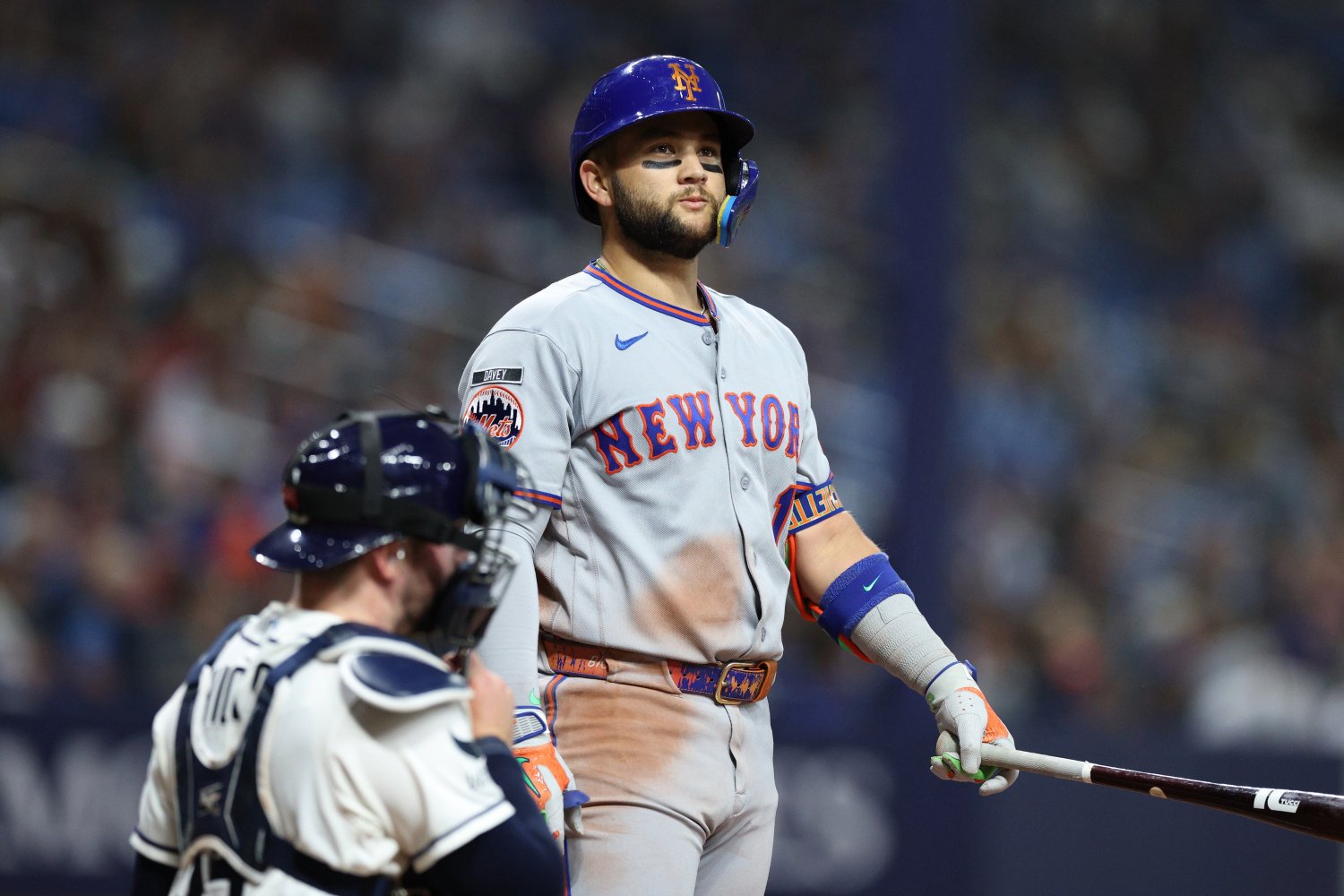 Fresh off writing the New York Mets’ hitters of the month piece for August, an odd detail caught my eye: Bo Bichette had an excellent 135 wRC+ in August, but managed to produce a negative win probability added (WPA). This isn’t a cause for alarm, but it is interesting. Those stats (wRC+ and WPA) are strongly correlated because hitting well is good for winning, so I figured further investigation was necessary. There are a few ways a hitter can hit well without helping his team’s chances of winning. The first is to rarely come up with runners on base or in scoring position. As great as a leadoff double is, the single that knocks them in improves your chances of winning more. The second is doing damage when the game is not close. If you’re up eight or down eight in the late innings, even a grand slam doesn’t change your odds all that much. The third is not having many leverage opportunities. And somehow, Bichette managed a trifecta. Of Bichette’s 109 plate appearances in August, 69 came with no runners on, and only 23 came with runners in scoring position. To make matters worse, Bichette saved his slugging for when the bases were empty. All four of his home runs, five of his seven doubles, and his lone triple came with no runners on. Bo Bichette Bases Empty Men On Total PA 69 40 109 1B 7 10 17 2B 5 2 7 3B 1 0 1 HR 4 0 4 BB 6 3 9 SO 14 6 20 Ave 0.270 0.324 0.290 OBP 0.333 0.375 0.349 Slugging 0.571 0.378 0.500 BB% 8.70% 7.50% 8.26% K% 20.29% 15.00% 18.35% On top of having no one on, three of Bichette’s August home runs came with the Mets up by at least three runs. And his lone home run to break a deadlock was in the first inning, when a 1-0 lead is the most vulnerable. Finally, Bichette’s average Leverage Index (0.89) for the month ranked 178th out of 190 qualified hitters. Now, that doesn’t necessarily doom you to a low WPA, as Alex Bregman had an identical Leverage Index and led baseball in WPA for August, but he posted a 177 wRC+ and hit three home runs in a single game twice. Opportunity is a big driver in context-based statistics, and Bichette didn’t really have the chance to shine. His -0.03 WPA was mostly driven by his 120th-ranked +1.75 win advancement, not his 60th-ranked -1.78 loss advancement. He wasn’t awful in leverage situations; he just didn’t have enough of them. This isn't proof that Bichette is some unclutch stiff who can only get it done when the pressure is off. He’s a career 118 wRC+ hitter with a positive clutch score, after all. However, even when a good hitter has it going, if the opportunities and sequencing are off, their impact on winning can be limited. I’ll stress: don’t hate the player, hate the game. Because that’s just baseball.
 -
New York Mets Hitters of the Month, August 2026: Carson Benge Goes Nuclear
N.B. Lindberg posted an article in Mets
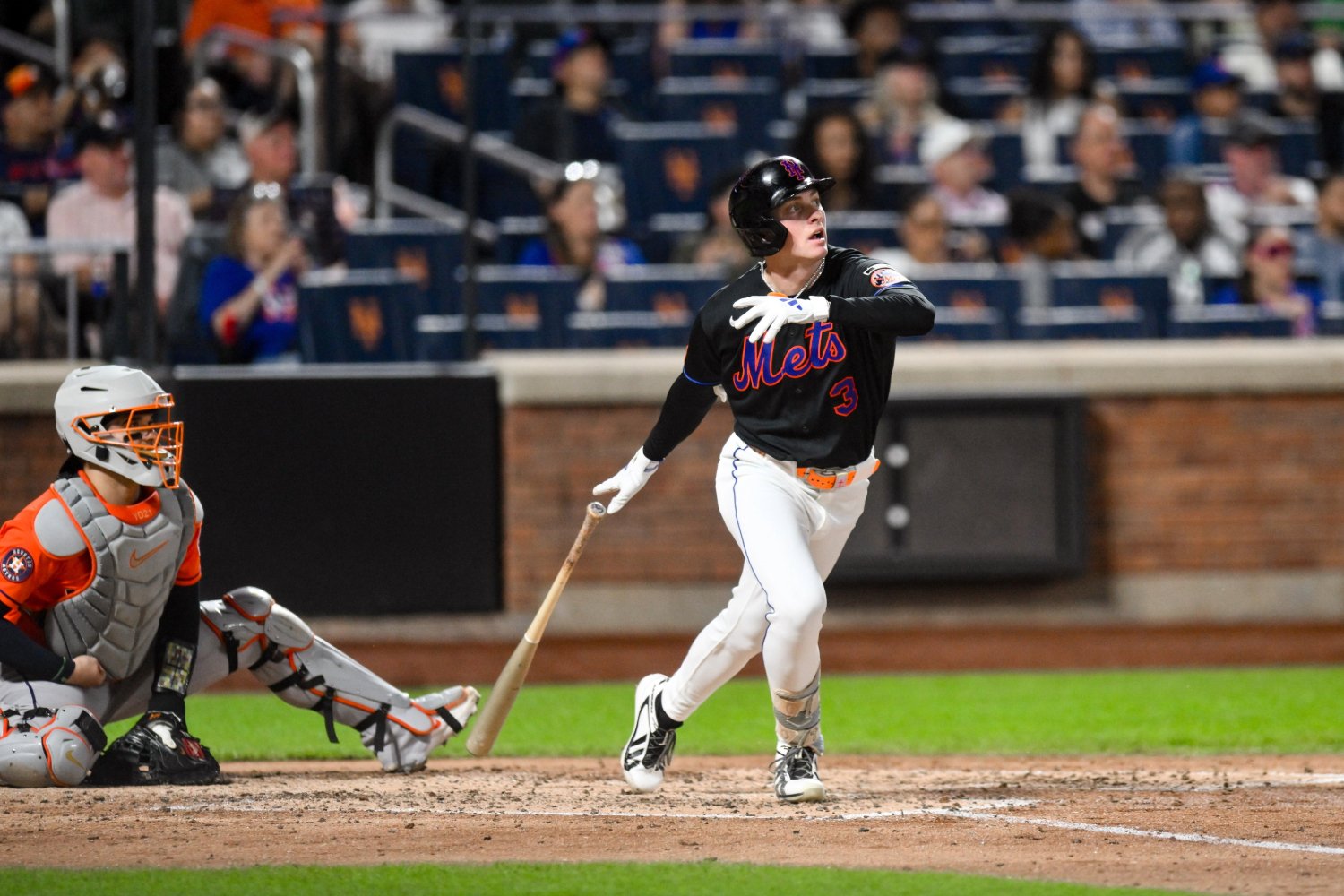 August marked the New York Mets' best month since their ultimately futile May. A 15-12 record was never going to get them back in the playoff mix, but it does portend a far brighter 2027. And when you consider that Juan Soto only graced the batters’ box nine times in August, the Mets’ performance looks a whole lot more promising. With apologies to Luis Torrens, who has been absolutely bonkers in August to the tune of six home runs, a .325 average, .386 on-base, and .775 slugging percentage—but 44 plate appearances isn’t enough to qualify for the monthly leaderboard, and that’s where I draw the line—these are the three Mets who have powered the offense. Ranking Mets' Best Hitters In August No. 3 Bo Bichette, 3B If every month had been like August for Bo Bichette, his and the Mets’ season could look very different. His 135 wRC+ ranks second among qualified Mets, and his triple-slash line of .290/.349/.500 is exactly the type of production fans envisioned when he signed his three-year, $126 million deal. While Bichette has outperformed his Statcast data, everything about his August looks like the hitter he showed to be in Toronto. He’s hitting the ball hard, racking up line drives, and has even seen his walk rate improve to 8.3%. Bichette is one of the few hitters who can hit four home runs in a month and still post a .500 slugging percentage. The only reason he doesn’t rank a spot higher is that he hasn’t been nearly as timely as he has been productive. Because this is the 2026 Mets, somehow, someway, Bichette produced a 135 wRC+ and a negative win probability added (-0.06 WPA) in the same month. I wouldn’t read too much into that, but when you hit is almost as important as how you hit, and in that department, Bichette came up just a bit short. No. 2 Luis Robert Jr., OF Like last month, a now-former Met makes the list. The Mets’ decision to place Luis Robert Jr. on waivers was purely financial. Due to their luxury tax situation, the $3 million owed to Robert over the remainder of the season would cost the Mets $6.3 million. On top of that, with a $2 million buyout or $20 million team option for next season, it’s not unsurprising the Mets looked to get off his deal now, and thankfully he delivered in August. Over 84 plate appearances, Robert produced a 128 wRC+ thanks to six home runs and a .520 slugging percentage. He still struck out a bit too much (26.2%) and walked a tad too infrequently (8.3%), but slugging cures a lot of sins. On top of that, Robert came up in leverage situations for the Mets. His 0.48 WPA was second on the Mets in August, as was his 0.19 Clutch rating. If it wasn’t for Robert’s strong showing in August, it’s very unlikely the Orioles would have claimed him off waivers. While I’d never suggest fans rooting for owners to save money, if the Mets take some of those savings and reinvest them in the 2027 team, then Robert’s final month will have been a nice little parting gift. No. 1 Carson Benge, OF Could it have been anyone else? Benge led qualified Mets in wRC+ (143) and WPA (+0.77), and that doesn’t even include his pair of ludicrous outfield assists in the same inning. Back to the hitting side of the equation. Benge was an absolute menace for opposing pitchers. He slashed .317/.367/.515 on the back of five home runs, three doubles, and a triple. Despite posting the lowest monthly average exit velocity of his young career, Benge prospered by lifting the ball more than ever. That type of strategy won’t continue to yield a .300 average, but it will lead to an increased power output. In what has been a down season for the Mets, Benge, following a rough April, has been a steady performer thanks to constant adjustments. In May, he turned his season around by peppering line drives. In July, he walked more than ever. And in August, he decided to lift the ball with increased frequency. If he ever puts it all together, watch out.
 -
Image courtesy of © John Jones-Imagn Images August marked the New York Mets' best month since their ultimately futile May. A 15-12 record was never going to get them back in the playoff mix, but it does portend a far brighter 2027. And when you consider that Juan Soto only graced the batters’ box nine times in August, the Mets’ performance looks a whole lot more promising. With apologies to Luis Torrens, who has been absolutely bonkers in August to the tune of six home runs, a .325 average, .386 on-base, and .775 slugging percentage—but 44 plate appearances isn’t enough to qualify for the monthly leaderboard, and that’s where I draw the line—these are the three Mets who have powered the offense. Ranking Mets' Best Hitters In August No. 3 Bo Bichette, 3B If every month had been like August for Bo Bichette, his and the Mets’ season could look very different. His 135 wRC+ ranks second among qualified Mets, and his triple-slash line of .290/.349/.500 is exactly the type of production fans envisioned when he signed his three-year, $126 million deal. While Bichette has outperformed his Statcast data, everything about his August looks like the hitter he showed to be in Toronto. He’s hitting the ball hard, racking up line drives, and has even seen his walk rate improve to 8.3%. Bichette is one of the few hitters who can hit four home runs in a month and still post a .500 slugging percentage. The only reason he doesn’t rank a spot higher is that he hasn’t been nearly as timely as he has been productive. Because this is the 2026 Mets, somehow, someway, Bichette produced a 135 wRC+ and a negative win probability added (-0.06 WPA) in the same month. I wouldn’t read too much into that, but when you hit is almost as important as how you hit, and in that department, Bichette came up just a bit short. No. 2 Luis Robert Jr., OF Like last month, a now-former Met makes the list. The Mets’ decision to place Luis Robert Jr. on waivers was purely financial. Due to their luxury tax situation, the $3 million owed to Robert over the remainder of the season would cost the Mets $6.3 million. On top of that, with a $2 million buyout or $20 million team option for next season, it’s not unsurprising the Mets looked to get off his deal now, and thankfully he delivered in August. Over 84 plate appearances, Robert produced a 128 wRC+ thanks to six home runs and a .520 slugging percentage. He still struck out a bit too much (26.2%) and walked a tad too infrequently (8.3%), but slugging cures a lot of sins. On top of that, Robert came up in leverage situations for the Mets. His 0.48 WPA was second on the Mets in August, as was his 0.19 Clutch rating. If it wasn’t for Robert’s strong showing in August, it’s very unlikely the Orioles would have claimed him off waivers. While I’d never suggest fans rooting for owners to save money, if the Mets take some of those savings and reinvest them in the 2027 team, then Robert’s final month will have been a nice little parting gift. No. 1 Carson Benge, OF Could it have been anyone else? Benge led qualified Mets in wRC+ (143) and WPA (+0.77), and that doesn’t even include his pair of ludicrous outfield assists in the same inning. Back to the hitting side of the equation. Benge was an absolute menace for opposing pitchers. He slashed .317/.367/.515 on the back of five home runs, three doubles, and a triple. Despite posting the lowest monthly average exit velocity of his young career, Benge prospered by lifting the ball more than ever. That type of strategy won’t continue to yield a .300 average, but it will lead to an increased power output. In what has been a down season for the Mets, Benge, following a rough April, has been a steady performer thanks to constant adjustments. In May, he turned his season around by peppering line drives. In July, he walked more than ever. And in August, he decided to lift the ball with increased frequency. If he ever puts it all together, watch out. View full article
-
Image courtesy of © Vincent Carchietta-Imagn Images Despite surrendering a walk-off home run to Tristan Peters, Kodai Senga’s transition to a single-inning reliever has been far more fruitful than this season’s work out of the rotation. Since making the switch on August 4, Senga has featured eight times, thrown 7.1 innings, and posted a 2.45 ERA. It’s a small sample, but it stands in stark contrast to the 8.66 ERA he managed over his prior 44.2 innings of work. Now, with Devin Williams on the injured list due to a shoulder strain, Senga is the New York Mets' de facto closer, and his relative success has piqued fans' interest. Could Senga be the Mets’ answer at closer in 2027? Perhaps he’s this generation’s Koji Uehara? Or is this stellar run a small sample blip? Oh, and as for Devin Williams, cue the Simple Minds. The biggest obstacle to Senga closing in 2027 is himself. It wasn’t that long ago that he was a legitimate starting pitcher. In 2023, his rookie season, he ghost-forked his way to a 2.98 ERA over 166.1 innings, finishing second in Rookie of the Year voting and seventh in the NL Cy Young. His follow-up campaign was derailed by injury, but in 2025, he posted a 3.02 ERA over 113.1 innings. At that point, over 285 innings, Senga owned a career 3.00 ERA as a starter. All of this is to say, if he gets right in the bullpen, it makes all the sense in the world to see if he can start again, and if he doesn’t get right in the bullpen, it makes no sense to hand him the closer role. Then there’s the question of whether he has gotten right. Obviously, a 2.45 ERA is far better than 8.66, but that doesn’t mean he’s suddenly fixed. First and foremost, Senga’s biggest problem this season has been a sky-high walk rate. Prior to Aug. 4, his 15.2% walk rate was the highest among any pitcher with over 40 innings pitched, and since moving to a single-inning reliever role, he has cut it to 12.9%. That’s a significant improvement, but it’s still an abysmal walk rate. The highest qualified walk rate among starting pitchers is 11.7%, and that 12.9% mark would still be the 20th-worst among all qualified relievers. On top of that, his underlying strike-zone data doesn’t suggest much, if any, improvement. Two of the best predictors for walk rate are first-pitch strike percentage and in-zone percentage. So, it might surprise you to learn that Senga’s first-pitch strike rate and zone rate have both been worse since the trade deadline. Pre August 4th Post August 4th BB% 15.20% 12.90% F-Strike% 55.2% 51.6% Zone% 47.9% 46.9% O-Swing% 25.9% 25.0% Z-Swing% 66.2% 60.0% Swing% 45.2% 41.4% O-Conact% 43.8% 41.2% Z-Contact% 85.6% 88.9% Contact% 73.1% 73.6% SwStrk% 12.2% 10.9% Based on the strike-zone data, it appears that Senga’s control has gotten even worse, but that’s not completely fair to him. While he isn’t pounding the zone at an increased frequency, he is throwing the ball in better places. Contrary to what your Little League coach might have said, throwing the ball right down the middle is bad advice, and before Aug. 4, that’s where 11.6% of Senga’s pitches went. It was by far his most frequented zone, and it’s part of why he allowed 2.42 home runs per nine innings. However, since moving into a single-inning role, he has cut that figure to 3.7%, and his most frequented zone has been the center-bottom of the strike zone at 14.3%. Despite not throwing more strikes, he is throwing better strikes, which has helped him limit damage on contact, rack up more strikeouts, and limit walks. But that still doesn’t mean he should be the Mets closer in 2027. Senga has legitimately pitched better since his role shift, but we’re talking about 7.1 innings with a moderate improvement in command. On top of that, while his 2.45 ERA is excellent, all of the ERA estimators think he is riding his luck. His xERA is 3.33, his FIP is 4.45, and his xFIP is 3.91. Those are all far better than what he managed earlier in the season, but they’re not anywhere near closer level. Among qualified relievers, a 3.33 xERA would rank 51st, a 4.45 FIP would rank 130th, and a 3.91 xFIP would tie for 65th. There’s also the little issue, if you want to call it that, of Devin Williams. This might be grating for some to hear, but Williams is still an excellent reliever, despite two seasons of rotten luck. From 2020 to 2024, he was arguably the best reliever in baseball. He racked up the second-most fWAR (7.6), had the second-best ERA (1.70), and the third-best FIP (2.24). He struck guys out, limited damage on contact, and while he issued a few more walks than you’d like, clearly it was worth it. Then he was traded to the Yankees, and everything and nothing changed. In his lone season in the Bronx, Williams posted a career-high 4.79 ERA, despite a 3.05 xERA, 2.68 FIP, and 2.95 xFIP, and it wasn’t hard to spot the culprit. After sporting a left-on-base percentage (LOB%) of 82.8% from 2020 to 2024, Williams saw it plummet to 55.2%. That is the 30th-lowest LOB% among all relievers since 1945. His luck went beyond bad, and it’s why the Mets offered him a three-year, $51 million deal in the offseason. Unfortunately, 2026 has also been another snake-bitten year for Williams, but in a different way. His 4.66 ERA looks bad, and it is, but his 3.29 xERA, 3.09 FIP, and 3.60 xFIP all suggest he is still a strong reliever. The problem is that this season his BABIP is an astronomical .388. While some pitchers earn their elevated BABIP, Williams does not. This season, among pitchers who have thrown 40 innings or more, the linear correlation between hard-hit balls (balls hit harder than 95 MPH) and hits allowed is 0.975. Basically, if you know how many hard-hit balls a pitcher has given up, you know how many hits they should have given up. And since the league average hard-hit ball to hit rate is 0.815, you’d assume that Williams, who has allowed 31 hard-hit balls, would have allowed 25 hits, not the 43 he has actually allowed. While it is true that Williams has not been as good since leaving Milwaukee, he has also had awful, nearly incomprehensible misfortune. And his series of unfortunate batted-ball events has only compounded the issue. Pitchers, almost universally, pitch better with the bases empty. Given a pseudo-normal season, he’ll look largely like the pitcher the Mets thought they were signing. Kodai Senga’s mini-resurgence is a nice little story and offers more hope of him contributing meaningfully to the 2027 squad, but it would be patently insane to suggest he deserves the inside track on the closer job. Even while pitching better, he hasn’t pitched that well. On top of that, Devin Williams is undoubtedly better than his results. Heading into next year, the Mets will hope that Senga can regain a starting spot, and Williams will stop being cursed. If Senga actually ends up the closer in 2027, then that’s a worst-case scenario for everyone. View full article
-
Kodai Senga Still Hasn't Usurped Devin Williams As Mets' Future Closer
N.B. Lindberg posted an article in Mets
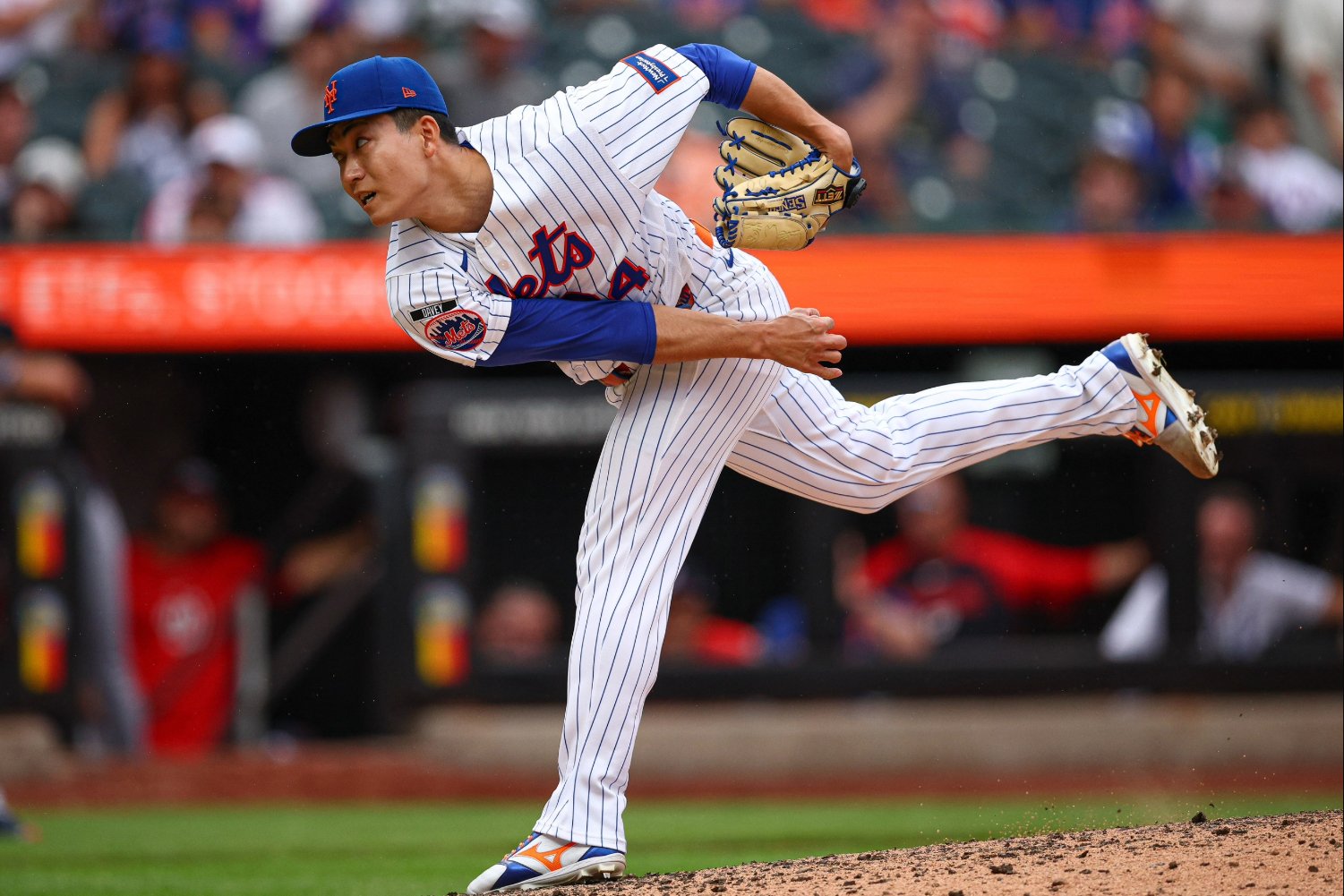 Despite surrendering a walk-off home run to Tristan Peters, Kodai Senga’s transition to a single-inning reliever has been far more fruitful than this season’s work out of the rotation. Since making the switch on August 4, Senga has featured eight times, thrown 7.1 innings, and posted a 2.45 ERA. It’s a small sample, but it stands in stark contrast to the 8.66 ERA he managed over his prior 44.2 innings of work. Now, with Devin Williams on the injured list due to a shoulder strain, Senga is the New York Mets' de facto closer, and his relative success has piqued fans' interest. Could Senga be the Mets’ answer at closer in 2027? Perhaps he’s this generation’s Koji Uehara? Or is this stellar run a small sample blip? Oh, and as for Devin Williams, cue the Simple Minds. The biggest obstacle to Senga closing in 2027 is himself. It wasn’t that long ago that he was a legitimate starting pitcher. In 2023, his rookie season, he ghost-forked his way to a 2.98 ERA over 166.1 innings, finishing second in Rookie of the Year voting and seventh in the NL Cy Young. His follow-up campaign was derailed by injury, but in 2025, he posted a 3.02 ERA over 113.1 innings. At that point, over 285 innings, Senga owned a career 3.00 ERA as a starter. All of this is to say, if he gets right in the bullpen, it makes all the sense in the world to see if he can start again, and if he doesn’t get right in the bullpen, it makes no sense to hand him the closer role. Then there’s the question of whether he has gotten right. Obviously, a 2.45 ERA is far better than 8.66, but that doesn’t mean he’s suddenly fixed. First and foremost, Senga’s biggest problem this season has been a sky-high walk rate. Prior to Aug. 4, his 15.2% walk rate was the highest among any pitcher with over 40 innings pitched, and since moving to a single-inning reliever role, he has cut it to 12.9%. That’s a significant improvement, but it’s still an abysmal walk rate. The highest qualified walk rate among starting pitchers is 11.7%, and that 12.9% mark would still be the 20th-worst among all qualified relievers. On top of that, his underlying strike-zone data doesn’t suggest much, if any, improvement. Two of the best predictors for walk rate are first-pitch strike percentage and in-zone percentage. So, it might surprise you to learn that Senga’s first-pitch strike rate and zone rate have both been worse since the trade deadline. Pre August 4th Post August 4th BB% 15.20% 12.90% F-Strike% 55.2% 51.6% Zone% 47.9% 46.9% O-Swing% 25.9% 25.0% Z-Swing% 66.2% 60.0% Swing% 45.2% 41.4% O-Conact% 43.8% 41.2% Z-Contact% 85.6% 88.9% Contact% 73.1% 73.6% SwStrk% 12.2% 10.9% Based on the strike-zone data, it appears that Senga’s control has gotten even worse, but that’s not completely fair to him. While he isn’t pounding the zone at an increased frequency, he is throwing the ball in better places. Contrary to what your Little League coach might have said, throwing the ball right down the middle is bad advice, and before Aug. 4, that’s where 11.6% of Senga’s pitches went. It was by far his most frequented zone, and it’s part of why he allowed 2.42 home runs per nine innings. However, since moving into a single-inning role, he has cut that figure to 3.7%, and his most frequented zone has been the center-bottom of the strike zone at 14.3%. Despite not throwing more strikes, he is throwing better strikes, which has helped him limit damage on contact, rack up more strikeouts, and limit walks. But that still doesn’t mean he should be the Mets closer in 2027. Senga has legitimately pitched better since his role shift, but we’re talking about 7.1 innings with a moderate improvement in command. On top of that, while his 2.45 ERA is excellent, all of the ERA estimators think he is riding his luck. His xERA is 3.33, his FIP is 4.45, and his xFIP is 3.91. Those are all far better than what he managed earlier in the season, but they’re not anywhere near closer level. Among qualified relievers, a 3.33 xERA would rank 51st, a 4.45 FIP would rank 130th, and a 3.91 xFIP would tie for 65th. There’s also the little issue, if you want to call it that, of Devin Williams. This might be grating for some to hear, but Williams is still an excellent reliever, despite two seasons of rotten luck. From 2020 to 2024, he was arguably the best reliever in baseball. He racked up the second-most fWAR (7.6), had the second-best ERA (1.70), and the third-best FIP (2.24). He struck guys out, limited damage on contact, and while he issued a few more walks than you’d like, clearly it was worth it. Then he was traded to the Yankees, and everything and nothing changed. In his lone season in the Bronx, Williams posted a career-high 4.79 ERA, despite a 3.05 xERA, 2.68 FIP, and 2.95 xFIP, and it wasn’t hard to spot the culprit. After sporting a left-on-base percentage (LOB%) of 82.8% from 2020 to 2024, Williams saw it plummet to 55.2%. That is the 30th-lowest LOB% among all relievers since 1945. His luck went beyond bad, and it’s why the Mets offered him a three-year, $51 million deal in the offseason. Unfortunately, 2026 has also been another snake-bitten year for Williams, but in a different way. His 4.66 ERA looks bad, and it is, but his 3.29 xERA, 3.09 FIP, and 3.60 xFIP all suggest he is still a strong reliever. The problem is that this season his BABIP is an astronomical .388. While some pitchers earn their elevated BABIP, Williams does not. This season, among pitchers who have thrown 40 innings or more, the linear correlation between hard-hit balls (balls hit harder than 95 MPH) and hits allowed is 0.975. Basically, if you know how many hard-hit balls a pitcher has given up, you know how many hits they should have given up. And since the league average hard-hit ball to hit rate is 0.815, you’d assume that Williams, who has allowed 31 hard-hit balls, would have allowed 25 hits, not the 43 he has actually allowed. While it is true that Williams has not been as good since leaving Milwaukee, he has also had awful, nearly incomprehensible misfortune. And his series of unfortunate batted-ball events has only compounded the issue. Pitchers, almost universally, pitch better with the bases empty. Given a pseudo-normal season, he’ll look largely like the pitcher the Mets thought they were signing. Kodai Senga’s mini-resurgence is a nice little story and offers more hope of him contributing meaningfully to the 2027 squad, but it would be patently insane to suggest he deserves the inside track on the closer job. Even while pitching better, he hasn’t pitched that well. On top of that, Devin Williams is undoubtedly better than his results. Heading into next year, the Mets will hope that Senga can regain a starting spot, and Williams will stop being cursed. If Senga actually ends up the closer in 2027, then that’s a worst-case scenario for everyone.
 -
Image courtesy of © Vincent Carchietta-Imagn Images Christian Scott throws right-handed, unleashes his curveball and splitter a combined 9% of the time, and leans heavily on the tried-and-true fastball-slider combination. Based on those details, it shouldn’t be too surprising to learn that out of the 340 batters he has faced this season, 214 (63%) of them have been left-handed. You can’t fault opposing managers for stacking the lineup card with left-handed sticks against a righty without a traditional platoon neutralizer, but they’re making a grave mistake. Pretty much any way you cut it, Christian Scott is a righty without a changeup or curveball who dominates lefties. He owns a 29% K%, 8.4% BB%, 3.36 FIP, and 3.34 xFIP against those very hitters. While those aren’t the best figures in the league, they stand in stark contrast to when he has the platoon advantage. Versus righties, he has a 28.6% K%, 11.9% BB%, 3.12 FIP, and 4.24 xFIP. Considering the sample is small enough that home run rate has yet to stabilize, his xFIP, which assumes a league-average home run to flyball rate, is probably a better indicator of his true pitching talent. On top of getting more strikeouts and issuing fewer walks when facing lefties, even his batted-ball data is more favorable. His infield flyball rate of 13.7% is elite, while his 6.9% mark against righties is rather pedestrian, and he gets more ground balls against left-handers (34.9% vs. 30.4%). So, how is Scott doing this? It’s not luck; no, he’s cutting down lefties all because of a cutter buried in on the hands. Traditionally, the changeup and curveball are the go-to platoon-neutralizing offerings, but the cutter is another option that can be equally as devastating. When Scott debuted back in 2024, he brought the very standard three-pitch mix of fastball, slider, and an oft-used splitter. Unsurprisingly, he did fine with the platoon advantage and was downright bad without it. If he was going to get back to the bigs and stay in the rotation, he needed some way to get opposite-handed batters out. So, he did what any pitcher who struggles to pronate should do: He added a cutter, and it has completely changed his profile. Scott’s cutter isn’t superlative in terms of velocity or movement, but it pairs exceptionally with his four-seam fastball and slider in a way that gives lefties nightmares. His four-seamer is typically located at the top of the zone, with a general bias towards the right-handed batter's box. Meanwhile, his cutter is almost always up and in on lefties. Hopefully, you can already see the dilemma. Out of the hand, left-handed batters don’t know if they’re facing a fastball up and away, or a cutter that will bear in on their hands. Making matters even better, or worse if you’re a lefty facing Scott, is that the threat of his cutter causes his slider to play up as well. His sweeper/slider is an interesting pitch; it drops far less than the average comparable offering, but that makes it tunnel even better with his cutter. Functionally, Scott’s slider is his cutter’s changeup. This band of pitches all at different velocities and movement profiles causes each pitch to play well above its raw stuff. Just look at this four-pitch strikeout of Matt Olson, owner of a 142 wRC+ against righties. Pitch one (cutter inside, swinging strike) Pitch two (low sweeper, fouled off) Pitch three (fastball up and away out of the zone) Pitch four (sweeper down and in, swinging strikeout) Scott’s evolution into a lefty killer is only a half-wonderful development for the Mets. Most righties with a fastball-sweeper combination struggle to get lefties out, while dominating righties, but the opposite is true for Scott. Somehow, someway, the same characteristics that make him a nightmare against left-handers haven’t translated against righties, and it won’t be long until managers get wise and start stacking them into the lineup. However, it doesn’t take a lot of imagination to conjure up a world where Scott adds another pitch or element to his repertoire to start baffling righties as well. In fact, his biggest issue might be eminently solvable. When facing same-sided batters, he has a 55.6% first-pitch strike rate, which lags far behind his 62.6% mark against lefties. Getting strike one is a big deal, especially for Scott. When up 0-1, the handedness of the hitter largely melts away. Against lefties in 0-1 counts, he has a 35.4% K%, 6.2% BB%, and 1.56 FIP, and when facing righties, he has a 37.7% K%, 8.2% BB%, and 1.68 FIP. However, when he falls behind 1-0, the script flips. Against lefties, he has a 26.1% K%, 13.6% BB%, and 4.38 xFIP, compared to a 23.6% K%, 18.2% BB%, and 5.53 xFIP versus righties. Simply getting ahead of righties with more frequency would do Scott a world of good. He has better contact figures in and out of the zone against righties, but he cannot get them to chase as often, which leads to more walks and fewer strikeouts. Just like against lefties, Scott’s best pitch by run value has been his cutter, but he only throws it 11% of the time to right handers, compared to 22% against lefties. It might be crazy, but maybe he needs to start cutting up righties, just like the lefties. View full article
-
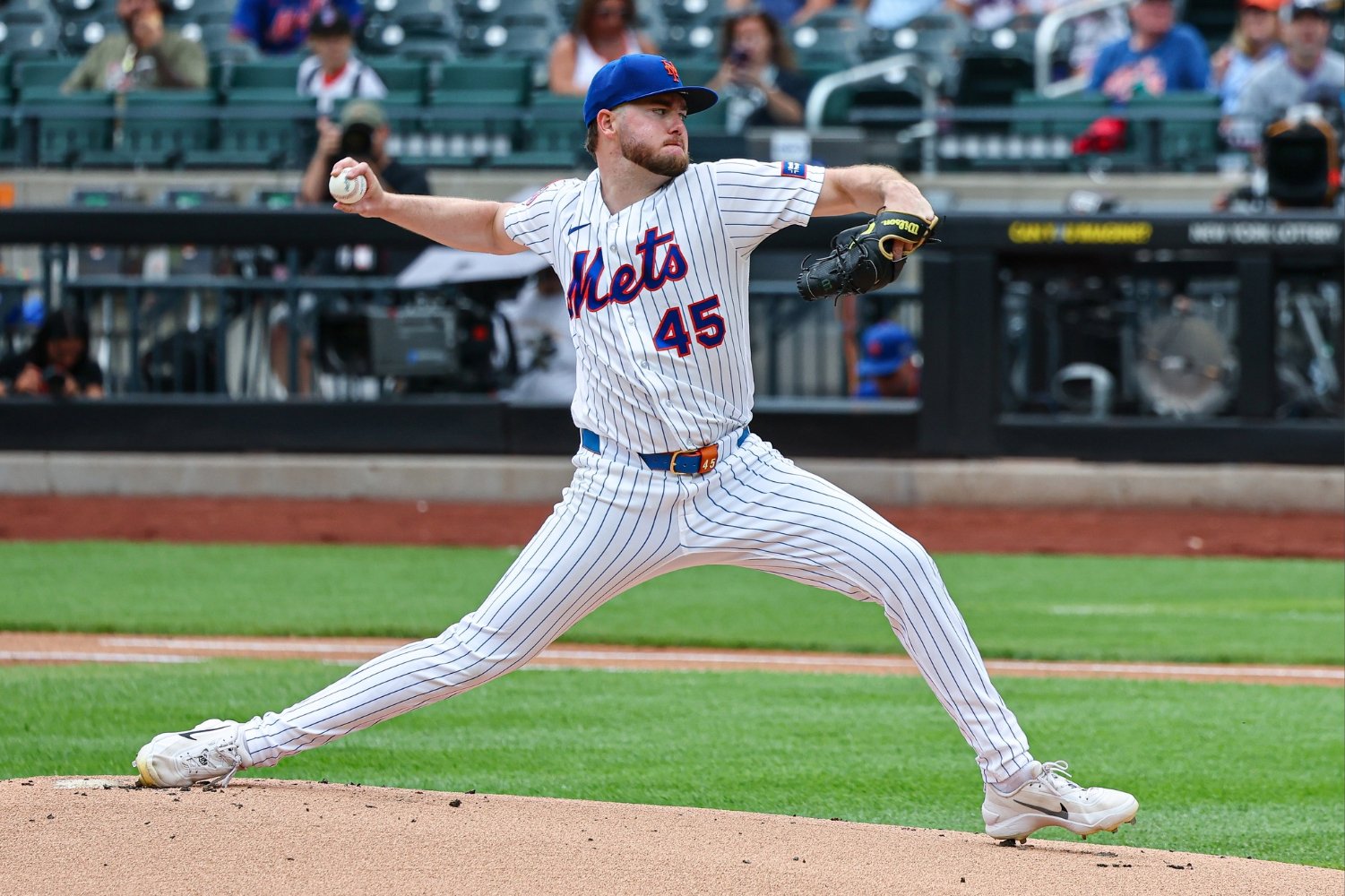 Christian Scott throws right-handed, unleashes his curveball and splitter a combined 9% of the time, and leans heavily on the tried-and-true fastball-slider combination. Based on those details, it shouldn’t be too surprising to learn that out of the 340 batters he has faced this season, 214 (63%) of them have been left-handed. You can’t fault opposing managers for stacking the lineup card with left-handed sticks against a righty without a traditional platoon neutralizer, but they’re making a grave mistake. Pretty much any way you cut it, Christian Scott is a righty without a changeup or curveball who dominates lefties. He owns a 29% K%, 8.4% BB%, 3.36 FIP, and 3.34 xFIP against those very hitters. While those aren’t the best figures in the league, they stand in stark contrast to when he has the platoon advantage. Versus righties, he has a 28.6% K%, 11.9% BB%, 3.12 FIP, and 4.24 xFIP. Considering the sample is small enough that home run rate has yet to stabilize, his xFIP, which assumes a league-average home run to flyball rate, is probably a better indicator of his true pitching talent. On top of getting more strikeouts and issuing fewer walks when facing lefties, even his batted-ball data is more favorable. His infield flyball rate of 13.7% is elite, while his 6.9% mark against righties is rather pedestrian, and he gets more ground balls against left-handers (34.9% vs. 30.4%). So, how is Scott doing this? It’s not luck; no, he’s cutting down lefties all because of a cutter buried in on the hands. Traditionally, the changeup and curveball are the go-to platoon-neutralizing offerings, but the cutter is another option that can be equally as devastating. When Scott debuted back in 2024, he brought the very standard three-pitch mix of fastball, slider, and an oft-used splitter. Unsurprisingly, he did fine with the platoon advantage and was downright bad without it. If he was going to get back to the bigs and stay in the rotation, he needed some way to get opposite-handed batters out. So, he did what any pitcher who struggles to pronate should do: He added a cutter, and it has completely changed his profile. Scott’s cutter isn’t superlative in terms of velocity or movement, but it pairs exceptionally with his four-seam fastball and slider in a way that gives lefties nightmares. His four-seamer is typically located at the top of the zone, with a general bias towards the right-handed batter's box. Meanwhile, his cutter is almost always up and in on lefties. Hopefully, you can already see the dilemma. Out of the hand, left-handed batters don’t know if they’re facing a fastball up and away, or a cutter that will bear in on their hands. Making matters even better, or worse if you’re a lefty facing Scott, is that the threat of his cutter causes his slider to play up as well. His sweeper/slider is an interesting pitch; it drops far less than the average comparable offering, but that makes it tunnel even better with his cutter. Functionally, Scott’s slider is his cutter’s changeup. This band of pitches all at different velocities and movement profiles causes each pitch to play well above its raw stuff. Just look at this four-pitch strikeout of Matt Olson, owner of a 142 wRC+ against righties. Pitch one (cutter inside, swinging strike) Pitch two (low sweeper, fouled off) Pitch three (fastball up and away out of the zone) Pitch four (sweeper down and in, swinging strikeout) Scott’s evolution into a lefty killer is only a half-wonderful development for the Mets. Most righties with a fastball-sweeper combination struggle to get lefties out, while dominating righties, but the opposite is true for Scott. Somehow, someway, the same characteristics that make him a nightmare against left-handers haven’t translated against righties, and it won’t be long until managers get wise and start stacking them into the lineup. However, it doesn’t take a lot of imagination to conjure up a world where Scott adds another pitch or element to his repertoire to start baffling righties as well. In fact, his biggest issue might be eminently solvable. When facing same-sided batters, he has a 55.6% first-pitch strike rate, which lags far behind his 62.6% mark against lefties. Getting strike one is a big deal, especially for Scott. When up 0-1, the handedness of the hitter largely melts away. Against lefties in 0-1 counts, he has a 35.4% K%, 6.2% BB%, and 1.56 FIP, and when facing righties, he has a 37.7% K%, 8.2% BB%, and 1.68 FIP. However, when he falls behind 1-0, the script flips. Against lefties, he has a 26.1% K%, 13.6% BB%, and 4.38 xFIP, compared to a 23.6% K%, 18.2% BB%, and 5.53 xFIP versus righties. Simply getting ahead of righties with more frequency would do Scott a world of good. He has better contact figures in and out of the zone against righties, but he cannot get them to chase as often, which leads to more walks and fewer strikeouts. Just like against lefties, Scott’s best pitch by run value has been his cutter, but he only throws it 11% of the time to right handers, compared to 22% against lefties. It might be crazy, but maybe he needs to start cutting up righties, just like the lefties.
 -
Image courtesy of © David Richard-Imagn Images The only good part about being out of it is that you can experiment with impunity. Obviously, fans would rather be engaged in a playoff race, but that’s all business, all the time, and that means stress. With the New York Mets' trade deadline fire sale complete, they still needed to actually field a 26-man team, and that means promotions for fringe major leaguers, and none is more interesting than Jefry Yan. Yan wasted no time introducing himself in his major league debut. Called upon in the sixth inning to protect a 4-3 Mets lead, he struck out Angel Martinez looking, and then proceeded to show off the celebration that is sure to make him a cult hero. I’ll admit, I’m terrified he’s going to blow out his knee one day, but that level of exuberance is infectious, and that’s something all Mets fans could use more of these days. Yan isn’t getting his first cup of coffee just as a promotional (or literal) stunt. He’s a real borderline major leaguer thanks to some of the nastiest stuff coming out of a left hand—a sinker which averaged 99.5 MPH and a bullet-bender slider that has few, if any, peers—and the rest of his single frame showed everything good and bad about his profile. Even though his sinker didn't miss as many bats as the velocity would have you think, the three batted balls he allowed were all on the ground with an average launch angle of -9.7 degrees. Groundballs are a great way to limit damage, but after two consecutive hits, he found himself in a bit of a jam. With runners on first and second with one out, Yan loaded the bases by walking Steven Kwan. Kwan possesses an incredible batting eye, but walks are just part of Yan’s effectively wild operation. After loading the bases, Yan bore down. First, he struck out Chase DeLauter, and then he finished the frame with a groundball out to escape the jam. In one inning, the Mets were treated to the Full Jefry. Incredible stuff. Tons of ground balls. A lot of wildness. Base runner-induced panic. And an infectious joy. Now, Yan isn’t going to stay in the bigs on vibes alone, but he’s a very interesting developmental project who could yield serious returns. Before we get into Jefry Yan the pitcher, I think it’s best to understand the person. Signed out of the Dominican Republic by the Los Angeles Angels, Yan came stateside in 2014 as a 17-year-old and struggled in rookie ball. He repeated the level as an 18-year-old, but blew out and needed Tommy John surgery, ending in his release in 2016. This is where most people’s baseball stories end, and it almost did for Yan. Living in the Phoenix area, he worked whatever job he could find, with reports listing landscaping, roofing, interior design, and being a delivery driver. However, through it all, he kept playing ball. Perhaps, he believed he’d get back to bigs. Perhaps, at some level, it was catharsis. All I know is that those poor amateur Sunday league guys must have thought they’d died and gone to hell. After three and a half years out of professional baseball, Yan had sufficiently terrorized enough amateurs to earn a contract with the Miami Marlins and started his major league journey all over again. He was wild, but effective, eventually reaching AAA in 2023. Instead of toiling away as a speculative call-up, he went to Japan for the 2024 season, where he posted a 5.58 ERA in 30.2 innings. For a reliever, that’s not going to get you a major-league contract, but it did allow him to find another interested club. In 2025, he latched on with the Colorado Rockies. His AAA performance was less than stellar. A 7.28 ERA in 29.2 innings is never going to be enough to get a shot, even for a team as moribund as the Rockies. Heading into his age-29 season in 2026, he got another opportunity with the Mets. While his walk rate remained above 15% (an almost unplayable figure), his strikeouts surged to 39.5% in AA and 50.8% in AAA. To go from out of the game to the highest level is an accomplishment in its own right. If last night’s inning is his lone MLB appearance, he’ll have defied the odds, and Yan knows that. His signature jump celebration is an expression of just how happy and lucky he is to be there, on that mound, hurling a leathery orb. While Jefry Yan’s human interest story is riveting on its own, his ability to pitch is just as intriguing. It’s one game and 24 pitches, but Fangraphs’ PitchingBot thinks he is armed with some of the best stuff, and worst control, in the entire league. Using the 80-20 scouting scale, PitchingBot takes a pitch’s velocity and movement, among other characteristics, and grades it based upon likely outcome. Yan’s sinker earned a 72, tied for the 15th-best grade among pitchers to throw one inning, and his slider earned a 68, tied for third. His overall stuff score of 64 ranks sixth, but his command score of 39 is one of the lowest in the league. The selling point here is pretty simple. Yan is going to strike guys out. He’s going to get ground balls. If he can simply throw an acceptable amount of strikes, he’ll be a real part of a bullpen. It’s a small sample, but the Mets were able to coax a career-high 50.8% first-pitch strike rate from him in AAA, and he did register a first-pitch strike of 66.7% in his lone inning of big league work. I wouldn’t bet on him ever throwing a league-average number of strikes, but it’s not impossible to dream. The Orioles famously got Felix Bautista to throw enough strikes to be one of the most dominant relievers in the sport, and they did the same thing with Yennier Cano. There is a history of relievers with big stuff finding the zone later in their careers and becoming legit late-inning weapons. The odds are stacked against Jefry Yan ever throwing enough strikes, but so were his odds of reaching the majors back in 2021. So yes, his appearances will oscillate between the sublime and sardonic, but I’ll still enjoy the ride. One jump at a time. View full article
-
Jefry Yan Will Jump Off the Mound Right Into Mets Fans' Hearts
N.B. Lindberg posted an article in Mets
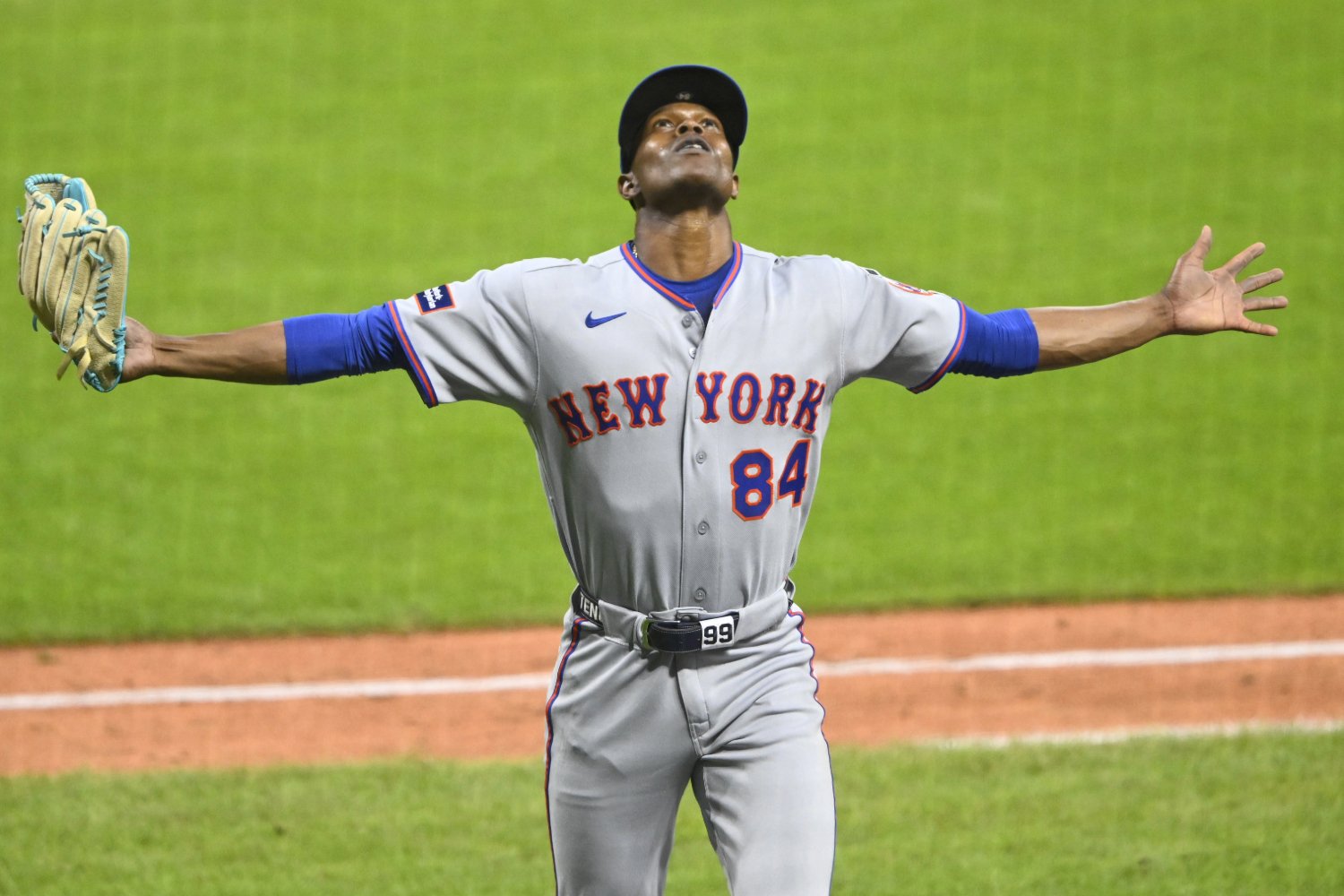 The only good part about being out of it is that you can experiment with impunity. Obviously, fans would rather be engaged in a playoff race, but that’s all business, all the time, and that means stress. With the New York Mets' trade deadline fire sale complete, they still needed to actually field a 26-man team, and that means promotions for fringe major leaguers, and none is more interesting than Jefry Yan. Yan wasted no time introducing himself in his major league debut. Called upon in the sixth inning to protect a 4-3 Mets lead, he struck out Angel Martinez looking, and then proceeded to show off the celebration that is sure to make him a cult hero. I’ll admit, I’m terrified he’s going to blow out his knee one day, but that level of exuberance is infectious, and that’s something all Mets fans could use more of these days. Yan isn’t getting his first cup of coffee just as a promotional (or literal) stunt. He’s a real borderline major leaguer thanks to some of the nastiest stuff coming out of a left hand—a sinker which averaged 99.5 MPH and a bullet-bender slider that has few, if any, peers—and the rest of his single frame showed everything good and bad about his profile. Even though his sinker didn't miss as many bats as the velocity would have you think, the three batted balls he allowed were all on the ground with an average launch angle of -9.7 degrees. Groundballs are a great way to limit damage, but after two consecutive hits, he found himself in a bit of a jam. With runners on first and second with one out, Yan loaded the bases by walking Steven Kwan. Kwan possesses an incredible batting eye, but walks are just part of Yan’s effectively wild operation. After loading the bases, Yan bore down. First, he struck out Chase DeLauter, and then he finished the frame with a groundball out to escape the jam. In one inning, the Mets were treated to the Full Jefry. Incredible stuff. Tons of ground balls. A lot of wildness. Base runner-induced panic. And an infectious joy. Now, Yan isn’t going to stay in the bigs on vibes alone, but he’s a very interesting developmental project who could yield serious returns. Before we get into Jefry Yan the pitcher, I think it’s best to understand the person. Signed out of the Dominican Republic by the Los Angeles Angels, Yan came stateside in 2014 as a 17-year-old and struggled in rookie ball. He repeated the level as an 18-year-old, but blew out and needed Tommy John surgery, ending in his release in 2016. This is where most people’s baseball stories end, and it almost did for Yan. Living in the Phoenix area, he worked whatever job he could find, with reports listing landscaping, roofing, interior design, and being a delivery driver. However, through it all, he kept playing ball. Perhaps, he believed he’d get back to bigs. Perhaps, at some level, it was catharsis. All I know is that those poor amateur Sunday league guys must have thought they’d died and gone to hell. After three and a half years out of professional baseball, Yan had sufficiently terrorized enough amateurs to earn a contract with the Miami Marlins and started his major league journey all over again. He was wild, but effective, eventually reaching AAA in 2023. Instead of toiling away as a speculative call-up, he went to Japan for the 2024 season, where he posted a 5.58 ERA in 30.2 innings. For a reliever, that’s not going to get you a major-league contract, but it did allow him to find another interested club. In 2025, he latched on with the Colorado Rockies. His AAA performance was less than stellar. A 7.28 ERA in 29.2 innings is never going to be enough to get a shot, even for a team as moribund as the Rockies. Heading into his age-29 season in 2026, he got another opportunity with the Mets. While his walk rate remained above 15% (an almost unplayable figure), his strikeouts surged to 39.5% in AA and 50.8% in AAA. To go from out of the game to the highest level is an accomplishment in its own right. If last night’s inning is his lone MLB appearance, he’ll have defied the odds, and Yan knows that. His signature jump celebration is an expression of just how happy and lucky he is to be there, on that mound, hurling a leathery orb. While Jefry Yan’s human interest story is riveting on its own, his ability to pitch is just as intriguing. It’s one game and 24 pitches, but Fangraphs’ PitchingBot thinks he is armed with some of the best stuff, and worst control, in the entire league. Using the 80-20 scouting scale, PitchingBot takes a pitch’s velocity and movement, among other characteristics, and grades it based upon likely outcome. Yan’s sinker earned a 72, tied for the 15th-best grade among pitchers to throw one inning, and his slider earned a 68, tied for third. His overall stuff score of 64 ranks sixth, but his command score of 39 is one of the lowest in the league. The selling point here is pretty simple. Yan is going to strike guys out. He’s going to get ground balls. If he can simply throw an acceptable amount of strikes, he’ll be a real part of a bullpen. It’s a small sample, but the Mets were able to coax a career-high 50.8% first-pitch strike rate from him in AAA, and he did register a first-pitch strike of 66.7% in his lone inning of big league work. I wouldn’t bet on him ever throwing a league-average number of strikes, but it’s not impossible to dream. The Orioles famously got Felix Bautista to throw enough strikes to be one of the most dominant relievers in the sport, and they did the same thing with Yennier Cano. There is a history of relievers with big stuff finding the zone later in their careers and becoming legit late-inning weapons. The odds are stacked against Jefry Yan ever throwing enough strikes, but so were his odds of reaching the majors back in 2021. So yes, his appearances will oscillate between the sublime and sardonic, but I’ll still enjoy the ride. One jump at a time.
 -
Image courtesy of © Vincent Carchietta-Imagn Images No one wants to be the biggest seller at the trade deadline because it usually means you’re the biggest loser. And while the New York Mets don’t have the worst record in baseball—at least, not yet—they’ve undoubtedly had the most disastrously depressing season in baseball. They entered the season earmarked as a 90-win team and find themself on pace for 67. Taking the old adage, “everyone will win 54 games and lose 54 games; it’s what you do with the other 54 that matters,” literally, the Mets went from a team expected to go 36-18 to one tracking to go 13-41. With that thought in mind, the 2026 Mets were functionally two teams: the awful one that they are, and the great one that they should have been. And this juxtaposition helps explain their overall deadline strategy. Starting with the players the Mets moved, one thing is very clear: they believe they’ll be good again in 2027. Of the eight players the Mets moved, four were relievers, six were on expiring contracts, and that doesn’t include Clay Holmes’ player option for 2027. Functionally, the only guy they moved who for sure had a contract for the 2027 team was Luke Weaver. I’m sure some fans wished they had kept Weaver, but there is never a bad time to trade a reliever. For whatever reason, relievers are as fickle as the wind. Weaver is pitching well now, and the Pirates were willing to give up an interesting prospect for him. You do that deal every day when you’re already out of the playoff mix. While that’s part and parcel for a deadline fire sale, it’s informative because of who the Mets could have moved. Luis Robert Jr., who has a team option for 2027, was in the rumor mill. As were Francisco Lindor and Alvarez. Sure, the Mets have a bunch of guys on seemingly immovable contracts, but I’m sure they could have found a home for Sean Manaea and Devin Williams if they were willing to eat a sizable amount of money. Instead, the team decided to almost exclusively move rentals, which means they’re still cautiously optimistic about the 2027 team. It may sound crazy to run back such a disappointing team, but it’s probably the right idea. Juan Soto is in the middle of his prime. Lindor is still excellent when healthy. McLean looks to be the real deal. And the blood sacrifice New York made trading the Mets’ soul for a Knicks championship run will hopefully have been fulfilled. Giving this core one more chance to live up to its potential is more prudent than strip mining the roster down to the core. On the prospect side of the equation, the Mets are betting big on their pitching development. Five of the 12 prospects they landed are pitchers, and four of them have the note, “Stuff, command issues,” next to them in my spreadsheet. The Mets have recently had success developing pitchers, so I think this is a good strategy. The chances that any of them turn into a solid major league starter are pretty small, but as this deadline showed, contenders need relievers, and Chayce McDermott, Luke Gabrysh, Gabe Davis, and Zach Franklin could all be pretty decent. On the position player side, the Mets were a little more scattershot. Landing Jefferson Rojas was one of the best moves of the deadline, and he could help the big team as early as next season. He’s unlikely to develop into a star—which is the case for just about every prospect—but the organization could have sorely used another competent infielder this season. And if he ends up being blocked, well, he’s a top-100 prospect to dangle for something you need more. After Rojas, the Mets picked up two higher-variance prospects in Sammy Stafura and Aidan Smith. Stafura projects to stick at short and has suddenly started hitting for power, but at the cost of contact. His hit tool was already a bit suspect, but a viable shortstop defender who can take a walk and hit 25 home runs is a valuable, if highly frustrating, major league contributor. His play bears monitoring, but the Mets might have identified an arrow-up prospect a bit quicker than the industry, and a utility guy with some pop is always nice to have hanging around the 40-man. Smith is a pure reclamation project, which is never a good sign for a 22-year-old who has yet to make it to AA. He’s a great athlete and has real power projection, but he hasn’t hit well this season and has yet to get his strikeout rate below 30% in High-A. He has a chance to stick in center, but unless his contact issues get remedied or he becomes an elite defender, he’ll probably get stuck in AA. However, guys who can play center with some level of power are always worth a lottery ticket. After those three, the Mets did well to land guys who should at least be able to navigate their way to AAA. Emilien Pitre is going to hit well enough to at least get a cup of coffee. John Spikerman can play center and is patient. And Bruin Agbayani is far away but has a solid hit-tool foundation. In general, the Mets appear to have indexed more towards higher-upside, higher-variance prospects, which I think is the right decision. They operate in a different financial realm than most of the league, which means they don’t need their farm system to constantly churn out average MLB players. If the Mets need a right fielder, they can sign or trade for an established one. That costs more money, but it also means they don’t necessarily need someone in AAA ready to step in. While it’s great to produce role players like a turn-of-the-century assembly line, the Mets farm system should be aiming to produce two things: stars, and players you package for immediate upgrades. I think the front office did a good job identifying players who could benefit from their developmental strengths, securing a few high-upside position players, and also getting guys who should be useful enough in the high minors that they’ll facilitate their own 2027 trade deadline acquisitions. As this deadline showed, a few 35-grade prospects can go a long way. View full article
-
 No one wants to be the biggest seller at the trade deadline because it usually means you’re the biggest loser. And while the New York Mets don’t have the worst record in baseball—at least, not yet—they’ve undoubtedly had the most disastrously depressing season in baseball. They entered the season earmarked as a 90-win team and find themself on pace for 67. Taking the old adage, “everyone will win 54 games and lose 54 games; it’s what you do with the other 54 that matters,” literally, the Mets went from a team expected to go 36-18 to one tracking to go 13-41. With that thought in mind, the 2026 Mets were functionally two teams: the awful one that they are, and the great one that they should have been. And this juxtaposition helps explain their overall deadline strategy. Starting with the players the Mets moved, one thing is very clear: they believe they’ll be good again in 2027. Of the eight players the Mets moved, four were relievers, six were on expiring contracts, and that doesn’t include Clay Holmes’ player option for 2027. Functionally, the only guy they moved who for sure had a contract for the 2027 team was Luke Weaver. I’m sure some fans wished they had kept Weaver, but there is never a bad time to trade a reliever. For whatever reason, relievers are as fickle as the wind. Weaver is pitching well now, and the Pirates were willing to give up an interesting prospect for him. You do that deal every day when you’re already out of the playoff mix. While that’s part and parcel for a deadline fire sale, it’s informative because of who the Mets could have moved. Luis Robert Jr., who has a team option for 2027, was in the rumor mill. As were Francisco Lindor and Alvarez. Sure, the Mets have a bunch of guys on seemingly immovable contracts, but I’m sure they could have found a home for Sean Manaea and Devin Williams if they were willing to eat a sizable amount of money. Instead, the team decided to almost exclusively move rentals, which means they’re still cautiously optimistic about the 2027 team. It may sound crazy to run back such a disappointing team, but it’s probably the right idea. Juan Soto is in the middle of his prime. Lindor is still excellent when healthy. McLean looks to be the real deal. And the blood sacrifice New York made trading the Mets’ soul for a Knicks championship run will hopefully have been fulfilled. Giving this core one more chance to live up to its potential is more prudent than strip mining the roster down to the core. On the prospect side of the equation, the Mets are betting big on their pitching development. Five of the 12 prospects they landed are pitchers, and four of them have the note, “Stuff, command issues,” next to them in my spreadsheet. The Mets have recently had success developing pitchers, so I think this is a good strategy. The chances that any of them turn into a solid major league starter are pretty small, but as this deadline showed, contenders need relievers, and Chayce McDermott, Luke Gabrysh, Gabe Davis, and Zach Franklin could all be pretty decent. On the position player side, the Mets were a little more scattershot. Landing Jefferson Rojas was one of the best moves of the deadline, and he could help the big team as early as next season. He’s unlikely to develop into a star—which is the case for just about every prospect—but the organization could have sorely used another competent infielder this season. And if he ends up being blocked, well, he’s a top-100 prospect to dangle for something you need more. After Rojas, the Mets picked up two higher-variance prospects in Sammy Stafura and Aidan Smith. Stafura projects to stick at short and has suddenly started hitting for power, but at the cost of contact. His hit tool was already a bit suspect, but a viable shortstop defender who can take a walk and hit 25 home runs is a valuable, if highly frustrating, major league contributor. His play bears monitoring, but the Mets might have identified an arrow-up prospect a bit quicker than the industry, and a utility guy with some pop is always nice to have hanging around the 40-man. Smith is a pure reclamation project, which is never a good sign for a 22-year-old who has yet to make it to AA. He’s a great athlete and has real power projection, but he hasn’t hit well this season and has yet to get his strikeout rate below 30% in High-A. He has a chance to stick in center, but unless his contact issues get remedied or he becomes an elite defender, he’ll probably get stuck in AA. However, guys who can play center with some level of power are always worth a lottery ticket. After those three, the Mets did well to land guys who should at least be able to navigate their way to AAA. Emilien Pitre is going to hit well enough to at least get a cup of coffee. John Spikerman can play center and is patient. And Bruin Agbayani is far away but has a solid hit-tool foundation. In general, the Mets appear to have indexed more towards higher-upside, higher-variance prospects, which I think is the right decision. They operate in a different financial realm than most of the league, which means they don’t need their farm system to constantly churn out average MLB players. If the Mets need a right fielder, they can sign or trade for an established one. That costs more money, but it also means they don’t necessarily need someone in AAA ready to step in. While it’s great to produce role players like a turn-of-the-century assembly line, the Mets farm system should be aiming to produce two things: stars, and players you package for immediate upgrades. I think the front office did a good job identifying players who could benefit from their developmental strengths, securing a few high-upside position players, and also getting guys who should be useful enough in the high minors that they’ll facilitate their own 2027 trade deadline acquisitions. As this deadline showed, a few 35-grade prospects can go a long way.
 -
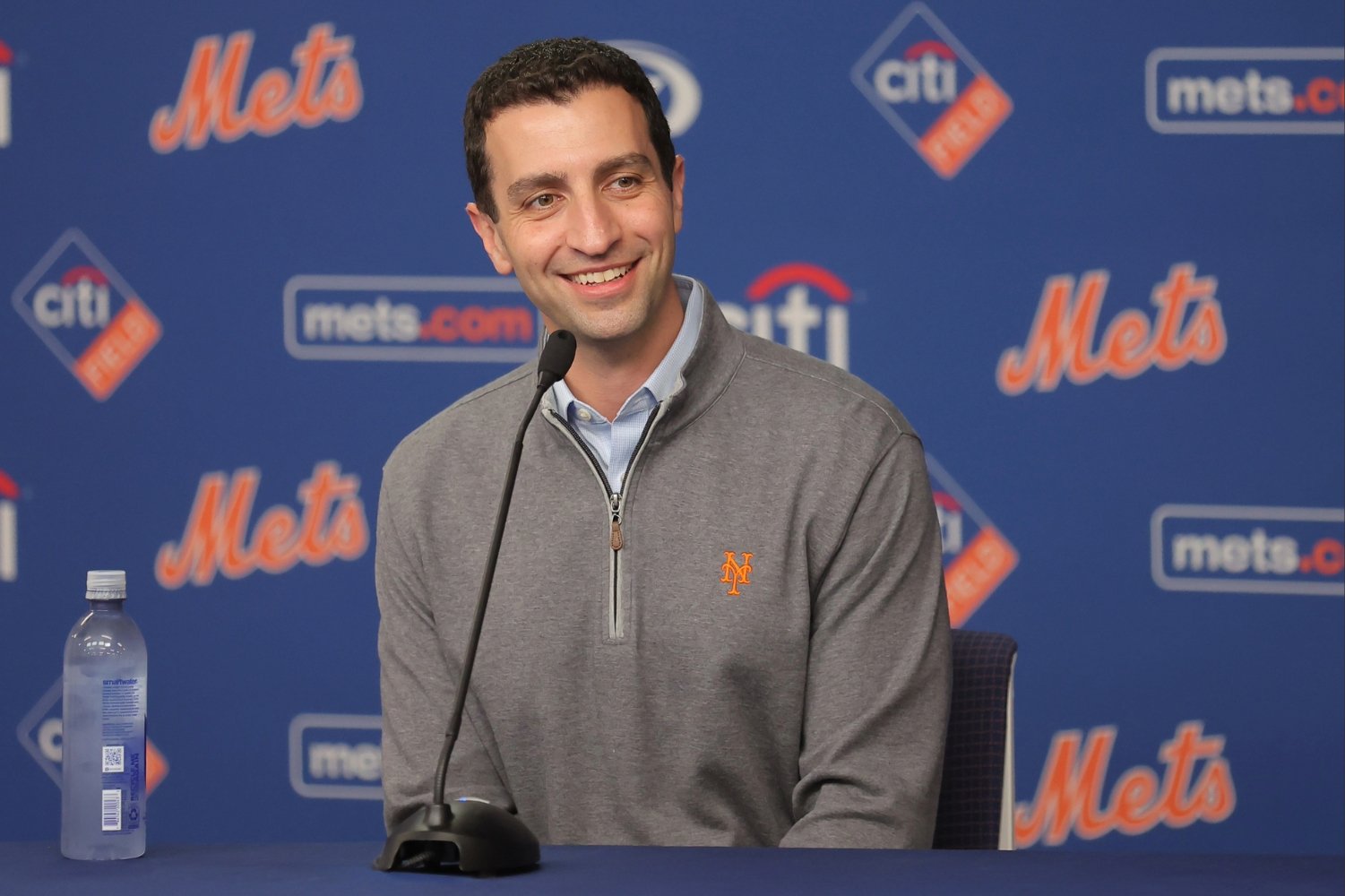 The New York Mets' disastrous 2026 made them easy deadline sellers. There was no straddling the fence, because by mid-June, they had already fallen from the fence, broken both legs and an arm as they rolled down a hill into an industrial waste receptacle. All told, the Mets executed seven trades, shipping out eight major leaguers, and got 12 prospects in return. Of the players the Mets traded, only Luke Weaver and Clay Holmes had guaranteed money on the books for the 2027 season, and Holmes’ guarantee is via a player option. Since the vast majority of the Mets’ moves were rentals, the expected prospect return should be muted. MLB organizations simply don’t depart with top prospects for rentals, unless they’re a star. While that might make the Mets’ deadline fire sale seem somewhat underwhelming, it also means they haven’t completely gutted their roster for future seasons. With those caveats in mind, let’s get out the red pen and hand out those grades. New York Mets 2026 Trade Deadline Grades Trade: Mets secure Jefferson Rojas from the Chicago Cubs for Clay Holmes and Tyrone Taylor This was, without a doubt, my favorite trade the Mets made, and the reason is quite simple. Jefferson Rojas is a global top-100 prospect. I wish more teams tried to bundle two vets to get one good prospect; instead of taking the pu-pu platter of 35 and 40-grade prospects that every organization seems to churn out, the Mets landed one big fish. On top of that, top-100 prospects rarely get moved for a 33-year-old pitcher who has missed the past two months and a career short-sided platoon outfielder. However, I’m not going to savage the Cubs for this decision. Holmes has been a solid starting pitcher since the Mets converted him from the pen in 2025. He posted a 3.53 ERA in 165.2 innings last season, and has a 2.39 ERA in 52.2 innings in 2026. Now, all the ERA estimators suggest he has gotten a bit fortunate, but the Cubs have one of the best position player cores in baseball and desperately needed starting pitching. On top of that, Holmes gets gobs of groundballs, which fits perfectly with the Cubs' exceptional infield defense. He fills a huge need for a World Series hopeful, and he fits perfectly with their core, even if he ends up a rental. Taylor has been legitimately excellent against left-handed pitching this season. He owns a 146 wRC+ against southpaws, but for his career his wRC+ against left-handers is only 101. He can also fake it in center, which is of no use to the Cubs because of Pete Crow-Armstrong, but it’s nice to have that in your back pocket. At the end of the day, Taylor is just a depth piece, which is never bad to have when you’re trying to win the whole thing. Rojas is by far the highest-rated prospect the Mets landed at the deadline, and he possesses a very interesting profile. He has excellent bat control, makes good swing decisions, has decent pop, and is likely to play a passable shortstop. If that sounds like a very stable prospect, that’s because he is. Rojas’ well-rounded skill set gives him a very strong likelihood of providing average or better value at shortstop. As a bonus, if any of his skills level up, he has a chance to be a star. While this is unlikely to be the Mets' revenge for the Pete Crow-Armstrong trade, it isn’t completely out of the question. Rojas is tracking for a 2028 debut, but he has a 114 wRC+ as a 21-year-old in AA, so a 2027 debut is certainly not out of the question. Grade: A+ Trade: Mets Land Sammy Stafura from Pirates for Luke Weaver and cash considerations There’s an argument to be made that Luke Weaver was the best reliever moved at the deadline, as his 1.84 ERA and 1.1 fWAR rank 11th and 19th in all of baseball. However, I’m inclined to believe his 3.50 xFIP, which supposes a league-average HR/FB, is closer to his true talent level. If you’re not a true kaiju-level reliever (e.g., Jhoan Duran or Mason Miller) with years of control, you’re just not getting moved for a top-100 guy. Weaver’s profile has changed markedly this season. He went from being an extreme fly-ball pitcher to now sporting a healthy 43.1% groundball rate. However, he hasn’t gotten there the old-fashioned way. Weaver still isn’t throwing a sinker; he has just traded in a few more cutters and change-ups to terrorize the local worm population. To get Weaver to the notoriously tight-fisted Pirates, the Mets had to chip in $2 million to help pay down Weaver’s remaining salary this season and a further $6 million to eat into his $11 million 2027 salary. That’s a heck of a reliever and a lot of money to land Sammy Stafura. Now, Stafura is an interesting lottery ticket for the Mets. He’s an excellent athlete and looks likely to stick at shortstop. At the plate, he has shown solid discipline in the low minors, but he has hit tool risk, and before this season, he had only shown minimal power. However, in 2026, Stafura’s power numbers have been exceptional. He has 19 home runs in High-A and is running an ISO of .355. The problem is power and offense has exploded throughout the minors, and it’s hard to parse what’s real and what’s the result of a juiced ball. If this level of power is real, which I’m inclined to believe at some level it is, then Stafura is a much more interesting prospect. We’ll have to wait and see if his offensive explosion is the real deal, but it certainly makes him more interesting than he was 12 months ago. My guess is some of the power uptick is legitimate because why else would the Mets be willing to move a top reliever, who wasn’t even a rental, and throw in $8 million for him? Grade: B Trade: Mets Flip Ben Rortvedt to the Dodgers for Chayce McDermott The fact that the Mets got anything for Ben Rortvedt is, on some level, impressive. Yes, he’s a great defensive catcher, but his career wRC+ of 62 is the same as Ice Box Chamberlain, Highball Wilson, and Doc Reisling’s, to name a few turn of the 20th century pitchers with 80-grade names. He’s a reserve catcher. These guys get DFA’d all the time. I’m sure he’ll make a great coach one day, but these are the types of players that flow freely between teams for a reason. Chayce McDermott was once a prospect. In fact, he was once a top-100 prospect. Between 2022 and 2024, he led the minors in strikeouts. He had great stuff and succeeded at a high level despite an elevated walk rate. Unfortunately, he has struggled with injuries since, and his stuff hasn’t been overwhelming enough to overcome his awful control. However, this is a shrewd pickup for the Mets. Sure, guys like McDermott get DFA’d all the time, but they flipped a DFA candidate with no shot of stardom for a guy who could conceivably become a valuable late-inning weapon. I think the ship has sailed on McDermott ever being a starter, but if the Mets can get his control to acceptable status, he could be a solid middle-inning option, and if he ever gets to average, he may be useful in leverage situations. This is a flyer on a guy with real upside and pedigree. For the cost of a catcher with an impossible-to-spell last name, that’s solid work. Grade: B- Trade: Mets Land Luke Gabrysh and John Spikerman from Phillies for Brooks Raley Brooks Raley, much like Luke Weaver, isn’t going to be judged by his sterling 1.96 ERA. He’s a 38-year-old left-handed reliever with average strikeout and walk figures who makes his living on contact suppression. He’s still a valuable contributor out of the pen, but this isn’t the guy you want slamming the door in the eighth and ninth innings. As such, the Mets return for him is most likely to end up as organizational depth. Luke Gabrysh is still starting, but command issues and good stuff have him trending towards the bullpen. You never know how a pitcher will take to the pen, but if his stuff plays up in single-inning bursts, he might not need all that much control to climb the ladder. While I’d still hold out hope that my pitching development could keep him on the starter track, he’s much more likely to debut in 2028 in the sixth inning of a random June game. John Spikerman has wheels, can potentially play centerfield, and is walking a ton in the low-minors. Based on his lack of power, which includes raw thump and a lack of lift and pull, Spikerman is not going to be an on-base machine as he climbs the ladder. He needs to be able to play centerfield to make it to the bigs, or else he’ll probably stall out in Triple-A as a light-hitting corner outfielder who gets overwhelmed by quality stuff. Grade: C Trade: Mets Get Gabe Davis and Zach Franklin from White Sox for Huascar Brazoban It’s always sad to see a guy like Huascar Brazobán get traded. He has been rock solid out of the middle of the Mets’ bullpen the past two seasons, and he could sell the rights to his route to the majors to one of those B-tier streaming services like Tubi. Brazoban, at age 28, was out of the minors following the 2017 season. Instead of packing it up, he just kept persevering. He played in the independent Atlantic League in 2018, then had visa issues that caused him to miss all of 2019, and then COVID canceled the 2020 season. After two seasons out of semi-professional American baseball, he again headed back to the Atlantic League for 2021, and it wasn’t until 2022 when the Marlins signed him that he got back on a major league track. Somehow, he debuted in 2022, at age 32, and has been a solid middle reliever ever since. Long live Huascar Brazobán! As noted, Brazobán is simply a solid middle reliever, so he was never going to command a haul, but I like what the Mets did here. In Gabe Davis and Zach Franklin, they landed two guys with huge stuff. Davis is the more interesting of the two because he’s still starting, stands 6’9, and has hit 100 MPH with his heater. Is the control an issue? Yes. Are the secondaries suspect? You bet. But this is a giant with a huge arm who was a reliever in college. He has a bunch of late bloomer traits, is still only 22, and has late-inning fireballer as a fallback career path. Franklin is extremely old to be considered a prospect, but I’m intrigued by him nonetheless. He’ll turn 28 in October and has yet to throw a major-league pitch, but his fastball-splitter combo has racked up strikeouts throughout the minors. His ERA is ugly at AAA (4.37), but he has the best walk rate of his career (7.5%) and is striking out a third (32.1%) of the opposition. As so many relievers have been in the past, he has been bedeviled by an insane home run rate (2.18 HR/9). Outside of Triple-A, he has largely limited the long ball. It could be his approach is susceptible to more advanced hitters, but he’s definitely worth a look because strikeouts are the best thing a pitcher can do. Grade: B Trade: Mets Acquire Aidan Smith, Emilien Pitre and Gary Gill Hill from the Rays for Freddy Peralta Freddy Peralta’s Mets’ tenure ended unceremoniously when he was flipped for the aforementioned 45-grade pu-pu platter. The unrealized promise of Peralta has been well documented, and while his ERA estimators all suggested better than his 4.99 showing, it’s not like they were secretly sterling. That being said, there’s still a solid pitcher in there, and the price the Rays paid to land him says as much. Aidan Smith, Emilien Pitre, and Gary Gill Hill are all solid if unspectacular prospects. That doesn’t mean this return was light, but it means the Mets went for solid depth, as opposed to chasing high-variance lottery tickets, as they did in many of their other deadline moves. As an overall deadline strategy, I think it makes sense to get a solid mix of different prospects. Gary Gill Hill is the opposite of just about every other pitcher the Mets acquired. He doesn’t possess overwhelming stuff, but he has excellent command and should be able to help the back of the rotation in short order. If the Mets can figure out how to coax more stuff out of him, he could really take off, but he doesn’t have the size or the type of dynamic athleticism where that’s a realistic dream. Hill is likely to end up the type of pitcher that is valuable in an emergency. Aidan Smith was trending up on prospect boards in 2024. Between Seattle and Tampa Bay, he hit for a robust 143 wRC+ at A-ball as a 19-year-old. For someone with plus-speed and a projectable frame, it became easy to dream. Unfortunately, a nascent hit tool risk torpedoed his performance in 2025 and has followed him into 2026. This is purely a flier on a high-variance prospect, whose arrow is currently pointing down. Emilien Pitre is inarguably the highest-performing prospect the Mets acquired. He walks a ton, rarely strikes out, and has enough pop to pull the occasional home run. For 2026, between High-A and Double-A, he is slashing .308/.438/.447 for a 139 wRC+. There isn’t much bust risk, but Pitre doesn’t have the power, physical projection, or defensive versatility to have a real big-league role if he’s not an elite contact hitter. There are more and more success stories of elite contact hitters using their astute batting eye and barrel control to sell out for power, but it’s always fair to remain skeptical until that evolution is complete. Right now, Pitre has exclusively played second base, and doesn’t project as plus at the position. He’s an interesting prospect who should get a cup of coffee one day, but he’s no lock to be a regular at the highest level. Grade: B- Trade: Mets Get Billy Amick and Bruin Agbayani from the Twins for A.J. Minter A.J. Minter was the first of the Mets’ trade deadline dominoes to fall. After missing most of 2025 recovering from lat surgery, Minter has been his usual exceptional self, albeit in a very different way. At his peak, he would rack up strikeouts while limiting walks. This season, the strikeouts have dried up, a career-low 21.4%, but he has virtually offered no free passes, a career-best 2.0%. His ERA estimators haven’t been quite as strong as they were in the past, but it’s pretty hard not to be an effective option when you issue a single pass every dozen innings. To pry Minter away from the Mets, the Twins sent Billy Amick and Bruin Agbayani to Queens. Both prospects have a 35-grade from FanGraphs, which indicates they’re viewed as marginal major leaguers. Amick has real power, but his contact issues are a glowing red flag. As a right-handed batting 3B/1B prospect, Amick is going to need to remedy his contact issues, because he isn’t suddenly going to develop 80-grade raw power. He projects as a boom-or-bust bench bat, if he reaches the majors at all. Bruin Agbayani is more the interesting prospect of the two, and not just because his dad is Benny “Hawaiian Punch” Agbayani. The younger Agbayani is only 19, and has a legitimate hit tool. That alone gives him a much more stable profile to build from. He’ll have to remain on the dirt and hopefully grow into average power to profile as an everyday big leaguer, but I’d rather take a chance on a 19-year-old outdoing their power projection than hoping a 23-year-old can actually make contact. In all likelihood, the Mets probably landed two guys who cap out in AA or AAA, but for wildly different reasons. While it would have been nice to land guys with better major-league chances, those guys just don’t get traded for rental relievers all that often. Grade: C Overall, the Mets did well to turn their stable of rentals into a bushel of prospects. Landing Jefferson Rojas was a masterstroke, and they did well to secure some high-variance arms. Based on FanGraphs' prospect rankings, the Mets added one 50-grade prospect, one 45-grade, four 40-grade, and six 35-grade prospects. Just as a note, the industry consensus is that a 50 grade indicates a future average major leaguer. That might not sound like much, but getting a few two-to-three WAR seasons from a pre-arbitration and early arbitration player is incredibly valuable. If the Mets had been willing to deal players with more team control, they could have certainly gotten a better prospect haul. Chances are about half of these players won’t even be viewed as legitimate prospects in 12 months, but that’s just fine. A minor-league system is about finding impact major-league talent, not having the most guys who get blurbs on websites. The Mets took some calculated risks, landed a stable top-100 prospect, and bulked up their organizational depth. That’s about as good as you’re going to do when you ship out a bunch of veteran rentals. Overall Grade: B+
 -
Image courtesy of © Brad Penner-Imagn Images The New York Mets' disastrous 2026 made them easy deadline sellers. There was no straddling the fence, because by mid-June, they had already fallen from the fence, broken both legs and an arm as they rolled down a hill into an industrial waste receptacle. All told, the Mets executed seven trades, shipping out eight major leaguers, and got 12 prospects in return. Of the players the Mets traded, only Luke Weaver and Clay Holmes had guaranteed money on the books for the 2027 season, and Holmes’ guarantee is via a player option. Since the vast majority of the Mets’ moves were rentals, the expected prospect return should be muted. MLB organizations simply don’t depart with top prospects for rentals, unless they’re a star. While that might make the Mets’ deadline fire sale seem somewhat underwhelming, it also means they haven’t completely gutted their roster for future seasons. With those caveats in mind, let’s get out the red pen and hand out those grades. New York Mets 2026 Trade Deadline Grades Trade: Mets secure Jefferson Rojas from the Chicago Cubs for Clay Holmes and Tyrone Taylor This was, without a doubt, my favorite trade the Mets made, and the reason is quite simple. Jefferson Rojas is a global top-100 prospect. I wish more teams tried to bundle two vets to get one good prospect; instead of taking the pu-pu platter of 35 and 40-grade prospects that every organization seems to churn out, the Mets landed one big fish. On top of that, top-100 prospects rarely get moved for a 33-year-old pitcher who has missed the past two months and a career short-sided platoon outfielder. However, I’m not going to savage the Cubs for this decision. Holmes has been a solid starting pitcher since the Mets converted him from the pen in 2025. He posted a 3.53 ERA in 165.2 innings last season, and has a 2.39 ERA in 52.2 innings in 2026. Now, all the ERA estimators suggest he has gotten a bit fortunate, but the Cubs have one of the best position player cores in baseball and desperately needed starting pitching. On top of that, Holmes gets gobs of groundballs, which fits perfectly with the Cubs' exceptional infield defense. He fills a huge need for a World Series hopeful, and he fits perfectly with their core, even if he ends up a rental. Taylor has been legitimately excellent against left-handed pitching this season. He owns a 146 wRC+ against southpaws, but for his career his wRC+ against left-handers is only 101. He can also fake it in center, which is of no use to the Cubs because of Pete Crow-Armstrong, but it’s nice to have that in your back pocket. At the end of the day, Taylor is just a depth piece, which is never bad to have when you’re trying to win the whole thing. Rojas is by far the highest-rated prospect the Mets landed at the deadline, and he possesses a very interesting profile. He has excellent bat control, makes good swing decisions, has decent pop, and is likely to play a passable shortstop. If that sounds like a very stable prospect, that’s because he is. Rojas’ well-rounded skill set gives him a very strong likelihood of providing average or better value at shortstop. As a bonus, if any of his skills level up, he has a chance to be a star. While this is unlikely to be the Mets' revenge for the Pete Crow-Armstrong trade, it isn’t completely out of the question. Rojas is tracking for a 2028 debut, but he has a 114 wRC+ as a 21-year-old in AA, so a 2027 debut is certainly not out of the question. Grade: A+ Trade: Mets Land Sammy Stafura from Pirates for Luke Weaver and cash considerations There’s an argument to be made that Luke Weaver was the best reliever moved at the deadline, as his 1.84 ERA and 1.1 fWAR rank 11th and 19th in all of baseball. However, I’m inclined to believe his 3.50 xFIP, which supposes a league-average HR/FB, is closer to his true talent level. If you’re not a true kaiju-level reliever (e.g., Jhoan Duran or Mason Miller) with years of control, you’re just not getting moved for a top-100 guy. Weaver’s profile has changed markedly this season. He went from being an extreme fly-ball pitcher to now sporting a healthy 43.1% groundball rate. However, he hasn’t gotten there the old-fashioned way. Weaver still isn’t throwing a sinker; he has just traded in a few more cutters and change-ups to terrorize the local worm population. To get Weaver to the notoriously tight-fisted Pirates, the Mets had to chip in $2 million to help pay down Weaver’s remaining salary this season and a further $6 million to eat into his $11 million 2027 salary. That’s a heck of a reliever and a lot of money to land Sammy Stafura. Now, Stafura is an interesting lottery ticket for the Mets. He’s an excellent athlete and looks likely to stick at shortstop. At the plate, he has shown solid discipline in the low minors, but he has hit tool risk, and before this season, he had only shown minimal power. However, in 2026, Stafura’s power numbers have been exceptional. He has 19 home runs in High-A and is running an ISO of .355. The problem is power and offense has exploded throughout the minors, and it’s hard to parse what’s real and what’s the result of a juiced ball. If this level of power is real, which I’m inclined to believe at some level it is, then Stafura is a much more interesting prospect. We’ll have to wait and see if his offensive explosion is the real deal, but it certainly makes him more interesting than he was 12 months ago. My guess is some of the power uptick is legitimate because why else would the Mets be willing to move a top reliever, who wasn’t even a rental, and throw in $8 million for him? Grade: B Trade: Mets Flip Ben Rortvedt to the Dodgers for Chayce McDermott The fact that the Mets got anything for Ben Rortvedt is, on some level, impressive. Yes, he’s a great defensive catcher, but his career wRC+ of 62 is the same as Ice Box Chamberlain, Highball Wilson, and Doc Reisling’s, to name a few turn of the 20th century pitchers with 80-grade names. He’s a reserve catcher. These guys get DFA’d all the time. I’m sure he’ll make a great coach one day, but these are the types of players that flow freely between teams for a reason. Chayce McDermott was once a prospect. In fact, he was once a top-100 prospect. Between 2022 and 2024, he led the minors in strikeouts. He had great stuff and succeeded at a high level despite an elevated walk rate. Unfortunately, he has struggled with injuries since, and his stuff hasn’t been overwhelming enough to overcome his awful control. However, this is a shrewd pickup for the Mets. Sure, guys like McDermott get DFA’d all the time, but they flipped a DFA candidate with no shot of stardom for a guy who could conceivably become a valuable late-inning weapon. I think the ship has sailed on McDermott ever being a starter, but if the Mets can get his control to acceptable status, he could be a solid middle-inning option, and if he ever gets to average, he may be useful in leverage situations. This is a flyer on a guy with real upside and pedigree. For the cost of a catcher with an impossible-to-spell last name, that’s solid work. Grade: B- Trade: Mets Land Luke Gabrysh and John Spikerman from Phillies for Brooks Raley Brooks Raley, much like Luke Weaver, isn’t going to be judged by his sterling 1.96 ERA. He’s a 38-year-old left-handed reliever with average strikeout and walk figures who makes his living on contact suppression. He’s still a valuable contributor out of the pen, but this isn’t the guy you want slamming the door in the eighth and ninth innings. As such, the Mets return for him is most likely to end up as organizational depth. Luke Gabrysh is still starting, but command issues and good stuff have him trending towards the bullpen. You never know how a pitcher will take to the pen, but if his stuff plays up in single-inning bursts, he might not need all that much control to climb the ladder. While I’d still hold out hope that my pitching development could keep him on the starter track, he’s much more likely to debut in 2028 in the sixth inning of a random June game. John Spikerman has wheels, can potentially play centerfield, and is walking a ton in the low-minors. Based on his lack of power, which includes raw thump and a lack of lift and pull, Spikerman is not going to be an on-base machine as he climbs the ladder. He needs to be able to play centerfield to make it to the bigs, or else he’ll probably stall out in Triple-A as a light-hitting corner outfielder who gets overwhelmed by quality stuff. Grade: C Trade: Mets Get Gabe Davis and Zach Franklin from White Sox for Huascar Brazoban It’s always sad to see a guy like Huascar Brazobán get traded. He has been rock solid out of the middle of the Mets’ bullpen the past two seasons, and he could sell the rights to his route to the majors to one of those B-tier streaming services like Tubi. Brazoban, at age 28, was out of the minors following the 2017 season. Instead of packing it up, he just kept persevering. He played in the independent Atlantic League in 2018, then had visa issues that caused him to miss all of 2019, and then COVID canceled the 2020 season. After two seasons out of semi-professional American baseball, he again headed back to the Atlantic League for 2021, and it wasn’t until 2022 when the Marlins signed him that he got back on a major league track. Somehow, he debuted in 2022, at age 32, and has been a solid middle reliever ever since. Long live Huascar Brazobán! As noted, Brazobán is simply a solid middle reliever, so he was never going to command a haul, but I like what the Mets did here. In Gabe Davis and Zach Franklin, they landed two guys with huge stuff. Davis is the more interesting of the two because he’s still starting, stands 6’9, and has hit 100 MPH with his heater. Is the control an issue? Yes. Are the secondaries suspect? You bet. But this is a giant with a huge arm who was a reliever in college. He has a bunch of late bloomer traits, is still only 22, and has late-inning fireballer as a fallback career path. Franklin is extremely old to be considered a prospect, but I’m intrigued by him nonetheless. He’ll turn 28 in October and has yet to throw a major-league pitch, but his fastball-splitter combo has racked up strikeouts throughout the minors. His ERA is ugly at AAA (4.37), but he has the best walk rate of his career (7.5%) and is striking out a third (32.1%) of the opposition. As so many relievers have been in the past, he has been bedeviled by an insane home run rate (2.18 HR/9). Outside of Triple-A, he has largely limited the long ball. It could be his approach is susceptible to more advanced hitters, but he’s definitely worth a look because strikeouts are the best thing a pitcher can do. Grade: B Trade: Mets Acquire Aidan Smith, Emilien Pitre and Gary Gill Hill from the Rays for Freddy Peralta Freddy Peralta’s Mets’ tenure ended unceremoniously when he was flipped for the aforementioned 45-grade pu-pu platter. The unrealized promise of Peralta has been well documented, and while his ERA estimators all suggested better than his 4.99 showing, it’s not like they were secretly sterling. That being said, there’s still a solid pitcher in there, and the price the Rays paid to land him says as much. Aidan Smith, Emilien Pitre, and Gary Gill Hill are all solid if unspectacular prospects. That doesn’t mean this return was light, but it means the Mets went for solid depth, as opposed to chasing high-variance lottery tickets, as they did in many of their other deadline moves. As an overall deadline strategy, I think it makes sense to get a solid mix of different prospects. Gary Gill Hill is the opposite of just about every other pitcher the Mets acquired. He doesn’t possess overwhelming stuff, but he has excellent command and should be able to help the back of the rotation in short order. If the Mets can figure out how to coax more stuff out of him, he could really take off, but he doesn’t have the size or the type of dynamic athleticism where that’s a realistic dream. Hill is likely to end up the type of pitcher that is valuable in an emergency. Aidan Smith was trending up on prospect boards in 2024. Between Seattle and Tampa Bay, he hit for a robust 143 wRC+ at A-ball as a 19-year-old. For someone with plus-speed and a projectable frame, it became easy to dream. Unfortunately, a nascent hit tool risk torpedoed his performance in 2025 and has followed him into 2026. This is purely a flier on a high-variance prospect, whose arrow is currently pointing down. Emilien Pitre is inarguably the highest-performing prospect the Mets acquired. He walks a ton, rarely strikes out, and has enough pop to pull the occasional home run. For 2026, between High-A and Double-A, he is slashing .308/.438/.447 for a 139 wRC+. There isn’t much bust risk, but Pitre doesn’t have the power, physical projection, or defensive versatility to have a real big-league role if he’s not an elite contact hitter. There are more and more success stories of elite contact hitters using their astute batting eye and barrel control to sell out for power, but it’s always fair to remain skeptical until that evolution is complete. Right now, Pitre has exclusively played second base, and doesn’t project as plus at the position. He’s an interesting prospect who should get a cup of coffee one day, but he’s no lock to be a regular at the highest level. Grade: B- Trade: Mets Get Billy Amick and Bruin Agbayani from the Twins for A.J. Minter A.J. Minter was the first of the Mets’ trade deadline dominoes to fall. After missing most of 2025 recovering from lat surgery, Minter has been his usual exceptional self, albeit in a very different way. At his peak, he would rack up strikeouts while limiting walks. This season, the strikeouts have dried up, a career-low 21.4%, but he has virtually offered no free passes, a career-best 2.0%. His ERA estimators haven’t been quite as strong as they were in the past, but it’s pretty hard not to be an effective option when you issue a single pass every dozen innings. To pry Minter away from the Mets, the Twins sent Billy Amick and Bruin Agbayani to Queens. Both prospects have a 35-grade from FanGraphs, which indicates they’re viewed as marginal major leaguers. Amick has real power, but his contact issues are a glowing red flag. As a right-handed batting 3B/1B prospect, Amick is going to need to remedy his contact issues, because he isn’t suddenly going to develop 80-grade raw power. He projects as a boom-or-bust bench bat, if he reaches the majors at all. Bruin Agbayani is more the interesting prospect of the two, and not just because his dad is Benny “Hawaiian Punch” Agbayani. The younger Agbayani is only 19, and has a legitimate hit tool. That alone gives him a much more stable profile to build from. He’ll have to remain on the dirt and hopefully grow into average power to profile as an everyday big leaguer, but I’d rather take a chance on a 19-year-old outdoing their power projection than hoping a 23-year-old can actually make contact. In all likelihood, the Mets probably landed two guys who cap out in AA or AAA, but for wildly different reasons. While it would have been nice to land guys with better major-league chances, those guys just don’t get traded for rental relievers all that often. Grade: C Overall, the Mets did well to turn their stable of rentals into a bushel of prospects. Landing Jefferson Rojas was a masterstroke, and they did well to secure some high-variance arms. Based on FanGraphs' prospect rankings, the Mets added one 50-grade prospect, one 45-grade, four 40-grade, and six 35-grade prospects. Just as a note, the industry consensus is that a 50 grade indicates a future average major leaguer. That might not sound like much, but getting a few two-to-three WAR seasons from a pre-arbitration and early arbitration player is incredibly valuable. If the Mets had been willing to deal players with more team control, they could have certainly gotten a better prospect haul. Chances are about half of these players won’t even be viewed as legitimate prospects in 12 months, but that’s just fine. A minor-league system is about finding impact major-league talent, not having the most guys who get blurbs on websites. The Mets took some calculated risks, landed a stable top-100 prospect, and bulked up their organizational depth. That’s about as good as you’re going to do when you ship out a bunch of veteran rentals. Overall Grade: B+ View full article
-
A day after shipping Freddy Peralta to Tampa Bay for three prospects, the Mets, as one of the few sellers employing impact talent, remained active in the trade market. Monday morning, they flipped left-handed reliever Brooks Raley to the Philadelphia Phillies for two 23-year-old High-A prospects– Luke Gabrysh and John Spikerman. Raley is in the midst of a strong season, but he was never going to land a haul commensurate with his 1.96 ERA. His strikeout rate of 23.5% and walk rate of 8.8% are only slightly better than the MLB averages for relievers (22.3% and 9.8%), and he has been relying on home run suppression (4.4% HR/FB) while being an extreme flyball pitcher (35.8% groundball rate) to produce a 3.10 FIP and 3.37 xERA. Rental relievers who rely on contact suppression are just not as hot a commodity in the age of the strikeout. Make no mistake, Raley is a good reliever, but only the cream of the crop land a haul for three months of work. The most important detail about Gabrysh, a right-handed pitcher, and Spikerman, an outfielder, is that they’re 23 and still in High-A. Any prospect who is old for their level needs to be dominant or possess outlier physical traits to be viewed as a future big leaguer, and neither Gabrysh nor Spikeman can really say that. Starting with Gabrysh, he is by far the more interesting of the two. His surface-level stats in High-A are not pretty: 5.14 ERA, 11.1% BB%, and 1.45 HR/9. However, he is sporting a 29% strikeout rate and is at least still starting. Stuff-wise, he has the goods to make the show, as his fastball, cutter, and sweeper all flash plus. The lack of a changeup or curveball makes his long-term prospects as a starter much more murky, and his scattershot control – he has hit 14 batters this season – already has him on the single-inning reliever path. However, pitchers who have multiple plus pitches should be given every chance to start. Despite averaging only 4 innings per start, Gabrysh, from a pitch count perspective, has been able to hold up to a starter’s workload for his level. If the Mets can help Gabrysh further refine his control and/or find a lefty-neutralizing off-speed pitch, he has a chance to be a starter, albeit an inefficient one. He isn’t Rule-5 eligible until December of 2027, which gives the Mets some runway to continue to develop him as a starter. If the control doesn’t come along by midway through next season, he’ll almost certainly be moved to the pen, where he could shoot through the minors if his stuff plays up in single-inning bursts with a more pared-down arsenal improving his strike throwing. The most likely outcome for Gabrysh is he’ll be an extremely volatile middle reliever. His stuff is good, but not so good he can just rear back and throw down the middle. The Mets should let him continue starting just for the reps, but I wouldn’t fault them for moving him to the pen and seeing just how nasty he can be in single-inning bursts. There’s a chance he takes to the pen and debuts in 2026, but 2027 is more likely. Spikerman is probably just organizational depth. He’s old for his level, and his future in center field is a bit murky. Despite excellent speed, he was moved off center field full time in 2025, and while he has played the vast majority of his innings in center this season, he probably needs to be plus in center to have any real future in the majors. There is good and bad news about Spikerman’s offensive profile. The good news is that he went from striking out nearly 30% of the time in 2025 to 22% in 2026. His contact metrics suggest he improved markedly in this department, which improves his chances of climbing the ladder from zero. The bad news is he has demonstrated absolutely no game power. He has hit three home runs in his minor league career; they all came last season in A-Ball, and his 90th percentile average exit velocity was only 100.4 MPH at A-ball in 2025. While his raw thump isn’t of the wet-noodle variety, he has struggled to lift or pull the ball, which he’d need to do at an exceptional rate to produce any power at the major league level. Despite his lack of power, he does own a 116 wRC+ at High-A this season, but it comes with a serious caveat. His profile is being carried almost exclusively by an excellent 19.5% walk rate, which is paradoxically not a good sign. Spikerman gets to his walks by being extremely passive. According to Prospect Savant, his swing rate of 35.98% is in the sixth percentile, and his in-zone swing rate of 59.29% is in the 16th percentile. The minors are littered with on-base machines who take advantage of wild minor league arms by simply not swinging. As he climbs the ladder, pitchers will more consistently pound the zone, and his lack of thump won’t make them pay. Functionally, his production looks like a house of cards built on a foundation of capitalizing on amateurish pitching. There’s a chance Spikerman can develop into a speed-centric fourth outfielder, but he’ll need to maintain his contact gains, develop a bit more power, and improve defensively enough to be viable in the majors. That’s a lot of “ifs” for a 23-year-old in High-A to overcome. However, he has shown real improvement at the plate season-to-season, which gives him a slim chance. The ability to make adjustments is the defining characteristic of baseball, and Spikerman has at least shown some aptitude to do so. View full article
-
 A day after shipping Freddy Peralta to Tampa Bay for three prospects, the Mets, as one of the few sellers employing impact talent, remained active in the trade market. Monday morning, they flipped left-handed reliever Brooks Raley to the Philadelphia Phillies for two 23-year-old High-A prospects– Luke Gabrysh and John Spikerman. Raley is in the midst of a strong season, but he was never going to land a haul commensurate with his 1.96 ERA. His strikeout rate of 23.5% and walk rate of 8.8% are only slightly better than the MLB averages for relievers (22.3% and 9.8%), and he has been relying on home run suppression (4.4% HR/FB) while being an extreme flyball pitcher (35.8% groundball rate) to produce a 3.10 FIP and 3.37 xERA. Rental relievers who rely on contact suppression are just not as hot a commodity in the age of the strikeout. Make no mistake, Raley is a good reliever, but only the cream of the crop land a haul for three months of work. The most important detail about Gabrysh, a right-handed pitcher, and Spikerman, an outfielder, is that they’re 23 and still in High-A. Any prospect who is old for their level needs to be dominant or possess outlier physical traits to be viewed as a future big leaguer, and neither Gabrysh nor Spikeman can really say that. Starting with Gabrysh, he is by far the more interesting of the two. His surface-level stats in High-A are not pretty: 5.14 ERA, 11.1% BB%, and 1.45 HR/9. However, he is sporting a 29% strikeout rate and is at least still starting. Stuff-wise, he has the goods to make the show, as his fastball, cutter, and sweeper all flash plus. The lack of a changeup or curveball makes his long-term prospects as a starter much more murky, and his scattershot control – he has hit 14 batters this season – already has him on the single-inning reliever path. However, pitchers who have multiple plus pitches should be given every chance to start. Despite averaging only 4 innings per start, Gabrysh, from a pitch count perspective, has been able to hold up to a starter’s workload for his level. If the Mets can help Gabrysh further refine his control and/or find a lefty-neutralizing off-speed pitch, he has a chance to be a starter, albeit an inefficient one. He isn’t Rule-5 eligible until December of 2027, which gives the Mets some runway to continue to develop him as a starter. If the control doesn’t come along by midway through next season, he’ll almost certainly be moved to the pen, where he could shoot through the minors if his stuff plays up in single-inning bursts with a more pared-down arsenal improving his strike throwing. The most likely outcome for Gabrysh is he’ll be an extremely volatile middle reliever. His stuff is good, but not so good he can just rear back and throw down the middle. The Mets should let him continue starting just for the reps, but I wouldn’t fault them for moving him to the pen and seeing just how nasty he can be in single-inning bursts. There’s a chance he takes to the pen and debuts in 2026, but 2027 is more likely. Spikerman is probably just organizational depth. He’s old for his level, and his future in center field is a bit murky. Despite excellent speed, he was moved off center field full time in 2025, and while he has played the vast majority of his innings in center this season, he probably needs to be plus in center to have any real future in the majors. There is good and bad news about Spikerman’s offensive profile. The good news is that he went from striking out nearly 30% of the time in 2025 to 22% in 2026. His contact metrics suggest he improved markedly in this department, which improves his chances of climbing the ladder from zero. The bad news is he has demonstrated absolutely no game power. He has hit three home runs in his minor league career; they all came last season in A-Ball, and his 90th percentile average exit velocity was only 100.4 MPH at A-ball in 2025. While his raw thump isn’t of the wet-noodle variety, he has struggled to lift or pull the ball, which he’d need to do at an exceptional rate to produce any power at the major league level. Despite his lack of power, he does own a 116 wRC+ at High-A this season, but it comes with a serious caveat. His profile is being carried almost exclusively by an excellent 19.5% walk rate, which is paradoxically not a good sign. Spikerman gets to his walks by being extremely passive. According to Prospect Savant, his swing rate of 35.98% is in the sixth percentile, and his in-zone swing rate of 59.29% is in the 16th percentile. The minors are littered with on-base machines who take advantage of wild minor league arms by simply not swinging. As he climbs the ladder, pitchers will more consistently pound the zone, and his lack of thump won’t make them pay. Functionally, his production looks like a house of cards built on a foundation of capitalizing on amateurish pitching. There’s a chance Spikerman can develop into a speed-centric fourth outfielder, but he’ll need to maintain his contact gains, develop a bit more power, and improve defensively enough to be viable in the majors. That’s a lot of “ifs” for a 23-year-old in High-A to overcome. However, he has shown real improvement at the plate season-to-season, which gives him a slim chance. The ability to make adjustments is the defining characteristic of baseball, and Spikerman has at least shown some aptitude to do so.
 -
Image courtesy of © John Jones-Imagn Images As the trade deadline approaches, the New York Mets will entertain trading everything that isn’t nailed down. So, outside of Juan Soto and their stockpile of pre-arbitration stalwarts, everyone should, and probably will, be on the block. However, that doesn’t mean they will engage in a full-on fire sale. For instance, the Mets might listen to offers for Francisco Lindor, but I seriously doubt any organization would make an offer that’s too good to refuse. And to a much lesser degree, the Mets shouldn’t listen to the offers that try to pry Luis Robert Jr. away. On the surface, the Mets should thank any team willing to take on Robert and the remainder of his contract. He’s on a $20 million salary for this season and has a $22 million team option for 2027, with a $2 million buyout. Considering he has once again missed considerable time to injury, has a wRC+ of 83, and has graded out as, at best, an average center fielder, it’d be a small miracle if any team was even willing to take on his buyout. I mean, who in their right mind would trade for this? Luis Robert Jr. Past Three Seasons Season Team GP AVG OBP SLG wRC+ Off Def WAR 2024 CHW 100 0.224 0.278 0.379 84 -6.7 -2.1 0.5 2025 CHW 110 0.223 0.297 0.364 84 -6.6 4.3 1.3 2026 NYM 32 0.200 0.302 0.336 83 -3.4 0 0.1 242 0.220 0.29 0.366 84 -16.7 2.2 1.9 For three straight seasons, Robert has been injured, ineffective, and wildly infuriating. Throw in A.J. Ewing’s impressive debut in center field, and Robert is now the league’s most expensive fourth outfielder. Yet, despite all of the recent evidence, it’s hard to give up on a player who did this. Luis Robert Jr First Four Seasons Season Team GP AVG OBP SLG wRC+ Off Def WAR 2020 CHW 56 0.233 0.302 0.436 99 0.7 3.2 1.3 2021 CHW 68 0.338 0.378 0.567 155 20.1 3.8 3.4 2022 CHW 98 0.284 0.319 0.426 111 6.7 1 2.1 2023 CHW 145 0.264 0.315 0.542 129 20.5 9.1 5 367 0.278 0.326 0.499 124 48 17.1 11.8 Robert has never been, and probably never will be, a beacon of health, but his first four seasons were exceptional. He blended above-average defense with tons of power, and averaged 4.66 WAR per 600 plate appearances. He, as the cool scouts like to say, was a toolshed, and that doesn’t appear to have changed, even as he approaches 30. Robert’s average swing speed of 76.2 MPH is the 23rd-fastest among players with 50 or more swings this season. And his sprint speed of 29.1 feet per second is in the 92nd percentile. The power-speed combination that made him a borderline star is still present, and he has suddenly started to display a more refined approach. Even when Robert was a successful hitter, his approach at the plate left a lot to be desired. He rarely walked and struck out too much, and it all stemmed from his propensity to swing at just about anything. But in 2026, he has reigned in his aggressiveness and has the best walk and strikeout figures of his career. Luis Robert Career Plate Discipline Season BB% K% BB% - K% O-Swing% Z-Swing% Swing% O-Contact% Z-Contact% Contact% Zone% 2020 8.8% 32.2% -23.4% 39.8% 80.7% 57.4% 45.0% 71.6% 61.1% 43.0% 2021 4.7% 20.6% -15.9% 40.3% 85.0% 61.4% 52.2% 84.9% 73.6% 47.3% 2022 4.2% 19.2% -15.0% 43.3% 83.7% 61.5% 59.2% 85.2% 75.2% 45.0% 2023 5.0% 28.9% -23.9% 40.5% 78.1% 58.3% 47.4% 81.0% 68.7% 47.3% 2024 6.6% 33.2% -26.6% 35.9% 72.7% 53.1% 43.8% 80.2% 67.1% 46.7% 2025 9.3% 26.0% -16.7% 32.5% 76.3% 53.3% 50.2% 80.0% 70.5% 47.6% 2026 12.7% 22.2% -9.5% 33.9% 67.1% 48.7% 53.2% 87.9% 74.5% 44.5% Total 6.60% 26.50% -19.9% 38.30% 78.00% 56.70% 49.80% 81.30% 69.80% 46.30% Now, 126 plate appearances is not a huge sample, but all the statistical indicators suggest his new approach should be somewhat sticky. That doesn’t mean he’ll finish the year with a walk percentage only 9.5% lower than his strikeout rate, but none of his gains feel suspect. If you swing less, you should walk more, and if you swing at better strikes, you should make more contact. As I’m sure you’re wondering, there is a paradox we have to address: How is it possible for Robert to simultaneously post the best plate discipline figures of his career, while swinging as hard as ever, and also have the lowest wRC+ of his career? Well, there are two things at play. Robert has certainly had his fair share of bad luck this season. He has a BABIP of .231, and his xwOBA of .317 far outstrips his actual wOBA of .289. But with his combination of bat speed and walk rate, his xwOBA lags far behind his peers. Among players with 50 batted ball events, only 14 have paired a walk rate of 12% or better with an average swing speed of 75 MPH or greater, and it’s basically a who’s who of MLB superstars. Rk. Player Year PA BB% Bat Speed wOBA xwOBA LA Sweet-Spot % Barrel% Hard Hit % EV50 Adjusted EV Whiff % Swing % 1 Alvarez, Yordan 2026 473 15.4 76.1 0.445 0.475 41.9 18.6 53.7 105.4 97.5 19.4 42.7 2 Wood, James 2026 513 16.8 76.9 0.403 0.424 40.7 21.5 58.5 106.3 98.5 31.3 38.2 3 Judge, Aaron 2026 261 16.1 76.1 0.385 0.415 33.6 21.7 57.3 105.3 97.8 32.2 42.9 4 Trout, Mike 2026 405 18.5 75.1 0.37 0.398 35.8 17.8 47.8 103.2 96 23.1 39.3 5 Murakami, Munetaka 2026 313 18.2 75.1 0.393 0.378 30.7 20.3 60.1 104.7 97.8 42.6 41.4 6 Kurtz, Nick 2026 426 18.1 78.2 0.384 0.375 38.8 18.2 57.4 106.2 98.2 36.5 43 7 Acuña Jr., Ronald 2026 248 14.5 76 0.34 0.372 32.9 13.2 43.4 101.7 95.1 29.9 46.1 8 Greene, Riley 2026 454 12.6 75.6 0.358 0.371 38.2 15.3 50.5 102.9 96 29.7 46.3 9 Caminero, Junior 2026 467 12.2 79.9 0.388 0.369 28.4 13 50.5 105.6 97.3 22.6 42.6 10 Schwarber, Kyle 2026 457 14.2 77.1 0.388 0.368 39.6 17.9 52.2 104 96.8 34.6 44.3 11 Bauers, Jake 2026 386 13.5 76.8 0.373 0.36 36.5 13.6 53.9 103.8 97 27.6 40.8 12 Anthony, Roman 2026 130 15.4 75.5 0.31 0.352 40.8 9.3 47.4 102.1 95.8 28.1 37.2 13 Robert Jr., Luis 2026 126 12.7 76.2 0.289 0.309 20.7 3.7 40.2 102.1 95.3 26.7 48.7 14 Raleigh, Cal 2026 324 12 75 0.262 0.29 34.8 11.8 33.7 99.3 93.7 31.2 51.7 Outside of Jake Bauers, who is in the midst of a breakout season at age 30, any self-respecting baseball fan should know who these guys are. If you swing really hard and walk a bunch, you should be a great hitter. However, you’ll notice that Robert’s xwOBA lags way behind, and it all comes down to his minuscule barrel rate. [As a quick aside, what the Capital-F is going on with Cal Raleigh?] Barrel rate is quite simple. It’s the percentage of batted balls that have at least an expected batting average of .500 and slugging percentage of 1.500 based on their exit velocity and launch angle. The harder a player hits the ball, the greater the range of launch angles that will result in a barrel. This relationship is why EV50, which takes the average of a batter’s 50% hardest hit balls, and barrel percentage per batted ball event have a much stronger correlation (0.793) than launch angle sweet spot (0.276). Robert’s EV50 of 102.1 MPH isn’t as sterling as his swing speed, but it still ranks 57th out of the 436 hitters who have 50 batted ball events, and it’s his highest mark since 2021. Despite hitting the crap out of the ball, to use a technical term, Robert has a barrel percentage of 3.7%, which ranks 360th. Based solely on his EV50, you’d expect Robert to have a barrel percentage of 11.6%, which is the single largest underperformance in all of baseball. That being said, this isn’t just bad luck. Robert’s launch angle sweet spot percentage of 20.7% is 432nd out of 436, but it does present a tremendous amount of upside. For his career, he has a launch angle sweet spot percentage of 35.4%. With his swing speed, exit velocities, and newfound approach, simply posting a launch angle sweet spot percentage of 30%, which would still rank 339th, would vault his production well above league average. Whether it's a mechanical or timing issue, Robert has found it more difficult to impart his best contact on balls that he has lifted this season. However, even over the prior two seasons, when he posted a wRC+ of 84, he was able to get far more lift on his best batted balls. His dearth of squared-up balls in the 25 to 30 degree range is what has dragged his barrel rate and production down. It has been three seasons since Luis Robert Jr. has even been an average player, but all of the attributes that made him a borderline star are still there. His power and speed remain excellent. He’s making more contact on pitches in the zone, while walking more than ever. On top of that, he bats right-handed and can actually play center field. With the rest of the Mets’ outfield batting from the left side, having a right-handed power bat who can play all three positions as your fourth outfielder seems like a good idea. When you factor in his current surface-level production and contract, the Mets aren’t going to get anything in return for Luis Robert Jr. that’s as interesting as Luis Robert Jr. himself. At the very least, the Mets should see if he’s worth that $20 million option, because there’s a player in there that’s worth far more than that. View full article
-
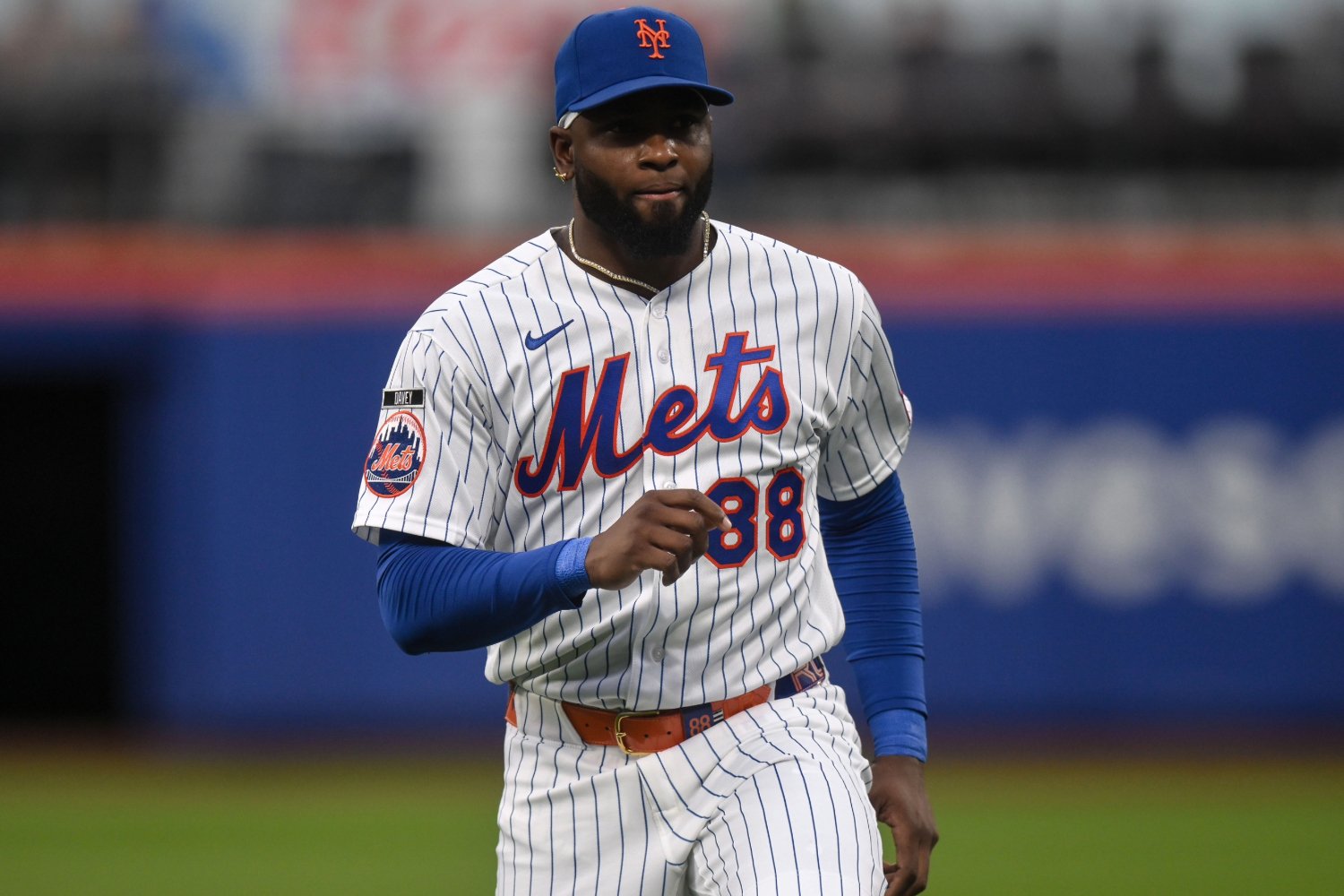 As the trade deadline approaches, the New York Mets will entertain trading everything that isn’t nailed down. So, outside of Juan Soto and their stockpile of pre-arbitration stalwarts, everyone should, and probably will, be on the block. However, that doesn’t mean they will engage in a full-on fire sale. For instance, the Mets might listen to offers for Francisco Lindor, but I seriously doubt any organization would make an offer that’s too good to refuse. And to a much lesser degree, the Mets shouldn’t listen to the offers that try to pry Luis Robert Jr. away. On the surface, the Mets should thank any team willing to take on Robert and the remainder of his contract. He’s on a $20 million salary for this season and has a $22 million team option for 2027, with a $2 million buyout. Considering he has once again missed considerable time to injury, has a wRC+ of 83, and has graded out as, at best, an average center fielder, it’d be a small miracle if any team was even willing to take on his buyout. I mean, who in their right mind would trade for this? Luis Robert Jr. Past Three Seasons Season Team GP AVG OBP SLG wRC+ Off Def WAR 2024 CHW 100 0.224 0.278 0.379 84 -6.7 -2.1 0.5 2025 CHW 110 0.223 0.297 0.364 84 -6.6 4.3 1.3 2026 NYM 32 0.200 0.302 0.336 83 -3.4 0 0.1 242 0.220 0.29 0.366 84 -16.7 2.2 1.9 For three straight seasons, Robert has been injured, ineffective, and wildly infuriating. Throw in A.J. Ewing’s impressive debut in center field, and Robert is now the league’s most expensive fourth outfielder. Yet, despite all of the recent evidence, it’s hard to give up on a player who did this. Luis Robert Jr First Four Seasons Season Team GP AVG OBP SLG wRC+ Off Def WAR 2020 CHW 56 0.233 0.302 0.436 99 0.7 3.2 1.3 2021 CHW 68 0.338 0.378 0.567 155 20.1 3.8 3.4 2022 CHW 98 0.284 0.319 0.426 111 6.7 1 2.1 2023 CHW 145 0.264 0.315 0.542 129 20.5 9.1 5 367 0.278 0.326 0.499 124 48 17.1 11.8 Robert has never been, and probably never will be, a beacon of health, but his first four seasons were exceptional. He blended above-average defense with tons of power, and averaged 4.66 WAR per 600 plate appearances. He, as the cool scouts like to say, was a toolshed, and that doesn’t appear to have changed, even as he approaches 30. Robert’s average swing speed of 76.2 MPH is the 23rd-fastest among players with 50 or more swings this season. And his sprint speed of 29.1 feet per second is in the 92nd percentile. The power-speed combination that made him a borderline star is still present, and he has suddenly started to display a more refined approach. Even when Robert was a successful hitter, his approach at the plate left a lot to be desired. He rarely walked and struck out too much, and it all stemmed from his propensity to swing at just about anything. But in 2026, he has reigned in his aggressiveness and has the best walk and strikeout figures of his career. Luis Robert Career Plate Discipline Season BB% K% BB% - K% O-Swing% Z-Swing% Swing% O-Contact% Z-Contact% Contact% Zone% 2020 8.8% 32.2% -23.4% 39.8% 80.7% 57.4% 45.0% 71.6% 61.1% 43.0% 2021 4.7% 20.6% -15.9% 40.3% 85.0% 61.4% 52.2% 84.9% 73.6% 47.3% 2022 4.2% 19.2% -15.0% 43.3% 83.7% 61.5% 59.2% 85.2% 75.2% 45.0% 2023 5.0% 28.9% -23.9% 40.5% 78.1% 58.3% 47.4% 81.0% 68.7% 47.3% 2024 6.6% 33.2% -26.6% 35.9% 72.7% 53.1% 43.8% 80.2% 67.1% 46.7% 2025 9.3% 26.0% -16.7% 32.5% 76.3% 53.3% 50.2% 80.0% 70.5% 47.6% 2026 12.7% 22.2% -9.5% 33.9% 67.1% 48.7% 53.2% 87.9% 74.5% 44.5% Total 6.60% 26.50% -19.9% 38.30% 78.00% 56.70% 49.80% 81.30% 69.80% 46.30% Now, 126 plate appearances is not a huge sample, but all the statistical indicators suggest his new approach should be somewhat sticky. That doesn’t mean he’ll finish the year with a walk percentage only 9.5% lower than his strikeout rate, but none of his gains feel suspect. If you swing less, you should walk more, and if you swing at better strikes, you should make more contact. As I’m sure you’re wondering, there is a paradox we have to address: How is it possible for Robert to simultaneously post the best plate discipline figures of his career, while swinging as hard as ever, and also have the lowest wRC+ of his career? Well, there are two things at play. Robert has certainly had his fair share of bad luck this season. He has a BABIP of .231, and his xwOBA of .317 far outstrips his actual wOBA of .289. But with his combination of bat speed and walk rate, his xwOBA lags far behind his peers. Among players with 50 batted ball events, only 14 have paired a walk rate of 12% or better with an average swing speed of 75 MPH or greater, and it’s basically a who’s who of MLB superstars. Rk. Player Year PA BB% Bat Speed wOBA xwOBA LA Sweet-Spot % Barrel% Hard Hit % EV50 Adjusted EV Whiff % Swing % 1 Alvarez, Yordan 2026 473 15.4 76.1 0.445 0.475 41.9 18.6 53.7 105.4 97.5 19.4 42.7 2 Wood, James 2026 513 16.8 76.9 0.403 0.424 40.7 21.5 58.5 106.3 98.5 31.3 38.2 3 Judge, Aaron 2026 261 16.1 76.1 0.385 0.415 33.6 21.7 57.3 105.3 97.8 32.2 42.9 4 Trout, Mike 2026 405 18.5 75.1 0.37 0.398 35.8 17.8 47.8 103.2 96 23.1 39.3 5 Murakami, Munetaka 2026 313 18.2 75.1 0.393 0.378 30.7 20.3 60.1 104.7 97.8 42.6 41.4 6 Kurtz, Nick 2026 426 18.1 78.2 0.384 0.375 38.8 18.2 57.4 106.2 98.2 36.5 43 7 Acuña Jr., Ronald 2026 248 14.5 76 0.34 0.372 32.9 13.2 43.4 101.7 95.1 29.9 46.1 8 Greene, Riley 2026 454 12.6 75.6 0.358 0.371 38.2 15.3 50.5 102.9 96 29.7 46.3 9 Caminero, Junior 2026 467 12.2 79.9 0.388 0.369 28.4 13 50.5 105.6 97.3 22.6 42.6 10 Schwarber, Kyle 2026 457 14.2 77.1 0.388 0.368 39.6 17.9 52.2 104 96.8 34.6 44.3 11 Bauers, Jake 2026 386 13.5 76.8 0.373 0.36 36.5 13.6 53.9 103.8 97 27.6 40.8 12 Anthony, Roman 2026 130 15.4 75.5 0.31 0.352 40.8 9.3 47.4 102.1 95.8 28.1 37.2 13 Robert Jr., Luis 2026 126 12.7 76.2 0.289 0.309 20.7 3.7 40.2 102.1 95.3 26.7 48.7 14 Raleigh, Cal 2026 324 12 75 0.262 0.29 34.8 11.8 33.7 99.3 93.7 31.2 51.7 Outside of Jake Bauers, who is in the midst of a breakout season at age 30, any self-respecting baseball fan should know who these guys are. If you swing really hard and walk a bunch, you should be a great hitter. However, you’ll notice that Robert’s xwOBA lags way behind, and it all comes down to his minuscule barrel rate. [As a quick aside, what the Capital-F is going on with Cal Raleigh?] Barrel rate is quite simple. It’s the percentage of batted balls that have at least an expected batting average of .500 and slugging percentage of 1.500 based on their exit velocity and launch angle. The harder a player hits the ball, the greater the range of launch angles that will result in a barrel. This relationship is why EV50, which takes the average of a batter’s 50% hardest hit balls, and barrel percentage per batted ball event have a much stronger correlation (0.793) than launch angle sweet spot (0.276). Robert’s EV50 of 102.1 MPH isn’t as sterling as his swing speed, but it still ranks 57th out of the 436 hitters who have 50 batted ball events, and it’s his highest mark since 2021. Despite hitting the crap out of the ball, to use a technical term, Robert has a barrel percentage of 3.7%, which ranks 360th. Based solely on his EV50, you’d expect Robert to have a barrel percentage of 11.6%, which is the single largest underperformance in all of baseball. That being said, this isn’t just bad luck. Robert’s launch angle sweet spot percentage of 20.7% is 432nd out of 436, but it does present a tremendous amount of upside. For his career, he has a launch angle sweet spot percentage of 35.4%. With his swing speed, exit velocities, and newfound approach, simply posting a launch angle sweet spot percentage of 30%, which would still rank 339th, would vault his production well above league average. Whether it's a mechanical or timing issue, Robert has found it more difficult to impart his best contact on balls that he has lifted this season. However, even over the prior two seasons, when he posted a wRC+ of 84, he was able to get far more lift on his best batted balls. His dearth of squared-up balls in the 25 to 30 degree range is what has dragged his barrel rate and production down. It has been three seasons since Luis Robert Jr. has even been an average player, but all of the attributes that made him a borderline star are still there. His power and speed remain excellent. He’s making more contact on pitches in the zone, while walking more than ever. On top of that, he bats right-handed and can actually play center field. With the rest of the Mets’ outfield batting from the left side, having a right-handed power bat who can play all three positions as your fourth outfielder seems like a good idea. When you factor in his current surface-level production and contract, the Mets aren’t going to get anything in return for Luis Robert Jr. that’s as interesting as Luis Robert Jr. himself. At the very least, the Mets should see if he’s worth that $20 million option, because there’s a player in there that’s worth far more than that.
 -
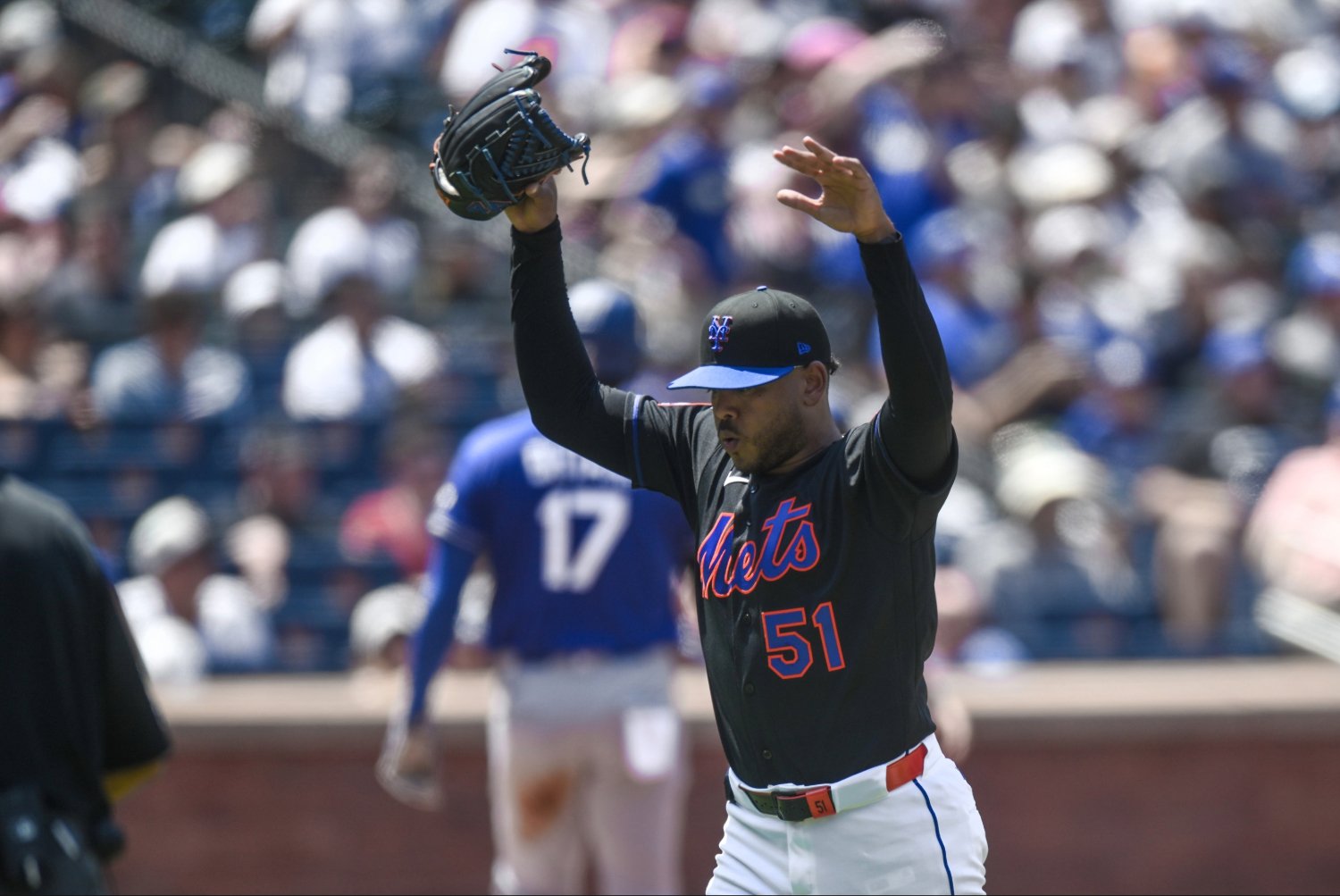 The New York Mets’ January acquisition of Freddy Peralta was supposed to be the beginning of a long and fruitful partnership. In the final year of an incredibly team-friendly deal, Milwaukee dealt their top-of-the-rotation force to the Mets for Brandon Sproat and Jett Williams, both top-100 prospects. The expectation in Queens was that the Mets would compete, Peralta would shove, and extension talks would be a breeze. Well, you know what they say about the best-laid plans of mice and the Mets. Neither team nor player have had the season they envisioned. The Mets are poised to be sellers at the trade deadline, and Peralta, quite candidly, mused that he had thrown his last pitch for the franchise. While January plans have a way of melting in the July heat, New York should still be optimistic about landing a sizable return for Peralta, should they trade him. First and foremost, the 2026 trade deadline is shaping up to be a sellers' market. According to FanGraphs playoff projections, 21 teams have a 10% or better playoff odds, and 20 teams, if you round up for the Padres at 14.7%, are at 15% and above. That’s nearly two-thirds of the league, and many of the de facto eliminated teams have next to no interesting pitching to offer (hello, Athletics and Rockies). Second, with the Tigers surging, Tarik Skubal may never hit the trade block, which means Peralta could end up being the most accomplished starter to move. Despite a lackluster ERA (4.99) this season, Peralta has been incredibly durable (30-plus starts 2023-2025), has a very recent track record of success (3.40 ERA 2023-2025), is only making $8 million this season, and his xERA of 3.84 is much more in line with his career ERA of 3.74. Nearly every team could afford to add Peralta’s salary, and just about every contender could use another pitcher who can start a playoff game. While the bidding for the 30-year-old wouldn’t incite the frenzy a Skubal sweepstakes would, if he’s the best or second-best starting pitcher on the market, the Mets will field multiple competitive offers. And solid starting pitching, even rentals, almost always lands real prospects. Using the past two trade deadlines as a proxy, there have been about eight trades for either a starting pitcher with a similarly sterling track record as Peralta or who was in the midst of a strong season. *Stats at time of the trade, FanGraphs WAR From this group of eight trades, 16 prospects of note (40-grade on 80-point scale or better) were secured, with three 50-grade prospects moved, and on average, teams acquired two 45-grade prospects. Considering the Mets had to part with two 50-grade prospects for a full season of Peralta, likely landing two 45-grade or one 50-grade farmhand for less than half a season of his services indicates his value hasn’t diminished as precipitously as his ERA has ballooned. *Prospects grades are via FanGraphs from their season update, or their final grade if they graduated prior to the trade without an extended, continuous run in the majors On top of the prospects that ended up being moved, solid major-league contributors (2026 All-Star Miguel Vargas went to Chicago in the Erick Fedde trade), lottery ticket teenage arms, and cash were liberally sprinkled throughout. None of these were blockbusters, but organizations have become much more tightfisted with their top prospects when acquiring rentals. Any team that makes a serious run for Peralta will have to be confident in two things. First, that his ERA is largely a result of bad luck (.319 BABIP and 68.4% Left-on-Base%), and second, that they can get his pitches back to where they were in Milwaukee. As for the first part of the equation, just about every front office will point to to explain away his 4.99 ERA. Peralta has a career BABIP of .271 and LOB% of 74.8%, and even with some decline, he hasn’t suddenly become the most hittable pitcher in the league. This confluence of bad luck will keep his market relatively stable, as most teams should view his floor as at least a backend starter who will take the bump every fifth day and pitch to around a 4.00 ERA. That’s not a splashy acquisition, but for any team with question marks in their rotation, it can be the difference between making or missing the playoffs. The second part of the equation is where a team could end up convincing themselves that they’re landing a real front-of-the-rotation force. This season, Peralta’s strikeout percentage has slumped to a career low 22.1%, while his walk rate (9.4%) is almost a dead ringer for his career average (9.3%). Usually a decline in strikeouts comes from diminished stuff, which has been the case for Peralta, but not in the hugely concerning way. His average four-seam velocity of 94.2 MPH is down a bit from his 94.8 MPH average in 2025, but he was a wildly effective pitcher in 2024 and 2023 when the pitch averaged 94.4 and 94.3 MPH, respectively. His secondaries have similarly lost a bit of velocity, outside of his curve, which has sped up, but they’re all thrown in velocity bands where he has had tons of success. Clearly, arm strength isn’t the primary reason his stuff has fallen off. Two things have changed dramatically this season for Peralta, and it’s likely why he has lost some swing and miss. He has drastically lowered his arm angle, while also losing a significant amount of extension. Fluctuations in arm angle and extension are just the reality of not being a robot, but 2026 sticks out like a sore thumb. More extension is generally better, with a few notable exceptions. Arm angle, on the other hand, will impact pitch shape and approach angle, which may or may not end up being a positive, and in Peralta’s case, it has largely been a flop. His fastball has gone from possessing outlier shape to having much more average movement, and it has also seen his breaking ball shape converge. The reason why Peralta made these changes is uncertain. It might have been a conscious decision to try and chase better pitch characteristics. It could be a breakdown in mechanics, or he could be pitching through a minor ailment. Regardless, any team that trades for Peralta will want to know the why, and they’ll certainly have a plan in place to remedy it. Despite a disappointing season, Peralta’s trade value hasn’t suffered the same fate as his results. If he had a repeat performance of 2025, his value would undoubtedly be higher, but 2025 saw him way outperform his ERA estimators. Fortunately, front offices don’t care much for ERA these days, which means the right-hander's value is largely static from this winter. So, while the Mets are unlikely to recoup two top-100 prospects, that mostly comes down to them getting Peralta’s first 20 starts of the season.
 -
Image courtesy of © John Jones-Imagn Images The New York Mets’ January acquisition of Freddy Peralta was supposed to be the beginning of a long and fruitful partnership. In the final year of an incredibly team-friendly deal, Milwaukee dealt their top-of-the-rotation force to the Mets for Brandon Sproat and Jett Williams, both top-100 prospects. The expectation in Queens was that the Mets would compete, Peralta would shove, and extension talks would be a breeze. Well, you know what they say about the best-laid plans of mice and the Mets. Neither team nor player have had the season they envisioned. The Mets are poised to be sellers at the trade deadline, and Peralta, quite candidly, mused that he had thrown his last pitch for the franchise. While January plans have a way of melting in the July heat, New York should still be optimistic about landing a sizable return for Peralta, should they trade him. First and foremost, the 2026 trade deadline is shaping up to be a sellers' market. According to FanGraphs playoff projections, 21 teams have a 10% or better playoff odds, and 20 teams, if you round up for the Padres at 14.7%, are at 15% and above. That’s nearly two-thirds of the league, and many of the de facto eliminated teams have next to no interesting pitching to offer (hello, Athletics and Rockies). Second, with the Tigers surging, Tarik Skubal may never hit the trade block, which means Peralta could end up being the most accomplished starter to move. Despite a lackluster ERA (4.99) this season, Peralta has been incredibly durable (30-plus starts 2023-2025), has a very recent track record of success (3.40 ERA 2023-2025), is only making $8 million this season, and his xERA of 3.84 is much more in line with his career ERA of 3.74. Nearly every team could afford to add Peralta’s salary, and just about every contender could use another pitcher who can start a playoff game. While the bidding for the 30-year-old wouldn’t incite the frenzy a Skubal sweepstakes would, if he’s the best or second-best starting pitcher on the market, the Mets will field multiple competitive offers. And solid starting pitching, even rentals, almost always lands real prospects. Using the past two trade deadlines as a proxy, there have been about eight trades for either a starting pitcher with a similarly sterling track record as Peralta or who was in the midst of a strong season. *Stats at time of the trade, FanGraphs WAR From this group of eight trades, 16 prospects of note (40-grade on 80-point scale or better) were secured, with three 50-grade prospects moved, and on average, teams acquired two 45-grade prospects. Considering the Mets had to part with two 50-grade prospects for a full season of Peralta, likely landing two 45-grade or one 50-grade farmhand for less than half a season of his services indicates his value hasn’t diminished as precipitously as his ERA has ballooned. *Prospects grades are via FanGraphs from their season update, or their final grade if they graduated prior to the trade without an extended, continuous run in the majors On top of the prospects that ended up being moved, solid major-league contributors (2026 All-Star Miguel Vargas went to Chicago in the Erick Fedde trade), lottery ticket teenage arms, and cash were liberally sprinkled throughout. None of these were blockbusters, but organizations have become much more tightfisted with their top prospects when acquiring rentals. Any team that makes a serious run for Peralta will have to be confident in two things. First, that his ERA is largely a result of bad luck (.319 BABIP and 68.4% Left-on-Base%), and second, that they can get his pitches back to where they were in Milwaukee. As for the first part of the equation, just about every front office will point to to explain away his 4.99 ERA. Peralta has a career BABIP of .271 and LOB% of 74.8%, and even with some decline, he hasn’t suddenly become the most hittable pitcher in the league. This confluence of bad luck will keep his market relatively stable, as most teams should view his floor as at least a backend starter who will take the bump every fifth day and pitch to around a 4.00 ERA. That’s not a splashy acquisition, but for any team with question marks in their rotation, it can be the difference between making or missing the playoffs. The second part of the equation is where a team could end up convincing themselves that they’re landing a real front-of-the-rotation force. This season, Peralta’s strikeout percentage has slumped to a career low 22.1%, while his walk rate (9.4%) is almost a dead ringer for his career average (9.3%). Usually a decline in strikeouts comes from diminished stuff, which has been the case for Peralta, but not in the hugely concerning way. His average four-seam velocity of 94.2 MPH is down a bit from his 94.8 MPH average in 2025, but he was a wildly effective pitcher in 2024 and 2023 when the pitch averaged 94.4 and 94.3 MPH, respectively. His secondaries have similarly lost a bit of velocity, outside of his curve, which has sped up, but they’re all thrown in velocity bands where he has had tons of success. Clearly, arm strength isn’t the primary reason his stuff has fallen off. Two things have changed dramatically this season for Peralta, and it’s likely why he has lost some swing and miss. He has drastically lowered his arm angle, while also losing a significant amount of extension. Fluctuations in arm angle and extension are just the reality of not being a robot, but 2026 sticks out like a sore thumb. More extension is generally better, with a few notable exceptions. Arm angle, on the other hand, will impact pitch shape and approach angle, which may or may not end up being a positive, and in Peralta’s case, it has largely been a flop. His fastball has gone from possessing outlier shape to having much more average movement, and it has also seen his breaking ball shape converge. The reason why Peralta made these changes is uncertain. It might have been a conscious decision to try and chase better pitch characteristics. It could be a breakdown in mechanics, or he could be pitching through a minor ailment. Regardless, any team that trades for Peralta will want to know the why, and they’ll certainly have a plan in place to remedy it. Despite a disappointing season, Peralta’s trade value hasn’t suffered the same fate as his results. If he had a repeat performance of 2025, his value would undoubtedly be higher, but 2025 saw him way outperform his ERA estimators. Fortunately, front offices don’t care much for ERA these days, which means the right-hander's value is largely static from this winter. So, while the Mets are unlikely to recoup two top-100 prospects, that mostly comes down to them getting Peralta’s first 20 starts of the season. View full article
-
Based on his underlying stats, I think pitchers rarely throw Alvarez anything in the zone in high leverage situations, and he's more than willing to oblige
