


metirish
-
Posts
39,413 -
Joined
-
Last visited
-
Days Won
20
Content Type
Profiles
New York Mets News, Rumors & Analysis
New York Mets Videos
2026 New York Mets Top Prospect Rankings
New York Mets Trade & Free Agent Rumors
New York Mets Fan Guides & Resources
2026 New York Mets Draft Picks & Signing Bonuses
Forums
Blogs
Events
Store
Downloads
Gallery
Everything posted by metirish
-
Big News! (update: Mets Minority Stake For Sale)
metirish replied to seawolf17's topic in New York Mets Talk
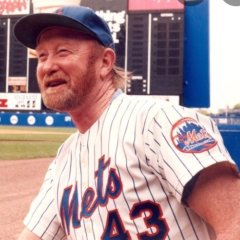
He really hasn't aged all that much from that picture has he? , must be nice to have that kind of wedge. -
Big News! (update: Mets Minority Stake For Sale)
metirish replied to seawolf17's topic in New York Mets Talk
NYT Hedge Fund Manager Negotiating Minority Stake in Mets By RICHARD SANDOMIR and ANDREW ROSS SORKIN Published: May 26, 2011 David Einhorn, the hedge fund manager, is in exclusive negotiations to buy a minority stake in the Mets, the team confirmed Thursday. The Mets have settled on selling less than 49 percent of the team for $200 million; Einhorn would not receive a portion of SNY, the team�s profitable cable network, a person briefed on the matter said. The sale is subject to approval by Major League Baseball, and the Mets said they expected a definitive agreement by late June. �We are very excited about David joining our ownership group for several reasons,� Fred Wilpon, the Mets� principal owner, said in a statement released by the team. �David�s investment immediately improves the franchise�s financial position. Equally important, David�s intelligence, integrity and success in both business and civic affairs provides us with another perspective in evaluating what is best for this organization and our fans, and we welcome his input.� Einhorn, president of Greenlight Capital, emerged from a group of prospective buyers Wednesday. �Having an opportunity to become part of the Mets franchise is exciting beyond my wildest childhood dreams,� Einhorn said in the Mets� statement. �I spent my first seven years living in New Jersey and rooting for the Mets. In 1975 I even dressed in a homemade jersey as a Met for Halloween. �I look forward to partnering with the Wilpon and Katz families through the good seasons, the tough seasons and especially the championship seasons.� The team lost $51 million last season, expects to lose as much as $70 million this season and has hundreds of millions of dollars in debt. As such, a number of interested parties looked at the Mets� books and went no further. �They have to do something,� said one banker who did not want to be named because he did business with the Mets. �Their attendance is way off, and they are going to run out of cash.� Many hurdles remain in any potential sale. Einhorn is likely to want indemnity from any legal settlements involving the court-appointed trustee representing the victims of the Bernard L. Madoff fraud. Given the Mets� financial woes, he may also want protection from future capital calls that owners are often requested to pay when there are shortfalls. Then there is the money. If the stake is $200 million, it may take time for Einhorn to organize the financing. �The problem is, it�s a big check to write,� said Rob Tilliss of Inner Circle Sports, a sports financial advisory firm. �The money and the governance, those are the two inhibitors.� The announcement could stanch a flow of recent bad news for the team, including injuries to David Wright and Ike Davis; critical remarks by Wilpon about Wright, Jose Reyes and Carlos Beltran; and the revelation that Major League Baseball loaned the team $25 million last November. The Mets have been formally searching for a buyer since late January, shortly before the unsealing of a $1 billion lawsuit against Wilpon and the co-owner, Saul Katz, by Irving H. Picard, the Madoff trustee. Apart from the lawsuit, the team needed money simply to finance its operations. Still, successfully finding a partner willing to pay $200 million will not end the Mets� financial problems. Most seriously, they are still contending with Picard. On Wednesday, former Gov. Mario M. Cuomo, the court-appointed mediator in the case filed in United States Bankruptcy Court, said that the mediation was entering a critical phase in which discussions on the framework of a possible settlement could begin. Cuomo said that by the end of next week, both sides should have submitted their valuations on the assets of Sterling Equities, Wilpon and Katz�s holding company. Those assets include the Mets, real estate and private equity investments and 65 percent of SNY, the Mets� cable network. �After that, we�ll have some serious sitdowns,� he said by telephone. �It won�t take long after that to see if a deal will be made.� Cuomo spoke one day after Wilpon was quoted as saying in an article in Sports Illustrated that Cuomo had been unable to persuade Picard �that the 700 is not going to be obtainable.� Picard is seeking the $1 billion in two major parts: $700 million in principal that Wilpon, Katz and their Sterling partners had in their Madoff accounts, and $300 million in fictitious profits from them. Cuomo said that Wilpon�s statement was premature. �It is a fact that I have not suggested any specific deal to either party,� he said. �We�ve not gone to the trustee and said, �Here�s a number we�re proposing to you.� � Wilpon appeared to be suggesting that $700 million was off the table because negotiating in that range would imply that he and Katz knew or should have known that Madoff might possibly be a fraud. Picard has accused them of turning a blind eye to warnings about Madoff in order to keep collecting consistent returns on their investments; they, in turn, accuse Picard of distorting or fabricating evidence. Karen Wagner, one of their lawyers, said in a statement: �Fred was referring to the fact that because he and Saul had no way of knowing anything about the fraud they�re unwilling to negotiate as though they�re not innocent victims.� Cuomo said that during meetings with the two sides, there have been discussions about the value of Sterling assets, and explorations of legal issues. When the property values are all in, he added, �we can start discussing the structures of possible settlements that will take into account all the differences in legal positions they have and the differences in factual positions they have.� He said that structuring a settlement �will be difficult given the disparity� between their positions. �One side says $100 million or whatever and the other side says $1 billion,� he said. �That certainly makes it challenging.� David Waldstein, Ken Belson and Michael S. Schmidt contributed reporting. -
Big News! (update: Mets Minority Stake For Sale)
metirish replied to seawolf17's topic in New York Mets Talk
Here's an even younger looking picture of him Mets investor David Einhorn as Dave Kingman per Metsblog -
Damn , posted here a few time IIRC....
-
Big News! (update: Mets Minority Stake For Sale)
metirish replied to seawolf17's topic in New York Mets Talk
Ceetar wrote: Here he is, the new man according to tweets http://en.m.wikipedia.org/wiki/David_Einhorn_(hedge_fund_manager) And apparently he called for the CEO of Microsoft to step down. I like it. i'd be more impressed if he called for Fred, Jeff and Saul to step aside. -
Big News! (update: Mets Minority Stake For Sale)
metirish replied to seawolf17's topic in New York Mets Talk
Here he is, the new man according to tweets http://en.m.wikipedia.org/wiki/David_Einhorn_(hedge_fund_manager) -
I want to give this optimism carryon a go for a while. I see no reason at all why Reyes will not only surpass Edward Kranepool on the hit list but he'll get 2000 hits as a Mets player.
-
I don't think Santana has the personality to draw fans in numbers to a game.
-
IGT 5/25/2011: NYM @ CHI -- Gee, It's Supposed to Rain
metirish replied to G-Fafif's topic in Archived Game Threads
Keith does some complaining about the weather doesn't he? -
Do all those missing fans come back with a competitive 85 win team?, I don't think so , playoffs is what's needed to get the excitement and fans back IMO.
-
[youtube:1dncavp0]GiPe1OiKQuk[/youtube:1dncavp0]
-
Ceetar wrote: themetfairy wrote: Telling someone not to overreact almost assures that there will be overreaction. And 30% is not a small number.... doh, my post today was about overreacting. I swear I hadn't read this yet! Freddy basically said it'd be up to Alderson, which is what we knew anyway, which is why what he says doesn't mean much. Won't stop everyone from overreacting to it despite Alderson already being pretty clear about the budget for next year. Are you saying that next years payroll "is up to Alderson"?, like if he goes out and signs a bunch of players and the figure is then $150 million that it's OK? Maybe I am not understanding you Ceetar, which is why I am asking.
-
RealityChuck wrote: The trailer is one of the best of all time. Stay till the end; I was completely underwhelmed -- until the surprise. [youtube]6CloKbXtD28[/youtube] I'm watching and think Chuck has lost his mind..............then , yep , can't wait.
-
Fair play to Bonds.
-
I skimmed it and here's all you need to read And that leads to the second question: Who is likely to be a better player from here on out? Jeter is older. But Beltran has had severe injuries. Jeter is a walking-talking legend. Beltran is in the last year of a contract that pretty much everyone wants to end. Jeter has played his whole career at shortstop, and shortstops do not age well. Beltran has played center field, which is rough on players, too, but he has moved to a corner outfield spot, where players do age a little better. So who would you bet on to have more value from this year on? Well, you know how Jeter has looked so far this year � his two-homer game aside. Beltran, meanwhile, has looked terrific at the plate in the early part of this season. His strikeout rate is down again, his fly ball percentage is way up (he leads the National League in doubles and extra base hits at the moment), and he�s catching up to the fastball, at least for the time being. One of the amazing parts of Beltran�s game has been his ability to adapt to his circumstances. I remember after the 2002 season, he decided he needed to cut down his strikeouts. And so, blammo, he cut down his strikeouts. Like it was easy. Players can spend entire careers trying and failing to cut down on strikeouts � Beltran did it in one off-season. I remember after his miserable 2005 season in New York, there were people saying that he would never be able to handle New York. And so, blammo, in 2006 he had perhaps the greatest every-day-player season in Mets history.
-
KTE, 5/24-27: Poetic License (@ Chicago)Posted: Tue May 24,
metirish replied to Edgy MD's topic in New York Mets Talk
great KET's -
OMFG .Mets can't catch the ball tonight...Murphy throws home to get the out at the plate and Paulino couldn't hold the ball.
-
OMFG , Pena tried to bunt with two strikes, he couldn't hold his head lower walking back to the dugout....apparently he has two two strike hits this year, against the shift they say.
-
I get it Keith , it's cold there, big fucking deal you with your nancy boy coat.
-
Ashie62 wrote: Keith seems to infer every now and then that Fartinez's legs are shot. He's had everything wrong with him that lad.
-
Well if Rob Castellano says it's so then that's it I guess.
-
I'm sure the ole winds blowing out at Wrigley line will get trotted out as to why Harris is out there.
-
Guys tweeted this Mets vs Cubs - Reyes. Murphy. Beltran. Bay. Turner 3b. Harris cf. Paulino. Tejada. Niese P
-
8:05 kick off Mets to have a team meeting today , Fred not expected to be there....per Waldstein on twitter
-
I hate to be a prick but can someone relieve Jay Horowitz of his job. I have felt for a long time that this organization needs an outside public relations firm and not the bumbling Jay beloved by many but seemingly incapable of doing this job.
