Frayed Knot Old-Timey Member Posted May 6 Posted May 6 The intent is to keep owners, who may have various incentives at a particular time to Not want to win, from being the one calling the shots on the field. Not that they can't do so remotely but at least there it's a level or two removed from the dugout rather than in it. Of course the number of teams in the NBA openly and purposely tanking may have been in double digits this season and few of their fans seem to mind. I mean, why there were more than 10 fans at any given Washington Wizards game over the last three seasons is a mystery to me, but I don't seem to get basketball culture in general.
Edgy MD Site Manager Posted May 7 Posted May 7 Let 'em lose. If they want to disgrace themselves, they can go crazy. The natural order of things makes life increasingly difficult when you lose. The problem is that we have a foolish system that un-naturally protects organizations from those consequences. Trying to re-engineer in artificial consequences, after engineering out natural ones, is goofy.
Cowtipper Old-Timey Member Posted May 10 Author Posted May 10 Dick Hughes died. https://www.legacy.com/us/obituaries/name/richard-hughes-obituary?id=61431231 Who was Dick Hughes? Dick Hughes was an American right-handed pitcher who played briefly in Major League Baseball for the St. Louis Cardinals from 1966 to 1968. Born in 1938 in Stephens, Arkansas, he grew up in Louisiana, where he developed as a standout high school pitcher before playing college baseball at the University of Arkansas and beginning his professional career in 1958. Hughes reached the majors late, debuting in 1966, but broke out in 1967 when he became a key member of the Cardinals’ pitching staff. That season, he went 16–6 with a strong 2.67 ERA, led the National League in WHIP, and finished second in Rookie of the Year voting behind Tom Seaver. He also helped the Cardinals win the 1967 World Series and even started two games in the Fall Classic against the Boston Red Sox. His career peaked quickly and ended just as fast. In spring training of 1968, he suffered a torn rotator cuff—an injury that could not be surgically repaired at the time. Although he attempted to continue pitching that season, his effectiveness declined, and he threw his final major league innings in 1968. After a brief stint in the minors, he retired from professional baseball. Hughes died in 2026 at the age of 88, remembered as a late-blooming pitcher whose career was highlighted by a standout rookie season and a World Series championship before injury cut it short. Also, who was Bobby Cox? Bobby Cox was a Hall of Fame Major League Baseball player, coach, general manager, and one of the most successful managers in baseball history. Born in 1941 in Tulsa, Oklahoma, he played briefly as a third baseman for the New York Yankees from 1968 to 1969 before transitioning into coaching and front-office roles. His managerial career began in the Yankees’ minor league system in the early 1970s, followed by his first MLB managerial job with the Atlanta Braves from 1978 to 1981. He then managed the Toronto Blue Jays from 1982 to 1985, helping turn them into a competitive team and leading them to their first division title in 1985. Cox returned to the Braves in the mid-1980s, initially as general manager, where he helped build the foundation of a dominant roster featuring players like Tom Glavine, John Smoltz, and Chipper Jones. He returned to the dugout as manager in 1990 and led one of the most successful eras in modern baseball history. Under Cox, the Braves became perennial contenders, winning 14 straight division titles from 1991 to 2005 (excluding the strike-shortened 1994 season). They won the World Series in 1995 and reached the postseason repeatedly throughout the 1990s and 2000s, though they often fell short in later playoff rounds. Cox became known for his leadership style, consistent success, and record-setting 162 career ejections. He retired after the 2010 season with over 2,500 managerial wins, one of the highest totals in MLB history. Cox was inducted into the Baseball Hall of Fame in 2014. He died in 2026 at age 84, widely regarded as one of the greatest and most influential managers in baseball history. And who was John Sterling? John Sterling was a longtime American sportscaster best known for being the radio play-by-play voice of the New York Yankees from 1989 to 2024. Born in 1938 in New York City, he had a long and varied broadcasting career before joining the Yankees, including work covering NBA, NHL, and other MLB teams such as the Atlanta Braves. Sterling became one of the most recognizable voices in baseball due to his highly distinctive announcing style, including signature home run calls tailored to individual players and his famous postgame line, “Theeeee Yankees win!” He also became known for his strong identification with the Yankees, often celebrating their successes in an enthusiastic, unmistakable style. During his Yankees tenure, he called over 5,000 consecutive games for decades, only briefly stepping away once in 2019 before continuing his streak. He worked alongside several partners over the years, most notably Suzyn Waldman, with whom he formed a long-running radio duo starting in 2005. Sterling announced his retirement in 2024 after more than three decades with the team but briefly returned later that year for select postseason broadcasts. He fully retired afterward. Outside of baseball, he also hosted television and radio programs, including Yankees-related features and occasional sports broadcasts. He was widely recognized in the industry, winning multiple Sports Emmy Awards. Sterling died in 2026 at the age of 87 from heart failure in New Jersey. He is remembered as one of the most distinctive and enduring voices in baseball broadcasting history, closely associated with the Yankees for an entire generation of fans. Also... Pat Caputo was a Detroit-based sportswriter and talk radio personality best known for his long tenure at WXYT-FM, where he hosted sports talk programs and contributed to coverage of local teams like the Tigers, Lions, Pistons, and Red Wings. After decades as a columnist for The Oakland Press and various radio and TV sports roles, he continued broadcasting into the 2020s before being diagnosed with stage 4 pancreatic cancer and dying in 2026 at age 67. whippoorwill 1
Cowtipper Old-Timey Member Posted May 11 Author Posted May 11 René Cárdenas was a pioneering Nicaraguan sports broadcaster who became the first Spanish-language announcer in Major League Baseball when he began calling games for the Los Angeles Dodgers in 1958. Over his long career, he also worked for the Houston Astros and Texas Rangers, helped create the first international Spanish-language baseball radio network, and died in 2026 at the age of 96. Gene Hooks was an American baseball player who starred as a third baseman for Wake Forest University, earning multiple All-American honors and helping lead the team to the 1949 College World Series championship game. He later became Wake Forest’s long-serving athletic director from 1964 to 1992, overseeing major athletic success before dying in 2026 at the age of 98. Steve Jongewaard was a multi-position minor league player drafted by the Boston Red Sox in 1982, moving through shortstop, outfield, and later pitching while struggling to establish consistent offensive success across five seasons in the minors. After his playing career, he became a scout and national crosschecker for organizations including the Atlanta Braves and Seattle Mariners, helping evaluate talent such as Adam Jones, Brandon Morrow, and Rob Johnson. Hank Nichols was an American college basketball referee and later supervisor of officials who had a long career officiating major NCAA games, including 10 Final Fours and six national championship games, and was inducted into the Naismith Memorial Basketball Hall of Fame in 2012. After retiring from officiating and his role as NCAA coordinator of officials, he also worked in education and as an umpire observer for Major League Baseball before dying in 2026 at age 89. Jeff Pyburn was a standout two-sport athlete and the son of former major leaguer Jim Pyburn, drafted in the first round by the San Diego Padres in 1980 but ultimately never reaching the majors due to a knee injury. He also played quarterback at the University of Georgia and was selected in the fifth round of the 1980 NFL Draft by the Buffalo Bills before passing away on March 29, 2026. Len Rivers was a long-time high school and college football coach who spent over 40 years in the profession and also served as head baseball coach at Princeton University from 1976 to 1980. During his tenure with the Princeton baseball program, he worked alongside players such as Bob Tufts and compiled a 74–82 record before his death on March 16, 2026.
Cowtipper Old-Timey Member Posted May 15 Author Posted May 15 Rick Kreuger died. https://www.thebiglead.com/pitcher-for-red-sox-world-series-team-dies-at-76/ Who was Rick Kreuger? Rick Kreuger was an American left-handed pitcher who played in Major League Baseball from 1975 to 1978 with the Boston Red Sox and Cleveland Indians, and later in Japan for the Yomiuri Giants. Born in Grand Rapids, Michigan, Kreuger first gained attention as an All-American at Grand Rapids Junior College before transferring to Michigan State University, where he pitched for the Spartans in 1970. He signed with Boston in 1971 and spent several years in the minor leagues, including missing the entire 1972 season with back problems. Kreuger made his MLB debut with Boston in September 1975. Over the next few seasons he moved between the majors and minors, highlighted by a strong outing against the Milwaukee Brewers in 1976 when he carried a no-hitter into the seventh inning. In 1978 he was traded to Cleveland, where he appeared in six games before returning to the minors. Across his major league career, he posted a 2–2 record with a 4.47 ERA and 20 strikeouts in 17 games. After leaving Major League Baseball, Kreuger continued playing internationally, including a season in Japan and winter ball in Puerto Rico with the Criollos de Caguas. Following retirement, he worked in real estate and later became a baseball coach and instructor, serving as head coach at Cornerstone College and operating Kreuger’s Baseball School in Hudsonville, Michigan. He died on May 7, 2026, at age 77. Also, who was Buzz Capra? Buzz Capra was an American Major League Baseball pitcher who played from 1971 to 1977 for the New York Mets and Atlanta Braves. Born in Chicago, Capra was originally a shortstop before becoming a standout pitcher at Illinois State University, where he helped lead the school to the 1969 NCAA Division II championship. Drafted by the Mets in 1969, he developed into a strong minor league pitcher and reached the majors in September 1971. Capra spent parts of three seasons with the Mets, working mainly as a reliever and contributing to the club that won the 1973 National League pennant. Though he did not pitch in the postseason, he became loosely connected to one of baseball’s memorable moments during the 1973 NLCS brawl involving Pete Rose and Bud Harrelson, when Reds pitcher Pedro Borbón accidentally grabbed and destroyed Capra’s Mets cap during the chaos. After being sold to Atlanta before the 1974 season, Capra enjoyed a dramatic breakout year. Inserted into the Braves’ rotation after an injury to Ron Reed, he quickly became one of the National League’s best pitchers, winning nine straight games and earning All-Star honors. He finished the season with a 16–8 record and a league-leading 2.28 ERA, while helping draw major crowds during the same season Hank Aaron broke baseball’s career home run record. Arm trouble soon followed, however, and Capra struggled with injuries and inconsistency over the remainder of his career before retiring after the 1977 season. Following his playing days, Capra spent decades coaching baseball at both the college and minor league levels. He worked as a pitching coach in several organizations, including the Braves, Mets, Chicago White Sox, Montreal Expos, and Philadelphia Phillies systems, and also taught ceramics during his playing career after earning a teaching degree. Illinois State later retired his No. 9 and inducted him into its athletics hall of fame. Capra died in Joliet, Illinois, on May 11, 2026, at age 78.
Cowtipper Old-Timey Member Posted May 25 Author Posted May 25 Charlie Moore died. https://www.tmj4.com/sports/former-milwaukee-brewers-player-charlie-butch-moore-passed-away Who was Charlie Moore? Charlie Moore was an American Major League Baseball player who spent most of his career with the Milwaukee Brewers during the 1970s and 1980s. Born in Birmingham, Alabama, Moore originally planned to attend Auburn University on a football scholarship before being drafted by Milwaukee in 1971. Choosing baseball instead, he rose quickly through the Brewers’ minor league system and made his major league debut in 1973. Although primarily a catcher early in his career, Moore became known for his versatility, also playing extensively in the outfield. He steadily developed into a reliable contributor for Milwaukee, batting over .300 in both 1980 and the strike-shortened 1981 season. One of his most memorable achievements came in 1980 when he hit for the cycle against the California Angels while also stealing two bases, a rare accomplishment. Moore was also the final player ever driven in by Hank Aaron during Aaron’s last MLB season in 1976. Moore played a key role in the Brewers’ 1982 postseason run, particularly during the American League Championship Series against the Angels, where he batted .462 and made a crucial throw from right field to retire Reggie Jackson at third base. He continued his strong performance in the World Series against the St. Louis Cardinals, batting .346 despite Milwaukee losing the series in seven games. He remained with the Brewers through 1986 before finishing his career with the Toronto Blue Jays in 1987. Over 15 major league seasons, Moore compiled a .261 batting average with 36 home runs and 408 RBIs. After retiring from baseball, he returned to Birmingham and worked as a sales representative for many years. In 2014, he was inducted into the Brewers Wall of Honor and named to the All-Time Alabama Baseball Team. Moore died on May 23, 2026, at the age of 72.
Cowtipper Old-Timey Member Posted May 26 Author Posted May 26 Scott Douglas (1968-2026) was a minor league baseball infielder and manager who played for the Regina Cyclones and Moose Jaw Diamond Dogs in the 1990s before transitioning into coaching. He later built a successful career as a college baseball coach, most notably leading Trinidad State Junior College to a 246-171-1 record from 2000 to 2012. James Riley (1939-2026) was a respected baseball historian and researcher best known for his extensive work documenting the history of the Negro Leagues. After a long career in Florida public education, he became research director for the Negro Leagues Baseball Museum and authored several influential books, including The Biographical Encyclopedia of the Negro Baseball Leagues.
Cowtipper Old-Timey Member Posted May 27 Author Posted May 27 Bob Horner died. https://ca.sports.yahoo.com/news/braves-face-third-major-loss-173929149.html Who was Bob Horner? Bob Horner was an American professional baseball player best known for his powerful hitting during the late 1970s and 1980s, primarily with the Atlanta Braves. Born in Junction City, Kansas, and raised in Glendale, Arizona, Horner became one of the most decorated college baseball players in history at Arizona State University. He helped lead the Sun Devils to the 1977 College World Series championship, won the tournament’s Most Outstanding Player award, and became the first recipient of the Golden Spikes Award in 1978. His extraordinary college career included 56 home runs and 229 RBIs, records that stood among the best in school history for decades. Selected first overall by the Braves in the 1978 MLB Draft, Horner bypassed the minor leagues entirely and immediately joined Atlanta’s major league roster. He made an instant impact, hitting a home run in his debut and earning National League Rookie of the Year honors after blasting 23 home runs in only 89 games. Alongside fellow slugger Dale Murphy, Horner became a centerpiece of the Braves’ offense during the early 1980s. Despite frequent injuries, he consistently produced power numbers, including three 30-home-run seasons and an All-Star appearance in 1982. Horner’s most famous moment came on July 6, 1986, when he became just the 11th player in MLB history to hit four home runs in a single game. Following that season, he became entangled in the Major League Baseball collusion scandal, as owners secretly cooperated to suppress free-agent salaries. Unable to secure a satisfactory contract in the United States, Horner signed with Japan’s Yakult Swallows for the 1987 season, where he hit .327 with 31 home runs. He returned to MLB with the St. Louis Cardinals in 1988, but ongoing injuries soon forced his retirement. Over ten major league seasons, Horner compiled a .277 batting average, 218 home runs, and 685 RBIs while earning a reputation as one of baseball’s premier right-handed power hitters of his era. He never played a single minor league game, a rare achievement for a first overall draft pick. In retirement, Horner received numerous honors, including induction into the College Baseball Hall of Fame in 2006 and the Georgia Sports Hall of Fame in 2022. He died on May 26, 2026, at the age of 68. George Riley died in 2023, but news of his passing was not uncovered until recently. https://www.stolfofuneralhome.com/obituaries/riley-10/ Who was George Riley? George Riley was an American professional baseball pitcher who appeared in parts of four Major League Baseball seasons between 1979 and 1986. A native of Philadelphia, Riley starred at South Philadelphia High School, where he became a local legend thanks to his dominant pitching performances. During his high school career, he compiled an undefeated 18–0 record, threw six no-hitters — including four in a row — and once struck out 21 batters in a single game while helping lead his school to a Philadelphia city championship. The Chicago Cubs selected Riley in the fourth round of the 1974 amateur draft when he was just 17 years old. After spending several seasons developing in the minor leagues, he made his major league debut with the Cubs in September 1979. Riley pitched in 26 games over two seasons with Chicago before continuing his career in the minors with organizations connected to the Chicago White Sox and Philadelphia Phillies. In 1984, Riley joined the San Francisco Giants as part of a trade involving veteran slugger Al Oliver. That season he earned the only major league victory of his career, defeating the Los Angeles Dodgers in a strong outing on September 23, 1984. Riley later spent time with the Montreal Expos during the 1986 season before ending his professional baseball career in the minors in 1987. Over his MLB career, Riley posted a 1–5 record with a 4.97 earned run average and 40 strikeouts. After retiring from baseball, he worked as an electrician and lived a quieter life away from the spotlight. Riley died on January 29, 2023, at the age of 66.
Cowtipper Old-Timey Member Posted May 27 Author Posted May 27 Mark Bailey died. https://www.ky3.com/video/2026/05/27/former-mlb-catcher-missouri-state-star-mark-bailey-dies-64/ Who was Mark Bailey? Mark Bailey was an American professional baseball catcher and longtime coach who spent parts of seven seasons in Major League Baseball with the Houston Astros and San Francisco Giants between 1984 and 1992. A native of Springfield, Missouri, Bailey excelled as both a baseball and basketball player at Southwest Missouri State University, earning NCAA Division II All-American honors while helping lead the school to the Division II College World Series. Drafted by Houston in the sixth round of the 1982 MLB Draft, he quickly advanced through the minors after converting from infielder to catcher. Bailey made his major league debut in 1984 and soon became Houston’s primary catcher. Known for his size, versatility as a switch-hitter, and defensive work behind the plate, he enjoyed his best offensive season in 1985, batting .265 with 10 home runs in 114 games. During his time with the Astros, he also caught historic moments, including Nolan Ryan’s 4,000th career strikeout. Though injuries and inconsistency affected later seasons, Bailey remained a valuable organizational player and spent time in the Astros, Montreal Expos, Mets, and Giants systems before ending his playing career in the mid-1990s. Over 340 major league games, Bailey compiled a .220 batting average with 24 home runs and 101 RBIs. After retiring as a player, he transitioned into coaching and spent decades working throughout the Astros organization in roles ranging from bullpen coach to hitting instructor and catching coordinator. His long tenure reflected his reputation as a respected teacher and mentor for developing players, especially catchers. Bailey’s contributions to sports in Missouri and professional baseball were recognized with inductions into the Springfield Area Sports Hall of Fame in 2016 and the Missouri Sports Hall of Fame in 2017. He died on May 26, 2026, at the age of 64, leaving behind a legacy that stretched from standout collegiate athlete to major league player and influential baseball instructor.
Cowtipper Old-Timey Member Posted June 6 Author Posted June 6 Eddie Haas died. https://www.wpsdlocal6.com/news/former-mlb-manager-paducah-native-eddie-haas-dies-at-91/article_6ce0af6a-4c3d-4f9d-ba6f-3051d3a70215.html Who was Eddie Haas? Eddie Haas (1935–2026) was an American baseball outfielder, coach, manager, and scout whose career spanned several decades in professional baseball, primarily within the Milwaukee and Atlanta Braves organizations. Though his Major League playing career was brief, he remained a long-term figure in the sport through coaching, player development, and scouting roles. As a player, Haas appeared in parts of three MLB seasons between 1957 and 1960 with the Chicago Cubs and Milwaukee Braves. In 55 major league games, he hit .243 with one home run and 17 hits. His playing time was limited, including a missed 1959 season due to a broken ankle, but he spent much of his career in the minor leagues, where he was a productive hitter with several strong seasons. After retiring as a player, Haas became heavily involved in coaching and managing in the Braves’ farm system, spending many years developing minor league talent and later serving as a major league coach. He eventually became the Atlanta Braves’ manager in 1985 after Joe Torre, but his tenure was short, as the team struggled and he was replaced midseason. Following his managerial career, Haas continued working in baseball as a scout for the Montreal Expos and Boston Red Sox. Coming from a family with deep baseball ties, he remained active in the professional game for decades until his death in 2026 at age 91, remembered more for his long developmental and scouting career than his brief time as a major league player.
Cowtipper Old-Timey Member Posted June 8 Author Posted June 8 Mike Johnson died. https://www.parkerkohlfuneralhome.com/obituaries/michael-johnson Who was Mike Johnson? Michael Norton Johnson (March 2, 1951 – May 20, 2026) was an American professional baseball pitcher who played briefly in Major League Baseball with the San Diego Padres during the 1974 season. Born in Slayton, Minnesota, he was a right-handed pitcher who attended Faribault High School before beginning a professional baseball career. Johnson made his major league debut on July 25, 1974, and appeared in 18 games for the Padres before his final MLB appearance on October 2, 1974. He finished his big-league career with a 0–2 record, a 4.64 earned run average, and 15 strikeouts. Although his time in the majors was brief, he spent several years in professional baseball and enjoyed considerable success in the minor leagues, where he often posted ERAs below 2.50. Throughout his career, Johnson played for numerous minor league clubs in the United States and Canada. While he is best remembered for his stint with the Padres, his professional journey reflected the dedication and perseverance of many players who spent most of their careers in the minor leagues. He died in Carefree, Arizona, at the age of 75. Bob Lacey died. https://www.si.com/mlb/angels/onsi/former-angels-pitcher-7-year-mlb-veteran-dies-at-72-01ktcajcsa6g Who was Bob Lacey? Robert Joseph Lacey Jr. (August 25, 1953 – June 4, 2026) was an American professional baseball pitcher who played seven seasons in Major League Baseball between 1977 and 1984. A left-handed pitcher, he appeared for the Oakland Athletics, Cleveland Indians, Texas Rangers, California Angels, and San Francisco Giants. He finished his major league career with a 20–29 record, a 3.67 ERA, and 251 strikeouts. Lacey was drafted by Oakland in 1972 and quickly rose through the minor leagues. He became one of the Athletics' most dependable relief pitchers, leading the American League in appearances in 1978 while posting a 3.01 ERA. Known for his durability, he inherited a record 104 baserunners that season and was frequently called upon in high-pressure situations. He also gained attention early in his career by striking out future Hall of Famer Reggie Jackson twice in a key game and later becoming involved in a notable on-field altercation with Darrell Porter. After leaving Oakland, Lacey spent time with several organizations, including stints in the minor leagues and the Mexican League, before ending his playing career in 1985. He later returned to baseball as a coach and manager, most notably managing the Greenville Bluesmen in the late 1990s. Lacey died on June 4, 2026, at the age of 72, leaving behind a professional baseball career remembered for his resilience, versatility, and success as a relief pitcher.
Cowtipper Old-Timey Member Posted June 14 Author Posted June 14 Al Closter died. https://www.thatericalper.com/2026/06/13/al-closter-olympic-gold-medalist-and-major-league-pitcher-dies-at-82/ Who was Al Closter? Al Closter was an American left-handed pitcher whose career in professional baseball stretched from the mid-1960s to the early 1970s. Born in 1943 in Creighton, Nebraska, he played college baseball at Iowa State University and gained early international experience as a member of the United States team during baseball’s demonstration event at the 1964 Summer Olympics. He signed with the New York Yankees organization as an amateur free agent in 1965. Closter’s early professional career involved frequent movement through the minor leagues and short-lived stints with multiple organizations. After being selected in the Rule 5 Draft by the Cleveland Indians, his contract was quickly purchased by the Washington Senators in 1966, where he made his Major League debut in a single appearance before returning to the Yankees. Most of his development years were spent in the minors, where he pitched extensively at Triple-A Syracuse and became a durable, frequently used arm. His Major League career was brief and scattered. After not appearing in the big leagues again until 1971, Closter pitched intermittently for the New York Yankees as a reliever and occasional starter, before finishing his MLB career with the Atlanta Braves in 1973. Across four seasons in the majors, he appeared in 21 games and finished with a 2–2 record and a 6.62 ERA. After retiring from baseball, Closter built a long career with Philip Morris International in product development work focused on Latin America and lived in Virginia. He remained connected to the sport through recognition from Syracuse baseball circles, including induction into its Wall of Fame in 2006. He died in 2026 at the age of 82. Also, who was Wes Gardner? Wes Gardner was an American Major League Baseball pitcher who played in the majors from 1984 to 1991 for the New York Mets, Boston Red Sox, San Diego Padres, and Kansas City Royals. Born in Benton, Arkansas in 1961, he was drafted by the Mets in 1982 out of the University of Central Arkansas and made his MLB debut in 1984, throwing a perfect ninth inning in a loss to the Cubs. Gardner spent his early career as a swingman with the Mets before being traded to the Boston Red Sox in late 1985. In Boston, he had the most notable stretch of his career. He became the team’s closer in 1987, leading the club in saves, and in 1988 transitioned into the starting rotation, where he posted career-best numbers, including 8 wins, 106 strikeouts, and a 3.50 ERA. He also made his only postseason appearance that year in the American League Championship Series against Oakland. After two more seasons in Boston, his performance declined. He was traded to the Padres in 1990 but struggled and was released in 1991. He briefly caught on with the Royals, spending most of his time in the minors and making only a short, effective relief stint in the majors before being released again, ending his MLB career. Across eight seasons, Gardner finished with an 18–30 record, a 4.90 ERA, and 358 strikeouts in 189 games. He was inducted into the University of Central Arkansas Hall of Fame in 2001. Gardner died in 2026 at the age of 65 in his hometown of Benton, Arkansas. Pedro Pacheco Figueroa was a Puerto Rican amateur baseball player born in 1933 who helped win a national title in 1957 and later represented Puerto Rico in international competitions, earning medals at the 1966 Central American and Caribbean Games and the 1967 Pan American Games. Beyond baseball, he was inducted into the Puerto Rican Amateur Baseball Hall of Fame in 1986 and served as a legislator in Ponce for 20 years before his death in 2026. David Pierce was a minor league baseball player from North Carolina who played multiple positions from 1949 to 1954 for several teams, including the Lumberton Auctioneers and Erie Senators. After his playing career, he returned to Appalachian State Teachers College as a coach in 1959–1960 before his death in 2026.
Cowtipper Old-Timey Member Posted June 21 Author Posted June 21 Al Worthington died. https://libertyflames.com/news/2026/6/19/baseball-liberty-athletics-mourns-the-loss-of-al-worthington Who was Al Worthington? Al Worthington was a major league pitcher whose career spanned 14 seasons from 1953 to 1969, but his path to success was anything but straightforward. Born in Birmingham, Alabama, he broke into the majors with the New York Giants and made history by throwing shutouts in each of his first two starts. Despite that remarkable debut, he spent much of the 1950s moving between the majors and minor leagues, struggling to establish himself as a consistent big-league pitcher. A turning point came in 1958 when Worthington and his wife became born-again Christians after attending a Billy Graham crusade in San Francisco. His faith became the defining influence in his life and career. Known for his strong convictions, he openly opposed sign-stealing schemes used by teams he played for and even retired from the Chicago White Sox in 1960 rather than continue playing for a club he believed was cheating. After two years in the minors, he returned to the majors with Cincinnati and soon found new life in Minnesota. With the Minnesota Twins, Worthington developed into one of the American League's premier relief pitchers. Armed with a sinking fastball and sharp breaking pitches, he became a key part of the Twins' bullpen during their successful mid-1960s run. His best season came in 1965 when he helped Minnesota win the American League pennant, posting a 2.13 ERA, winning 10 games, and recording a career-high 21 saves. He later led the league in saves in 1968 and finished his career with 110 saves, a 3.39 ERA, and 834 strikeouts. After retiring as a player, Worthington remained devoted to baseball and Christian education. He served as pitching coach for the Twins before helping build Liberty University's baseball program, coaching the team for 13 seasons and later serving as athletic director. The university eventually named its baseball facilities in his honor. Remembered for both his accomplishments on the mound and his unwavering principles, Worthington left a legacy of perseverance, faith, and integrity when he passed away in 2026 at the age of 97.
Cowtipper Old-Timey Member Posted July 2 Author Posted July 2 Roger Cador died. https://www.theadvocate.com/baton_rouge/sports/southern/roger-cador-southern-baseball-dies/article_ac662910-a316-4da3-87e6-760c44982e25.html Who was Roger Cador? Roger Cador was an outfielder who spent five seasons in the Atlanta Braves' minor league system from 1973 to 1977, reaching Triple-A before transitioning into coaching. He returned to his alma mater, Southern University, where he built one of the most successful programs in HBCU baseball history, winning 14 SWAC championships, earning numerous Coach of the Year honors, guiding the Jaguars to 11 NCAA Tournament appearances, and becoming the first coach from a historically Black university to win an NCAA Division I Tournament game. Inducted into the National College Baseball Hall of Fame in 2022, Cador also helped develop future major leaguers such as Rickie Weeks, Fred Lewis, José De León, Dewon Day, and Trenidad Hubbard. He died in June 2026 at the age of 74.
Cowtipper Old-Timey Member Posted July 5 Author Posted July 5 Lázaro Junco (1958-2026) was one of the greatest power hitters in Cuban baseball history, winning a record 10 Serie Nacional home run titles, setting the Cuban single-season home run record three times, and becoming the first player in the country's history to reach 400 career home runs. Despite his legendary domestic success and 405 career homers, he made only limited appearances for the Cuban national team, where he helped win gold medals in international competition. Harley Oyloe was a left-handed minor league pitcher who played for the Grand Forks Chiefs in 1941, posting a 5-6 record and a 4.04 ERA over 78 innings. A World War II veteran who served in the U.S. Army/Air Force, Oyloe lived to the age of 105 before passing away in Fergus Falls, Minnesota, on June 15, 2026.
Cowtipper Old-Timey Member Posted July 6 Author Posted July 6 Jesus Sommers died. https://lmb.com.mx/noticias/en-memoria-del-rey-del-hit-de-la-lmb-jesus-sommers Who was Jesus Sommers? Jesús Martín Sommers López was born on November 11, 1949, in Guaymas, Sonora, Mexico, the son of former Negro League and Mexican League player Lonnie Summers. He enjoyed a remarkable 30-year professional career and became the only player in Mexican League history to reach the 3,000-hit milestone, finishing with league records for hits, doubles, games played, at-bats, and seasons played while earning induction into the Mexican Professional Baseball Hall of Fame in 2002. Following his playing career, Sommers spent more than two decades managing and coaching clubs across the Mexican League, continuing to leave his mark on the game. Known as the "King of Hits" for his consistency and longevity, he remained one of the most respected figures in Mexican baseball until his death on February 21, 2026, in Culiacán, Sinaloa, at the age of 76.
Cowtipper Old-Timey Member Posted July 6 Author Posted July 6 Al Holland died. https://www.syracuse.com/sports/2026/07/former-mlb-all-star-dies-at-73.html Who was Al Holland? Alfred Willis "Al" Holland (August 16, 1952 – July 4, 2026) was an American Major League Baseball relief pitcher who played from 1977 to 1987 for the Pittsburgh Pirates, San Francisco Giants, Philadelphia Phillies, California Angels, and New York Yankees. Born in Roanoke, Virginia, Holland starred at North Carolina A&T before becoming one of the National League's top relievers, earning the 1983 NL Rolaids Relief Man Award, a 1984 All-Star selection, and helping lead the Phillies to the 1983 World Series while finishing his career with a 2.98 ERA and 78 saves. After his playing career, Holland pitched in the Senior Professional Baseball Association before spending several years as a minor league pitching coach, including with the Johnson City Cardinals and Batavia Muckdogs. Inducted into the College Baseball Hall of Fame in 2015, he was remembered for his dominant left arm, intimidating "Mr. T" persona, and outstanding collegiate and professional accomplishments before his death in Fort Mill, South Carolina, at the age of 73. Darrell Jackson died. https://www.baseball-reference.com/bullpen/Darrell_Jackson Who was Darrell Jackson? Darrell Preston Jackson (April 3, 1956 – July 5, 2026) was an American Major League Baseball pitcher who spent his entire five-year big league career with the Minnesota Twins from 1978 to 1982. Born in Los Angeles, California, Jackson starred at Arizona State University, helping the Sun Devils reach three consecutive College World Series and win the 1977 national championship before making headlines by throwing nine no-hit innings in his professional debut and later posting 20 career victories with the Twins. Although shoulder injuries and declining performance shortened his major league career, Jackson remained remembered for his promising start, highlighted by a career-best 1980 season in which he won nine games with a 3.87 ERA. He finished with a 20–27 record and 229 strikeouts in the majors before his death at the age of 70 on July 5, 2026.
Johnny Lunchbucket Old-Timey Member Posted July 6 Posted July 6 I remember Al Holland. He was like a discount Al Hrabosky
Cowtipper Old-Timey Member Posted July 9 Author Posted July 9 Who was Phil Regan? Phil Regan (1937–2026) was an American professional baseball pitcher, manager, scout, and coach whose career in the game spanned more than six decades. After debuting with the Detroit Tigers in 1960, he found his greatest success as a relief pitcher with the Los Angeles Dodgers, earning the nickname "The Vulture" from teammate Sandy Koufax for his remarkable ability to collect victories in late-inning relief appearances. Regan was a National League All-Star in 1966, won two National League saves titles, twice earned The Sporting News Reliever of the Year Award, and helped the Dodgers reach the 1966 World Series before finishing his playing career with the Chicago Cubs and Chicago White Sox. Following his retirement as a player, Regan became a respected coach and manager at both the collegiate and professional levels. He managed Grand Valley State University, served as pitching coach for several major league clubs, spent one season as manager of the Baltimore Orioles in 1995, and coached extensively in winter leagues and the minor leagues. In 2019, he made headlines by returning to the majors as the New York Mets' interim pitching coach at age 82, one of the oldest coaches in MLB history. Regan remained active in baseball well into his 80s and was remembered as one of the sport's enduring baseball lifers following his death on July 8, 2026, at the age of 89.
Cowtipper Old-Timey Member Posted July 14 Author Posted July 14 Hector Valle died. https://www.syracuse.com/sports/2026/07/former-los-angeles-dodgers-catcher-dies-at-85.html Who was Hector Valle? Héctor José Valle Vázquez (October 27, 1940 – July 11, 2026) was a Puerto Rican catcher whose major league career consisted of nine games with the 1965 Los Angeles Dodgers, the eventual World Series champions. He batted .308 (4-for-13) with two RBIs while appearing in six games behind the plate, handling all 21 defensive chances without an error. Signed by the Dodgers in 1960, Valle spent much of his career in the minor leagues, highlighted by a .325 season with the 1961 Reno Silver Sox, a club later recognized among Minor League Baseball's top 100 teams. Before turning professional, Valle helped Puerto Rico win the silver medal at the 1959 Pan American Games. He played in the U.S. minor leagues from 1960 to 1971 before continuing his career as both a player and manager in Mexico through 1981. Valle also spent approximately 22 seasons in the Puerto Rican Winter League with clubs including the Mayagüez Indians, Ponce Lions, and Caguas Creoles. Widely recognized as the first Puerto Rican-born catcher to reach the major leagues, he remained an important figure in Puerto Rican baseball long after his brief time in the majors.
Cowtipper Old-Timey Member Posted July 19 Author Posted July 19 Derrell Griffith died. https://www.facebook.com/100008419926993/posts/rip-to-an-anadarko-legend-️/4140513969572560/ Who was Derrell Griffith? Derrell Griffith was an American outfielder and third baseman who appeared in parts of four Major League seasons with the Los Angeles Dodgers from 1963 to 1966. A highly regarded prospect out of Southwestern Oklahoma State University, he impressed in the minor leagues before earning an extended opportunity with the Dodgers in 1964. That season proved to be his best, as he batted .290 with 16 doubles, four home runs, and five three-hit games while splitting time between third base and the outfield. He finished his major league career with a .260 batting average, five home runs, and 33 RBIs in 124 games. Griffith's promising career was derailed by a shoulder injury suffered in 1966, an ailment he kept private for nearly 50 years before revealing it publicly in 2015. After being traded to the New York Mets following the 1966 season, he spent one final year in the minor leagues with the Mets, Houston Astros, and Atlanta Braves organizations before retiring from professional baseball. A native of Anadarko, Oklahoma, Griffith later returned to his hometown, where he owned and operated a liquor store. He died on June 25, 2026, at the age of 82. Who was Ron Hunt? Ron Hunt was a two-time National League All-Star second baseman who played 12 major league seasons from 1963 to 1974 with the New York Mets, Los Angeles Dodgers, San Francisco Giants, Montreal Expos, and St. Louis Cardinals. A career .273 hitter, Hunt was the first Mets player to start an All-Star Game, earning the honor in 1964 after batting .303. He later became a standout with the Expos, winning the club's Player of the Year award in 1971 and finishing his career with 39 home runs and 370 RBIs. Hunt is best remembered as one of baseball's greatest hit-by-pitch specialists. He led the National League in hit-by-pitches for seven consecutive seasons (1968-1974), setting a modern-era record by being hit 50 times in 1971—a mark that remains the highest single-season total since 1900. Although later research restored Hughie Jennings' 1896 total of 51 as the all-time record, Hunt's feat remains one of the most extraordinary statistical accomplishments in baseball history relative to his era. After retiring, he operated businesses in Missouri and founded the Ron Hunt Eagles Baseball Association to develop young players. He died on July 15, 2026, at age 85 after battling Parkinson's disease and cancer.
Frayed Knot Old-Timey Member Posted July 20 Posted July 20 Duane Ward - 62 RH reliever who was a 1st round/9th overall draft pick by the Braves in 1982. He came up with Atlanta in '86 but traded to Toronto* before the year was out and spent the rest of his nine year career with them including on their two WS teams in '92 (against Atlanta) & '93 (Phils) where he allowed just one ER over 8 WS innings combined. No cause of death was announced. * for Doyle Alexander whom the Braves flipped a year later to Detroit for some guy named Smoltz. Smoltz did OK with ATL but the year Alexander was traded to Detroit he made 11 starts down the stretch going 9-0 with a 1.53 ERA as the Tigers won the AL East by just 2.0 games before losing the ALCS to Minnesota ... so maybe the deal worked out for all concerned. The Tigers made a great deadline pickup and made the playoffs; Ward closed for two WS winners,, and Smoltz went to the HoF
Cowtipper Old-Timey Member Posted July 21 Author Posted July 21 Who was Duane Ward? Duane Ward was an American relief pitcher who played in Major League Baseball from 1986 to 1995 with the Atlanta Braves and Toronto Blue Jays. Drafted ninth overall by the Braves in 1982, he was traded to Toronto during his rookie season and developed into one of baseball's premier late-inning relievers. After several standout years as setup man to Tom Henke, Ward became the Blue Jays' closer in 1993, leading the American League with a franchise-record 45 saves while earning his lone All-Star selection and finishing fifth in Cy Young Award voting. He played a key role in Toronto's back-to-back World Series championships in 1992 and 1993, finishing his career with a 3.28 ERA, 121 saves, and 679 strikeouts. Ward made 452 appearances for the Blue Jays, a franchise record until 2011, and remains one of the organization's greatest relief pitchers. Following his playing career, he stayed active with the club as an alumni ambassador, instructor at Blue Jays baseball camps, and occasional radio broadcaster. He was inducted into the New Mexico Sports Hall of Fame in 2009 and the Canadian Baseball Hall of Fame in 2020. Ward died of natural causes in Toronto on July 18, 2026, at age 62 while in the city to participate in ceremonies honoring the Blue Jays' 1992 and 1993 championship teams. His death came just before the unveiling of a commemorative statue celebrating those clubs, underscoring his lasting legacy as one of the most beloved players in franchise history.
Cowtipper Old-Timey Member Posted July 25 Author Posted July 25 Scott Brown died. https://www.dignitymemorial.com/obituaries/dequincy-la/scott-brown-12977337 Who was Scott Brown? Scott Edward Brown (August 30, 1956 – July 21, 2026) was an American right-handed pitcher who appeared in one major league season with the Cincinnati Reds in 1981. Drafted by the Reds in the fourth round of the 1975 MLB Draft, Brown spent several years developing in the minor leagues, highlighted by leading the Southern League with a 2.40 ERA in 1979. He made his major league debut on August 11, 1981, earning the victory in his first appearance, and finished his brief big league career with a 1–0 record, a 2.77 ERA, and seven strikeouts over 10 relief appearances. Following the 1981 season, Brown was traded to the Kansas City Royals in exchange for Clint Hurdle and pitched his final professional season with Triple-A Omaha in 1983. Remembered as a hard-throwing Louisiana native with a colorful personality, Brown was the subject of a humorous story recounted by Hall of Fame writer Hal McCoy in which he reportedly visited a sporting goods store looking to buy a curveball after being told he needed one. Brown died in his hometown of DeQuincy, Louisiana, on July 21, 2026, at the age of 69. Ossie Blanco died. https://www.eluniversal.com/deportes/237932/fallecio-oswaldo-blanco-pionero-venezolano-en-las-grandes-ligas#goog_rewarded Who was Ossie Blanco? Oswaldo Carlos "Ossie" Blanco Díaz (September 8, 1945 – July 2026) was a Venezuelan first baseman who became a pioneer for his country's baseball history. After signing with the San Francisco Giants organization as a teenager, he spent several years in the minor leagues before reaching the majors with the Chicago White Sox in 1970. On May 26 of that year, he became the first Venezuelan player to bat cleanup in a Major League game, collecting a hit and an RBI while sharing the lineup with fellow Venezuelan star Luis Aparicio. Blanco later returned to the majors with the Cleveland Indians in 1974, finishing his MLB career with a .196 batting average in 52 games. Although his major league career was brief, Blanco enjoyed a long and distinguished career in Venezuelan professional baseball, playing 20 seasons for several clubs, including Oriente, Magallanes, Águilas del Zulia, and Tiburones de La Guaira. He collected 860 hits in 952 LVBP games, won a league championship with La Guaira during the 1970–71 season, and was later inducted into the Venezuelan Baseball Hall of Fame in 2015. Beyond his accomplishments on the field, Blanco was recognized as a leader who advocated for players' rights through Venezuela's professional baseball players' association. He died in Caracas in July 2026 at the age of 80 after several months of declining health.
Cowtipper Old-Timey Member Posted July 28 Author Posted July 28 John Anderson died. https://apnews.com/article/minnesota-gophers-baseball-john-anderson-death-8bd6386cab9138ca52503f0d5034bff8 Who was John Anderson? John Anderson was a longtime University of Minnesota baseball coach who devoted nearly his entire adult life to the program, first as a pitcher, then as a student and assistant coach, and finally as head coach from 1982 to 2024. Taking over at just 26 years old as the youngest head coach in Big Ten history, he compiled a 1,390–1,021–3 record, won seven Big Ten regular-season titles, nine conference tournament championships, made 18 NCAA Tournament appearances, and was inducted into the American Baseball Coaches Association Hall of Fame in 2008. Beyond Minnesota, Anderson coached with Team USA, helping lead the national team to a silver medal at the 1993 Intercontinental Cup after previously serving on its coaching staff for the 1990 Baseball World Cup. He retired following the 2024 season after more than four decades at the helm of the Golden Gophers and died in 2026 at age 71 following complications from a heart attack. Eiji Bando died. https://bandoeiji.amebaownd.com/posts/59061098 Who was Eiji Bando? Eiji Bandō was a Japanese pitcher who spent his entire 11-year Nippon Professional Baseball career (1959–1969) with the Chunichi Dragons, compiling a 77–65 record with a 2.89 ERA while earning two All-Star selections. Before turning professional, he became a high school baseball legend by striking out a still-record 83 batters during the 1958 National High School Baseball Championship, including an 18-inning quarterfinal that helped prompt changes to tournament rematch rules due to concerns about pitcher overuse. After retiring from baseball, Bandō became one of Japan's best-known television personalities, working for decades as a broadcaster, variety-show regular, game-show panelist, and later a YouTuber. He remained a familiar public figure long after his playing career and died of chronic heart failure in 2026 at the age of 86.
Cowtipper Old-Timey Member Posted August 1 Author Posted August 1 Gil Blanco died. https://www.baseball-almanac.com/players/player.php?p=blancgi01 Who was Gil Blanco? Gil Blanco was a left-handed pitcher who reached the major leagues as a teenager after signing with the New York Yankees in 1964. A native of Phoenix, Arizona, the 6-foot-5 hurler made his MLB debut on April 24, 1965, and appeared in 28 career games over two seasons with the Yankees and Kansas City Athletics. He posted a 3–5 record with a 4.45 ERA, striking out 35 batters in 58⅔ innings before his major league career ended in 1966, prior to his 21st birthday. Blanco spent several additional seasons in the minor leagues with multiple organizations but did not return to the majors. A highly regarded "bonus baby" prospect, he was noted for beginning his big league career with seven scoreless relief innings and remains the only American-born major leaguer with the surname Blanco. Blanco died on July 9, 2026, in his hometown of Phoenix at the age of 80.
Cowtipper Old-Timey Member Posted August 4 Author Posted August 4 Rentaro Imanishi (1924-2026) was a Japanese right-handed pitcher who played 10 seasons in Nippon Pro Baseball from 1946 to 1955, compiling an 88-102 record with a 3.23 ERA over 1,690⅓ innings while spending time with the Hankyu Braves, Taiyo Whales, and Toei Flyers. He enjoyed his best years with Hankyu in the late 1940s, winning 21 games in 1947 and 23 in 1948, before retiring after the 1955 season. Perry Pelekoudas (1934-2026) was a longtime minor league umpire whose career spanned multiple leagues beginning in 1959, and although he was named to the National League umpiring staff for 1972, he never worked a major league game. A member of a notable baseball family, he was the brother of major league umpire Chris Pelekoudas and the uncle of baseball executive Lee Pelekoudas.
Cowtipper Old-Timey Member Posted August 5 Author Posted August 5 Jim Toman died. https://eu.dnj.com/story/sports/college/mtsu/2026/08/04/mtsu-baseball-jim-toman-dies-south-carolina-obituary/91169591007/ Who was Jim Toman? Jim Toman was a longtime college baseball coach who spent nearly two decades as a respected assistant at NC State and South Carolina before serving as head coach at Liberty (2008–2016) and Middle Tennessee (2019–2022). A former NC State player, he guided Liberty to two NCAA Tournament appearances, won Big South Coach of the Year honors in 2014, compiled 406 career victories, and died on August 4, 2026, after battling brain cancer.
Cowtipper Old-Timey Member Posted August 18 Author Posted August 18 Skip Bertman died. https://www.wafb.com/2026/08/14/legendary-lsu-coach-athletic-director-skip-bertman-dies-age-88/ Who was Skip Bertman? Skip Bertman (1938–2026) was an American college baseball coach and athletic director who became one of the most successful figures in the history of LSU athletics. Born in Detroit, he played catcher and outfield at the University of Miami before beginning his coaching career at Miami Beach High School, where he won a state championship. He later spent eight years as an assistant at Miami, helping the Hurricanes win the 1982 national championship, before being hired as LSU's head baseball coach in 1984. Bertman transformed LSU baseball into a national powerhouse during his 18 seasons as head coach. His teams won five College World Series championships—in 1991, 1993, 1996, 1997, and 2000—and seven SEC championships, while making 11 College World Series appearances. He finished with an extraordinary 870–330–3 record (.724), including an NCAA tournament record of 89–29 (.754), the highest tournament winning percentage in college baseball history according to the source. His teams also became a major draw in Baton Rouge, leading the nation in attendance during each of his final six seasons. Bertman also had a significant career outside LSU's baseball program. He coached and managed the United States national baseball team, helping Team USA win a bronze medal at the 1996 Olympics. In 2001, he became LSU's athletic director, overseeing an exceptionally successful period for the university's entire athletic department. During his tenure, LSU won football national championships in 2003 and 2007, while its basketball, softball, and track programs also achieved major national success. He stepped down as athletic director in 2008 and subsequently served as athletic director emeritus, primarily assisting with fundraising. Bertman died in Baton Rouge on August 14, 2026, at age 88. His numerous honors included induction into the College Baseball Hall of Fame, the American Baseball Coaches Association Hall of Fame, and multiple LSU and Louisiana sports halls of fame. LSU also retired his No. 15 jersey and named its baseball field Skip Bertman Field in his honor. His legacy is that of the coach who built LSU baseball into a dominant national program while later helping establish LSU as a powerhouse across collegiate athletics. Jinten Haku (In-chun Baek) died. https://m-en.yna.co.kr/view/AEN20260815000400315 Who was Jinten Haku? Baek In-chun (1942–2026) was a Korean baseball player, player-manager, coach, and manager whose career spanned professional baseball in both Japan and South Korea. Born in Wuxi, China, to an ethnic Korean family, he moved to Japan as a child and began his professional career with the Toei Flyers in 1962. Initially a catcher, he later converted to the outfield and spent 19 seasons in Nippon Professional Baseball, playing for several teams. He made four All-Star teams, won the 1975 Pacific League batting title, and finished his Japanese career with 209 home runs and 212 stolen bases. Baek returned to his ethnic homeland in 1982 when South Korea launched its professional baseball league, becoming the player-manager of the MBC Chungyong. At age 38, he produced the defining season of his career, batting .412, still the only .400 season in KBO history. He led the league in batting average, hits, runs, doubles, and slugging percentage, making him one of the most important players in the early history of Korean professional baseball. He continued playing until 1984, finishing his three-year KBO career with a .335 batting average. After retiring as a player, Baek became a prominent KBO manager. His greatest success came with the LG Twins, whom he led to the 1990 Korean Series championship, the franchise's first title. He later managed the Samsung Lions and Lotte Giants and worked as a coach for several organizations, including the Hanwha Eagles and SK Wyverns. His career also included significant setbacks, including an adultery arrest in 1983 that cost him his MBC managerial position and a brain aneurysm that caused him to miss time while managing Samsung in 1997. Baek died in Cheonan, South Korea, on August 15, 2026, at age 83, after suffering cardiac arrest at his home the previous day. He left behind a unique legacy spanning two countries' professional baseball systems: a long and productive NPB career, an unprecedented .412 KBO batting season, and a Korean Series championship as a manager. Although his career was occasionally marked by controversy and adversity, he remains best remembered as a pioneering Korean baseball figure and the only player in KBO history to hit .400 in a season. Also, who was Butch Huskey? Butch Huskey (1971–2026) was an Oklahoma-born professional baseball player who spent most of his six-year MLB career with the New York Mets. Originally a third baseman, Huskey was a highly regarded prospect after being selected by the Mets in the seventh round of the 1989 draft. He excelled in the minor leagues, winning four Doubleday Awards and earning International League MVP honors with the Norfolk Tides in 1995. He reached the majors briefly in 1993 and again in 1995 before becoming a regular with the Mets in 1996. Huskey's most notable MLB season came in 1997, when he hit .287 with 24 home runs, 81 RBI, and eight stolen bases, while also putting together a 20-game hitting streak. His career with the Mets, however, was marked by positional uncertainty. He struggled defensively at both third base and right field and frequently moved between positions and roles as the team searched for a place to use his powerful bat. One of his most memorable moments came that September, when he hit a home run into the 600 level of Veterans Stadium, becoming only the third player to reach that section. After the 1998 season, Huskey was traded to Seattle and subsequently moved among the Mariners, Boston Red Sox, Minnesota Twins, and Colorado Rockies. He proved particularly useful as a part-time power hitter, including a strong stretch with Boston in 1999 that helped the Red Sox reach the playoffs. He finished his MLB career with a .267 batting average, 86 home runs, and 336 RBI. He continued playing in the minors in 2001, hitting .323 with 19 home runs for Colorado's Triple-A affiliate, but did not return to the majors. Huskey was also notable as one of the last MLB players permitted to wear No. 42 after Jackie Robinson's number was universally retired in 1997. Because he had already been wearing 42, he was grandfathered in and continued wearing it with the Mets, Twins, and other clubs; he was the last Seattle Mariner to wear the number. His career even received a pop-culture footnote through a mention in Yo La Tengo's song "Moby Octopad." Huskey died in Lawton, Oklahoma, on August 14, 2026, at age 54, from a pulmonary embolism. And who was Tommy John? Tommy John (1943 – 2026) was an American left-handed Major League Baseball pitcher who played 26 seasons (1963–1989) for the Cleveland Indians, Chicago White Sox, Los Angeles Dodgers, New York Yankees, California Angels, and Oakland Athletics. He compiled a 288–231 record with a 3.34 ERA and 2,245 strikeouts over 4,710⅓ innings, ranking among the all-time leaders in wins, innings, starts, and other categories. A four-time All-Star known for longevity (Opening Day starter six times; oldest active player in 1988), he is most famous as the namesake and pioneer of “Tommy John surgery.” Born in Terre Haute, Indiana, John signed with Cleveland in 1961 after starring in high school baseball and basketball. He reached the majors in 1963, established himself as a durable starter with the White Sox (1965–1971), and flourished after a 1971 trade to the Dodgers. In 1974, while leading the National League in winning percentage with a 13–3 record, he tore his ulnar collateral ligament. On September 25, 1974, Dodgers physician Frank Jobe performed the first ulnar collateral ligament reconstruction on a pitcher, grafting a tendon from John’s right forearm into his left elbow. John missed all of 1975 but returned in 1976, becoming the first pitcher to resume a successful career after the procedure. He went on to win 164 games post-surgery (including three 20-win seasons: 1977 with the Dodgers and 1979–1980 with the Yankees), earned Comeback Player of the Year and other awards, and appeared in three World Series (all losses, with a 2.67 ERA in 33⅔ innings). A soft-throwing sinkerballer who induced ground balls, John continued pitching into his mid-40s, tying (then later surpassed by Nolan Ryan) the record for most seasons played. He finished second in Cy Young voting twice and led his league in shutouts three times. After retiring in 1989, he worked as a broadcaster (Twins, Yankees, others), minor-league coach and manager (including the independent Bridgeport Bluefish), and motivational speaker. He founded the “Let’s Do It” Foundation focused on suicide prevention following the 2010 death of his son Taylor. Despite strong statistical credentials and the revolutionary impact of his surgery (now common among pitchers), he fell short of Hall of Fame election on the writers’ ballot and subsequent Veterans Committee ballots. John died at age 83 at his home in Lakewood Ranch, Florida, after battling health issues including a recurrence of bladder cancer; he had recently shared a farewell message with Yankees fans.
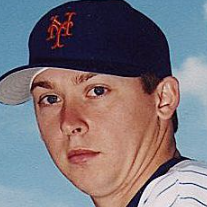
Aiden Robbins Brooklyn Cyclones - A+ OF The 21-year-old 3rd round pick this year played 20 games for St. Lucie and hit .273/.371/.455 (.826) with 2 doubles and 4 homers. He has now played 2 games with Brooklyn and is 2-for-4 with a home run. Explore Aiden Robbins News >






Recommended Posts
Create an account or sign in to comment
You need to be a member in order to leave a comment
Create an account
Sign up for a new account in our community. It's easy!
Register a new accountSign in
Already have an account? Sign in here.
Sign In Now