


Brandon Glick
-
Posts
40 -
Joined
-
Last visited
Brandon Glick's Achievements


-
 Brandon Glick reacted to a post in a topic:
IGT, 9/12/2026, NYM@NYY
Brandon Glick reacted to a post in a topic:
IGT, 9/12/2026, NYM@NYY
-
Brandon Glick reacted to a post in a topic:
Subway Series IGT at YSIII - 9/11/26
-
Welp. So much for this idea. Onto waivers he goes!
-
IGT 08/29 - Astros at Mets (4:10pm)
Brandon Glick replied to kcmets's topic in Archived Game Threads
Updated bullpen chart: MON TUE WED THU FRI TOT Nate Lavender 0 20 0 0 11 31 Kodai Senga 0 0 0 0 9 9 Jonathan Pintaro 0 19 0 0 21 40 Jefry Yan 0 13 26 0 0 39 Dedniel Núñez 0 0 8 0 10 18 Daniel Duarte 0 0 0 0 0 0 Austin Warren 0 15 0 26 0 41 -
Brandon Glick reacted to a post in a topic:
IGT 8/28 Houston we have a problem Mets vs Astros 7:10
-
whippoorwill reacted to a post in a topic:
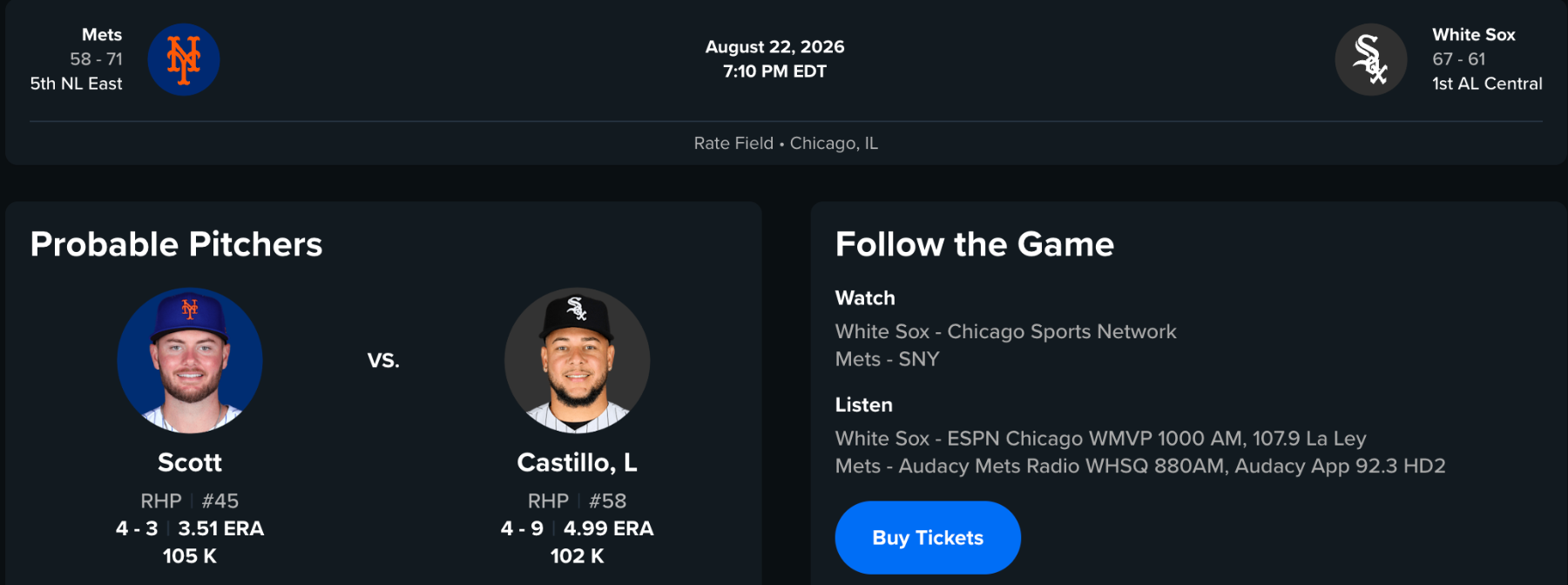
IGT 8/22 (7:10pm): Mets (Scott) vs White Sox (Castillo)
-
MON TUE WED THU FRI TOT Nate Lavender 2 0 9 0 14 25 Kodai Senga 0 0 21 0 0 21 Jonathan Pintaro 14 0 13 0 0 27 Jefry Yan 0 8 0 0 11 19 Dedniel Núñez 0 17 0 0 0 17 Daniel Duarte 14 0 10 0 8 32 Austin Warren 0 0 17 0 0 17
-
It's Christian Scott day! [I promise this is real excitement and not the throes of the dog days of summer talking.]
-
Brandon Glick reacted to a post in a topic:
Early Impressions of Mets' Biggest Trade Deadline Acquisitions: Jefferson Rojas, Billy Amick, and Emilien Pitre
-
Brandon Glick reacted to a post in a topic:
Game #118 IGT - Mets at Pirates - 8/8/26
-
whippoorwill reacted to a post in a topic:
Mets, Cubs Continue Nuclear Deadlines, Getting Together On A Clay Holmes Trade
-
Image courtesy of © Vincent Carchietta-Imagn Images Some fans were left disappointed by the New York Mets' return for Luke Weaver, one of the best relievers on the market, as the front office only pried Sammy Stafura out of Pittsburgh. So, in order to get a better prospect from the Chicago Cubs, David Stearns packaged two of his best remaining trade chips into one deal. Yes, Clay Holmes and Tyrone Taylor are on the move, completing the second trade between these two teams after the David Peterson deal a month ago. In return, the Mets are receiving Jefferson Rojas, a consensus top-100 prospect with enormous upside. Holmes, 33, has a 2.39 ERA this season, but it’s come in just nine starts. He fractured his leg in May and is just now on the cusp of a return to the majors. He’s under contract for $13 million this season, so he’s owed about $4 million the rest of the way. He can also earn $12 million in 2027, but if he comes back and pitches well the rest of the way, he’ll almost certainly opt out, which the deal allows him to do. Meanwhile, Taylor is an excellent fourth outfielder who hits lefties well and plays solid defense at all three positions on the grass. He's exactly the kind of player every winning team needs, which makes his inclusion in the deal more understandable when it means that a player like Rojas is the return. Speaking of, Rojas is a 21-year-old hitting .270/.339/.461 in Double-A this year, and he's got potential to be a five-tool player. He's long been seen as a "jack of all trades, master of none" kind of player, but he's played good defense at third base this year while hitting 15 homers and swiping 17 bags. He immediately becomes one of the best prospects in the farm system and is positioned to be Bo Bichette's heir apparent at the hot corner. In truth, this trade is somewhat reminiscent of the Pete Crow-Armstrong trade from 2021, when the Cubs sent two of their better trade chips (Javier Báez and Trevor Williams) in order to land the star outfield prospect. Hopefully, this deal ages just as well for Rojas and the Mets. View full article
-
- 1
-
-
- clay holmes
- jefferson rojas
- (and 1 more)
-
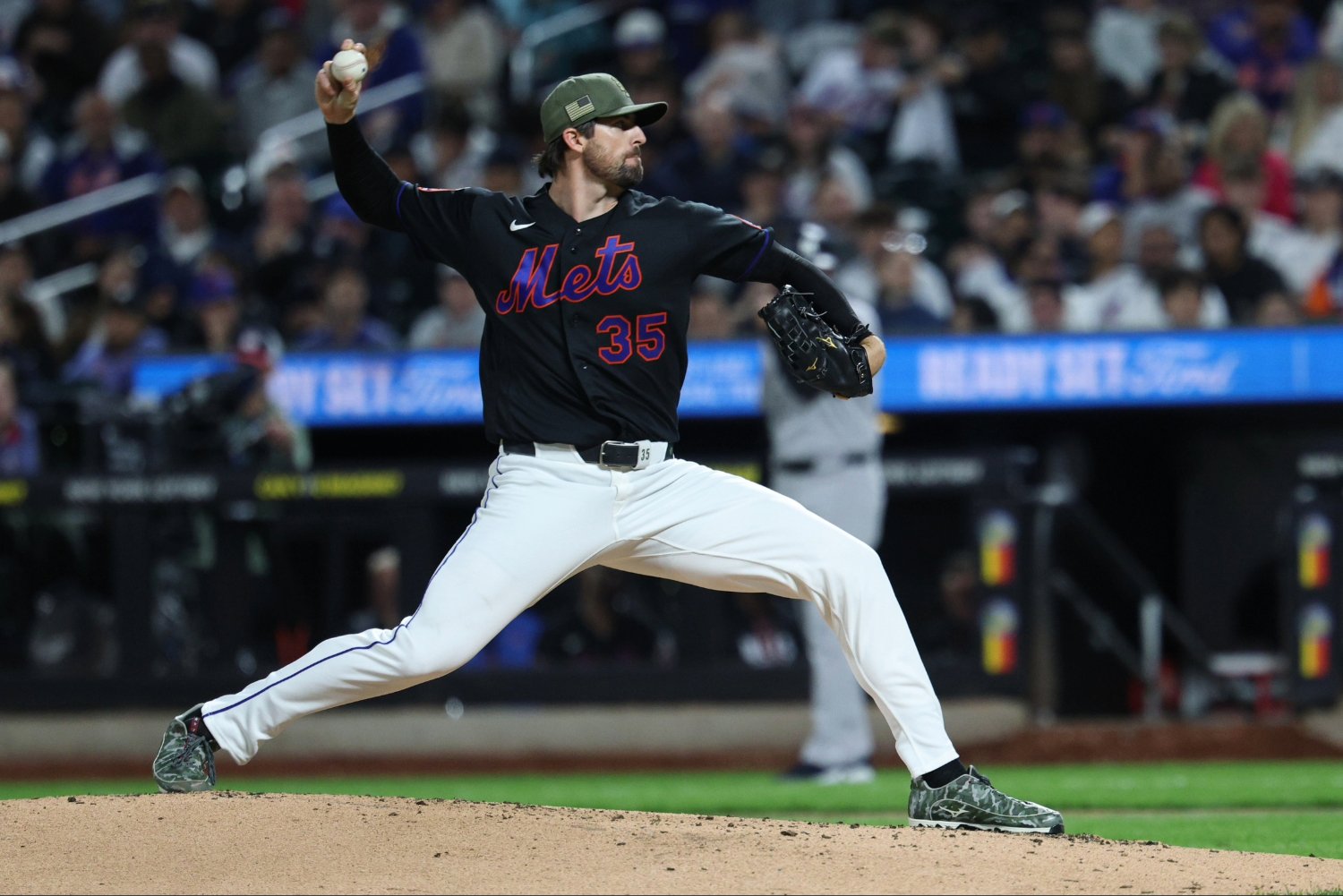 Some fans were left disappointed by the New York Mets' return for Luke Weaver, one of the best relievers on the market, as the front office only pried Sammy Stafura out of Pittsburgh. So, in order to get a better prospect from the Chicago Cubs, David Stearns packaged two of his best remaining trade chips into one deal. Yes, Clay Holmes and Tyrone Taylor are on the move, completing the second trade between these two teams after the David Peterson deal a month ago. In return, the Mets are receiving Jefferson Rojas, a consensus top-100 prospect with enormous upside. Holmes, 33, has a 2.39 ERA this season, but it’s come in just nine starts. He fractured his leg in May and is just now on the cusp of a return to the majors. He’s under contract for $13 million this season, so he’s owed about $4 million the rest of the way. He can also earn $12 million in 2027, but if he comes back and pitches well the rest of the way, he’ll almost certainly opt out, which the deal allows him to do. Meanwhile, Taylor is an excellent fourth outfielder who hits lefties well and plays solid defense at all three positions on the grass. He's exactly the kind of player every winning team needs, which makes his inclusion in the deal more understandable when it means that a player like Rojas is the return. Speaking of, Rojas is a 21-year-old hitting .270/.339/.461 in Double-A this year, and he's got potential to be a five-tool player. He's long been seen as a "jack of all trades, master of none" kind of player, but he's played good defense at third base this year while hitting 15 homers and swiping 17 bags. He immediately becomes one of the best prospects in the farm system and is positioned to be Bo Bichette's heir apparent at the hot corner. In truth, this trade is somewhat reminiscent of the Pete Crow-Armstrong trade from 2021, when the Cubs sent two of their better trade chips (Javier Báez and Trevor Williams) in order to land the star outfield prospect. Hopefully, this deal ages just as well for Rojas and the Mets.
 -
Image courtesy of © Vincent Carchietta-Imagn Images Three relievers down, how many to go? After a late-night trade that sent Huascar Brazoban to the Chicago White Sox, David Stearns clearly woke up with some urgency. Brooks Raley is now on the move, and he'll be staying in the NL East as he joins the Philadelphia Phillies. Though the destination is a little surprising, the move itself is anything but. Raley is a rental reliever, and much like A.J. Minter before him, was better suited to help a contender down the stretch than the Mets. Meanwhile, the Phillies recently lost Brad Keller for an extended period of time and have been in desperate need of a quality left-handed set-up man. In return, prospects Luke Gabrysh and John Spikerman (incredible name) will be coming back to New York. Raley, 38, has been a fixture in Queens since 2023, his first season with the team. He's pitched to an incredible 2.31 ERA over 149 appearances in that time, including a 1.96 ERA in 41.1 innings this year. He's as soft a tosser as you'll find, but he uses his flat arm angle to create an unmistakable advantage over opposing hitters, emerging as one of the best contact managers in the league. Though it'll be hard to root for his success in Philly, he'll always be remembered for an excellent tenure in New York. As for the prospects coming back, Gabrysh was the Phillies' 15th-round pick in 2024 out of Saint Joseph's and is regarded for having three pitches (fastball, slider, cutter) that all have plus potential. It shouldn't be too surprising, then, to see that he has a 29% strikeout rate in High-A this year. The problem is that he poses incredible reliever risk, due to poor command and some concerns about his ability to turn over lineups multiple times. He's started 36 of his 39 pro appearances thus far, but the 23-year-old may benefit from a shift to the bullpen. Spikerman is the more notable prospect, ranking at No. 27 on MLB Pipeline's list of the Phillies' top prospects. He has absolutely no power to speak of (zero home runs, .078 ISO this year), but he's still got a .753 OPS and 116 wRC+ this year thanks to a mature plate approach and decent bat-to-ball skills. More importantly, he's an elite base runner and plus outfield defender, which gives him a very solid floor as a potential fourth outfielder at the major-league level. He just probably won't emerge as more than that. It's a reasonable return for an aging rental reliever, featuring both a high-ceiling and high-floor player. The package will likely be easier to appreciate once the Mets wrap up the deadline and we can assess their entire haul. View full article
-
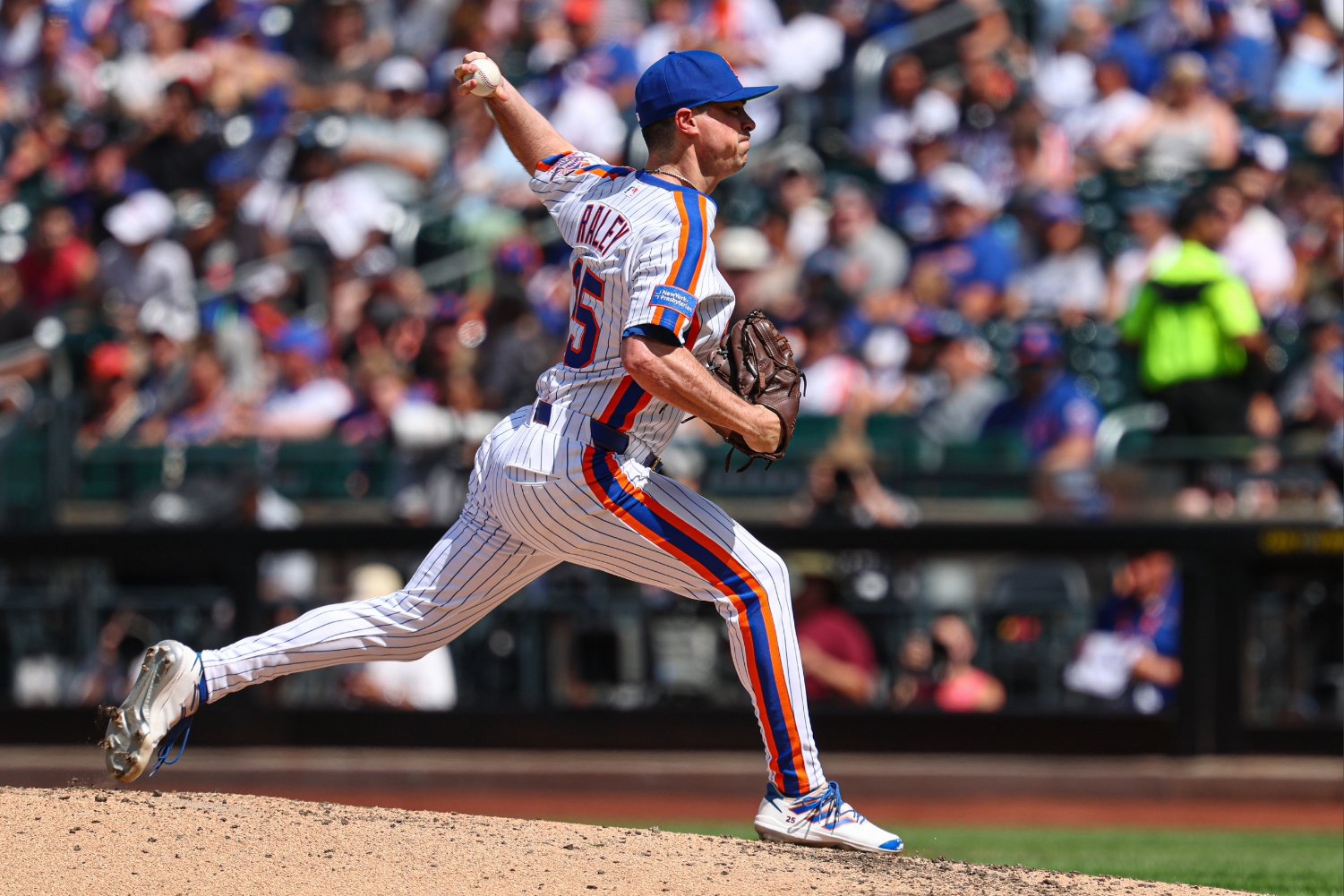 Three relievers down, how many to go? After a late-night trade that sent Huascar Brazoban to the Chicago White Sox, David Stearns clearly woke up with some urgency. Brooks Raley is now on the move, and he'll be staying in the NL East as he joins the Philadelphia Phillies. Though the destination is a little surprising, the move itself is anything but. Raley is a rental reliever, and much like A.J. Minter before him, was better suited to help a contender down the stretch than the Mets. Meanwhile, the Phillies recently lost Brad Keller for an extended period of time and have been in desperate need of a quality left-handed set-up man. In return, prospects Luke Gabrysh and John Spikerman (incredible name) will be coming back to New York. Raley, 38, has been a fixture in Queens since 2023, his first season with the team. He's pitched to an incredible 2.31 ERA over 149 appearances in that time, including a 1.96 ERA in 41.1 innings this year. He's as soft a tosser as you'll find, but he uses his flat arm angle to create an unmistakable advantage over opposing hitters, emerging as one of the best contact managers in the league. Though it'll be hard to root for his success in Philly, he'll always be remembered for an excellent tenure in New York. As for the prospects coming back, Gabrysh was the Phillies' 15th-round pick in 2024 out of Saint Joseph's and is regarded for having three pitches (fastball, slider, cutter) that all have plus potential. It shouldn't be too surprising, then, to see that he has a 29% strikeout rate in High-A this year. The problem is that he poses incredible reliever risk, due to poor command and some concerns about his ability to turn over lineups multiple times. He's started 36 of his 39 pro appearances thus far, but the 23-year-old may benefit from a shift to the bullpen. Spikerman is the more notable prospect, ranking at No. 27 on MLB Pipeline's list of the Phillies' top prospects. He has absolutely no power to speak of (zero home runs, .078 ISO this year), but he's still got a .753 OPS and 116 wRC+ this year thanks to a mature plate approach and decent bat-to-ball skills. More importantly, he's an elite base runner and plus outfield defender, which gives him a very solid floor as a potential fourth outfielder at the major-league level. He just probably won't emerge as more than that. It's a reasonable return for an aging rental reliever, featuring both a high-ceiling and high-floor player. The package will likely be easier to appreciate once the Mets wrap up the deadline and we can assess their entire haul.
 -
MON TUE WED THU FRI TOT Xzavion Curry 0 0 0 0 62 62 Luke Weaver 0 0 12 0 0 12 Kodai Senga 0 0 0 0 49 49 Huascar Brazobán 13 0 11 0 0 24 Devin Williams 0 0 18 17 0 35 Daniel Duarte 24 0 27 0 0 51 Brooks Raley 0 0 0 14 0 14
-
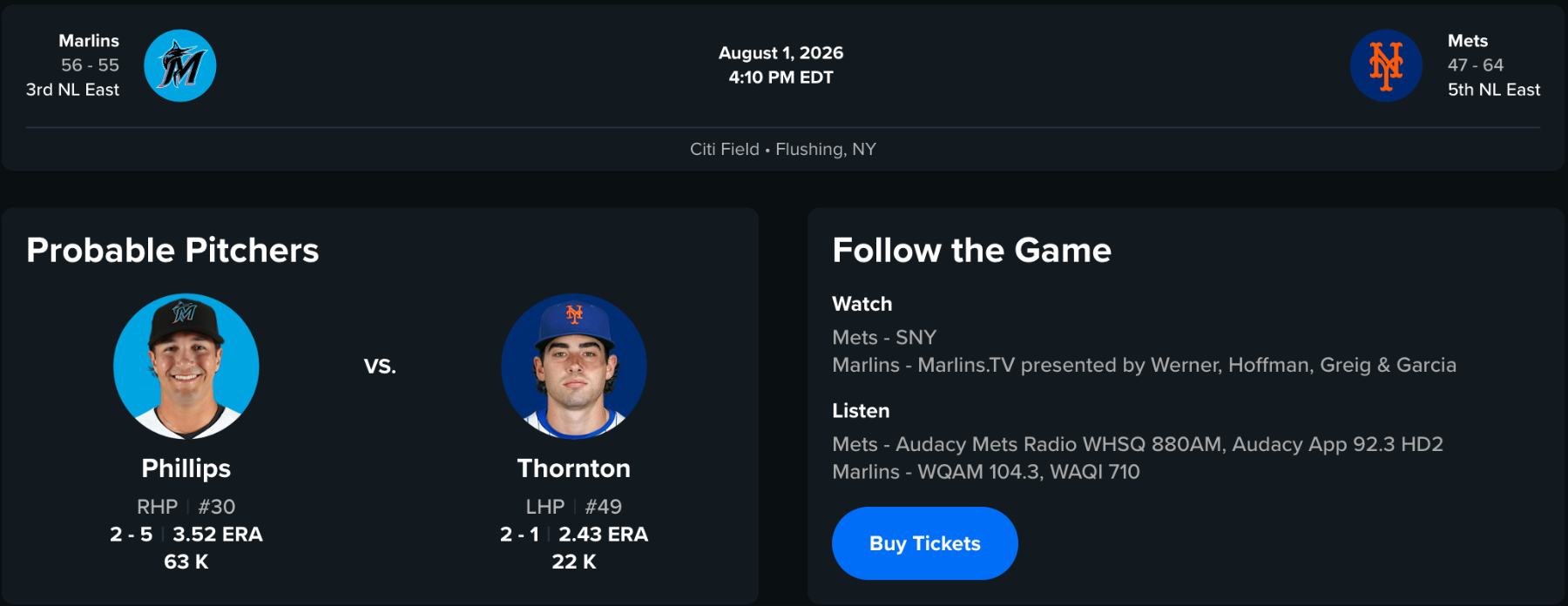
Mostly just hoping at this point that no one gets traded during the game. Let's be civil about this fire sale, shall we?
-
MON TUE WED THU FRI TOT Luke Weaver 0 15 0 0 0 15 Kodai Senga 0 0 0 0 0 0 Huascar Brazobán 0 0 16 0 0 16 Devin Williams 0 15 0 0 0 15 Daniel Duarte 0 0 24 0 0 24 Cionel Pérez 0 0 25 0 13 38 Brooks Raley 0 15 0 0 23 38 A.J. Minter 0 0 19 0 12 31
-
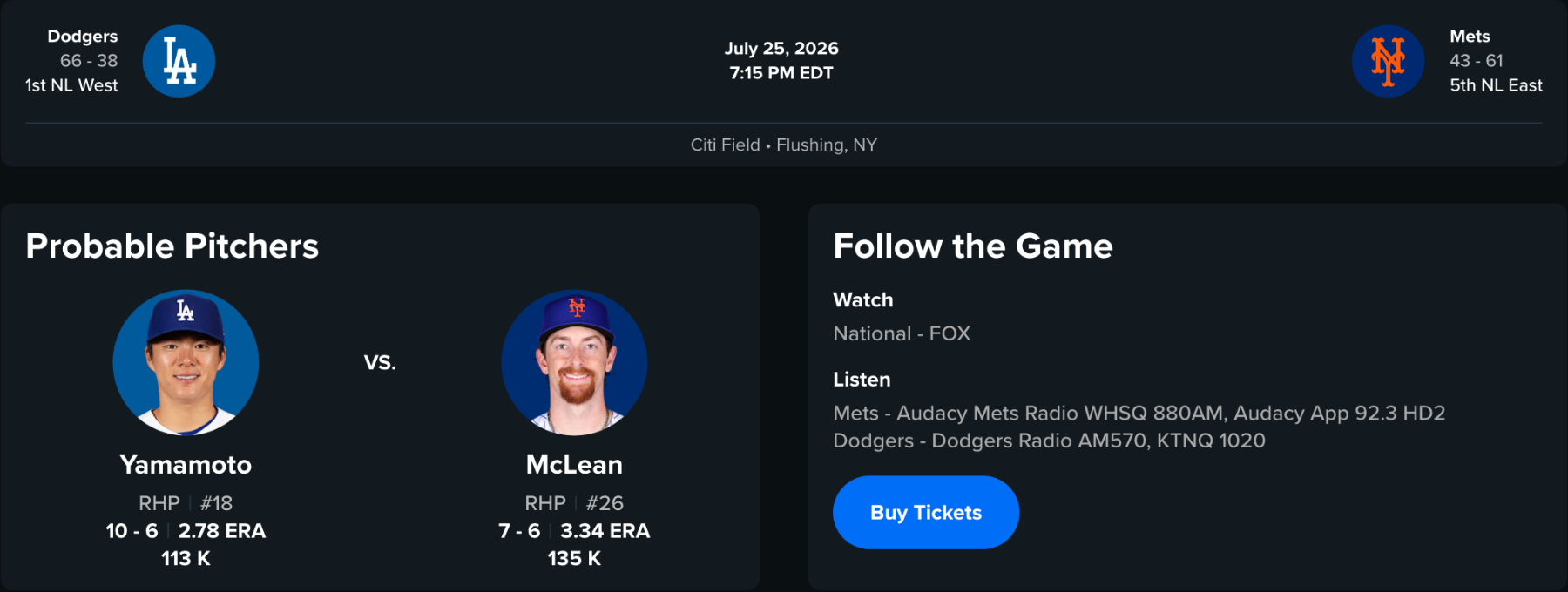
Hard to complain about the pitching matchup at least...
-
SUN MON TUE WED THU TOT Luke Weaver 0 0 15 0 0 15 Kodai Senga 0 0 0 0 0 0 Huascar Brazobán 22 0 0 16 0 38 Devin Williams 0 0 15 0 0 15 Daniel Duarte 0 0 0 24 0 24 Cionel Pérez 18 0 0 25 0 43 Brooks Raley 0 0 15 0 0 15 A.J. Minter 14 0 0 19 0 33
-
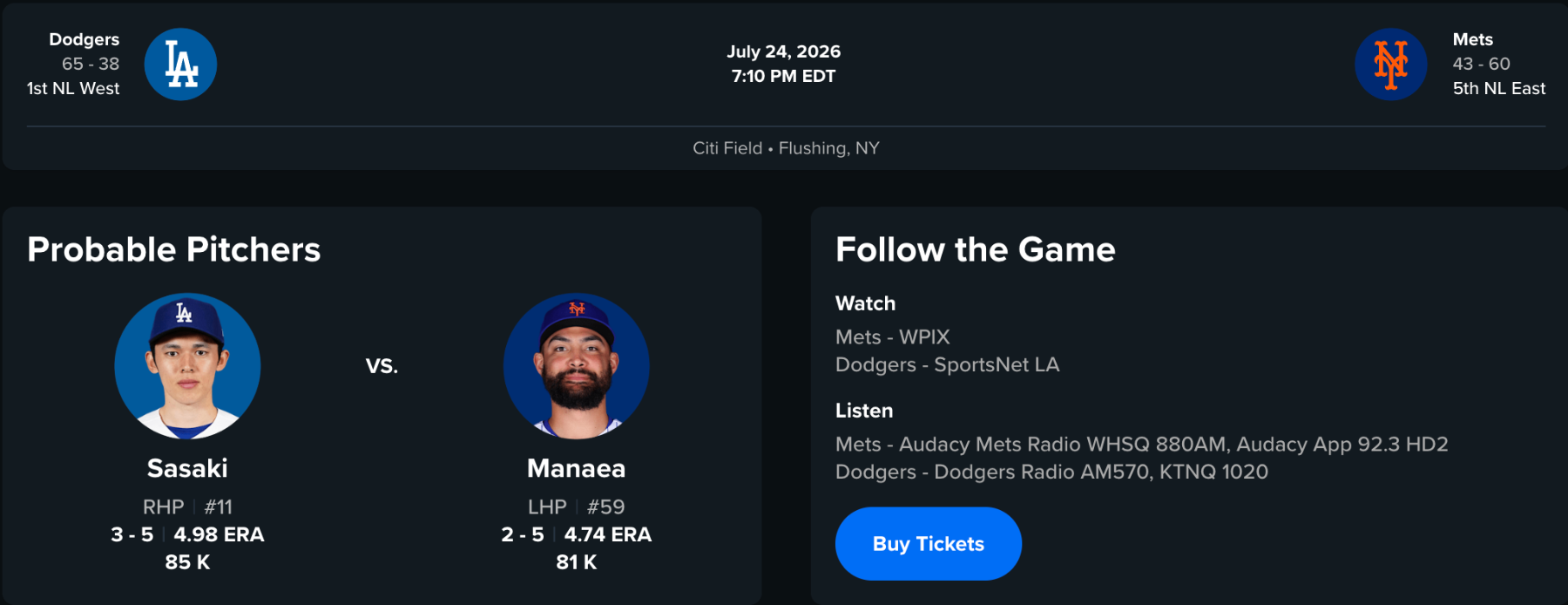
T-minus 11 days until the trade deadline...
-
Brandon Glick reacted to a post in a topic:
Mets Enter Trade Deadline As True Sellers With Tons of Market Leverage
-
Brandon Glick reacted to an article:
2026 New York Mets MLB Draft Day 2 Thread
-
 Brandon Glick reacted to a post in a topic:
2026 New York Mets MLB Draft Day 1 Thread
Brandon Glick reacted to a post in a topic:
2026 New York Mets MLB Draft Day 1 Thread
-
IGT 7/11 Mets Red Sox 4:10 Peralta Bello
Brandon Glick replied to ashie62's topic in Archived Game Threads
FWIW, the Sox called up Eduardo Rivera to take the start today. Bello is sticking in the minors.
