


Mets Video
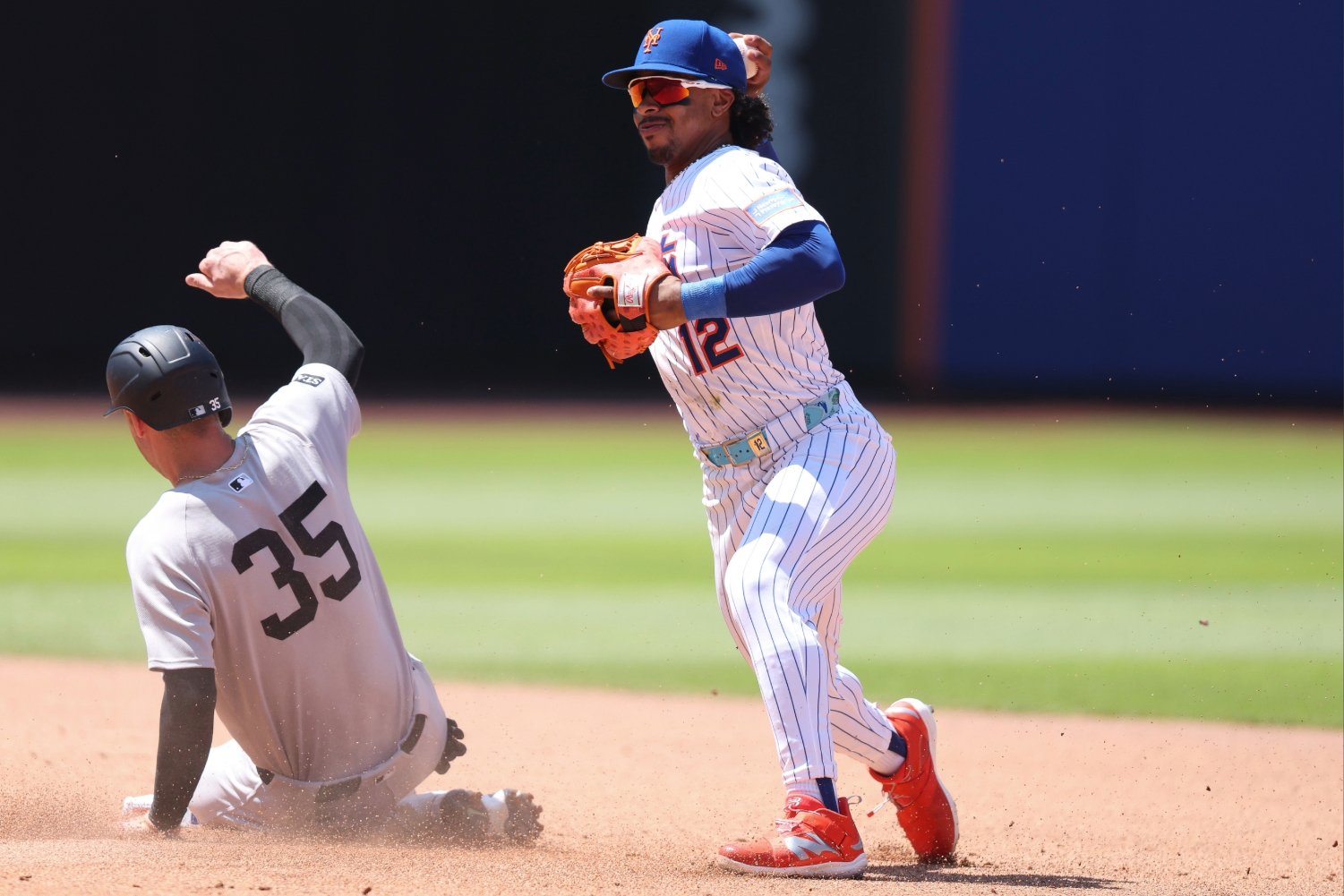
By mid-May, New York is still trying to figure out what kind of teams the Yankees and Mets actually are.
The Yankees continue winning just enough games to remain firmly inside the American League conversation, but they arrive at the Subway Series carrying bullpen concerns and an offense that finished its series against the Baltimore Orioles with 15 consecutive scoreless innings.
When Aaron Judge and Ben Rice are not producing, the Yankees’ offense has struggled badly to create runs. The Mets, meanwhile, are trapped between conflicting signals: Francisco Lindor, Luis Robert Jr., Jorge Polanco, Francisco Álvarez, Ronny Mauricio, and Kodai Senga are all on the injured list. Bo Bichette’s elite swing still looks disconnected—he currently owns the worst barrel rate of his career at just 3.4%.
In the middle of the chaos, Juan Soto is enduring one of the worst offensive stretches of his recent career, yet around him, small signs of a more dangerous and less improvised lineup are beginning to emerge.
That is what makes this edition of the Subway Series feel different.
It does not arrive as a simple rivalry series on the calendar. It arrives at that uncomfortable point of the season when the first cracks start feeling real. When offensive struggles stop looking temporary. When teams begin understanding which parts of the roster truly work and which ones are still surviving more on reputation than production.
And that is why this series feels far heavier than a typical May matchup.
Because while the noise surrounding Juan Soto and Aaron Judge will dominate every headline, the true backdrop of this Subway Series feels deeper: two teams trying to prove there is still a more dangerous version of themselves hidden underneath all the inconsistency.
The Yankees enter the series having lost five of their last six games, while the Mets just completed their first sweep of the season behind five home runs Thursday against the Detroit Tigers. Over the last decade, the Mets have controlled the Subway Series with a 25-23 record and a plus-33 run differential (253-220). If we narrow the sample to the last five seasons, the Mets own two series victories and three splits, including a 2024 sweep with wins at both Yankee Stadium and Citi Field, respectively.
| New York Mets vs. New York Yankees | ||||||||||||
|
|
New York Mets | New York Yankees | ||||||||||
| Rk | Season | GP | W | L | R | R | GP | W | L | R | R | |
| 1 | 2025 | 6 | 3 | 3 | 29 | 33 | 6 | 3 | 3 | 33 | 29 | |
| 2 | 2024 | 4 | 4 | 0 | 36 | 14 | 4 | 0 | 4 | 14 | 36 | |
| 3 | 2023 | 4 | 2 | 2 | 20 | 16 | 4 | 2 | 2 | 16 | 20 | |
| 4 | 2022 | 4 | 2 | 2 | 13 | 13 | 4 | 2 | 2 | 13 | 13 | |
| 5 | 2021 | 6 | 4 | 2 | 44 | 29 | 6 | 2 | 4 | 29 | 44 | |
| 6 | 2020 | 6 | 3 | 3 | 29 | 29 | 6 | 3 | 3 | 29 | 29 | |
| 7 | 2019 | 4 | 2 | 2 | 20 | 23 | 4 | 2 | 2 | 23 | 20 | |
| 8 | 2018 | 6 | 3 | 3 | 27 | 25 | 6 | 3 | 3 | 25 | 27 | |
| 9 | 2017 | 4 | 0 | 4 | 14 | 21 | 4 | 4 | 0 | 21 | 14 | |
| 10 | 2016 | 4 | 2 | 2 | 21 | 17 | 4 | 2 | 2 | 17 | 21 | |
| 11 | 2015 | 6 | 2 | 4 | 20 | 31 | 6 | 4 | 2 | 31 | 20 | |
| 12 | 2014 | 4 | 2 | 2 | 21 | 19 | 4 | 2 | 2 | 19 | 21 | |
| 13 | 2013 | 4 | 4 | 0 | 16 | 7 | 4 | 0 | 4 | 7 | 16 | |
| 14 | 2012 | 6 | 1 | 5 | 21 | 32 | 6 | 5 | 1 | 32 | 21 | |
| 15 | 2011 | 6 | 2 | 4 | 14 | 29 | 6 | 4 | 2 | 29 | 14 | |
| 16 | 2010 | 6 | 3 | 3 | 19 | 18 | 6 | 3 | 3 | 18 | 19 | |
| 17 | 2009 | 6 | 1 | 5 | 17 | 44 | 6 | 5 | 1 | 44 | 17 | |
| 18 | 2008 | 6 | 4 | 2 | 38 | 25 | 6 | 2 | 4 | 25 | 38 | |
| 19 | 2007 | 6 | 3 | 3 | 27 | 34 | 6 | 3 | 3 | 34 | 27 | |
| 20 | 2006 | 6 | 3 | 3 | 30 | 35 | 6 | 3 | 3 | 35 | 30 | |
| 21 | 2005 | 6 | 3 | 3 | 32 | 23 | 6 | 3 | 3 | 23 | 32 | |
| 22 | 2004 | 6 | 4 | 2 | 43 | 38 | 6 | 2 | 4 | 38 | 43 | |
| 23 | 2003 | 6 | 0 | 6 | 19 | 39 | 6 | 6 | 0 | 39 | 19 | |
| 24 | 2002 | 6 | 3 | 3 | 29 | 27 | 6 | 3 | 3 | 27 | 29 | |
| 25 | 2001 | 6 | 2 | 4 | 20 | 26 | 6 | 4 | 2 | 26 | 20 | |
| 26 | 2000 | 6 | 2 | 4 | 24 | 25 | 6 | 4 | 2 | 25 | 24 | |
| 27 | 1999 | 6 | 3 | 3 | 30 | 28 | 6 | 3 | 3 | 28 | 30 | |
| 28 | 1998 | 3 | 1 | 2 | 8 | 16 | 3 | 2 | 1 | 16 | 8 | |
| 29 | 1997 | 3 | 1 | 2 | 11 | 9 | 3 | 2 | 1 | 9 | 11 | |
| Totals | 152 | 69 | 83 | 692 | 725 | 152 | 83 | 69 | 725 | 692 | ||
Heading into a promising weekend series that opens with a pitching matchup between Cam Schlittler and Clay Holmes, here are five storylines that could shape the direction of the Subway Series:
1. Juan Soto vs. Aaron Judge
Everything starts, naturally, with Juan Soto and Aaron Judge, former teammates in 2024. Because while the marketing will sell this matchup as a battle between superstars, the interesting part is not simply who is performing—it is who will carry the heavier pressure.
Judge still looks like the gravitational center of the Yankees lineup. Over the last ten days, he is slashing .278/.409/.583 with three home runs and a .992 OPS. Those numbers almost feel routine for him now, but behind the production lies a deeper issue: New York has needed virtually every Judge swing to keep the offense alive.
Because around him, there are concerning signs.
Paul Goldschmidt is probably enjoying his best offensive stretch of the season, posting a 1.256 OPS with three home runs—two of them leadoff shots—in eight games. But after that, the lineup collapses into a dangerous mixture of late swings, strikeouts, and rallies that never fully materialize. Jazz Chisholm Jr. has struck out 14 times in ten games. Ben Rice is hitting just .125. Austin Wells sits at .095.
And then comes the statistic that changes the tone of the entire series: the Yankees enter without scoring a run over their last 15 innings. Since leaving Yankee Stadium, the offense has collapsed on the road, hitting .158 with runners in scoring position over the last six games. They have struck out 14 times while drawing only four walks. The only memorable productive swing was Trent Grisham’s three-run homer Tuesday that capped a five-run rally in the third inning. Since then, the Yankees have not scored again.
On the other side, Soto is not arriving hot either. He is arriving under pressure. Although he hit his fifth home run of the season and drove in two runs Thursday during the Mets’ five-homer explosion to complete the sweep over Detroit, Soto is still searching offensively. His line over the last eight games stood at .138/.212/.310, far from the elite discipline and zone control that define his profile. But the context around Soto has started to change. The Mets do not look explosive offensively, yet they do appear to be finding a more functional structure.
Carson Benge is beginning to look like a hitter finally understanding the rhythm of the major leagues. His .379 average and .971 OPS over the last eight games represent stability in front of Soto. His swings no longer look rushed. There is now intention behind them, especially against fastballs in the middle of the zone, and that changes the entire offensive dynamic for the Mets.
The 21-year-old rookie A.J. Ewing has also made an impact in his recent debut with the Mets. After launching the first home run of his career Thursday against Tigers right-hander Keider Montero, Ewing has gone 3-for-9 with two extra-base hits, including a triple. He has also drawn four walks—more than his three strikeouts—and stolen a base.
Mark Vientos has two home runs and seven RBIs over his last nine games, while Brett Baty, who homered Thursday, has also delivered quality at-bats. It is not a dominant offense. But it is one that seems to be searching for a more coherent identity.
So once again, the expectation will center on how much impact Juan Soto and Aaron Judge can create, but the true turning point may depend on how hot the hitters around them become.
2. Can the Mets stop Cam Schlittler?
One of the biggest arms to watch in the entire series is undoubtedly Cam Schlittler, who has posted a 0.57 ERA with 29 strikeouts and only one home run allowed across 31 2/3 innings over his last five starts.
During that span, opposing hitters have slashed just .168/.223/.212 against Schlittler while generating 67 whiffs. But the interesting part is not only the ERA or the sheer volume of swing-and-miss. It is the way he controls at-bats. Some young pitchers survive by hiding on the edges of the strike zone. Schlittler appears to do the exact opposite: he challenges hitters.
His fastball plays above the zone with late life, and that could become especially uncomfortable for this Mets lineup, which at times still depends too heavily on early-count contact. Against four-seam fastballs, the Mets have produced the worst on-base percentage (.304) in baseball and the second-worst ISO (.127), trailing only the Red Sox (.115).
That is where one of the central conflicts of the series emerges, because Schlittler throws his four-seam fastball 44% of the time and attacks the upper part of the zone with 51% of those pitches. This advanced report probably will not surprise you:
Lowest OBP against high four-seam fastballs this season

Table context: The leaderboard is sorted by lowest OBP allowed among pitchers with at least 20 plate appearances ending on a high fastball, either inside or outside the strike zone.
Behind Jacob deGrom, Schlittler owns the second-best whiff rate (32.3%) in this group of upper-zone fastball predators, as well as the second-best strikeout rate (38.3%), trailing only Paul Skenes (38.5%).
That is not good news for the Mets lineup, because Soto is struggling. Bo Bichette arrives offensively lost, carrying a .369 OPS over recent days, although his .314 expected batting average against four-seamers and 61.8% hard-hit rate suggest he has also been somewhat unlucky. Without key hitters like Lindor, Robert, Polanco, and Álvarez, several secondary Mets bats still show problems adjusting to sustained velocity up around the hands.
That is why Schlittler could completely control the rhythm of the game if he gets ahead in counts, especially while pairing the four-seamer with a devastating cutter that has held hitters to a .113 average without an extra-base hit in 57 plate appearances.
The Yankees and Mets both arrive with inconsistent offenses, but Schlittler possesses the exact type of profile capable of turning a bad offensive week into a full-blown multi-day crisis.
3. Freddy Peralta and Clay Holmes could extend the Yankees’ offensive collapse
Perhaps the most interesting matchup of the entire series is not Soto versus Judge. Perhaps it is Freddy Peralta versus the Yankees.
Peralta represents exactly the kind of starter that has historically disrupted this lineup: elevated fastballs, hidden velocity, and enough slider usage to destroy aggressive swings.
Now the question becomes whether Peralta will bring back his fastball the way he did in his last start, when he generated 13 whiffs against the Detroit Tigers on Tuesday. Eleven of those 13 misses (85%) came on the four-seam fastball. The rest were split between the changeup and slider. That was encouraging news for the Mets, although there is another layer here; the Yankees have crushed sliders all season, leading baseball with 14 home runs, a .260 ISO, and a 45.3% hard-hit rate against the pitch. So, which version of these Yankees will appear against Peralta? What adjustments will they make? We will find out soon enough.
If we dive into the individual matchups, another fascinating detail appears immediately: Judge has faced Peralta three times and still does not have a hit against him, striking out twice. The sample is tiny, but it perfectly captures the visual conflict Peralta often creates for larger hitters. The ball seems to appear on top of them.
Still, the history also carries warnings. Goldschmidt has hit two home runs against Peralta and owns an .887 OPS in the matchup. Cody Bellinger has also punished him historically with an OPS north of 1.100. That forces Peralta to pitch with more precision than aggression. Against this offensively limited version of the Yankees, he probably does not need to dominate the entire lineup—he simply needs to prevent Judge and Bellinger from changing the game with one swing, especially since Aaron Boone typically avoids starting Goldschmidt against right-handed pitching.
On the Mets' side, Clay Holmes could quietly become one of the most important figures of the series.
Holmes’ old problem has always been the same: when the sinker loses depth, everything unravels quickly. Early this season, opponents are finding the sinker more often. His whiff rate has dropped from 16.4% to 12.8%, and his strikeout rate has declined by 5.5%. The sinker remains the foundation of his mix, but now the sweeper has become the true put-away weapon, generating 52% of his strikeouts.
If Holmes’ movement shows up, he could turn games into a sequence of weak grounders and uncomfortable swings. During this 15-inning scoreless streak, the Yankees look particularly vulnerable to that kind of pitching profile.
New York is not simply enduring an offensive drought. The Yankees are also chasing too many pitches outside the zone and losing hard contact early in counts. Against an aggressive Holmes attacking below the strike zone, that can quickly turn into ten-pitch innings and easy outs.
4. Will the Yankees bullpen return to dominance?
The Yankees bullpen enters the Subway Series with numbers that inspire both confidence and concern at the same time.
The positive side is obvious enough: there is still plenty of swing-and-miss to finish important games. The group has recorded 17 strikeouts in 17 innings over the last six games, and arms like David Bednar and Fernando Cruz continue generating whiffs even when they do not look fully dominant. Bednar owns 13.5 strikeouts per nine innings during that stretch, while Cruz carries a 4.0 strikeout-to-walk ratio, signs that the Yankees still possess relievers capable of surviving traffic through pure stuff.
But the problems emerge immediately afterward: too much hard contact and too many unstable innings.
The bullpen owns a collective 4.76 ERA over the last six games, has allowed four home runs, and several relievers are living through outings where one mistake destroys the entire inning. Camilo Doval still does not look fully consistent inside the strike zone. Brent Headrick surrendered two home runs in just two innings. Paul Blackburn arrives especially vulnerable with three walks and a 2.25 WHIP in only 2 2/3 innings. Even the overall bullpen profile is starting to reveal something interesting: too many dangerous fly balls and not enough complete weak-contact suppression outside of what Tim Hill has provided, as he continues looking like the steadiest reliever in the group because of his ability to generate ground balls consistently.
And that could matter greatly against the Mets.
Because even if this offense is not exploding consistently, it is beginning to create offensive traffic ahead of Soto. If the Mets force games into the bullpen early—especially in situations where Aaron Boone must extend secondary relievers—the series could suddenly open the door to chaotic innings. The problem for the Yankees is that this no longer looks like a bullpen that simply enters and suffocates games automatically. Right now it looks more human. More vulnerable to the big inning. And in an emotional series like the Subway Series, that can change everything with one swing.
The contrast between both bullpens could quietly become one of the defining themes of the weekend. While the Yankees enter with a 4.76 ERA over their last six games and several relievers vulnerable to hard contact, the Mets bullpen appears to be stabilizing at exactly the right moment.
New York’s bullpen ERA sits at 3.16 over the last seven games, but the most revealing detail emerges once the disastrous outings from Tobias Myers and Craig Kimbrel are removed: the rest of the bullpen has combined for a microscopic 0.43 ERA.
That completely changes the perception of the group. Devin Williams is once again generating uncomfortable swings with his changeup. Brooks Raley has been extremely stable. The Mets also enter with 30 strikeouts in 25 2/3 innings during that stretch. More than overwhelming dominance, the important detail is that the bullpen seems to be producing clean innings precisely when the Yankees are enduring one of their worst offensive stretches of the season.
5. Can the Mets solve the Yankees’ left-handed starters?
The end of the series could ultimately be decided by a problem that has haunted the Mets for nearly the entire season: left-handed pitching. Behind Schlittler, Carlos Rodón and Ryan Weathers will close out the series. It just so happens that the Mets own the worst OBP in Major League Baseball against left-handed pitchers (.276).
That turns Rodón and Weathers into massive threats for the final games of the weekend. Current Mets hitters have combined to hit just .203 (13-for-64) with 14 strikeouts across 72 plate appearances against them. Only three hitters have homered: Tyrone Taylor, Marcus Semien, and Luis Torrens. Soto is 0-for-4 with four walks and one strikeout. Bichette is 4-for-14 (.286) with two RBIs and three strikeouts.
That is why names like Soto, Bichette, and Benge become so important in this matchup. The Mets do not need to destroy Rodón. But they do need to avoid the offensive pattern that has followed them for months: late swings, nonexistent offensive traffic, and rallies dying before they even begin.
Meanwhile, Ryan Weathers could quietly play a major role in Sunday’s finale. Soto has gone 4-for-8 (.500) with a home run against Weathers, while Semien is 2-for-5 with a double. The rest of the projected lineup will mostly be facing him for the first time. For many of them, their struggles against left-handed pitching this season tell the story clearly:
|
Player |
Split |
Year |
G |
PA |
BA |
OBP |
SLG |
OPS |
HR |
RBI |
K% |
BB% |
|
vs LHP |
2026 |
2 |
2 |
.000 |
.000 |
.000 |
.000 |
0 |
0 |
50.0% |
0.0% |
|
|
vs LHP |
2026 |
19 |
45 |
.146 |
.222 |
.293 |
.515 |
1 |
2 |
20.0% |
8.9% |
|
|
vs LHP |
2026 |
24 |
53 |
.188 |
.264 |
.313 |
.577 |
1 |
8 |
15.1% |
9.4% |
|
|
vs LHP |
2026 |
12 |
21 |
.222 |
.333 |
.278 |
.611 |
0 |
1 |
38.1% |
9.5% |
|
|
vs LHP |
2026 |
19 |
36 |
.235 |
.235 |
.441 |
.676 |
2 |
7 |
22.2% |
0.0% |
|
|
vs LHP |
2026 |
20 |
39 |
.257 |
.333 |
.314 |
.648 |
0 |
1 |
20.5% |
7.7% |
|
|
vs LHP |
2026 |
20 |
43 |
.268 |
.302 |
.415 |
.717 |
1 |
3 |
14.0% |
2.3% |
|
|
vs LHP |
2026 |
12 |
21 |
.278 |
.381 |
.278 |
.659 |
0 |
1 |
38.1% |
14.3% |
|
|
vs LHP |
2026 |
2 |
4 |
.333 |
.500 |
1.000 |
1.500 |
0 |
1 |
50.0% |
25.0% |
|
|
vs LHP |
2026 |
11 |
19 |
.353 |
.389 |
.471 |
.859 |
0 |
4 |
10.5% |
5.3% |
The numbers speak for themselves. Soto, Bichette, Baty, and Semien will need to make quick adjustments. Benge and Ewing bring some stability in small samples, although the strikeouts remain significant.
So. the story here is not simply Soto versus Judge. It is about two teams trying to prove they still have a dangerous version of themselves hidden underneath all the inconsistency. The Yankees are searching for offense again. The Mets are trying to prove they can survive velocity and left-handed pitching after finally securing their first sweep of the season.
And in the middle of all that, New York once again finds itself inside a series where every inning feels heavier than normal.





Recommended Comments
Create an account or sign in to comment
You need to be a member in order to leave a comment
Create an account
Sign up for a new account in our community. It's easy!
Register a new accountSign in
Already have an account? Sign in here.
Sign In Now