


Mets Video
In late June, the New York Mets moved struggling pitcher Kodai Senga to the bullpen. Since then, the only game he started was when the team decided to scratch the soon-to-be-traded Freddy Peralta, so he’s officially a relief pitcher now.
To be fair, the experiment hasn’t gone terribly well from a results standpoint in the strictest sense, as he has a 5.40 ERA in 20 innings with a 23:12 K:BB ratio and a 4.53 FIP. However, most of those frames came as part of outings in which he was asked to give the club more than three outs.
Of the nine games he pitched in since he became a full-time reliever (including that unexpected start), Senga has pitched exactly one inning in four of them. Here are his stats in those appearances: no hits, no runs, two walks, five strikeouts.
There’s a reason behind this dominance: Senga can throw much harder in one-inning spurts, without pacing himself over four, five, or six frames. His four-seamer is sitting in the 96-99 mph range in his new role, and the velocity of his secondary offerings is also up.
Now that he seems keen to get most of the save opportunities while Devin Williams is on the injured list, we will see the Mets deploy Senga more frequently in this manner. Besides the obvious increase in velocity, it allows him to focus on the ‘ghost fork’ as the main secondary offering almost exclusively.
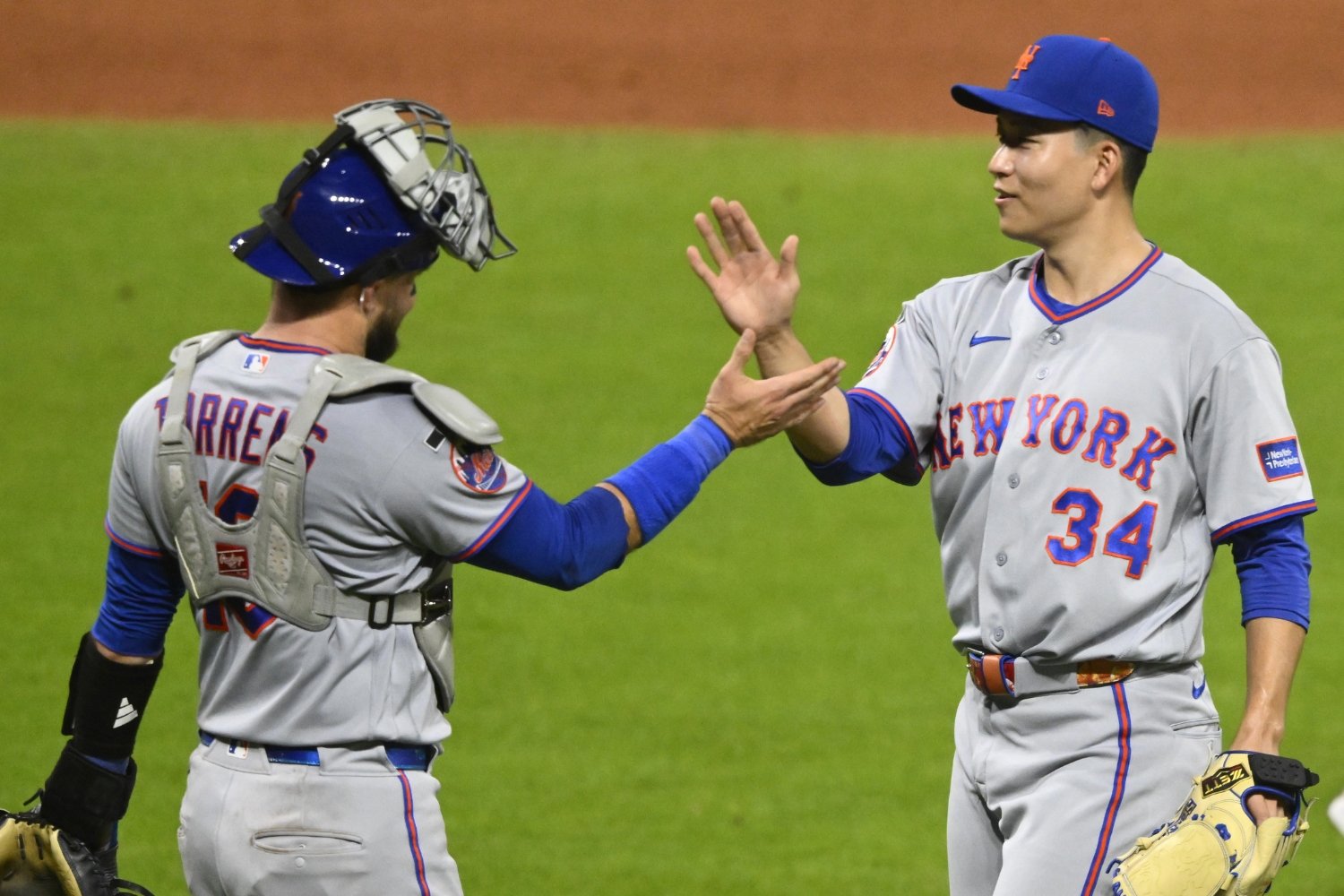
The formula worked to near-perfection on Monday, when he notched his first MLB save. That day, he threw 18 pitches: 11 four-seamers, four forkballs, two sweepers, and a cutter. The heater touched 99.9 mph, and even though it just earned him one called strike and no whiffs, it helped him get a weak 85.5-mph fly out. He got two strikeouts with his signature ‘ghost fork’, a pitch that clocked 2.9 mph faster than his yearly average in the outing.
As Mets fans probably know by now, everything will come down to command with Senga. Even his most dominant version, the one that earned him second place in the NL Rookie of the Year Award voting in 2023, walked 4.17 batters per nine innings. This year, the number is up to 6.42. That’s just not going to cut it.
It would certainly help if Senga got more called strikes or whiffs on the four-seamer. The forkball is an excellent put-away pitch, but we would love to see the primary offering, which is the fastball, become more consistent. The velocity is there, particularly in his new role as a reliever, but this probably isn’t sustainable if it can’t generate more strikes. For now, it will at least keep hitters hones.
There are always pitfalls in the transition from starting to relief—not to mention the inherent loss of value once a pitcher stops consuming huge gobs of innings at once—but Senga has the raw stuff to succeed in his new role. With the Mets already planning for 2027 and beyond, it'll be useful to keep experimenting with him in these high-leverage, one-inning situations.




Recommended Comments
There are no comments to display.
Create an account or sign in to comment
You need to be a member in order to leave a comment
Create an account
Sign up for a new account in our community. It's easy!
Register a new accountSign in
Already have an account? Sign in here.
Sign In Now