


Mets Video
To say it was a disappointing season for the New York Mets would be an understatement. After finishing the year 14 games below .500, there’s plenty of work to be done this offseason, and that should probably begin with improving the starting rotation.
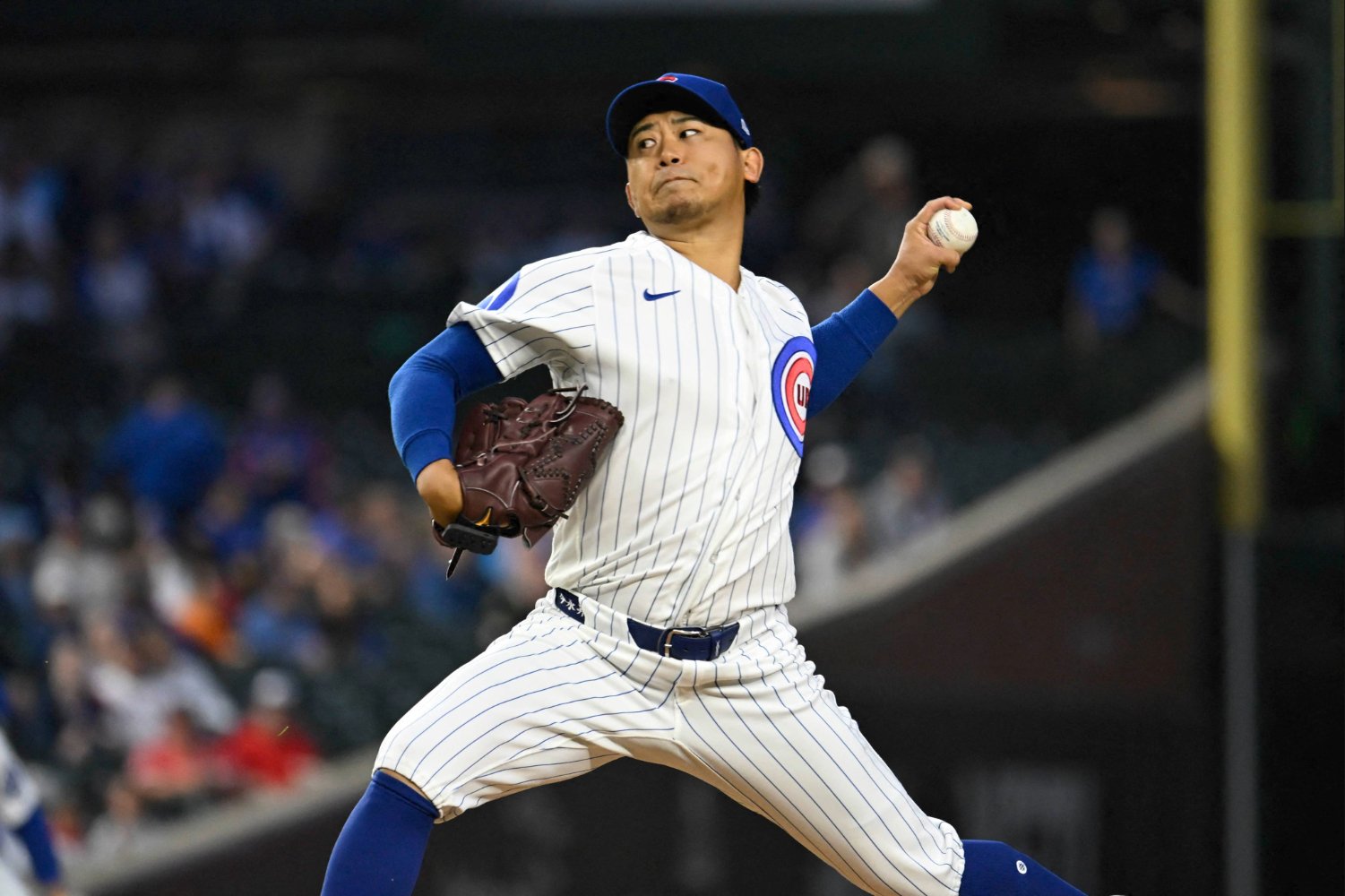
Nolan McLean has looked like a quality starter since making his big-league debut in 2025, and Christian Scott flashed his upside this year. But aside from those two, there are more questions than answers with this unit. Someone like free agent left-hander Shota Imanaga could really help stabilize the rotation moving forward.
Imanaga comes in as DiamondCentric’s 28th-ranked free agent, and he’s spent his three major-league seasons with the Chicago Cubs after signing as an international free agent out of Japan. He’s been a quality arm, too, posting a 3.45 career ERA and 3.71 expected ERA across 492 1/3 innings, along with 465 strikeouts to just 91 walks. His ability to pound the zone has always been one of his biggest strengths. He’s finished with a walk rate in the 95th percentile or better in all three seasons, and that command has helped him get hitters to chase when he expands the zone.
He has a versatile six-pitch mix with different speeds and movement profiles, but he’s leaned heavily on his four-seam fastball and splitter throughout his big-league career. His four-seam doesn’t have overpowering velocity, sitting around 91 mph, but it has outstanding life. He’s also flattened out his arm angle a bit since entering the league, allowing him to generate more arm-side run on the pitch.
The same can be said of his splitter. It doesn't have an especially sharp bite, but it runs away from right-handed hitters and comes in about nine miles per hour slower than his fastball. That deception helped the pitch generate whiffs on 41.4% of swings in 2026. Those two pitches accounted for 75% of his pitch selection this season, and they’re the foundation of his success. However, his sweeper adds another element to the mix.
It made up another 15% of his usage, and at around 81 mph, it creates a slightly smaller velocity gap with his fastball than the average pitcher’s breaking ball. Still, it has a quality movement profile that gives hitters another look to consider. Imanaga threw the sweeper nearly as often against left-handed hitters as he did his four-seam fastball. When hitters have to respect a fastball that runs up and in but also account for a breaking ball moving in the opposite direction, things can get pretty difficult. That combination helps make his arsenal more effective than the velocity readings alone might suggest.
His sinker, curveball and slider accounted for the remaining 10% of his pitch selection. However, his command of the sinker and curveball, in particular, remains a work in progress. Both pitches caught too much of the plate too often, and his sinker was hit extremely hard, allowing an average exit velocity of 92.3 mph. For pitches primarily intended to keep hitters off balance and give them a different look, they don't necessarily need to be located in spots where opposing hitters can do significant damage.
In general, fly balls have really hurt Imanaga throughout his career. He has allowed 1.7 home runs per nine innings, and his ground-ball rate ranked in just the 23rd percentile this past season. That was actually a career best, which illustrates how much room there is for improvement in that department.
Fortunately, moving from Wrigley Field to Citi Field could help. In 2026, the Mets' home stadium was one of the more pitcher-friendly ballparks in the league, while Wrigley ranked as the fourth-most hitter-friendly park, according to Statcast's Park Factors Leaderboard. Imanaga's four-seam fastball has accounted for most of the damage against him, and he's left it over the plate too often throughout his career. Getting that pitch to run up in the zone more consistently while allowing his secondary offerings to work down will continue to be a point of emphasis.
The Mets were already in the top half of the league in home runs allowed this season, giving up 184. They don't need to regress further in that department, so Imanaga's tendency to surrender fly balls is something they'll need to consider before making a significant financial commitment.
Still, there's reason to like the fit here, especially given the strength of the Mets' outfield defense with A.J. Ewing and Carson Benge entrenched out there now. So, what would a deal for Imanaga look like? He accepted the qualifying offer from the Cubs this past year at roughly $22 million. Before that, however, Chicago declined a three-year, $57.75 million club option that would have kept him under contract through 2028. That suggests the Mets wouldn't necessarily have to pay him like an ace to get a deal done.
There's also the fact that Imanaga will turn 34 next September, making a shorter contract with a slightly higher annual average value a more likely outcome than a lengthy commitment. Despite the Cubs declining his club option, I suspect a lot of that decision stemmed from his poor second half of the 2025 season. Given his overall consistency, I have to imagine Imanaga will be looking for north of $20 million annually on his next deal.
I could see a contract similar to the one Michael King signed with the San Diego Padres this past offseason. King received a three-year, $75 million deal that included options after each of the first two years. I'm not sure Imanaga would command quite that much money annually, but the structure could make sense. A three-year deal with multiple opportunities to opt out would give him some financial security while allowing him to return to the market if he pitches well enough to earn a more lucrative contract.
Regardless, Imanaga feels like a good blend of a quality starting pitcher who could help stabilize the rotation without requiring an enormous financial commitment. He has his flaws, particularly when it comes to keeping the ball in the yard, but his command, ability to miss bats and diverse pitch mix give him a solid foundation to build on.
The Mets have plenty of questions to answer this offseason, and improving their starting staff should be near the top of that list. Imanaga might not be the perfect solution, but he could be a sensible addition who gives them a more reliable rotation heading into 2027.
Do you approve of the job the Mets' front office is doing?

Want to play the role of Mets general manager? Check out our free-to-use "You're The GM" offseason tool and build your own Mets roster!
Build Your 2027 Roster



Recommended Comments
There are no comments to display.
Create an account or sign in to comment
You need to be a member in order to leave a comment
Create an account
Sign up for a new account in our community. It's easy!
Register a new accountSign in
Already have an account? Sign in here.
Sign In Now