


Mets Video
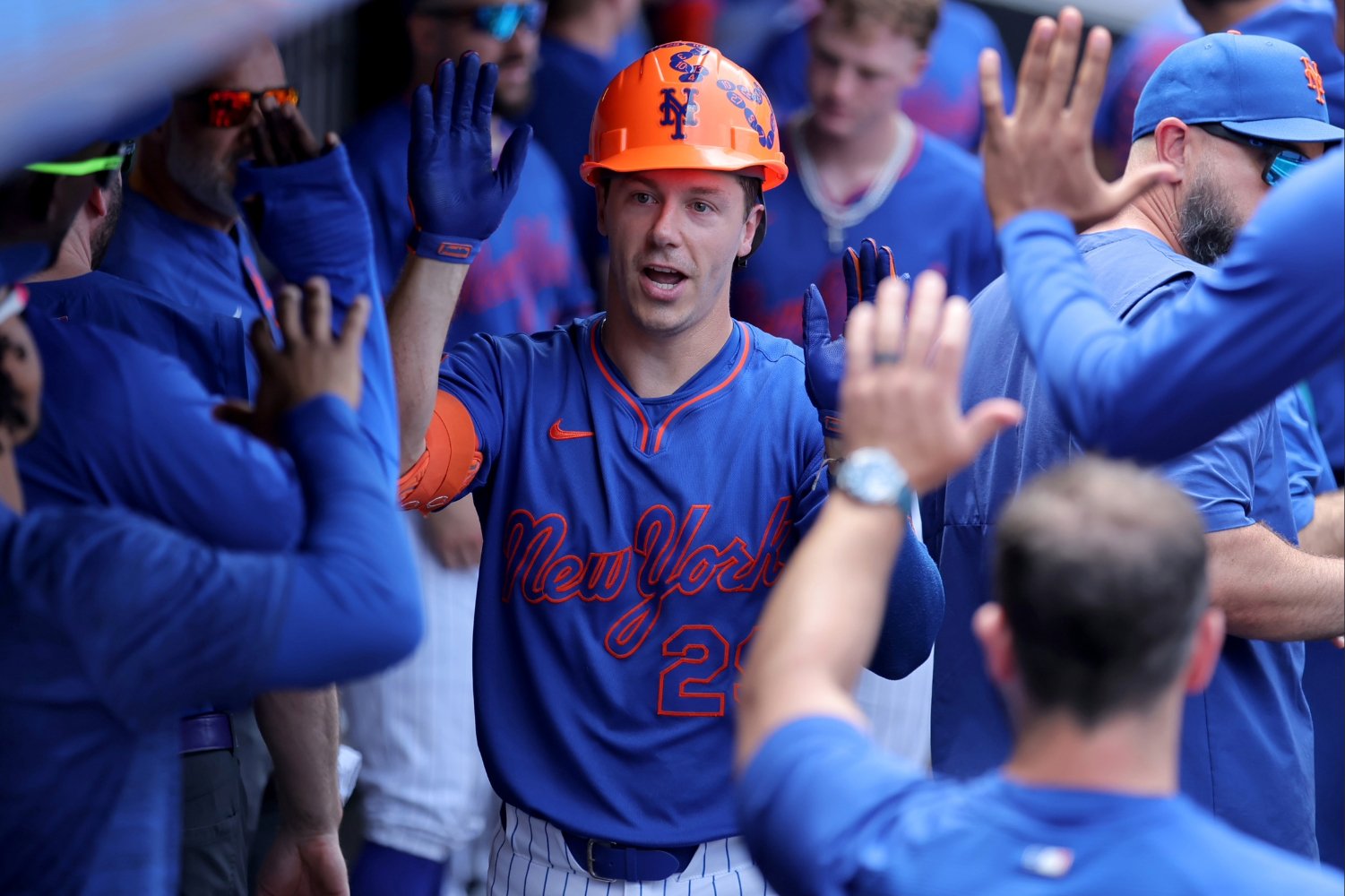
When Jared Young returned to the New York Mets' lineup on May 26 after missing more than six weeks with a torn left meniscus, attention quickly shifted toward the most visible results. After all, home runs are usually the fastest way to attract attention in Major League Baseball.
Young was placed on the injured list on April 13 and required a six-game rehabilitation assignment between St. Lucie and Syracuse before being cleared to return. Since coming back, he has hit four home runs and posted a .750 OPS over his first 18 games, providing a meaningful contribution to a Mets offense that has searched for production throughout the lineup.
However, the home runs do not appear to be the most interesting part of the story. A deeper look suggests that Young's offensive development has far less to do with a power surge and much more to do with the way he is building each plate appearance.
That evolution begins with swing decisions.
|
Plate Discipline |
2025 |
2026 |
|
Chase Rate |
28.7% |
26.3% |
|
Zone Swing Rate |
67.3% |
73.1% |
|
In-Zone Contact Rate |
81.8% |
87.2% |
|
Strikeout Rate |
34.0% |
21.6% |
The decline in his chase rate may seem modest in isolation, but it becomes more meaningful when viewed alongside the rest of his profile. Young is chasing fewer pitches outside the strike zone while increasing the frequency with which he swings at strikes. In other words, he is becoming more selective without becoming passive.
Naturally, the most significant change in Young's profile is his strikeout rate. After striking out in 34.0% of his plate appearances last season, that figure has fallen to 21.6% in 2026.
His improvement on pitches in the strike zone is especially noteworthy. Young's In-Zone Contact Rate has increased from 81.8% to 87.2%, a substantial jump in an environment where plate appearances are often decided by the smallest margins. Every avoided swing-and-miss creates another opportunity to put the ball in play and force the defense to make a play.
Of course, making more contact only matters if the quality of that contact remains intact. That is where Young's profile becomes particularly interesting.
|
Quality of Contact |
2025 |
2026 |
|
Hard-Hit Rate |
39.3% |
45.9% |
|
Avg. Exit Velocity |
84.6 mph |
89.9 mph |
|
xwOBA |
.296 |
.344 |
|
Squared-Up Contact% |
23.60% |
27.20% |
The numbers show that Young is not sacrificing impact in exchange for contact. His hard-hit rate has increased by more than six percentage points compared to last season, while his average exit velocity has jumped by more than five miles per hour. At the same time, his xwOBA has improved from .296 to .344, suggesting that the quality of his contact has improved along with his ability to put the ball in play.
The increase in squared-up contact rate reinforces that conclusion. Young is producing efficient contact more frequently than he did a year ago, another indicator that the gains in his profile extend beyond simple results.
The data also suggest that these gains are being driven by efficiency rather than increased effort. Young's average bat speed has actually declined slightly from last season, making it unlikely that the improved results stem from a more aggressive approach. Instead, the evidence points toward a hitter who is finding better pitches to attack and maximizing more of the opportunities he gets.
That distinction matters because improvements in plate discipline and contact quality often provide a stronger foundation than short-term fluctuations in power production. Home run totals can rise and fall over the course of a season, but underlying skills tend to offer a clearer picture of whether a hitter is genuinely improving.
There are still limitations in Young's profile. His production against left-handed pitching remains well below what he has done against right-handers, a split that opposing clubs will continue trying to exploit. Through 2026, he owns a 130 wRC+ against right-handed pitching compared to an 8 wRC+ against left-handers, illustrating how much of his offensive value remains tied to favorable matchups.
Even so, the broader trend is difficult to ignore. Fewer chases, more contact in the strike zone, and stronger underlying contact metrics all point in the same direction. Whether that translates into a larger offensive leap remains to be seen, but the indicators suggest Young is becoming a more complete hitter than the one the Mets saw a year ago.





Recommended Comments
There are no comments to display.
Create an account or sign in to comment
You need to be a member in order to leave a comment
Create an account
Sign up for a new account in our community. It's easy!
Register a new accountSign in
Already have an account? Sign in here.
Sign In Now