


Mets Video
The defense, which was without a doubt the most concerning point for the New York Mets after signing Bo Bichette for $126 million, ended up not causing a huge headache. His adaptation to playing third base was one of the biggest uncertainties from the moment Bichette arrived at spring training, and not only because he had never played even a single inning at third base throughout his career.
The big problem was that Bichette had just finished the worst defensive season of his career, recording -10 Fielding Run Value in the 1,139 innings he played at shortstop for the Toronto Blue Jays in 2025.
Much of the inconsistency was in his range, so the fact that he was facing a new position required an intense process for Bichette, who at the beginning did not seem comfortable at all. The final results, though, were truly encouraging, as he finished with +1 Out Above Average, only the second positive mark of his career, and the first since 2024 when he was involved in 244 plays as a shortstop. As a third baseman, his problems completing plays to his right became less frequent, but his range remained limited when he tried to field balls hit to his left. In the time he played at shortstop, about 391 innings during Francisco Lindor’s absence due to injury, Bichette recorded -2 OAA, which ended up influencing his overall -2 FRV result in 2026.
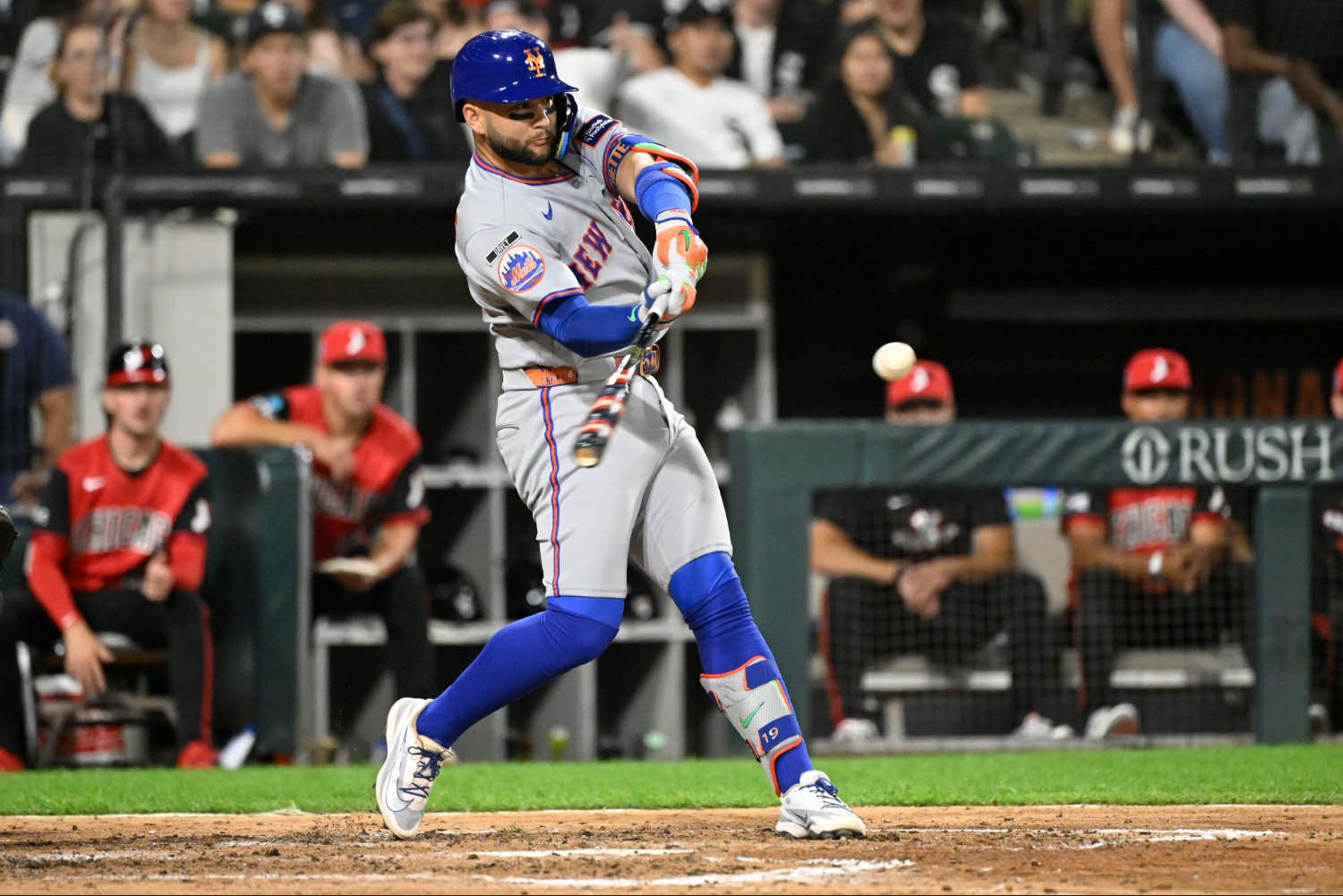
So, while he kept his head above water with the glove, what did fall short of expectations was his offense, the main thing that made Bichette a sought-after free agent. For the first time in a qualified season throughout his career, his bat’s contribution fell below average after finishing with a 96 wRC+, a noticeable drop-off from 2025 when he posted a 134 mark. However, it is worth noting that much of Bichette’s problem finding his rhythm at the plate came because of an extremely slow start during the first two months of the season, when his wRC+ sat at just 64.

The underlying metrics were far more positive during that early slump, and in June, he improved to a 140 wRC+ and produced a .321/.342/.541 line, with five home runs, seven doubles, one triple, and 18 RBIs, and finished tied for fourth in the league in hits. The streak continued, and he recorded at least one hit in 22 of 26 games from June 11 to July 8, hitting .336/.365/.533 (36-for-107), with five home runs during that period.
From there, the expected statistics that offered hope began to turn in his favor. Bichette had hit just .213 (52-for-244) in his first 61 games of the campaign, but then he heated up, and for the rest of the way his swing produced as it usually does, providing plenty of contact. He hit .289 (114-for-394) in his last 99 games of the season—from June 3 onward—and during that period, he tied for seventh in the majors in hits.
Another key point in his season was his timely hitting, leading the lineup with 59 RBIs when he had runners in scoring position. So, in a way, Bichette delivered the big bat the Mets needed and stayed healthy, to the point of setting a personal record with 160 games played.
It was not an ideal debut season, but there's plenty for him to build on next year now that he's officially opted into his contract for 2027.





Recommended Comments
There are no comments to display.
Create an account or sign in to comment
You need to be a member in order to leave a comment
Create an account
Sign up for a new account in our community. It's easy!
Register a new accountSign in
Already have an account? Sign in here.
Sign In Now