


Mets Video
MLB free agency is rapidly approaching, and for a team like the New York Mets, it can’t come soon enough.
After a disappointing 2026 season, this is an organization that figures to be busy over the coming months, and one of their biggest areas of need is the starting rotation. New York got strong seasons from guys like Nolan McLean, Christian Scott and Zac Thornton, but there’s still plenty of room for improvement in this group.
If the Mets want to get back into contention next year, adding some quality arms to the rotation should be near the top of their offseason checklist. With that in mind, here are three starting pitchers New York should look to target in free agency.
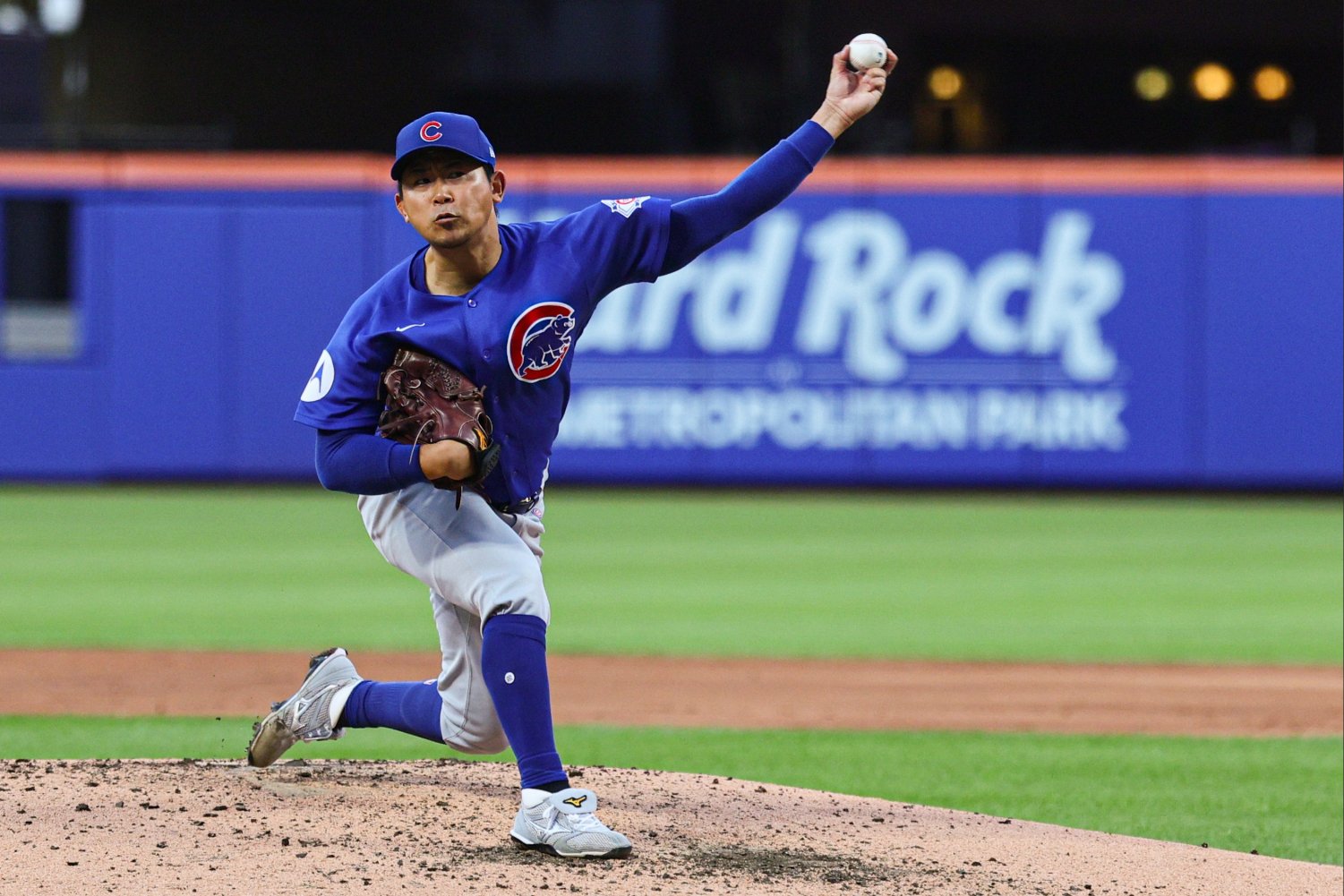
Shota Imanaga
Imanaga accepted the qualifying offer from the Chicago Cubs this past year at roughly $22 million. Before that, though, Chicago declined a three-year, $57.75 million club option that would have kept him under contract through 2028. That decision could make him an interesting name to watch this winter, depending on how the Cubs approach his future.
He finished the 2026 season with a 3.77 ERA and a 1.10 WHIP across 174 1/3 innings. He also recorded 174 strikeouts compared to just 37 walks, showing an ability to work deep into games while limiting free passes. When he’s on, he's capable of being dominant. He recorded 14 quality starts this season, and his six-pitch mix gives him a strong foundation to build on. He ranked in the 82nd percentile or better in chase rate, whiff rate, and walk rate, all of which sometimes coalesce to form torrid hot streaks on the mound.
The biggest concern with Imanaga is his inability to consistently keep the ball on the ground. That has contributed to a career home run rate of 1.7 per nine innings, which can become a problem when he isn't locating his pitches as effectively.
Still, he feels like a relatively safe option for the Mets. He has the track record to provide quality innings near the middle of the rotation, with the ability to pitch like a frontline starter when everything is working. If New York can land him on a reasonable contract, he'd be a solid addition to this group.
Foster Griffin
It was somewhat of a tale of two halves for Griffin this season. He was excellent with the Washington Nationals during the first half, posting a 3.06 ERA across 129 1/3 innings while earning his first All-Star Game appearance.
However, things took a turn following his trade deadline acquisition by Cleveland. His ERA climbed to 5.19 with the Guardians, his strikeout rate declined, and his walk rate increased. It's fair to wonder whether that second-half performance should give teams some pause, but I still think he's someone the Mets should take a look at this winter.
Griffin's skill set has a lot in common with Imanaga's. He's not going to overpower hitters with velocity, but he has a deep arsenal, featuring seven different pitches, and a similar arm slot. That gives him plenty of ways to attack hitters without having to rely on one dominant offering. Like Imanaga, he does a good job of pounding the strike zone and getting hitters to chase pitches outside of it.
Another encouraging part of Griffin's profile is his ability to limit hard contact. His hard-hit rate and average exit velocity were both better than league average this season, and he did a nice job of keeping the ball on the ground. Those are important qualities for a pitcher who doesn't necessarily have the stuff to consistently overpower hitters.
After spending the previous three years pitching in Japan, Griffin reinvented himself this season and showed that he could be a legitimate major-league starter. His second-half struggles are worth considering, but there's enough in his profile to believe he can be a useful addition to New York's rotation.
Brandon Woodruff
I know that floating another former David Stearns player with a long track record of not being available isn't going to go over well, but allow me to explain why Woodruff fits if the money is right.
Of course, he comes with some added risk because of his injury history. He's been limited to just 110 innings since the start of the 2024 season due to recurring shoulder issues, and he hasn't been healthy for the second half of the season or the postseason for Milwaukee. That's obviously a significant concern for any team considering signing him. The Mets can't afford to add another question mark to their rotation without carefully weighing the potential upside.
That upside is the key; when healthy, he's been great. Woodruff has finished with an ERA of 3.20 or lower and an expected ERA of 2.88 or lower in each of the last two seasons, albeit over a limited number of innings. Those numbers show just how effective he can be when he's available. Like Imanaga and Griffin, Woodruff doesn't walk many hitters, gets plenty of chases outside the strike zone, and has a deep arsenal to work with. However, he's even better than the two left-handers at generating soft contact, giving him another way to limit damage when hitters put the ball in play.
Even with his velocity declining, Woodruff has still been able to post strikeout rates hovering around 30%. Arm injuries be damned, he remains wildly effective when he can pitch through the pain.
Woodruff's track record is hard to ignore, and he feels like someone who could make a real difference in this rotation. Given his recent injury history, New York might also be able to land him without paying top dollar. For a Mets team looking to bounce back in 2027, that could be a risk worth taking.





Recommended Comments
There are no comments to display.
Create an account or sign in to comment
You need to be a member in order to leave a comment
Create an account
Sign up for a new account in our community. It's easy!
Register a new accountSign in
Already have an account? Sign in here.
Sign In Now