


Mets Video
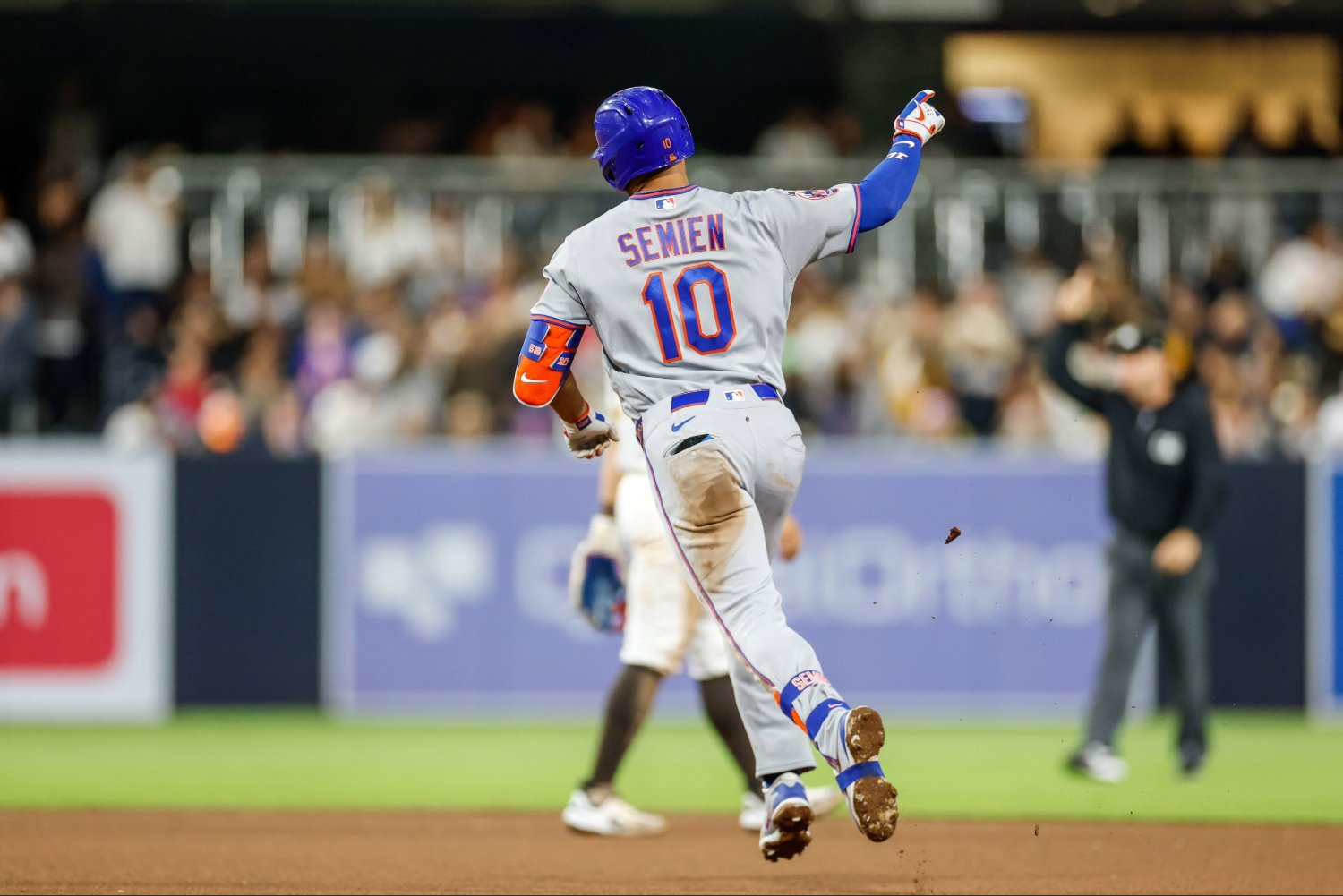
When the New York Mets brought in Marcus Semien, the expectation was never that he would carry the offense by himself. They also didn't need him to immediately replicate his MVP-caliber seasons. What they wanted was stability: a hitter capable of controlling the strike zone, producing quality contact, and delivering the consistency that has defined much of his career.
For the first five weeks of the season, that version of Semien seemed nowhere to be found. His .218/.291/.257 slash line and 64 wRC+ through his first 34 games ranked among the least productive performances from any regular in the Mets' lineup. More concerning was the near-complete disappearance of his power. For a hitter who has built much of his value on a combination of solid contact and extra-base production, a .291 slugging percentage inevitably raised questions about whether age-related decline was beginning to surface.
A deeper look at his last 31 games, however, tells a very different story.
Marcus Semien's Results Are Finally Catching Up to the Process
On the surface, the improvement is easy to spot.
|
Period |
PA |
AVG |
SLG |
wOBA |
xBA |
xSLG |
xwOBA |
|
First 34 games |
121 |
.218 |
.291 |
.257 |
.232 |
.363 |
.289 |
|
Last 31 games |
136 |
.232 |
.424 |
.306 |
.292 |
.497 |
.357 |
His batting average has increased by only 14 points, which might not seem particularly significant at first glance. The slugging percentage, however, has jumped by more than 130 points, while his expected slugging percentage has risen from .363 to .497.
That number matters. Expected metrics are designed to separate contact quality from actual results. In other words, they attempt to answer a simple question: what should have happened based on how the ball came off the bat?
During his first 34 games, Semien produced contact quality consistent with a .363 xSlG. Over his last 31 games, that figure has climbed to .497. That's an absurd jump more in line with the superstar he once was rather than the role player he seemed to become in recent years.
His current batting average may even be understating the improvement. While he hit .232 during this stretch, his expected batting average reached .292. That 60-point gap suggests there could still be positive regression ahead.
Fewer empty swings, more productive contact
The most meaningful adjustments don’t necessarily show up in the traditional production numbers.
When a veteran struggles early in a season, conversations often focus on dramatic changes in approach. That hasn’t really been the case for Semien. His chase rate has barely moved, increasing from 29.8% to 30.3%. His overall swing rate has actually declined slightly from 51.8% to 50.6%.
What has changed is his ability to connect when he swings.
|
Period |
O-Contact% |
Z-Contact% |
Contact% |
Barrel% |
Hard Hit% |
|
First 34 games |
54.2% |
88.6% |
79.6% |
6.8% |
34.1% |
|
Last 31 games |
59.1% |
90.2% |
81.6% |
9.9% |
37.6% |
His contact rate on pitches outside the zone has increased by nearly five percentage points. Contact within the strike zone has improved as well. The result has been fewer whiffs and more balls put in play.
But the story doesn't stop there. If a hitter simply makes more contact without increasing the damage, the outcome is usually more weakly hit balls. That's not what's happening here; Semien is making more contact while simultaneously producing better contact.
His barrel rate has climbed from 6.8% to 9.9%, an increase of 3.1 percentage points (roughly 46%). His hard-hit rate has risen by more than three percentage points. Even his 90th-percentile exit velocity has improved from 101.7 mph to 102.5 mph. That means his best contact is now more dangerous than it was during the season's opening month.
There's also another number that helps explain the transformation: Semien's average launch angle has dropped from 19.2 degrees to 17.7 degrees.
That may not sound like a dramatic adjustment, but it is significant. During the first stretch of the season, Semien was frequently lifting balls that weren't struck with enough authority to become extra-base hits. Many of those balls ended up as relatively routine fly-outs.
A slightly lower launch angle combined with better contact quality is often a favorable combination. It creates more productive batted-ball trajectories and allows a greater percentage of hard-hit balls to find gaps instead of gloves.
The simultaneous increases in Barrel%, Hard-Hit%, and xSLG point directly toward that conclusion. Yes, it's still too early to know how far Semien's resurgence can go. What the last 31 games show, however, is a hitter generating more quality contact and producing the kind of underlying metrics the Mets expected from the beginning.
After a difficult first month, that's a trend that is becoming increasingly difficult to ignore.





Recommended Comments
There are no comments to display.
Create an account or sign in to comment
You need to be a member in order to leave a comment
Create an account
Sign up for a new account in our community. It's easy!
Register a new accountSign in
Already have an account? Sign in here.
Sign In Now