


Cory Sparks
-
Posts
49 -
Joined
-
Last visited
Content Type
Profiles
News
New York Mets Videos
2026 New York Mets Top Prospects Ranking
New York Mets Free Agent & Trade Rumors, Notes, & Tidbits
Guides & Resources
The New York Mets Players Project
2026 New York Mets Draft Tracker: Picks & Bonuses
Forums
Blogs
Events
Store
Downloads
Gallery
Everything posted by Cory Sparks
-
Image courtesy of © Chris Pietsch/The Register-Guard / USA TODAY NETWORK via Imagn Images New York Mets prospect Mitch Voit is showing some promise in High-A Brooklyn with the Cyclones. While it’s been a rough start to the season for the big-league ball club, their young nucleus could be a sign of brighter days ahead. Today, we’ll dive into what separates Voit from most prospects and when to expect his big league debut. Mitch Voit's Updated Mets Scouting Report Voit is a 6-foot, 201 lb middle infielder and the eighth-ranked prospect in the Mets pipeline, per GrandCentralMets.com. He was the team’s first-round draft pick last summer, going 38th overall after playing three years for the Michigan Wolverines in the Big Ten. The speedy right-handed hitter was a two-way talent his first two years of college, chalking up a similar profile to recent Mets prospect graduates Nolan McLean and Carson Benge. However, Voit had internal brace surgery in the summer of 2024 and decided to go the same route as Benge by specializing as a hitter. Channeling that focus on just one side of the game helped Voit’s hitting, as he logged a .346 batting average and .668 slugging percentage with 14 home runs in 56 games with Michigan. After his selection in last year’s draft, Voit wasted no time to get professional reps, as he played 22 contests for the Single-A St. Lucie Mets to cut his teeth. Voit's 60-Grade Run Tool The first aspect of Voit’s game that jumps off of the page is his speed. The 60-grade run tool was on full display last year, as he stole 20 bases in 22 contests and has 43 swipes in 74 total minor-league contests so far. After getting caught just once in the Florida State League last year, it’s clear that Voit has a combination of raw speed and the ability to read a pitcher’s cadence to perfection. While the 21-year-old has been getting most of his work in at second base heading into this year, the speed could come in handy at the shortstop position when it comes to chasing down a ball deep in the hole. Another one of Voit’s strengths is that he’s just a pure athlete. While he may not pitch anymore, he contorted his body and prepared like a pitcher for so long, he’s become more athletic and is used to tweaking his motion. If he needs to fix something in his batting stance, swing path or something else with his fundamentals needs to change, this is someone who has been toying with his game twofold until very recently. Pristine Discipline The discipline also jumps off of the page for Voit. It’s one thing to be naturally athletic or to build up strengths within a skillset, but Voit is drawing walks at a near-10% clip this season. He’s standing at 49 punchouts to 22 walks in his first 237 plate appearances this year, giving him another path to get his chaos-creating speed on the basepaths. If this plate discipline trend stands as he elevates up the Mets’ minor-league system, his floor will rise as a result. Outlook with Mets Voit may only be in High-A, but it’s fair to ask when he’ll ultimately debut in the major leagues. The 21-year-old is projected, per MLB pipeline, to get into the big leagues in 2028. I’d say he’s in line for a late 2027, early 2028 arrival if the power develops. The plate discipline and speed are there; now it’s just about generating some more hard contact to round out what’s already a very impressive skillset. View full article
-
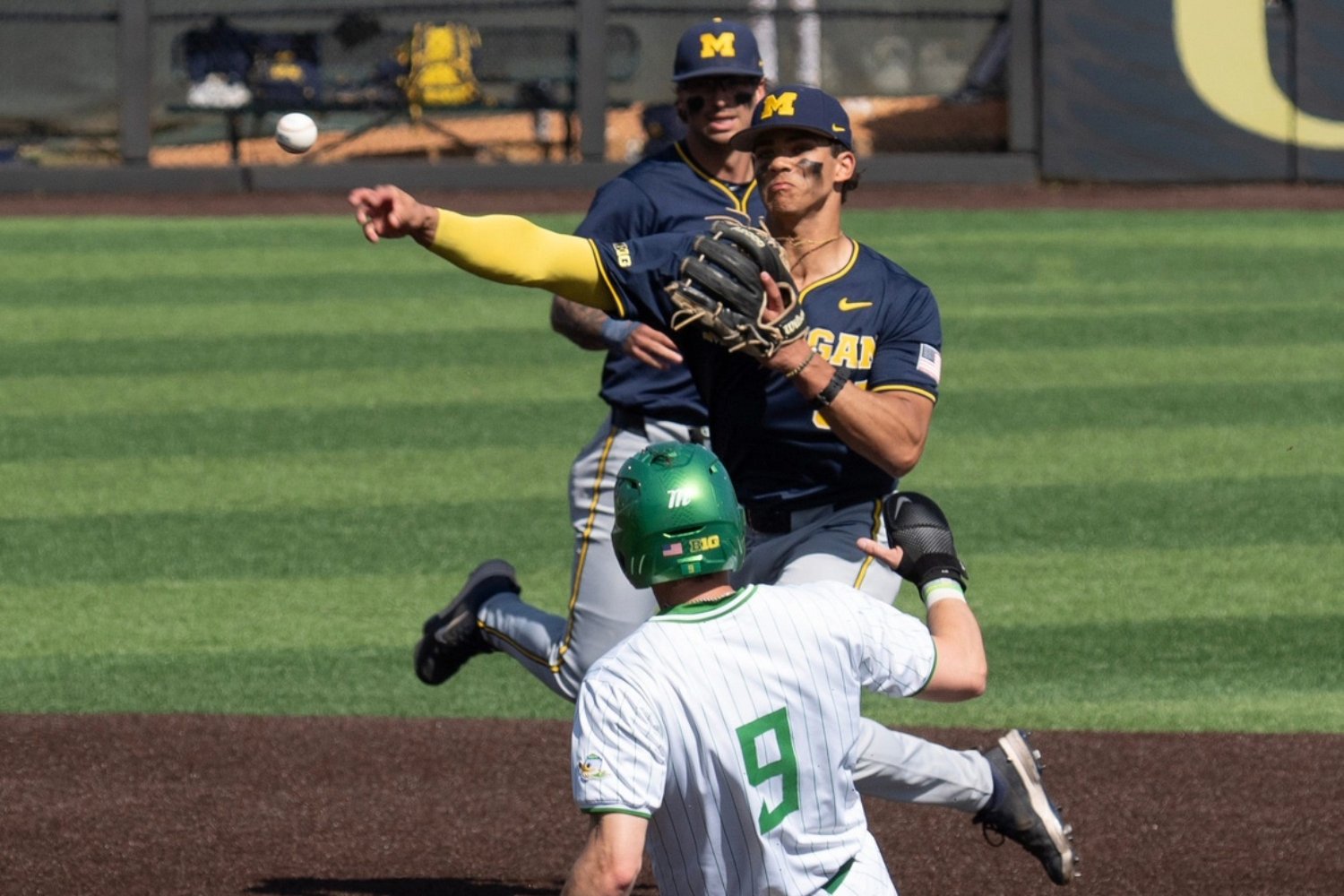 New York Mets prospect Mitch Voit is showing some promise in High-A Brooklyn with the Cyclones. While it’s been a rough start to the season for the big-league ball club, their young nucleus could be a sign of brighter days ahead. Today, we’ll dive into what separates Voit from most prospects and when to expect his big league debut. Mitch Voit's Updated Mets Scouting Report Voit is a 6-foot, 201 lb middle infielder and the eighth-ranked prospect in the Mets pipeline, per GrandCentralMets.com. He was the team’s first-round draft pick last summer, going 38th overall after playing three years for the Michigan Wolverines in the Big Ten. The speedy right-handed hitter was a two-way talent his first two years of college, chalking up a similar profile to recent Mets prospect graduates Nolan McLean and Carson Benge. However, Voit had internal brace surgery in the summer of 2024 and decided to go the same route as Benge by specializing as a hitter. Channeling that focus on just one side of the game helped Voit’s hitting, as he logged a .346 batting average and .668 slugging percentage with 14 home runs in 56 games with Michigan. After his selection in last year’s draft, Voit wasted no time to get professional reps, as he played 22 contests for the Single-A St. Lucie Mets to cut his teeth. Voit's 60-Grade Run Tool The first aspect of Voit’s game that jumps off of the page is his speed. The 60-grade run tool was on full display last year, as he stole 20 bases in 22 contests and has 43 swipes in 74 total minor-league contests so far. After getting caught just once in the Florida State League last year, it’s clear that Voit has a combination of raw speed and the ability to read a pitcher’s cadence to perfection. While the 21-year-old has been getting most of his work in at second base heading into this year, the speed could come in handy at the shortstop position when it comes to chasing down a ball deep in the hole. Another one of Voit’s strengths is that he’s just a pure athlete. While he may not pitch anymore, he contorted his body and prepared like a pitcher for so long, he’s become more athletic and is used to tweaking his motion. If he needs to fix something in his batting stance, swing path or something else with his fundamentals needs to change, this is someone who has been toying with his game twofold until very recently. Pristine Discipline The discipline also jumps off of the page for Voit. It’s one thing to be naturally athletic or to build up strengths within a skillset, but Voit is drawing walks at a near-10% clip this season. He’s standing at 49 punchouts to 22 walks in his first 237 plate appearances this year, giving him another path to get his chaos-creating speed on the basepaths. If this plate discipline trend stands as he elevates up the Mets’ minor-league system, his floor will rise as a result. Outlook with Mets Voit may only be in High-A, but it’s fair to ask when he’ll ultimately debut in the major leagues. The 21-year-old is projected, per MLB pipeline, to get into the big leagues in 2028. I’d say he’s in line for a late 2027, early 2028 arrival if the power develops. The plate discipline and speed are there; now it’s just about generating some more hard contact to round out what’s already a very impressive skillset.
 -
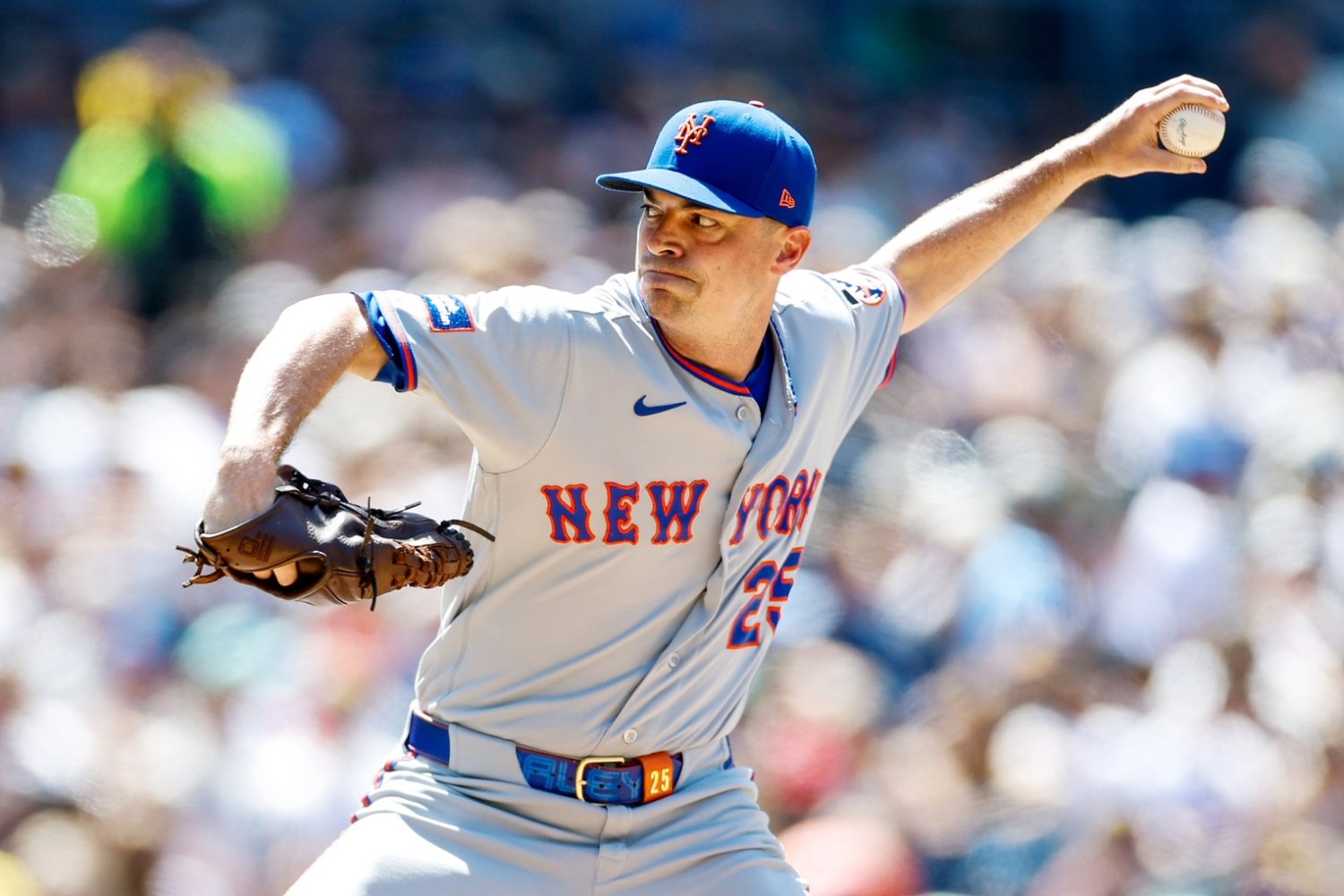 Nowadays, the young, flamethrowing pitcher archetype seems to be the talk of the town across the professional baseball landscape. Players throwing triple digits with sky-high whiff rates are the hot commodity and apparent ultimate prerequisite in dominating in today’s day and age. Brooks Raley is none of those things, and yet he's been one of the best relievers in the sport. Let’s dive into how he’s successfully climbed uphill all year for one of the best seasons of his illustrious career. Brooks Raley's Path to Dominance Raley is a 37-year-old relief pitcher for the New York Mets, and he’s defying almost every sense of logic present in today’s game. The veteran southpaw stands at 6-foot-3, 200 pounds, and he possesses north of 270 innings of experience over 284 appearances. Nearly ever single one of those appearances have been out of the bullpen, as the 2009 sixth-round pick by the Chicago Cubs has proven to be a steady, reliable relief option over his nine-year career. The Texas A&M alum has major league experience with the Cubs, Cincinnati Reds, Houston Astros, Tampa Bay Rays and now the Mets. With no All-Star selections, it can be easy for some to overlook the veteran southpaw. However, he has had to overcome some pretty significant hurdles to make a living in the majors. Velocity and Whiffs Aren't Mutually Inclusive The average fastball in 2026 glides across the plate in the mid-90s, and that value has only climbed over the years. Raley has a different way of going about his business. His fastball clocks in at an average of 89.9 miles per hour, putting him in the 4th percentile of MLB pitchers. This isn’t new for the veteran hurler, either; his average fastball has never eclipsed 91 miles per hour at any point throughout his career. Naturally, his whiff rate isn’t astronomically higher either, sitting at 26.4% (59th percentile). However, that's still an impressive, above-average figure. This is someone who can’t rely on blowing a pitch by someone, and in turn, if he makes a mistake and catches too much of the plate, it’s more likely that Raley gets punished than, say, Milwaukee Brewers hurler Jacob Misiorowski (who leads MLB in pitches over 100 miles per hour this year). Yet, even without the velocity to generate more swings and misses, Raley has struck out 27% of hitters (81st percentile). How does he do this and stay on a pace that’s given him 29 punchouts in 24.1 innings this year? Raley's Deep Arsenal It all starts with his arsenal of pitches. While the league seems to be dominated by hard throwers, finesse pitchers still exist. Having a variety of pitches is usually one of the first ways that soft-tossers can meander their way through a lineup. Sure enough, Riley utlizes four different pitches as a reliever. His sweeper, which he uses 44% of the time, bites hard glove-side with plenty of horizontal movement. Opposing hitters have struggled to time it up, as they’ve hit just .196 with a .219 expected batting average against Raley’s primary offering. The sinker and cutter share time as his secondary pitch, being utilized at 22% and 21% of the time, respectively. They both dart in very different directions; the 37-year-old’s sinker glides around 18 inches to his arm-side, while the cutter has more of a sharp, bullet-like movement to it. His changeup has almost the same path as the sinker but buzzes in at 5.7 miles per hour slower (84.2). Raley fires out of a 32-degree arm angle which is considered a lower arm slot. That allows for more side-to-side movement on his breaking pitches. Mitigating Solid Contact While Raley’s strikeout rate is well above the league average, his bread and butter is generating weak contact. The cerebral lefty is allowing just a 29.5% hard-hit rate, or proportion of baseballs leaving the bat at 95 miles per hour or greater. He doesn’t generate a ton of ground balls, but the sharper launch angle doesn’t hurt him since opposing hitters aren’t piecing up his offerings. In effect, this is a pitcher who can beat you in multiple ways. Be it by soft contact or strikeout, Raley has insulated himself from the kind of damage that tends to ruin a reliever's ERA. A rather impressive feat for someone who barely touches 90 miles per hour, no?
 -
Image courtesy of © David Frerker-Imagn Images Nowadays, the young, flamethrowing pitcher archetype seems to be the talk of the town across the professional baseball landscape. Players throwing triple digits with sky-high whiff rates are the hot commodity and apparent ultimate prerequisite in dominating in today’s day and age. Brooks Raley is none of those things, and yet he's been one of the best relievers in the sport. Let’s dive into how he’s successfully climbed uphill all year for one of the best seasons of his illustrious career. Brooks Raley's Path to Dominance Raley is a 37-year-old relief pitcher for the New York Mets, and he’s defying almost every sense of logic present in today’s game. The veteran southpaw stands at 6-foot-3, 200 pounds, and he possesses north of 270 innings of experience over 284 appearances. Nearly ever single one of those appearances have been out of the bullpen, as the 2009 sixth-round pick by the Chicago Cubs has proven to be a steady, reliable relief option over his nine-year career. The Texas A&M alum has major league experience with the Cubs, Cincinnati Reds, Houston Astros, Tampa Bay Rays and now the Mets. With no All-Star selections, it can be easy for some to overlook the veteran southpaw. However, he has had to overcome some pretty significant hurdles to make a living in the majors. Velocity and Whiffs Aren't Mutually Inclusive The average fastball in 2026 glides across the plate in the mid-90s, and that value has only climbed over the years. Raley has a different way of going about his business. His fastball clocks in at an average of 89.9 miles per hour, putting him in the 4th percentile of MLB pitchers. This isn’t new for the veteran hurler, either; his average fastball has never eclipsed 91 miles per hour at any point throughout his career. Naturally, his whiff rate isn’t astronomically higher either, sitting at 26.4% (59th percentile). However, that's still an impressive, above-average figure. This is someone who can’t rely on blowing a pitch by someone, and in turn, if he makes a mistake and catches too much of the plate, it’s more likely that Raley gets punished than, say, Milwaukee Brewers hurler Jacob Misiorowski (who leads MLB in pitches over 100 miles per hour this year). Yet, even without the velocity to generate more swings and misses, Raley has struck out 27% of hitters (81st percentile). How does he do this and stay on a pace that’s given him 29 punchouts in 24.1 innings this year? Raley's Deep Arsenal It all starts with his arsenal of pitches. While the league seems to be dominated by hard throwers, finesse pitchers still exist. Having a variety of pitches is usually one of the first ways that soft-tossers can meander their way through a lineup. Sure enough, Riley utlizes four different pitches as a reliever. His sweeper, which he uses 44% of the time, bites hard glove-side with plenty of horizontal movement. Opposing hitters have struggled to time it up, as they’ve hit just .196 with a .219 expected batting average against Raley’s primary offering. The sinker and cutter share time as his secondary pitch, being utilized at 22% and 21% of the time, respectively. They both dart in very different directions; the 37-year-old’s sinker glides around 18 inches to his arm-side, while the cutter has more of a sharp, bullet-like movement to it. His changeup has almost the same path as the sinker but buzzes in at 5.7 miles per hour slower (84.2). Raley fires out of a 32-degree arm angle which is considered a lower arm slot. That allows for more side-to-side movement on his breaking pitches. Mitigating Solid Contact While Raley’s strikeout rate is well above the league average, his bread and butter is generating weak contact. The cerebral lefty is allowing just a 29.5% hard-hit rate, or proportion of baseballs leaving the bat at 95 miles per hour or greater. He doesn’t generate a ton of ground balls, but the sharper launch angle doesn’t hurt him since opposing hitters aren’t piecing up his offerings. In effect, this is a pitcher who can beat you in multiple ways. Be it by soft contact or strikeout, Raley has insulated himself from the kind of damage that tends to ruin a reliever's ERA. A rather impressive feat for someone who barely touches 90 miles per hour, no? View full article
-
One of the New York Mets' top pitching prospects, Jonathan Santucci, is making serious strides as we hit the middle third of the 2026 minor league baseball season. In this video, we'll break down Santucci's strengths, a wicked slider, and what he needs to do to break into the major leagues before this year's conclusion.
-
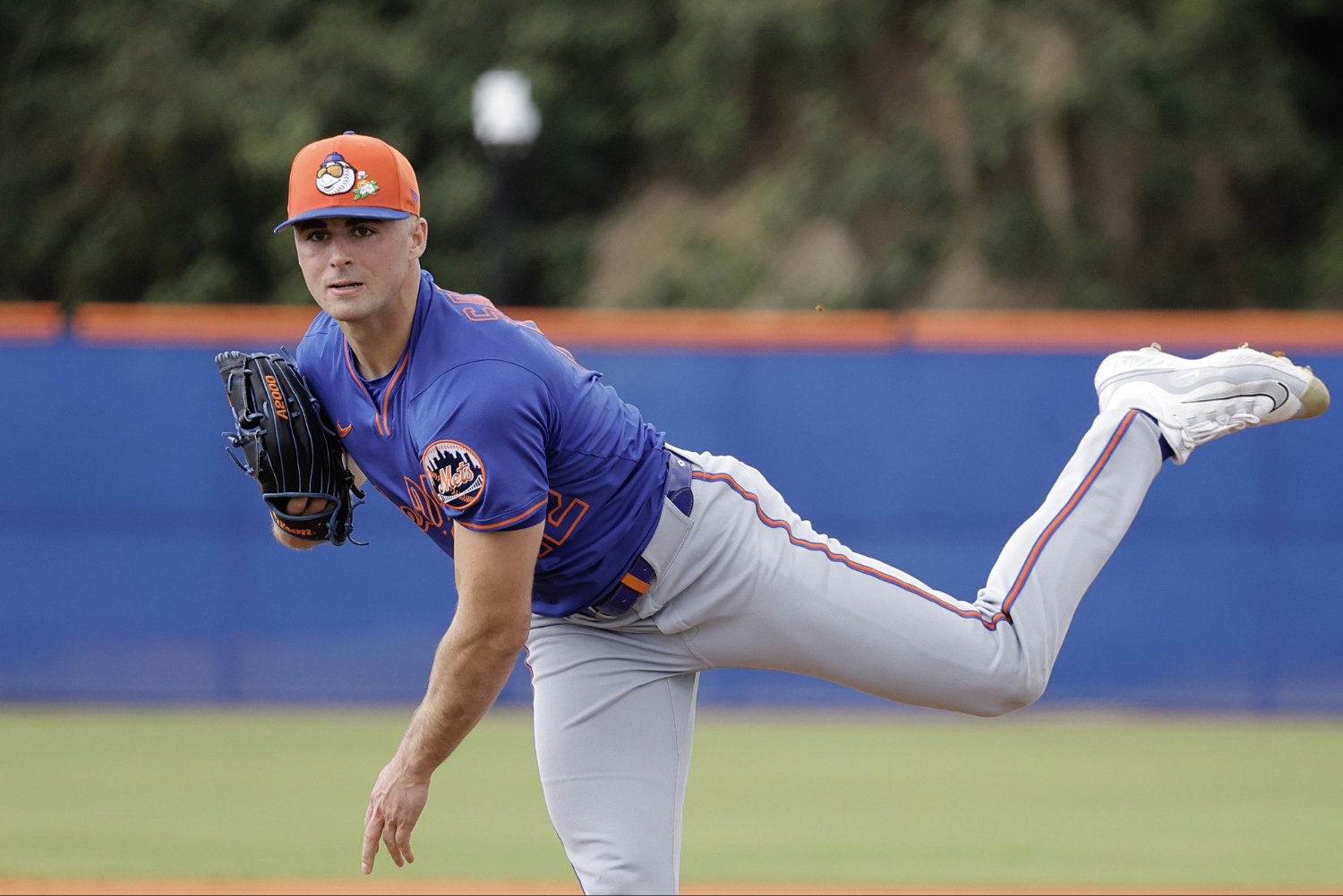 If the present doesn't have much to offer, at least the New York Mets’ future looks bright, popping with up-and-coming talent who could have an impact on the big-league club soon. Left-handed pitching prospect Jonathan Santucci is no exception to the rule, as he’s been playing some of his best baseball lately. Let’s break down Santucci’s latest numbers and his long-term projection within the Mets organization. Jonathan Santucci's Updated Scouting Mets Scouting Report Santucci is a left-handed pitching prospect and rides in as the team’s ninth-ranked prospect per Grand Central Mets. The Mets called his name in the second round of the 2024 draft after the southpaw’s successful campaign with the Blue Devils. He entered the professional ranks just last season, working his way all the way up to the Double-A Binghamton Rumble Ponies’ roster by the middle of July. He dazzled with the team’s Double-A affiliate, spinning a 2.52 earned run average with a strikeout rate north of 32 percent down the home stretch of his season. Santucci's 2026 So Far While he may hold a losing record to start this season out, the Mets’ highly touted farmhand has looked sharp in his recent outings. In his most recent start on June 6, lefty spun a career-best 6.2 innings of one-run ball. He allowed just three hits, gave up a pair of free passes and fanned five on the evening. Santucci notably took a no-hitter into the sixth inning en route to his first win of the 2026 season. Over his last two starts, he’s allowed just a single earned run on six hits in 11.2 innings. Santucci has 10 punchouts to only three walks in that span. He also has allowed two earned runs or less in six of his last seven starts for Binghamton. Santucci's Strengths The lefty hurler’s slider leads the charge, as his glove-side-biting breaking pitch has a 60-grade on the 20-to-80 scouting scale. This is a two-plane breaking ball that tunnels very well off of his fastball, and he’s able to give hitters from both sides of the plate absolute fits with it. His four-seamer, a 55-grade heater which does a lot of the heavy-lifting to set up his slide piece, rides in between 92-95 miles per hour and can touch 97. Santucci releases the baseball from a high point and is able to get plenty of carry into the upper regions of the strike zone. While Santucci also possesses a changeup, it grades out around average, as he doesn’t lean on it a ton in-game. Santucci's Weaknesses Therein lies one of Santucci’s weakness. While the southpaw has fooled hitters with a slider and is currently sporting an impressive .219 batting average against over his first 170.1 innings of professional baseball, operating with a two-pitch arsenal can only get a pitcher so far. For somebody who plans on operating as a rotation piece (he’s started 34 of his 36 appearances), he’ll need more than a two-pitch combo to get through an order multiple times. Santucci also gets a case of the walks from time to time, as shown by his 50-grade control tool. He just recently escaped a stretch where he walked at least two hitters in four straight games, including a six-walk performance back on May 2. Overall, his stuff plays well enough for him to live in the strike zone and even get away with the occasional mistake. Now, it’s just about in-zone consistency for the rising lefty. Future Role With Mets What will Santucci’s role be, and when will he ultimately break into the big leagues? He’s tracking towards being a middle-of-the-rotation starter, especially considering that his slider has continued to serve as a true out-pitch even as he’s ascended up the minor-league ladder. The next question becomes which pitch, whether it’s a fledgling curveball or his changeup, will earn a more consistent spot in his arsenal. MLB Pipeline projects that Santucci will break into the big leagues by the end of the 2026 season, and his pitch variety could play a pivotal role in ensuring that comes true.
 -
Image courtesy of © Reinhold Matay-Imagn Images If the present doesn't have much to offer, at least the New York Mets’ future looks bright, popping with up-and-coming talent who could have an impact on the big-league club soon. Left-handed pitching prospect Jonathan Santucci is no exception to the rule, as he’s been playing some of his best baseball lately. Let’s break down Santucci’s latest numbers and his long-term projection within the Mets organization. Jonathan Santucci's Updated Scouting Mets Scouting Report Santucci is a left-handed pitching prospect and rides in as the team’s ninth-ranked prospect per Grand Central Mets. The Mets called his name in the second round of the 2024 draft after the southpaw’s successful campaign with the Blue Devils. He entered the professional ranks just last season, working his way all the way up to the Double-A Binghamton Rumble Ponies’ roster by the middle of July. He dazzled with the team’s Double-A affiliate, spinning a 2.52 earned run average with a strikeout rate north of 32 percent down the home stretch of his season. Santucci's 2026 So Far While he may hold a losing record to start this season out, the Mets’ highly touted farmhand has looked sharp in his recent outings. In his most recent start on June 6, lefty spun a career-best 6.2 innings of one-run ball. He allowed just three hits, gave up a pair of free passes and fanned five on the evening. Santucci notably took a no-hitter into the sixth inning en route to his first win of the 2026 season. Over his last two starts, he’s allowed just a single earned run on six hits in 11.2 innings. Santucci has 10 punchouts to only three walks in that span. He also has allowed two earned runs or less in six of his last seven starts for Binghamton. Santucci's Strengths The lefty hurler’s slider leads the charge, as his glove-side-biting breaking pitch has a 60-grade on the 20-to-80 scouting scale. This is a two-plane breaking ball that tunnels very well off of his fastball, and he’s able to give hitters from both sides of the plate absolute fits with it. His four-seamer, a 55-grade heater which does a lot of the heavy-lifting to set up his slide piece, rides in between 92-95 miles per hour and can touch 97. Santucci releases the baseball from a high point and is able to get plenty of carry into the upper regions of the strike zone. While Santucci also possesses a changeup, it grades out around average, as he doesn’t lean on it a ton in-game. Santucci's Weaknesses Therein lies one of Santucci’s weakness. While the southpaw has fooled hitters with a slider and is currently sporting an impressive .219 batting average against over his first 170.1 innings of professional baseball, operating with a two-pitch arsenal can only get a pitcher so far. For somebody who plans on operating as a rotation piece (he’s started 34 of his 36 appearances), he’ll need more than a two-pitch combo to get through an order multiple times. Santucci also gets a case of the walks from time to time, as shown by his 50-grade control tool. He just recently escaped a stretch where he walked at least two hitters in four straight games, including a six-walk performance back on May 2. Overall, his stuff plays well enough for him to live in the strike zone and even get away with the occasional mistake. Now, it’s just about in-zone consistency for the rising lefty. Future Role With Mets What will Santucci’s role be, and when will he ultimately break into the big leagues? He’s tracking towards being a middle-of-the-rotation starter, especially considering that his slider has continued to serve as a true out-pitch even as he’s ascended up the minor-league ladder. The next question becomes which pitch, whether it’s a fledgling curveball or his changeup, will earn a more consistent spot in his arsenal. MLB Pipeline projects that Santucci will break into the big leagues by the end of the 2026 season, and his pitch variety could play a pivotal role in ensuring that comes true. View full article
-
Mitch Voit is the New York Mets' no. 8 prospect, per Grand Central Mets. What makes the 2025 first-rounder different from others? In this video, we'll discuss his advantageous two-way background, game-wrecking speed, budding plate discipline, and ultimately, when to expect his major league debut. Enjoy!
-
Carson Benge's Updated Scouting Profile 2 Months Into MLB Career
Cory Sparks posted an article in Mets
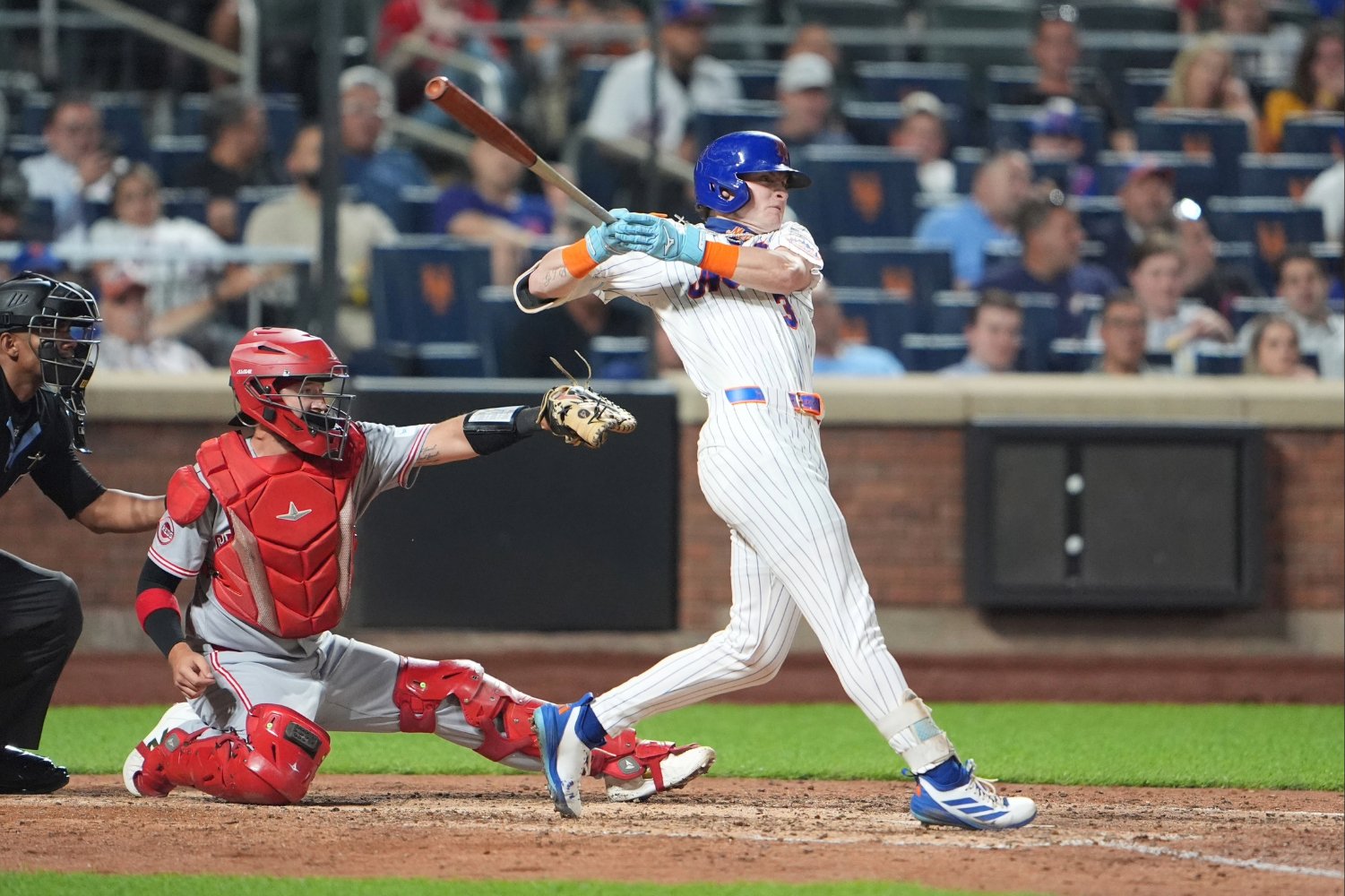 We have a decent sample size to start Carson Benge’s major league career now, and after a rough first handful of games, there is a lot to be optimistic about. Let’s dive into Benge’s strengths, what numbers are really popping out, and what he still needs to work on as he progresses through his rookie campaign. Carson Benge's Background To give a little more context on Benge, this is another example of somebody who sprinted up through the Minor League Baseball ranks. The Oklahoma State alum, who went to the same college as Nolan McLean, was the 19th pick in the 2024 MLB Draft. He cracked the big league Opening Day roster, and so far this season he’s sporting a batting average around .250, an on-base percentage just above .300, and looks to be a pretty well-rounded outfielder in the Big Apple. Hard-Hit Balls Where is Benge excelling? Quality of contact is a big area to look at early on. His average exit velocity is hovering around the 90 miles per hour mark, putting him in the top half among big-league hitters. His expected batting average of .265 implies that he’s hit into a decent amount of bad luck as well. Benge also has a knack for finding the right part of the bat, as shown by his above-average squared-up and hard-hit rates. Making Contact Benge, the former two-way standout, also has shown great plate discipline. He hasn’t ventured outside of the zone much, as his 27.0% chase percentage is well better than the league average. He hasn’t come up empty much either, as the 23-year-old right fielder whiffs just 19.8% of the time, putting him in the top 25% of all hitters. Benge has sprayed the ball pretty much all over the field, though all three of his long balls in 2026 have gone to the pull side in deep right center field. Benge’s blistering speed has come in handy to this point as well. His top 20% sprint speed helps him on the basepaths, and he has eight stolen bags on the young season to show for it. The hustle shows in the outfield as well, leading to above-average marks in right field. Arm Strength Another plus to Benge’s game, also referencing his value in right, is his legendary arm strength. This is arguably the most impressive thing about the 23-year-old, as his arm strength is rated in the top percentile of all outfielders. This is someone who can do a little bit of everything, and while I wouldn’t quite say he’s at five-tool player status yet, he’s certainly multi-faceted. Area for Improvement: Patience One aspect for the young left-handed hitter to work on would be his ability to draw walks. While he isn’t chasing a ton, this is someone walking just 7.0% of the time. That is well below the league average in the 25th percentile. Again, it’s not that he’s venturing out of the zone a whole lot. This is more or less an indicator that Benge is looking for something over the plate early, and doesn’t have much of a desire to work deep into counts. Sometimes, for a rookie, it’s best to keep the art of an at-bat simple. If it’s a matter of looking for a first-pitch fastball, so be it. One other aspect to work on is success of opposing pitchers’ secondary stuff, as Benge is hitting just .172 against off-speed offerings with a single extra-base hit in 30 batted ball events.
 -
Image courtesy of © Gregory Fisher-Imagn Images We have a decent sample size to start Carson Benge’s major league career now, and after a rough first handful of games, there is a lot to be optimistic about. Let’s dive into Benge’s strengths, what numbers are really popping out, and what he still needs to work on as he progresses through his rookie campaign. Carson Benge's Background To give a little more context on Benge, this is another example of somebody who sprinted up through the Minor League Baseball ranks. The Oklahoma State alum, who went to the same college as Nolan McLean, was the 19th pick in the 2024 MLB Draft. He cracked the big league Opening Day roster, and so far this season he’s sporting a batting average around .250, an on-base percentage just above .300, and looks to be a pretty well-rounded outfielder in the Big Apple. Hard-Hit Balls Where is Benge excelling? Quality of contact is a big area to look at early on. His average exit velocity is hovering around the 90 miles per hour mark, putting him in the top half among big-league hitters. His expected batting average of .265 implies that he’s hit into a decent amount of bad luck as well. Benge also has a knack for finding the right part of the bat, as shown by his above-average squared-up and hard-hit rates. Making Contact Benge, the former two-way standout, also has shown great plate discipline. He hasn’t ventured outside of the zone much, as his 27.0% chase percentage is well better than the league average. He hasn’t come up empty much either, as the 23-year-old right fielder whiffs just 19.8% of the time, putting him in the top 25% of all hitters. Benge has sprayed the ball pretty much all over the field, though all three of his long balls in 2026 have gone to the pull side in deep right center field. Benge’s blistering speed has come in handy to this point as well. His top 20% sprint speed helps him on the basepaths, and he has eight stolen bags on the young season to show for it. The hustle shows in the outfield as well, leading to above-average marks in right field. Arm Strength Another plus to Benge’s game, also referencing his value in right, is his legendary arm strength. This is arguably the most impressive thing about the 23-year-old, as his arm strength is rated in the top percentile of all outfielders. This is someone who can do a little bit of everything, and while I wouldn’t quite say he’s at five-tool player status yet, he’s certainly multi-faceted. Area for Improvement: Patience One aspect for the young left-handed hitter to work on would be his ability to draw walks. While he isn’t chasing a ton, this is someone walking just 7.0% of the time. That is well below the league average in the 25th percentile. Again, it’s not that he’s venturing out of the zone a whole lot. This is more or less an indicator that Benge is looking for something over the plate early, and doesn’t have much of a desire to work deep into counts. Sometimes, for a rookie, it’s best to keep the art of an at-bat simple. If it’s a matter of looking for a first-pitch fastball, so be it. One other aspect to work on is success of opposing pitchers’ secondary stuff, as Benge is hitting just .172 against off-speed offerings with a single extra-base hit in 30 batted ball events. View full article
-
Carson Benge is quickly turning into one of the brighter young stars in the 2026 MLB rookie class. The New York Mets' right fielder is hitting just over .250 and is hitting the ball relatively hard. In this video, we will dive into his average exit velocity and overall approach to start off the season. View full video
-
Carson Benge is quickly turning into one of the brighter young stars in the 2026 MLB rookie class. The New York Mets' right fielder is hitting just over .250 and is hitting the ball relatively hard. In this video, we will dive into his average exit velocity and overall approach to start off the season.
-
Jonah Tong is the New York Mets' no. 2 overall prospect. After struggling upon his big league call-up last year, the hard-throwing righty is getting a second chance to prove to the Big Apple that he can be a starter in this league. In this video, we'll break down what Tong needs to fine-tune to stick around this time. View full video
-
Jonah Tong is the New York Mets' no. 2 overall prospect. After struggling upon his big league call-up last year, the hard-throwing righty is getting a second chance to prove to the Big Apple that he can be a starter in this league. In this video, we'll break down what Tong needs to fine-tune to stick around this time.
-
Jonah Tong Will Be Most Important Contributor to Mets' Youth Movement
Cory Sparks posted an article in Mets
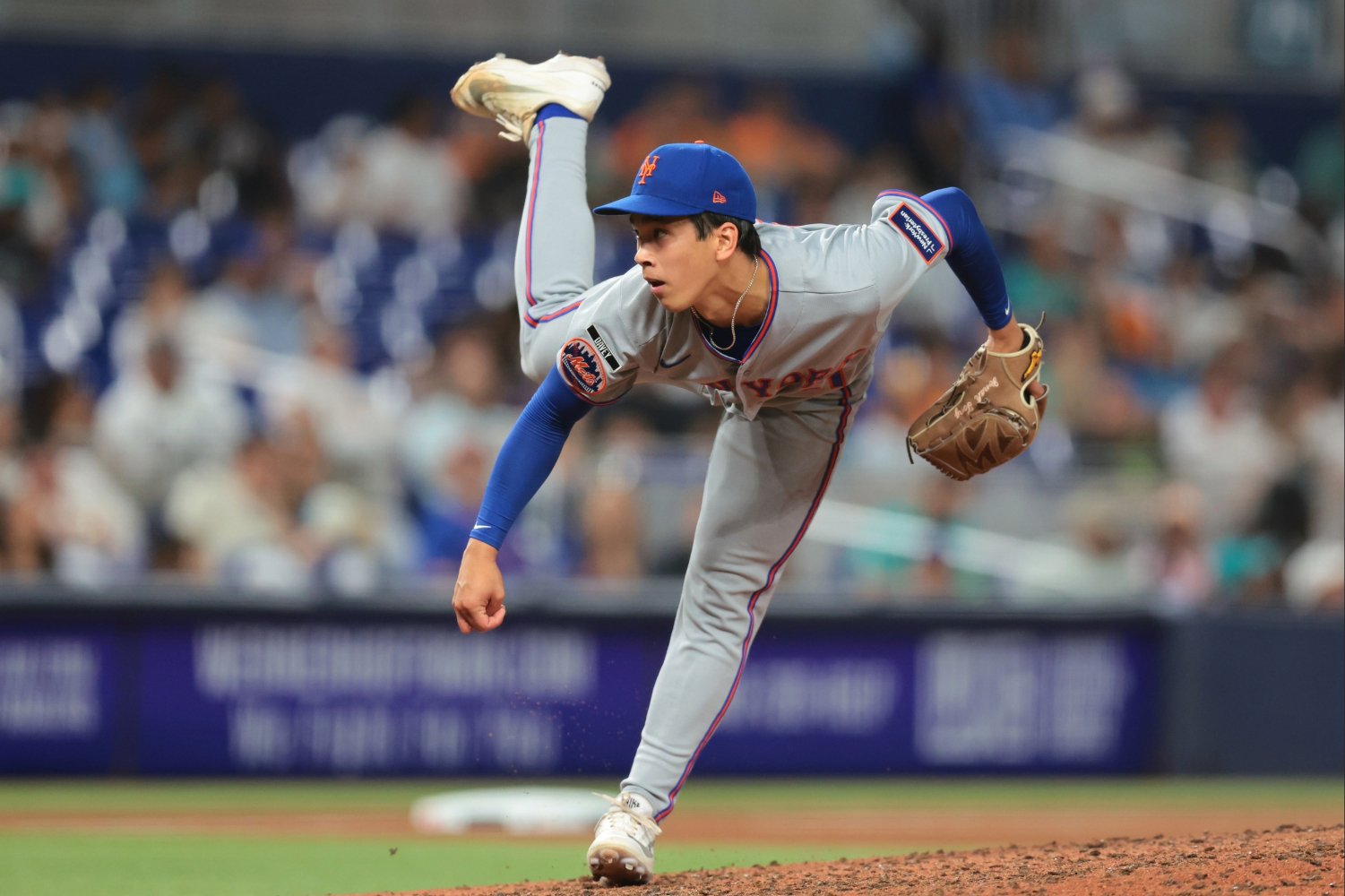 Jonah Tong is one of the league’s brightest young stars, and the New York Mets have decided to call the 22-year-old up to the big leagues for the second time in as many seasons. Let’s break down his background, arsenal, strengths and what he needs to do to remain a major league hurler this time around. Jonah Tong’s Background Jonah Tong is the second-ranked prospect in the Mets’ system, behind recently called-up contact speedster in A.J. Ewing. The hard-throwing righty is 6-foot-1, 180 pounds and was a seventh-round draft pick back in 2022. Tong proactively got himself some scouting looks by moving to the Georgia Premier Academy and MLB Draft league the year he got his name called. After a couple of years climbing the Mets’ farm system, he earned 2025 MLB Pipeline Pitching Prospect of the Year honors after pacing MiLB in earned run average and strikeouts while tossing north of 100 innings between Double-A Binghamton and Triple-A Syracuse. Tong's Arsenal What is the 22-year-old working with? He leads the way with a lively, 70-grade fastball. The primary offering has continued to collect steam, riding in the 94-97 mph range in 2025. His second-best option is a changeup that he changed to a vulcan grip, where he straddles the horseshoe part of the laces on the ball. This allows him to get more lateral movement to the arm-side and gives the ball more of a sinking motion. This is something that had a whiff rate of north of 50% in the minor leagues. He also sports a curveball and slider to round out what is a four-pitch mix for the time being. Strengths Tong’s strength is his velocity and ability to manipulate the baseball to get ahead in counts. Splitting the fastball and changeup off of each other gave hitting prospects a world of trouble, and he was able to use his above-average extension of 6.8 feet to speed things up on batters even more. This is someone who uses a combination of deception and count leverage to mow his way through the opposing team’s lineup. Overall, in a day and age where velocity and arm-side ride is key, Tong has the raw skillset to be a successful starter in the Big Apple for years to come. Weaknesses While Tong has the intangibles to be a promising arm at the biggest stage, there are still a couple of aspects to iron out. After all, this is somebody who got rung up for a 7.71 earned run average and had a .312 opposing batting average over 18.2 innings of work with the team last year. What led to the rough baptism by fire? Tong’s mechanics lend to some reason for concern towards a repeatable, consistent motion. This could lead to wavering command, above-average walks and more hard-hit balls than he can afford. The over-reliance on his heater also led to some issues. In his 2026 Mets debut, he threw that four-seamer 61% of the time. Between the fastball and the changeup, he used his top two options 86% of the time. That’s how someone becomes predictable and may start to profile as more of a reliever if the ratio doesn’t change. Outlook What does Tong’s outlook look like? I think, considering he has a 52-degree arm angle, which is really steep, the more he develops his curveball, the better. When a pitcher has a steeper, more up-and-down arm angle, it’s easier to get vertical drop on breaking pitches. Not only would using his full arsenal make Tong more predictable, but I think there’s a real chance for his curve to develop into an out pitch. In fact, I think that could serve as the key to making him a starter.
 -
Image courtesy of © Sam Navarro-Imagn Images Jonah Tong is one of the league’s brightest young stars, and the New York Mets have decided to call the 22-year-old up to the big leagues for the second time in as many seasons. Let’s break down his background, arsenal, strengths and what he needs to do to remain a major league hurler this time around. Jonah Tong’s Background Jonah Tong is the second-ranked prospect in the Mets’ system, behind recently called-up contact speedster in A.J. Ewing. The hard-throwing righty is 6-foot-1, 180 pounds and was a seventh-round draft pick back in 2022. Tong proactively got himself some scouting looks by moving to the Georgia Premier Academy and MLB Draft league the year he got his name called. After a couple of years climbing the Mets’ farm system, he earned 2025 MLB Pipeline Pitching Prospect of the Year honors after pacing MiLB in earned run average and strikeouts while tossing north of 100 innings between Double-A Binghamton and Triple-A Syracuse. Tong's Arsenal What is the 22-year-old working with? He leads the way with a lively, 70-grade fastball. The primary offering has continued to collect steam, riding in the 94-97 mph range in 2025. His second-best option is a changeup that he changed to a vulcan grip, where he straddles the horseshoe part of the laces on the ball. This allows him to get more lateral movement to the arm-side and gives the ball more of a sinking motion. This is something that had a whiff rate of north of 50% in the minor leagues. He also sports a curveball and slider to round out what is a four-pitch mix for the time being. Strengths Tong’s strength is his velocity and ability to manipulate the baseball to get ahead in counts. Splitting the fastball and changeup off of each other gave hitting prospects a world of trouble, and he was able to use his above-average extension of 6.8 feet to speed things up on batters even more. This is someone who uses a combination of deception and count leverage to mow his way through the opposing team’s lineup. Overall, in a day and age where velocity and arm-side ride is key, Tong has the raw skillset to be a successful starter in the Big Apple for years to come. Weaknesses While Tong has the intangibles to be a promising arm at the biggest stage, there are still a couple of aspects to iron out. After all, this is somebody who got rung up for a 7.71 earned run average and had a .312 opposing batting average over 18.2 innings of work with the team last year. What led to the rough baptism by fire? Tong’s mechanics lend to some reason for concern towards a repeatable, consistent motion. This could lead to wavering command, above-average walks and more hard-hit balls than he can afford. The over-reliance on his heater also led to some issues. In his 2026 Mets debut, he threw that four-seamer 61% of the time. Between the fastball and the changeup, he used his top two options 86% of the time. That’s how someone becomes predictable and may start to profile as more of a reliever if the ratio doesn’t change. Outlook What does Tong’s outlook look like? I think, considering he has a 52-degree arm angle, which is really steep, the more he develops his curveball, the better. When a pitcher has a steeper, more up-and-down arm angle, it’s easier to get vertical drop on breaking pitches. Not only would using his full arsenal make Tong more predictable, but I think there’s a real chance for his curve to develop into an out pitch. In fact, I think that could serve as the key to making him a starter. View full article
-
Nolan McLean is one of baseball's biggest and brightest young talents. The former two-way prospect out of Oklahoma State is sporting a winning MLB record, an earned run average hovering around two, and looks untouchable when he's on. What separates him from the pack? We break it all down in this video about the New York Mets' starter! View full video
-
Nolan McLean is one of baseball's biggest and brightest young talents. The former two-way prospect out of Oklahoma State is sporting a winning MLB record, an earned run average hovering around two, and looks untouchable when he's on. What separates him from the pack? We break it all down in this video about the New York Mets' starter!
-
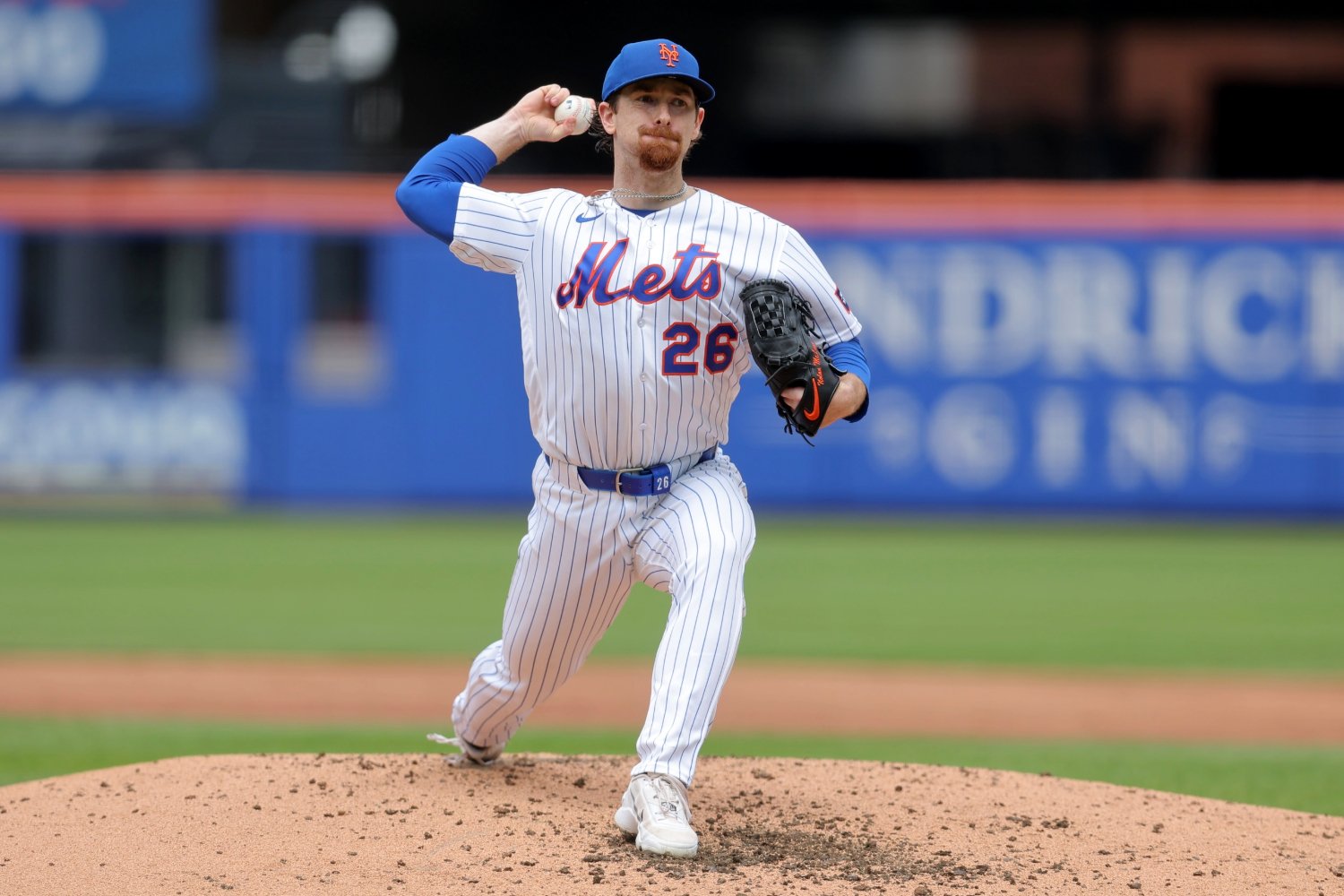 It probably shouldn’t be a shock to anyone to be hearing this, especially after how he looked last year, but Nolan McLean is off to a remarkable start in 2026. Let’s take a deep dive into his advanced analytics to break down why he is giving hitters such fits, as the 24-year-old does have a unique aspect that not many others possess. Nolan McLean’s Background Nolan McLean was originally a two-way prospect out of Oklahoma State. He actually held the bat over his shoulder until he broke into the upper ranks of the Mets’ farm system, too. The guy had a decent amount of power, but he struck out a lot and started hanging out below the Mendoza line a little too much. Once he started focusing on just pitching, his stuff elevated to a whole new level. An Otherworldly Strikeout Rate McLean broke out last year, logging a 2.06 earned run average and a 5-1 record over eight starts and 41 innings. Bridging the gap between last season and this time around, the 24-year-old righty competed at the World Baseball Classic and once again looks dominant. What makes him such a promising young star? It starts with every pitcher’s favorite stat: the strikeout rate. McLean is living well above the league average, punching out 31.5 percent of the hitters he’s faced to this point. A fastball riding in at an average of just over 95 miles per hour helps, as it has plenty of arm-side movement to go with a sinker that he can break off as well. McLean sports a 32 degree arm angle, meaning he can push plenty of horizontal movement on those primary pitches. Generating Soft Contact McLean may have a high strikeout rate, but it’s no secret that everyone allows contact from time to time. Even some pitchers with high punchout totals get hit around, but does McLean? No. His average exit velocity allowed is one of the better rates in all of baseball at just 86 miles per hour. That puts him in the top 10 percent of all pitchers. He also allows a relatively low barrel percentage, and his hard-hit rate is lower than the league average to complement his assortment of proof that he knows how to control the contact game. Pitch Variety But what’s the weapon that most 24-year-old hurlers don’t have? Along with having a high-octane fastball/sinker combo, McLean is sporting a six-pitch arsenal. He spins that sinker in at 37% of the time, and then it’s a gradual decrease from using the four-seamer 18% of the time to a changeup that gets utilized on just 8% of his offerings. This is the type of arsenal you’ll see some of the elite pitchers build out as they get into their primes. Seth Lugo with the Kansas City Royals is a prime example of someone who developed a deeper arsenal as he got older. But, sometimes, you’ll get the occasional starter who has the velocity AND the mix, like a Paul Skenes or in this case, Nolan McLean. So far, the curveball is his most dangerous offering, as McLean has 22 strikeouts in 29 at-bats finished and has allowed just one hit off of it. That’s a ridiculous .034 batting average against for McLean’s curve. Four of his six offerings have an opposing batting average south of the Mendoza line. Keeping the Ball Out of the Air Is there anything to tweak with McLean’s game? You’d really have to nitpick to do it, but one thing I’ve noticed over a small sample size is a spike in line drive rate. It’s up to 29% from just 20% a season ago. Consequently, the righty has forced just a 42% ground ball rate, so opposing hitters are elevating off of him, but he has so many options and so much movement on his pitches that it still isn’t quality contact. As long as that average exit velocity stays down, he’ll continue to be one of the more dominant pitchers in today’s game.
 -
Image courtesy of © Brad Penner-Imagn Images It probably shouldn’t be a shock to anyone to be hearing this, especially after how he looked last year, but Nolan McLean is off to a remarkable start in 2026. Let’s take a deep dive into his advanced analytics to break down why he is giving hitters such fits, as the 24-year-old does have a unique aspect that not many others possess. Nolan McLean’s Background Nolan McLean was originally a two-way prospect out of Oklahoma State. He actually held the bat over his shoulder until he broke into the upper ranks of the Mets’ farm system, too. The guy had a decent amount of power, but he struck out a lot and started hanging out below the Mendoza line a little too much. Once he started focusing on just pitching, his stuff elevated to a whole new level. An Otherworldly Strikeout Rate McLean broke out last year, logging a 2.06 earned run average and a 5-1 record over eight starts and 41 innings. Bridging the gap between last season and this time around, the 24-year-old righty competed at the World Baseball Classic and once again looks dominant. What makes him such a promising young star? It starts with every pitcher’s favorite stat: the strikeout rate. McLean is living well above the league average, punching out 31.5 percent of the hitters he’s faced to this point. A fastball riding in at an average of just over 95 miles per hour helps, as it has plenty of arm-side movement to go with a sinker that he can break off as well. McLean sports a 32 degree arm angle, meaning he can push plenty of horizontal movement on those primary pitches. Generating Soft Contact McLean may have a high strikeout rate, but it’s no secret that everyone allows contact from time to time. Even some pitchers with high punchout totals get hit around, but does McLean? No. His average exit velocity allowed is one of the better rates in all of baseball at just 86 miles per hour. That puts him in the top 10 percent of all pitchers. He also allows a relatively low barrel percentage, and his hard-hit rate is lower than the league average to complement his assortment of proof that he knows how to control the contact game. Pitch Variety But what’s the weapon that most 24-year-old hurlers don’t have? Along with having a high-octane fastball/sinker combo, McLean is sporting a six-pitch arsenal. He spins that sinker in at 37% of the time, and then it’s a gradual decrease from using the four-seamer 18% of the time to a changeup that gets utilized on just 8% of his offerings. This is the type of arsenal you’ll see some of the elite pitchers build out as they get into their primes. Seth Lugo with the Kansas City Royals is a prime example of someone who developed a deeper arsenal as he got older. But, sometimes, you’ll get the occasional starter who has the velocity AND the mix, like a Paul Skenes or in this case, Nolan McLean. So far, the curveball is his most dangerous offering, as McLean has 22 strikeouts in 29 at-bats finished and has allowed just one hit off of it. That’s a ridiculous .034 batting average against for McLean’s curve. Four of his six offerings have an opposing batting average south of the Mendoza line. Keeping the Ball Out of the Air Is there anything to tweak with McLean’s game? You’d really have to nitpick to do it, but one thing I’ve noticed over a small sample size is a spike in line drive rate. It’s up to 29% from just 20% a season ago. Consequently, the righty has forced just a 42% ground ball rate, so opposing hitters are elevating off of him, but he has so many options and so much movement on his pitches that it still isn’t quality contact. As long as that average exit velocity stays down, he’ll continue to be one of the more dominant pitchers in today’s game. View full article
-
How much of a ripple effect can one person have on a struggling baseball team? Today, we are doing a deep dive into A.J. Ewing and how he can help a stumbling New York Mets squad. We break down everything from Ewing's advanced, contact-oriented approach to the 70-grade speed that jumps off the page among his fellow prospects. View full video
-
How much of a ripple effect can one person have on a struggling baseball team? Today, we are doing a deep dive into A.J. Ewing and how he can help a stumbling New York Mets squad. We break down everything from Ewing's advanced, contact-oriented approach to the 70-grade speed that jumps off the page among his fellow prospects.
-
The New York Mets have some top-end prospect names who could be making their Big Apple debut soon. Jonah Tong has one of the better K/9 marks in all of minor league baseball, A.J. Ewing continues to showcase his flashing speed upon his Triple-A promotion, and Dylan Ross looks like he could be a lockdown reliever.
