


Jamie Cameron
-
Posts
7 -
Joined
-
Last visited
Content Type
Profiles
News
New York Mets Videos
2026 New York Mets Top Prospects Ranking
New York Mets Free Agent & Trade Rumors, Notes, & Tidbits
Guides & Resources
The New York Mets Players Project
2026 New York Mets Draft Tracker: Picks & Bonuses
Forums
Blogs
Events
Store
Downloads
Gallery
Everything posted by Jamie Cameron
-
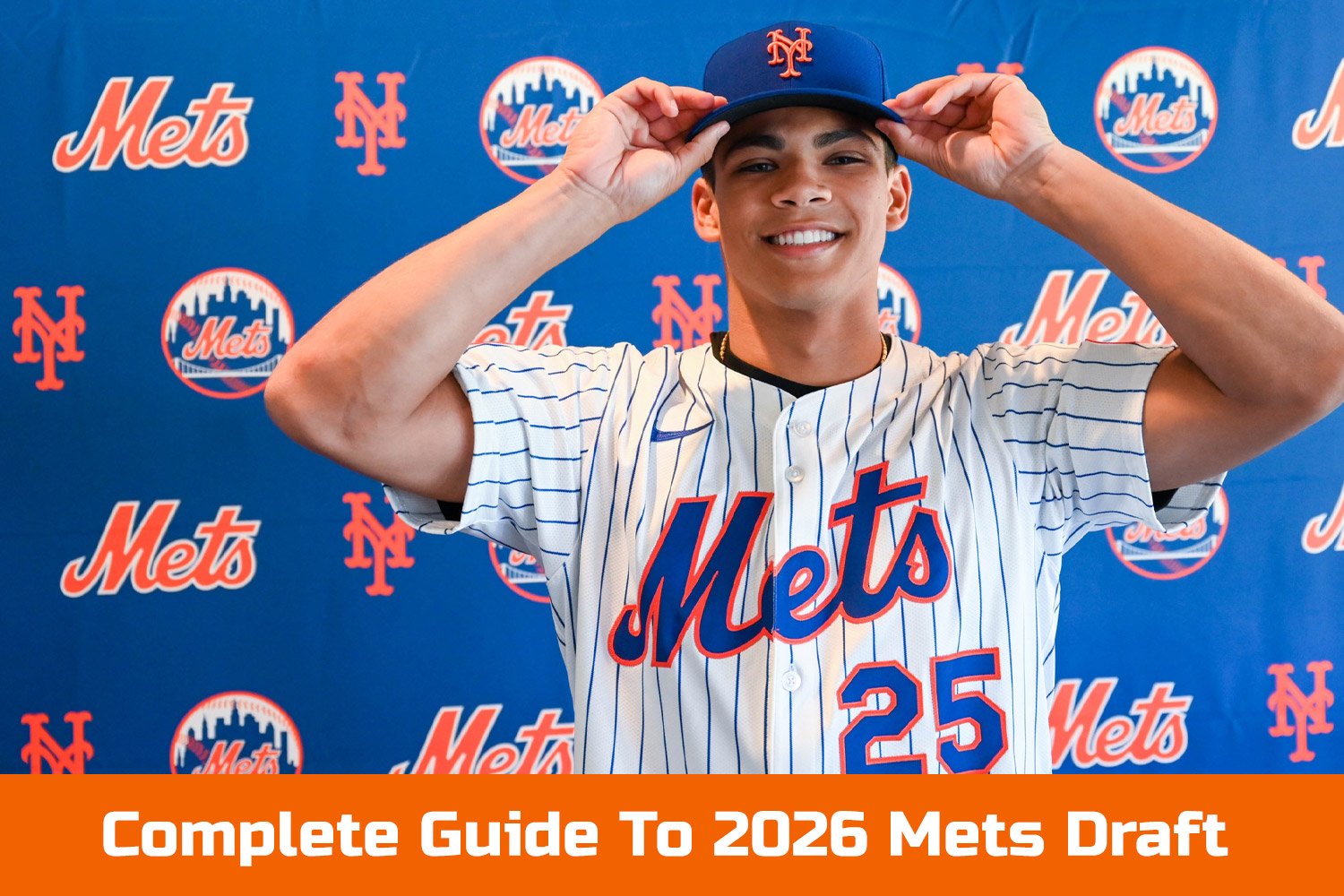 This guide is a comprehensive look at the 2026 MLB Draft with a focus on the New York Mets. You’ll find a list of key dates for the draft cycle, including the release of bonus pools and pick values, the MLB Draft combine, and a breakdown of the draft itself. Additionally, you’ll find an overview of the draft combine and MLB draft weekend, in addition to links to other important draft resources like the consensus board. Mets 2025 MLB Draft Recap The Mets kicked off their 2025 draft by drafting one of the sharpest risers in the entire draft class in Michigan infielder Mitch Voit, who combined both tools and production in an incredible junior season for the Wolverines. After selecting Central Florida shortstop Antonio Jimenez in the third round (102nd), they paid significantly overslot for Wisconsin prep righty Peter Kussow in the fourth. Standing at 6’5, 205 pounds, Kussow added significant stuff and velocity in his senior year of high school. The Mets finished their first five rounds by selecting Florida State righty Peyton Prescott in the fifth round. When Is The 2026 MLB Draft? April 1st 2026 - MLB announced draft bonus pools and pick values June 2026 - MLB Draft Combine (Chase Field, Arizona) July 11th - 12th: 2026 MLB Draft (Philadelphia, PA) July 11th - Rounds 1-4 (time TBA) July 12th - Round 5 through Round 20 (time TBA) 2026 MLB Draft Combine The draft combine is a newer event that started in the 2021 draft cycle. Held over a five-day period around a month before the draft itself, it serves as an opportunity for prospects to showcase their talents and boost their draft stock, while giving organizations better access to potential picks. In addition to medical examinations and educational programming, players have an opportunity to meet with teams in advance of the draft. Additionally, there are a number of televised workouts, featuring infield and outfield drills, batting practice for hitters, and bullpens for pitchers, all of which are tracked and underpinned by Statcast data. There is an incentive for players to attend and complete medicals, as prospects are guaranteed 75 percent of their draft slot bonus if they participate and complete medicals. How Many Rounds Are There In The MLB Draft? There is yet another design shift ahead of the 2026 draft cycle. It was shortened from a three-day event to a two-day event. Previously, day one included rounds 1 through the supplemental second round, day two included rounds 3 through 10, and day three included rounds 10 through 20. For the 2026 cycle, day one will be adjusted to include rounds one through four (~135 picks). The draft will conclude on day two with rounds five through twenty. MLB Draft Day One Explained The first day of the draft can be chaotic, as additional rounds and picks are in play beyond rounds one and two. The top of the draft (top 6 picks) is now determined by the draft lottery. Every non-playoff team is entered into the lottery, giving them the opportunity to move up in the draft order. Non-lottery-eligible teams are picked in the order they are eliminated from the postseason, with regular-season record ties broken. After the first round, prospect promotion incentive picks take place. If an eligible player wins Rookie of the Year, they earn their organization an extra pick immediately after the completion of the first round. Next come compensation picks, where teams who extend the qualifying offer to a player (who rejects it) earn an additional draft pick. Compensation pick positions depend on the contract size signed by the player rejecting the qualifying offer, as well as the payroll of the organization receiving them (there are additional compensation picks after competitive balance round B and the fourth round). After any compensation picks, comes the competitive balance round A. Teams that have one of the ten smallest markets or ten smallest revenue pools receive an additional pick in round A or round B, on an annually rotating basis. The first day of the draft is capped by the second round, competitive balance round B, and the third and fourth rounds, which typically take us through approximately 135 picks. MLB Draft Bonus Pool Allocations & Pick Values Prior to the draft, in April, MLB announces each team's bonus pool for the forthcoming draft cycle and the value of every pick in the top 10 rounds. Each pick in the first ten rounds of the draft is assigned a value, with the total of the slots for the picks each organization has in the top ten rounds comprising their total ‘bonus pool’. Organizations can sign a player to a deal greater than a slot or less than a slot, depending on their negotiations with the player, so it’s useful to think of the slots as ‘guidelines’ and little more. Organizations are allowed to spend up to 5% more than their total pool without incurring a penalty, a choice many teams take advantage of. The Twins and the Rockies are the only teams that have never spent any overage on their bonus pool. Any amount up to 5% over the pool is met with a 75% tax on the overage. If a team spends between 5-10% more than their pool, the penalty is 75% tax on the overage and loss of a future first-rounder. Any team that exceeds its bonus pool by more than 10% up to 15% pays 100% tax on the overage and will lose a first and second-round future pick. Any team that exceeds its bonus pool by more than 15% loses two future first-round picks in addition to paying 100% tax on the overage. Rounds 11-20 work differently from the first half of the draft. These picks do not come with an assigned slot value. Teams can spend up to $150,000 per pick without that spending coming out of their bonus pool. If they spend over that amount, any overage will be deducted from their bonus pool. For example, an 11th-round pick signing for $250,000 will result in $100,000 being subtracted from that team’s bonus pool. This is where some financial strategy comes into play. Often, teams will look to accrue some ‘savings’ from their bonus pool so they can spend over the maximum of $150,000 for a prospect in the second half of the draft. NOTE: Slot values increased by 2.5% from 2025 to 2026. View Mets Mock Draft Board Mets 2026 MLB Draft Bonus Pool Round Pick Slot Value Round 1* 27th $3,466,500 Round 3 92nd $859,900 Round 4 120th $645,100 Round 5 152nd $472,500 Round 6 181st $364,600 Round 7 210th $287,800 Round 8 240th $232,100 Round 9 270th $207,200 Round 10 300th $195,200 Total Bonus Pool Allocation $6,730,900 (28th in MLB) * The Mets first pick dropped 10 spots from 29th for exceeding the second surcharge threshold of the competitive balance tax
 -
I take MLB mock draft rankings from major industry outlets like MLB Pipeline, ESPN, The Athletic (and many others) to form a consensus board, with a working hypothesis that using this approach will eliminate some of the noise and variance in MLB Draft mock rankings. This is the final mock draft board, locked in just before the 2026 MLB Draft on Saturday, July 11. Round 1: Coleman Borthwick, RHP, South Walton HS, FL Borthwick is a physical monster out of Florida, built more like an NFL linebacker than a high school baseball player. Standing at 6'6, 255 pounds, he's an exciting two-way prospect, but most believe his future is on the mound. It's a slightly crossfire delivery, which helps to create a more unusual angle for hitters as he strides down the mound. However it looks, there's a ton of quality in the stuff. Borthwick recently ran his fastball up to 100 mph for the first time. It's a pitch that will sit 94-96 mph with plenty of run. It's paired with a quality slider, a pitch that might already be plus. It sits in the mid-80s with some sharp, late tilt. Borthwick has a changeup in the bank, too, but it's been used sparingly to date. Borthwick has been a more effective strike thrower to date than you might expect from a frame his size and such an explosive arsenal. He's committed to Auburn but has T30 pick upside. Round 3: Jason DeCaro, RHP, North Carolina DeCaro was a reclass in high school, making him one of the youngest college players in this year's class at 20 years and two months when the draft kicks off in July. Listed at 6'5, 230 pounds, he improved steadily while shouldering a significant workload in three years as a starter for North Carolina. DeCaro has a track record of production and innings, but not of overpowering stuff. His fastball has been as high as 97 mph, but will sit 92-94 mph with some run. It doesn't miss a ton of bats. DeCaro can spin the ball with conviction, though. He has a harder slider that sits in the low-to-mid 80s and an upper 70s curveball, both 50s at best, to go with a solid changeup. DeCaro pitched a career high in innings in 2026 (97.1), managing a 4.56 FIP, while striking out 24% of hitters and walking 10.2%. He has starter traits if a pro organization can tweak his arsenal and optimize his breaking stuff through pitch design work. Round 4: Kollin Ritchie, OF, Oklahoma State Kollin Ritchie is a three-year college performer who was drafted as a prep player out of Oklahoma in 2023 in the 19th round by the Orioles. It's a profile headlined by damage on contact, with some sneaky supplementary tools. Ritchie hits from the left side and has improved his approach in 2026, cutting his chase rate from 26% to 21%. His offensive profile is buoyed by his ability to take walks (15.5% in 2026). There's a ton of swing and miss in his profile, and it might be an issue that dampens Ritchie's effectiveness as a pro. It's an above-average arm and above-average wheels, which have sufficed in center field in college, but are likely better suited to right field or a corner spot as a pro. Ritchie hit .326/.462/.804 with 31 home runs (46 XBH), striking out 23.1% of the time, good for a 163 wRC+ in 290 PAs in 2026. If he can make enough contact, he has a chance to be a dangerous pro hitter. Curious to see the players around the New York Mets picks in the draft? Click on the button below to view the entire mock draft board! View full article
-
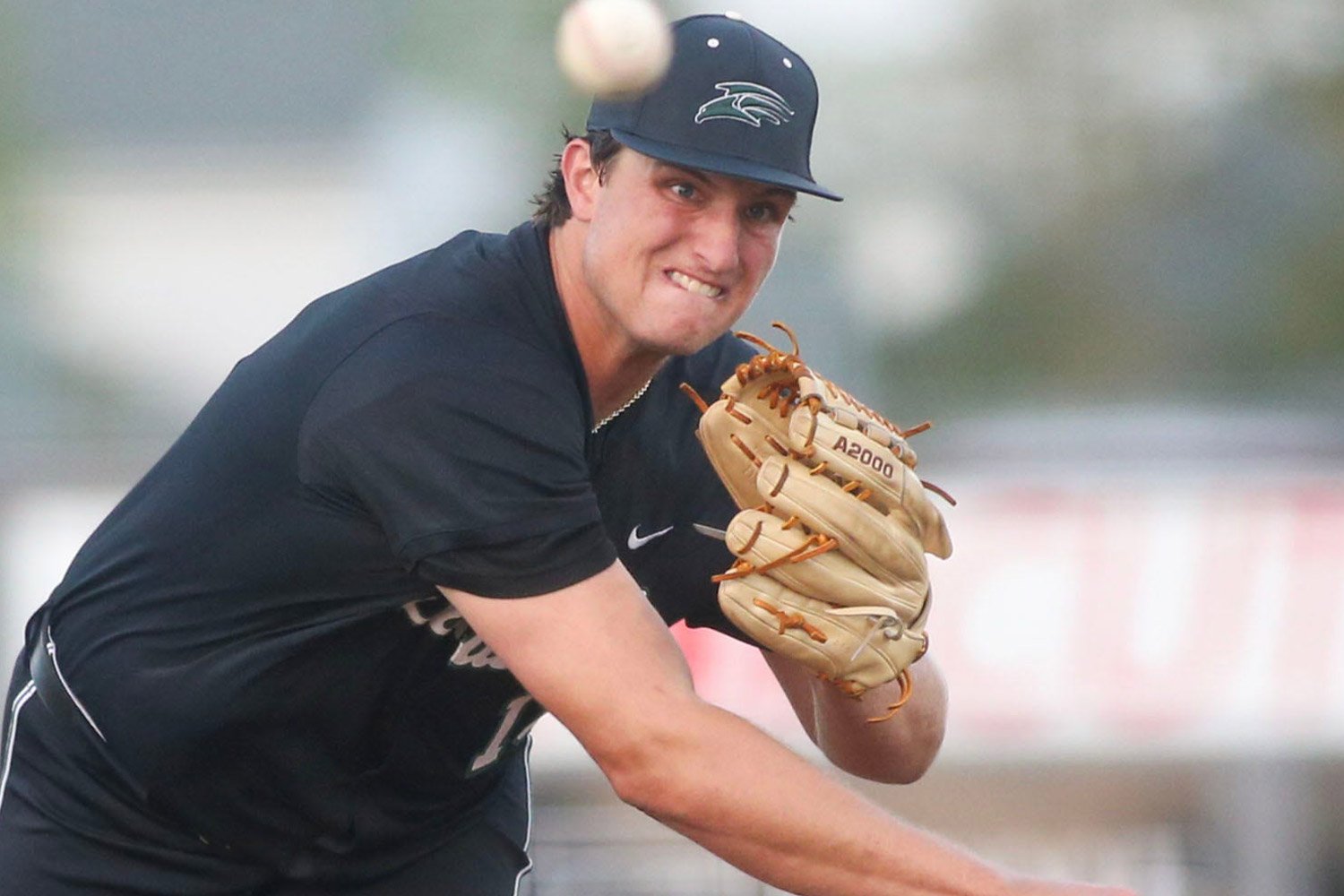 I take MLB mock draft rankings from major industry outlets like MLB Pipeline, ESPN, The Athletic (and many others) to form a consensus board, with a working hypothesis that using this approach will eliminate some of the noise and variance in MLB Draft mock rankings. This is the final mock draft board, locked in just before the 2026 MLB Draft on Saturday, July 11. Round 1: Coleman Borthwick, RHP, South Walton HS, FL Borthwick is a physical monster out of Florida, built more like an NFL linebacker than a high school baseball player. Standing at 6'6, 255 pounds, he's an exciting two-way prospect, but most believe his future is on the mound. It's a slightly crossfire delivery, which helps to create a more unusual angle for hitters as he strides down the mound. However it looks, there's a ton of quality in the stuff. Borthwick recently ran his fastball up to 100 mph for the first time. It's a pitch that will sit 94-96 mph with plenty of run. It's paired with a quality slider, a pitch that might already be plus. It sits in the mid-80s with some sharp, late tilt. Borthwick has a changeup in the bank, too, but it's been used sparingly to date. Borthwick has been a more effective strike thrower to date than you might expect from a frame his size and such an explosive arsenal. He's committed to Auburn but has T30 pick upside. Round 3: Jason DeCaro, RHP, North Carolina DeCaro was a reclass in high school, making him one of the youngest college players in this year's class at 20 years and two months when the draft kicks off in July. Listed at 6'5, 230 pounds, he improved steadily while shouldering a significant workload in three years as a starter for North Carolina. DeCaro has a track record of production and innings, but not of overpowering stuff. His fastball has been as high as 97 mph, but will sit 92-94 mph with some run. It doesn't miss a ton of bats. DeCaro can spin the ball with conviction, though. He has a harder slider that sits in the low-to-mid 80s and an upper 70s curveball, both 50s at best, to go with a solid changeup. DeCaro pitched a career high in innings in 2026 (97.1), managing a 4.56 FIP, while striking out 24% of hitters and walking 10.2%. He has starter traits if a pro organization can tweak his arsenal and optimize his breaking stuff through pitch design work. Round 4: Kollin Ritchie, OF, Oklahoma State Kollin Ritchie is a three-year college performer who was drafted as a prep player out of Oklahoma in 2023 in the 19th round by the Orioles. It's a profile headlined by damage on contact, with some sneaky supplementary tools. Ritchie hits from the left side and has improved his approach in 2026, cutting his chase rate from 26% to 21%. His offensive profile is buoyed by his ability to take walks (15.5% in 2026). There's a ton of swing and miss in his profile, and it might be an issue that dampens Ritchie's effectiveness as a pro. It's an above-average arm and above-average wheels, which have sufficed in center field in college, but are likely better suited to right field or a corner spot as a pro. Ritchie hit .326/.462/.804 with 31 home runs (46 XBH), striking out 23.1% of the time, good for a 163 wRC+ in 290 PAs in 2026. If he can make enough contact, he has a chance to be a dangerous pro hitter. Curious to see the players around the New York Mets picks in the draft? Click on the button below to view the entire mock draft board!
 -
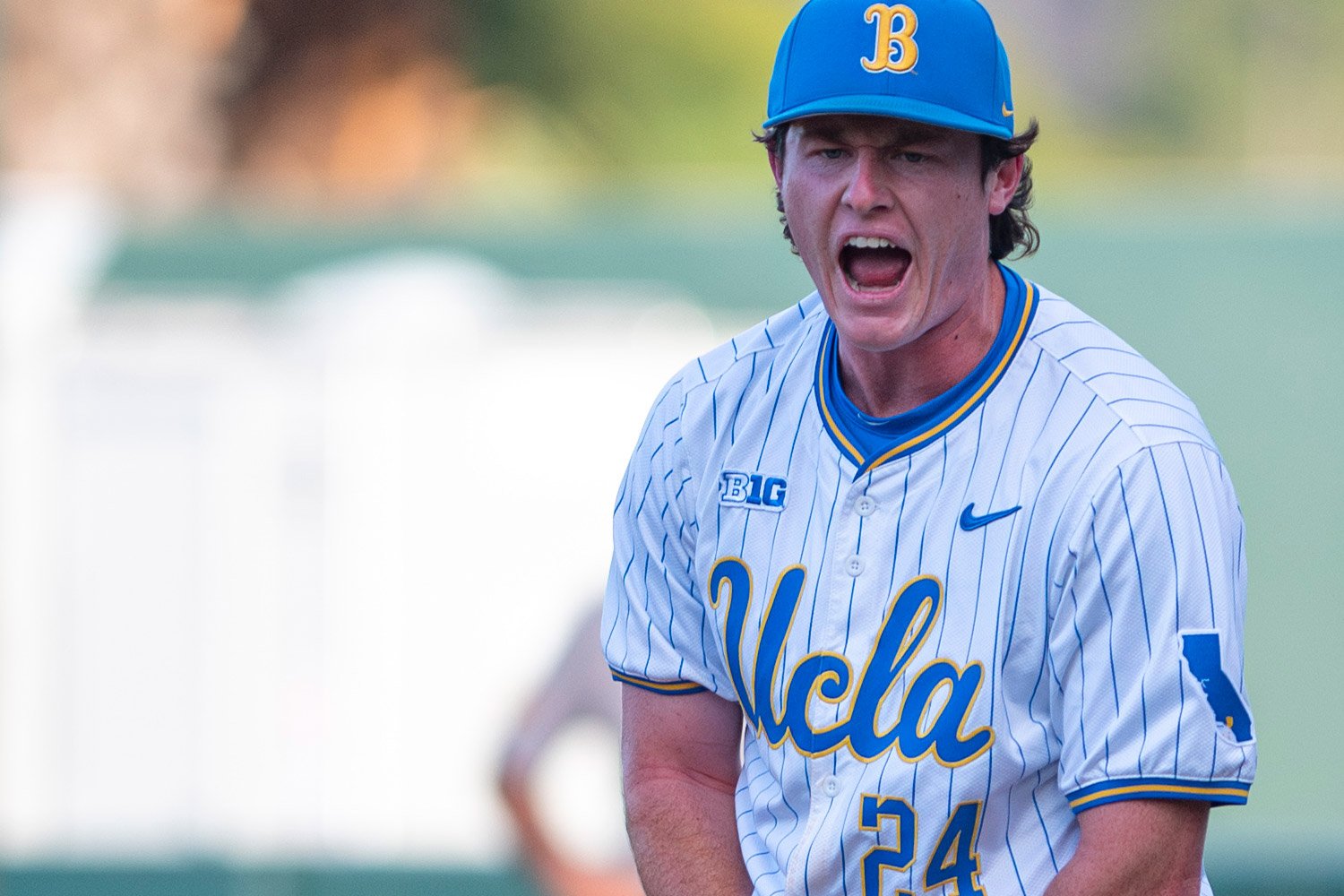 I take MLB mock draft rankings from major industry outlets like MLB Pipeline, ESPN, The Athletic (and many others) to form a consensus board, with a working hypothesis that using this approach will eliminate some of the noise and variance in MLB Draft mock rankings. The New York Mets’ first five picks are: Round 1: 27th Overall Round 3: 92nd Overall Round 4: 120th Overall Round 5: 152nd Overall Round 6: 181st Overall Round 1: Logan Reddemann, RHP, UCLA Reddemann has surged up draft boards after not featuring prominently on pre- or early-season lists. A transfer from San Diego, the 6'2 righty has turned a developmental corner for an outstanding UCLA team and is putting it all together in his draft-eligible junior season. Reddemann has a little bit of a jerky delivery to the plate. Even so, he keeps the baseball well hidden behind his plate until release, creating some deception for hitters and making the ball difficult to track. Reddemann is an excellent strike thrower, which, in concert with an uptick in velocity this year, has left B1G Ten hitters with little chance against his stuff. Reddemann relies on a fastball that sits 94-96 mph but can grab 98 mph. There's a sinker and a cutter too, to round out a trio of fastballs. Reddemann has a slider, which he throws in the low 80s, although it tends to blur with his cutter, and a high-70s curveball to round out a diverse arsenal of pitches. Reddemann managed a 2.68 FIP with a 35.7 K% and a stingy 4.7 BB% in 59.2 innings in 2026. A flexor strain prevented him from pitching down the stretch (including postseason play). If he can prove his health in pre-draft bullpens, he’s likely to still be a first-round pick. Round 3: Owen Hull, OF, North Carolina Owen Hull is a sharp riser on the college side of the draft after an impressive postseason run as part of North Carolina’s CWS squad. After spending his first two collegiate seasons at George Mason, the 6’4 outfielder made the transition to the ACC look seamless and has set himself up as a likely day one pick as a result. Hull hits from the left side and has a bit of an unorthodox-looking swing. There is some swing and miss in the profile, but the damage on contact is impressive. He controls his at-bats well and takes plenty of walks, rarely expanding the zone in collegiate ball. Hull has a chance to stick in center field with plus speed. It’s a fringe-average arm, but the range and glove will play in center, at least during the onset of his professional career. Hull hit .393/.500/.615 with 9 home runs (38 extra base hits), a 14.8 BB%, a 15.1 K%, and a 146 wRC+ in 2026. Curious to see the players around the New York Mets picks in the draft? Click on the button below to view the entire mock draft board!
 -
I take MLB mock draft rankings from major industry outlets like MLB Pipeline, ESPN, The Athletic (and many others) to form a consensus board, with a working hypothesis that using this approach will eliminate some of the noise and variance in MLB Draft mock rankings. The New York Mets’ first five picks are: Round 1: 27th Overall Round 3: 92nd Overall Round 4: 120th Overall Round 5: 152nd Overall Round 6: 181st Overall Round 1: Logan Reddemann, RHP, UCLA Reddemann has surged up draft boards after not featuring prominently on pre- or early-season lists. A transfer from San Diego, the 6'2 righty has turned a developmental corner for an outstanding UCLA team and is putting it all together in his draft-eligible junior season. Reddemann has a little bit of a jerky delivery to the plate. Even so, he keeps the baseball well hidden behind his plate until release, creating some deception for hitters and making the ball difficult to track. Reddemann is an excellent strike thrower, which, in concert with an uptick in velocity this year, has left B1G Ten hitters with little chance against his stuff. Reddemann relies on a fastball that sits 94-96 mph but can grab 98 mph. There's a sinker and a cutter too, to round out a trio of fastballs. Reddemann has a slider, which he throws in the low 80s, although it tends to blur with his cutter, and a high-70s curveball to round out a diverse arsenal of pitches. Reddemann managed a 2.68 FIP with a 35.7 K% and a stingy 4.7 BB% in 59.2 innings in 2026. A flexor strain prevented him from pitching down the stretch (including postseason play). If he can prove his health in pre-draft bullpens, he’s likely to still be a first-round pick. Round 3: Owen Hull, OF, North Carolina Owen Hull is a sharp riser on the college side of the draft after an impressive postseason run as part of North Carolina’s CWS squad. After spending his first two collegiate seasons at George Mason, the 6’4 outfielder made the transition to the ACC look seamless and has set himself up as a likely day one pick as a result. Hull hits from the left side and has a bit of an unorthodox-looking swing. There is some swing and miss in the profile, but the damage on contact is impressive. He controls his at-bats well and takes plenty of walks, rarely expanding the zone in collegiate ball. Hull has a chance to stick in center field with plus speed. It’s a fringe-average arm, but the range and glove will play in center, at least during the onset of his professional career. Hull hit .393/.500/.615 with 9 home runs (38 extra base hits), a 14.8 BB%, a 15.1 K%, and a 146 wRC+ in 2026. Curious to see the players around the New York Mets picks in the draft? Click on the button below to view the entire mock draft board! View full article
-
- 1
-

-
It's time to check back in with another New York Mets mock. The MLB Draft is just five weeks away. This class is as muddled as any I've covered, though it's plenty deep in talent. You can find our mock consensus board here. Let's check in on some player profiles it's currently mocking to the Mets with their first few picks in July. Mets Mock Draft: No. 27, Coleman Borthwick, RHP, South Walton HS, FL Borthwick is a physical monster out of South Carolina, built more like an NFL linebacker than a high school baseball player. Standing at 6'6, 255 pounds, he's an exciting two-way prospect, but most believe his future is on the mound. It's a slightly crossfire delivery which helps to create a more unusual angle for hitters as he strides down the mound. However it looks, there's a ton of quality in the stuff. Borthwick recently ran his fastball up to 100mph for the first time. It's a pitch that will sit 94-96 mph with plenty of run. It's paired with a quality slider, a pitch that might already be plus. It sits in the mid-80s with some sharp, late tilt. Borthwick has a changeup in the bank too, but it's been used sparingly to date. Borthwick has been a more effective strike thrower to date than you might expect from a frame his size and such an explosive arsenal. He's committed to Auburn but has T30 pick upside. Mets Mock Draft: No. 92, Will Gasparino, OF, UCLA If you want to lean into raw tools on the college side of the 2026 draft, there's no better place to look than Will Gasparino, who is finishing his collegiate career at UCLA (close to home) after a mixed two years at Texas. This is double plus raw power from the right side from a 6'6 frame. The problem for Gasparino is there wasn't enough of a hit tool to go with it in his first two collegiate seasons. It's a longer swing, but the staff at UCLA have him on plane earlier and have quieted down his lower half, work that has unlocked a much better version of Gasparino in 2026. He's hit over .300 through in his junior season (a 40-50 point increase from his first two seasons), with 20 home runs and a reduced strikeout rate. There's strong supplementary tools here, too. Gasparino has an above-average arm and once he gets going, has above-average speed too. It's a power-reliant corner outfield profile who could be a monster if he hits enough at the next level. View full article
-
 It's time to check back in with another New York Mets mock. The MLB Draft is just five weeks away. This class is as muddled as any I've covered, though it's plenty deep in talent. You can find our mock consensus board here. Let's check in on some player profiles it's currently mocking to the Mets with their first few picks in July. Mets Mock Draft: No. 27, Coleman Borthwick, RHP, South Walton HS, FL Borthwick is a physical monster out of South Carolina, built more like an NFL linebacker than a high school baseball player. Standing at 6'6, 255 pounds, he's an exciting two-way prospect, but most believe his future is on the mound. It's a slightly crossfire delivery which helps to create a more unusual angle for hitters as he strides down the mound. However it looks, there's a ton of quality in the stuff. Borthwick recently ran his fastball up to 100mph for the first time. It's a pitch that will sit 94-96 mph with plenty of run. It's paired with a quality slider, a pitch that might already be plus. It sits in the mid-80s with some sharp, late tilt. Borthwick has a changeup in the bank too, but it's been used sparingly to date. Borthwick has been a more effective strike thrower to date than you might expect from a frame his size and such an explosive arsenal. He's committed to Auburn but has T30 pick upside. Mets Mock Draft: No. 92, Will Gasparino, OF, UCLA If you want to lean into raw tools on the college side of the 2026 draft, there's no better place to look than Will Gasparino, who is finishing his collegiate career at UCLA (close to home) after a mixed two years at Texas. This is double plus raw power from the right side from a 6'6 frame. The problem for Gasparino is there wasn't enough of a hit tool to go with it in his first two collegiate seasons. It's a longer swing, but the staff at UCLA have him on plane earlier and have quieted down his lower half, work that has unlocked a much better version of Gasparino in 2026. He's hit over .300 through in his junior season (a 40-50 point increase from his first two seasons), with 20 home runs and a reduced strikeout rate. There's strong supplementary tools here, too. Gasparino has an above-average arm and once he gets going, has above-average speed too. It's a power-reliant corner outfield profile who could be a monster if he hits enough at the next level.
